
This chapter completes the laws of chapters 21–23. It speaks of hypocrisy and justice (1–3), helping others (4–6), bribery and justice (7–9), the Sabbath and the rights of others (10–13), the feasts (14–19), the divine presence (20–23), and not mixing with the nations (24–33).
1. Hypocrisy and the Justice of Judgment
KJV · Verses 1–3
1 Thou shalt not raise a false report: put not thine hand with the wicked to be an unrighteous witness. 2 Thou shalt not follow a multitude to do evil; neither shalt thou speak in a cause to decline after many to wrest judgment: 3 Neither shalt thou countenance a poor man in his cause.
The Law was concerned with the sanctification of the community as well as the sanctification of each of its members. If, for the sake of the community, a member must not receive a false report nor join hands with the hypocrite in his wrongdoing, so too, for the sanctification of his own soul, he must not follow the community if it turns aside, for “thou shalt not follow a multitude to do evil” (2), nor speak falsely so as to slay the righteous (7).
As God cares for the poor, lest people wrong him for the sake of the rich, “Thou shalt not wrest the judgment of thy poor in his cause” (6), He also asks us, in our pity for the poor, not to wrong the rich: “Neither shalt thou countenance a poor man in his cause” (3).
2. Helping Others
KJV · Verses 4–6
4 If thou meet thine enemy's ox or his ass going astray, thou shalt surely bring it back to him again. 5 If thou see the ass of him that hateth thee lying under his burden, and wouldest forbear to help him, thou shalt surely help with him. 6 Thou shalt not wrest the judgment of thy poor in his cause.
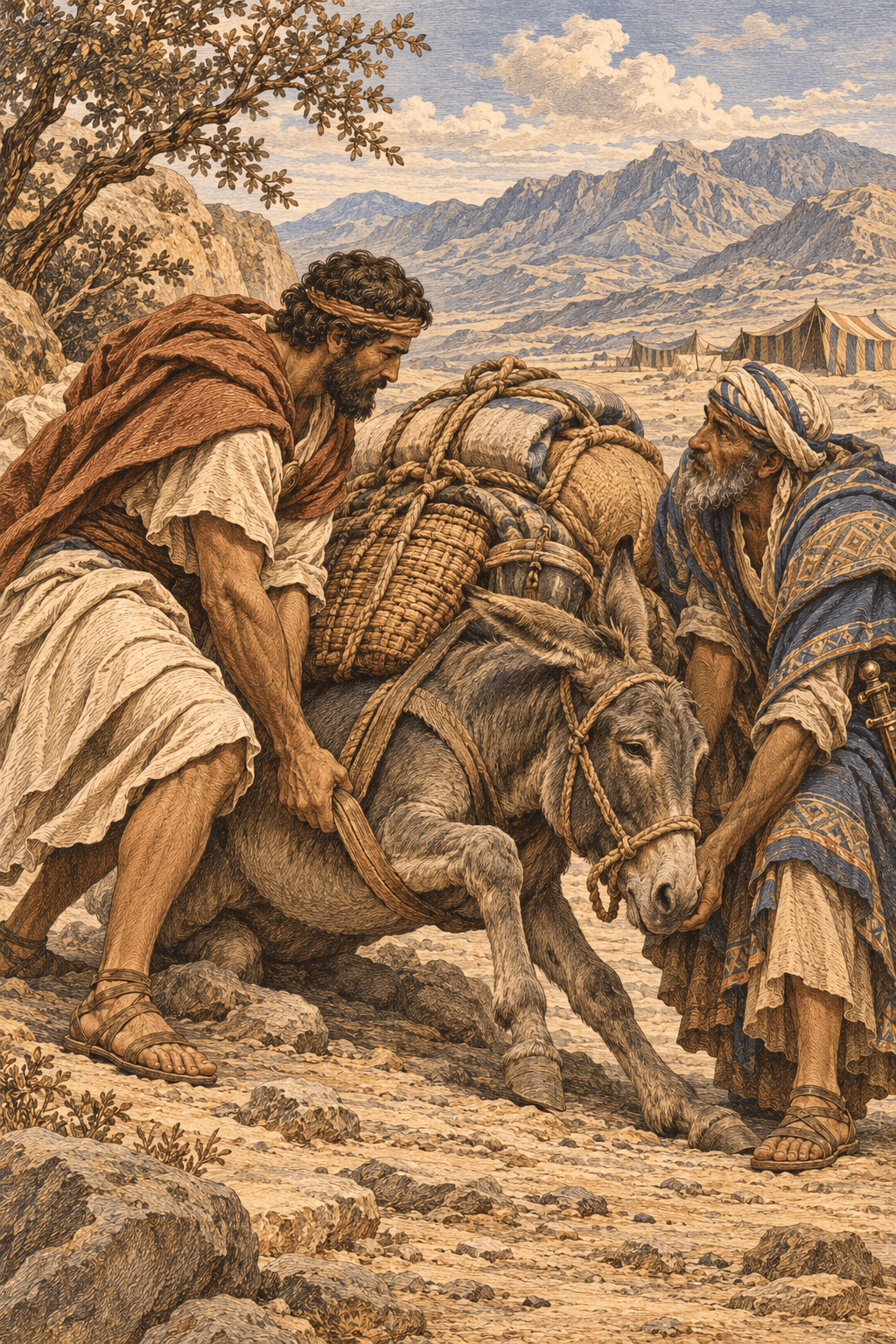
Helping others is not optional; it is a binding divine commandment. It does not stop at people, but extends to supporting even the ass of one’s enemy if it falls under its burden (5).
If a person under the Law was bound not to neglect the ass of his enemy when it fell, how much greater is his responsibility, in the age of grace, if he neglects to support the soul of his enemy or his brother? As Saint John Chrysostom says:
If it is so with one who neglects the ass of his enemy, what of one who does not neglect the beast used for burdens, yet despises the soul of his enemy as it perishes, and even makes light of the soul of his friend?! How shall he obtain forgiveness?! [322]
3. Bribery and Justice
KJV · Verses 7–9
7 Keep thee far from a false matter; and the innocent and righteous slay thou not: for I will not justify the wicked. 8 And thou shalt take no gift: for the gift blindeth the wise, and perverteth the words of the righteous. 9 Also thou shalt not oppress a stranger: for ye know the heart of a stranger, seeing ye were strangers in the land of Egypt.
The Law warns against bribery, “for the gift blindeth the wise, and perverteth the words of the righteous” (8).
4. The Sabbath and the Rights of Others
KJV · Verses 10–13
10 And six years thou shalt sow thy land, and shalt gather in the fruits thereof: 11 But the seventh year thou shalt let it rest and lie still; that the poor of thy people may eat: and what they leave the beasts of the field shall eat. In like manner thou shalt deal with thy vineyard, and with thy oliveyard. 12 Six days thou shalt do thy work, and on the seventh day thou shalt rest: that thine ox and thine ass may rest, and the son of thy handmaid, and the stranger, may be refreshed. 13 And in all things that I have said unto you be circumspect: and make no mention of the name of other gods, neither let it be heard out of thy mouth.
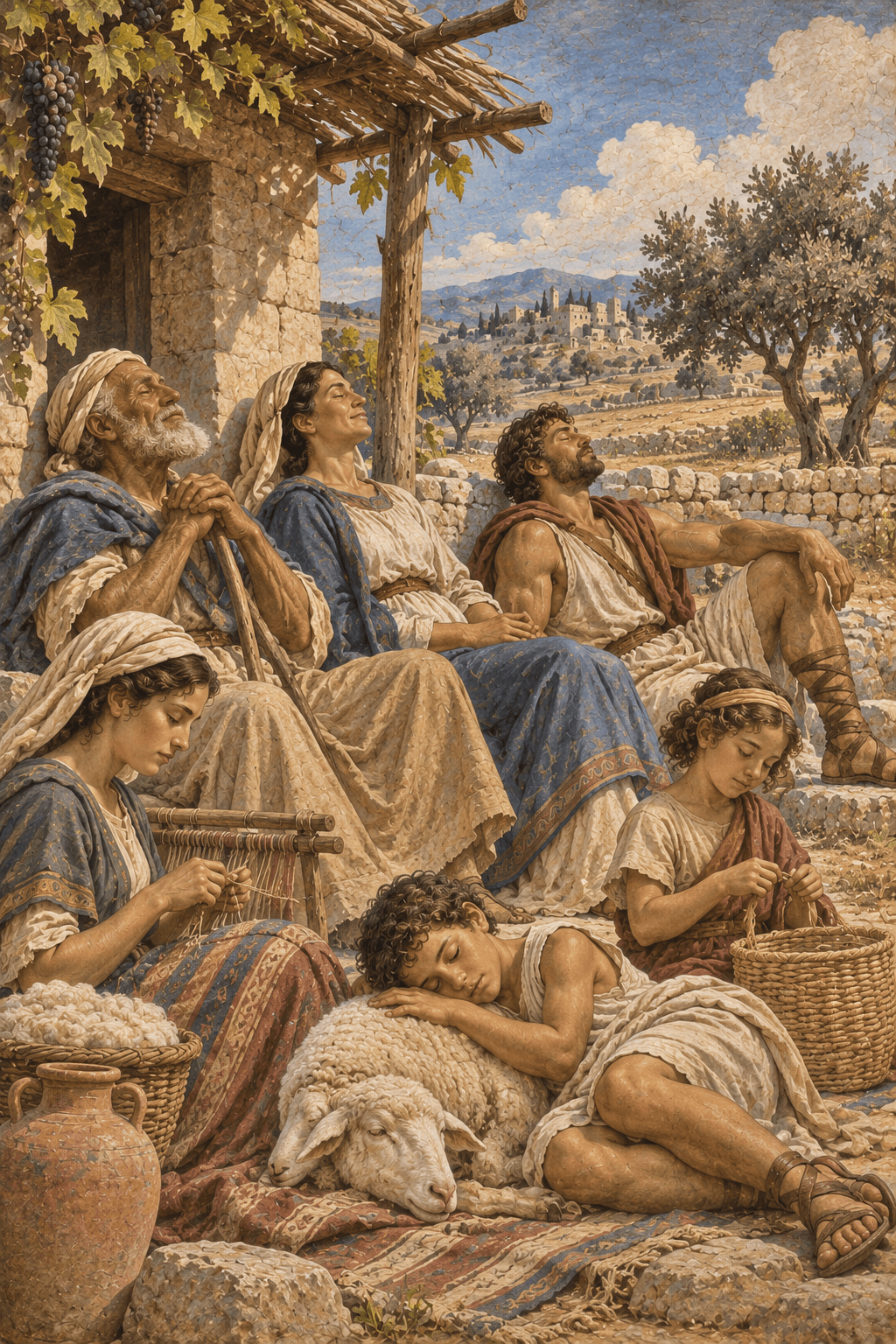
We heard of the Sabbath in the gathering of the manna (Exodus 16) and in the Ten Commandments (Exodus 20). But here in the Law, as He speaks of the rights of others, He speaks of the Sabbath from a new point of view. Here the Sabbath is not the sanctification of a person’s life, in which he remembers God who rested on the seventh day, nor a memorial of his going out from the land of Egypt and God’s works with him to bring him into rest; rather, the Sabbath is mentioned for the sake of the rights others have upon you. He gives the land a Sabbath of rest (the seventh year), so that the land rests and the poor find food, and also the beasts of the field (11). He also gives rest on the seventh day, not only for himself and his family, but for the son of his handmaid, the stranger, his ox, and his ass (12).
5. The Feasts
KJV · Verses 14–19
14 Three times thou shalt keep a feast unto me in the year. 15 Thou shalt keep the feast of unleavened bread: (thou shalt eat unleavened bread seven days, as I commanded thee, in the time appointed of the month Abib; for in it thou camest out from Egypt: and none shall appear before me empty:) 16 And the feast of harvest, the firstfruits of thy labours, which thou hast sown in the field: and the feast of ingathering, which is in the end of the year, when thou hast gathered in thy labours out of the field. 17 Three times in the year all thy males shall appear before the Lord God. 18 Thou shalt not offer the blood of my sacrifice with leavened bread; neither shall the fat of my sacrifice remain until the morning. 19 The first of the firstfruits of thy land thou shalt bring into the house of the Lord thy God. Thou shalt not seethe a kid in his mother's milk.
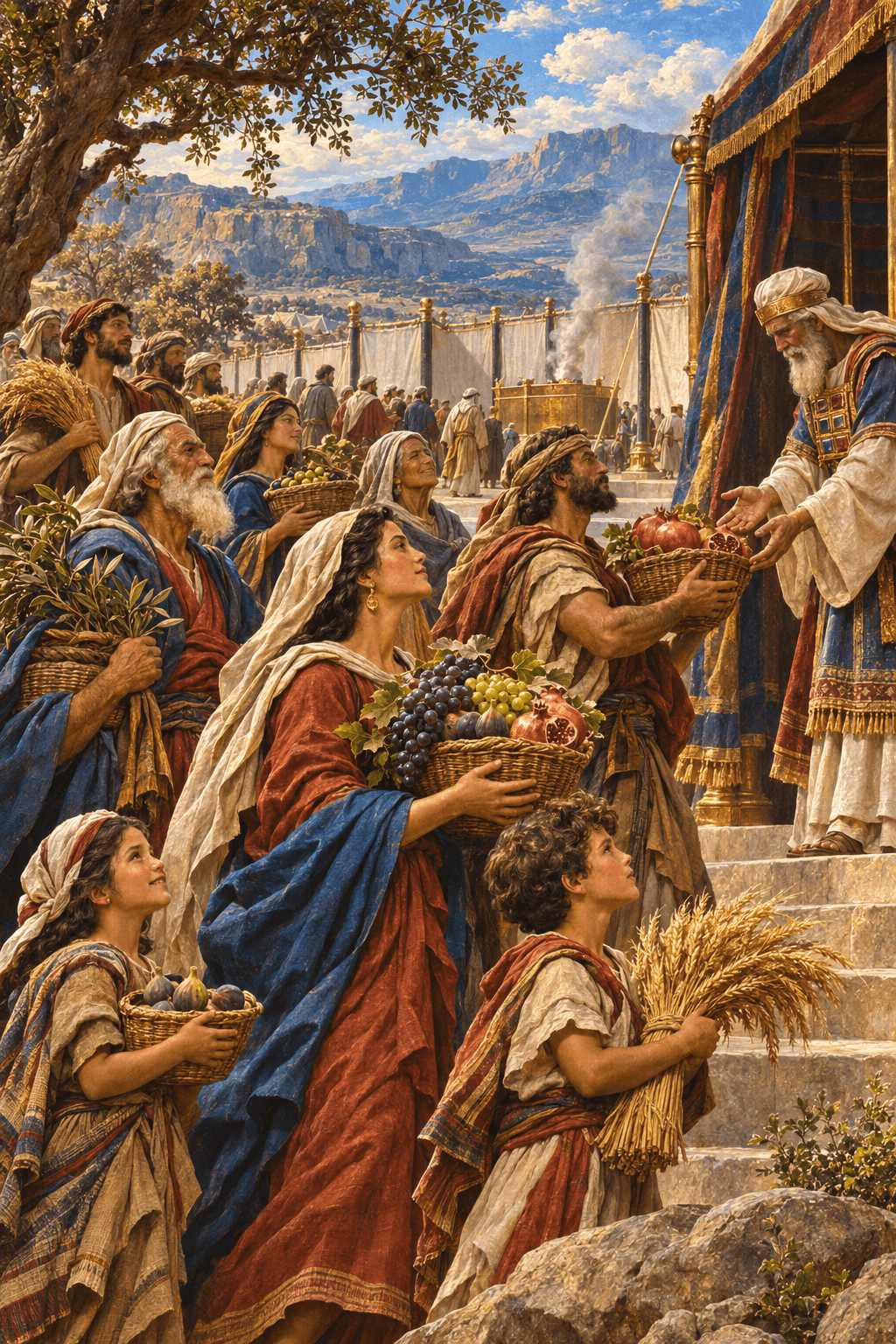
The Book of Leviticus speaks of the Jewish feasts and their rites in more detail, [323] but here He concentrates on a particular side: their importance in social life. He speaks of three feasts, and of three things:
A) They eat unleavened bread, not only at the feast of unleavened bread but also at the other two feasts. As we said before (chapter 12), unleavened bread points to “the new life.” It is as if the feast is an occasion for a person to review his inner accounts and his relations with others, lest he has wronged anyone or ignored the right of the poor or the stranger.
B) “Neither shall the fat of my sacrifice remain until the morning” (18). Here He says “my” feast; it is not the feast of man, but the feast of the Lord, in which God rejoices in man. Perhaps by this commandment He meant that everything one has for the feast should be distributed on that day, leaving nothing for himself or his family, but giving it to the needy.
C) Offering the firstfruits, of which we have spoken before.
The great feasts of the Jews are: the feast of unleavened bread, which is inseparable from the Passover (Exodus 12:15; Leviticus 23:5–8); the feast of harvest, at the beginning of the harvest season, when they offer the firstfruits of their crops (Leviticus 23:15–22; Numbers 28:26–31; Deuteronomy 16:9–12); and the feast of ingathering at the end of the season (Numbers 29:12; Leviticus 23:34–43; Deuteronomy 16:13–14).
Saint John Chrysostom comments on the commandment of the Law, “None shall appear before me empty” (15):
It means that you should not enter the temple without sacrifices. It is not fitting for you to enter the house of God without sacrifices; so do not go to the assembly without bringing your brethren with you. For this sacrifice and offering is better than that one, when you offer to God a soul with you in the church. [324]
6. The Divine Presence
KJV · Verses 20–23
20 Behold, I send an Angel before thee, to keep thee in the way, and to bring thee into the place which I have prepared. 21 Beware of him, and obey his voice, provoke him not; for he will not pardon your transgressions: for my name is in him. 22 But if thou shalt indeed obey his voice, and do all that I speak; then I will be an enemy unto thine enemies, and an adversary unto thine adversaries. 23 For mine Angel shall go before thee, and bring thee in unto the Amorites, and the Hittites, and the Perizzites, and the Canaanites, the Hivites, and the Jebusites: and I will cut them off.
This is the farewell commandment: He sends His Angel before them to keep them in the way and bring them into the place He has prepared for them (20). Here He speaks of the presence of God, who condescends to be in their midst, becoming as an Angel sent to protect them, lead them, and bring them into the divine promises. The word “angel” means “messenger,” one who carries a message; when God comes down to us He carries to us a message from Himself. And He is called the “presence” of the LORD in Exodus 33:15–16.
In this there is a sign of the Incarnation of the Word of God and His coming down to us to lead us to the Jerusalem above.
As the Law and its commandments ended with this promise, so the Lord ended His life on earth with the same promise, that He would be with us unto the end of the world (Matthew 28:20). Saint Gregory of Nyssa [325] showed that by “His Angel” the Lord Himself is meant, for shortly after Moses says: “Let my Lord, I pray thee, go among us” (Exodus 34:9; see 33:16), and the Lord’s answer was: “I will do this thing also that thou hast spoken” (Exodus 33:17).
7. Not Mixing with the Nations
KJV · Verses 24–33
24 Thou shalt not bow down to their gods, nor serve them, nor do after their works: but thou shalt utterly overthrow them, and quite break down their images. 25 And ye shall serve the Lord your God, and he shall bless thy bread, and thy water; and I will take sickness away from the midst of thee. 26 There shall nothing cast their young, nor be barren, in thy land: the number of thy days I will fulfil. 27 I will send my fear before thee, and will destroy all the people to whom thou shalt come, and I will make all thine enemies turn their backs unto thee. 28 And I will send hornets before thee, which shall drive out the Hivite, the Canaanite, and the Hittite, from before thee. 29 I will not drive them out from before thee in one year; lest the land become desolate, and the beast of the field multiply against thee. 30 By little and little I will drive them out from before thee, until thou be increased, and inherit the land. 31 And I will set thy bounds from the Red sea even unto the sea of the Philistines, and from the desert unto the river: for I will deliver the inhabitants of the land into your hand; and thou shalt drive them out before thee. 32 Thou shalt make no covenant with them, nor with their gods. 33 They shall not dwell in thy land, lest they make thee sin against me: for if thou serve their gods, it will surely be a snare unto thee.
This is not a separate commandment, but an extension of the previous one. If on the positive side they accept the presence of God in their midst and hand over to Him the leadership of their life, on the negative side they refuse to mix with the nations as a sign of their rejection of their gods; for the Jews could not yet distinguish between the sinner and the sin, between the Gentile peoples and the pagan life.
Notes and References
[322] St. John Chrysostom, In 1 Cor. hom. 44:5.
[323] We will speak of them in more detail, if the Lord wills, in the commentary on the Book of Leviticus.
[324] St. John Chrysostom, To Those Who Had Not Attended the Assembly 4.
[325] Gregory of Nyssa, Against Eunomius 11:3.