
Part Four: Closing Acts and Commandments (Deuteronomy 31–34)
This last part presents to us closing acts and commandments of the utmost importance:
First: Joshua succeeds Moses (Deuteronomy 31). The success of Moses the prophet’s leadership appears in his discipling of Joshua. The successful leader is the one who cares for the second rank of leadership, so that the work continues and does not stop. In humility he declares: “I am an hundred and twenty years old this day; I can no more go out and come in…” (2). He declares his joy that his disciple achieves what he himself could not: “the Lord hath said unto me, Thou shalt not go over this Jordan… Joshua, he shall go over before thee, as the Lord hath said” (2–3).
When does every leader desire the success of another more than his own success?! Moses supported the people so that Joshua might fulfill his mission, and he supported Joshua, declaring: “And the Lord, he it is that doth go before thee; he will be with thee, he will not fail thee, neither forsake thee: fear not, neither be dismayed” (8).
Second: Confirming the obligation to read the Law publicly before all the people, even the children, at the Feast of Tabernacles in the year of release (the seventh year).
Third: The Lord appeared in the tabernacle to bless Joshua’s taking up the leadership. The Lord spoke frankly with His people, affirming their entry into the Promised Land and their turning aside afterward, and He charged Joshua: “Be strong and of a good courage… I will be with thee” (23).
Fourth: The Levites’ obligation to write the Law (the Torah) and place it beside the ark of the covenant.
Fifth: The closing song (Deuteronomy 32). At God’s command (19), Moses the prophet uttered, in the last moments of his life, that song which the imagination of the greatest writers and poets falls short of equaling.
Sixth: The blessing of the tribes, for it was not possible for Moses the prophet, in his fatherhood of the people, to depart from this world without blessing his people tribe by tribe, as Jacob did with his sons (Genesis 49).
Seventh: Moses’ ascent to Mount Nebo, where he died and the Lord buried him (Deuteronomy 34).
A Final Advice with a Warning
Moses the prophet affirmed that God is the true Leader of His people; as He led them in the days of Moses, He would lead them through Joshua. He also charged the priests and all the elders of Israel to read the Law in the year of release at the Feast of Tabernacles. He mentions nothing here of a rite of covenant renewal except the recording of the word of God and its reading (9–13). The Lord also appeared to him and warned the people not to turn away from the faith after his death.
1. Encouraging the People and Joshua
KJV · Verses 1–8
1 And Moses went and spake these words unto all Israel. 2 And he said unto them, I am an hundred and twenty years old this day; I can no more go out and come in: also the Lord hath said unto me, Thou shalt not go over this Jordan. 3 The Lord thy God, he will go over before thee, and he will destroy these nations from before thee, and thou shalt possess them: and Joshua, he shall go over before thee, as the Lord hath said. 4 And the Lord shall do unto them as he did to Sihon and to Og, kings of the Amorites, and unto the land of them, whom he destroyed. 5 And the Lord shall give them up before your face, that ye may do unto them according unto all the commandments which I have commanded you. 6 Be strong and of a good courage, fear not, nor be afraid of them: for the Lord thy God, he it is that doth go with thee; he will not fail thee, nor forsake thee. 7 And Moses called unto Joshua, and said unto him in the sight of all Israel, Be strong and of a good courage: for thou must go with this people unto the land which the Lord hath sworn unto their fathers to give them; and thou shalt cause them to inherit it. 8 And the Lord, he it is that doth go before thee; he will be with thee, he will not fail thee, neither forsake thee: fear not, neither be dismayed.
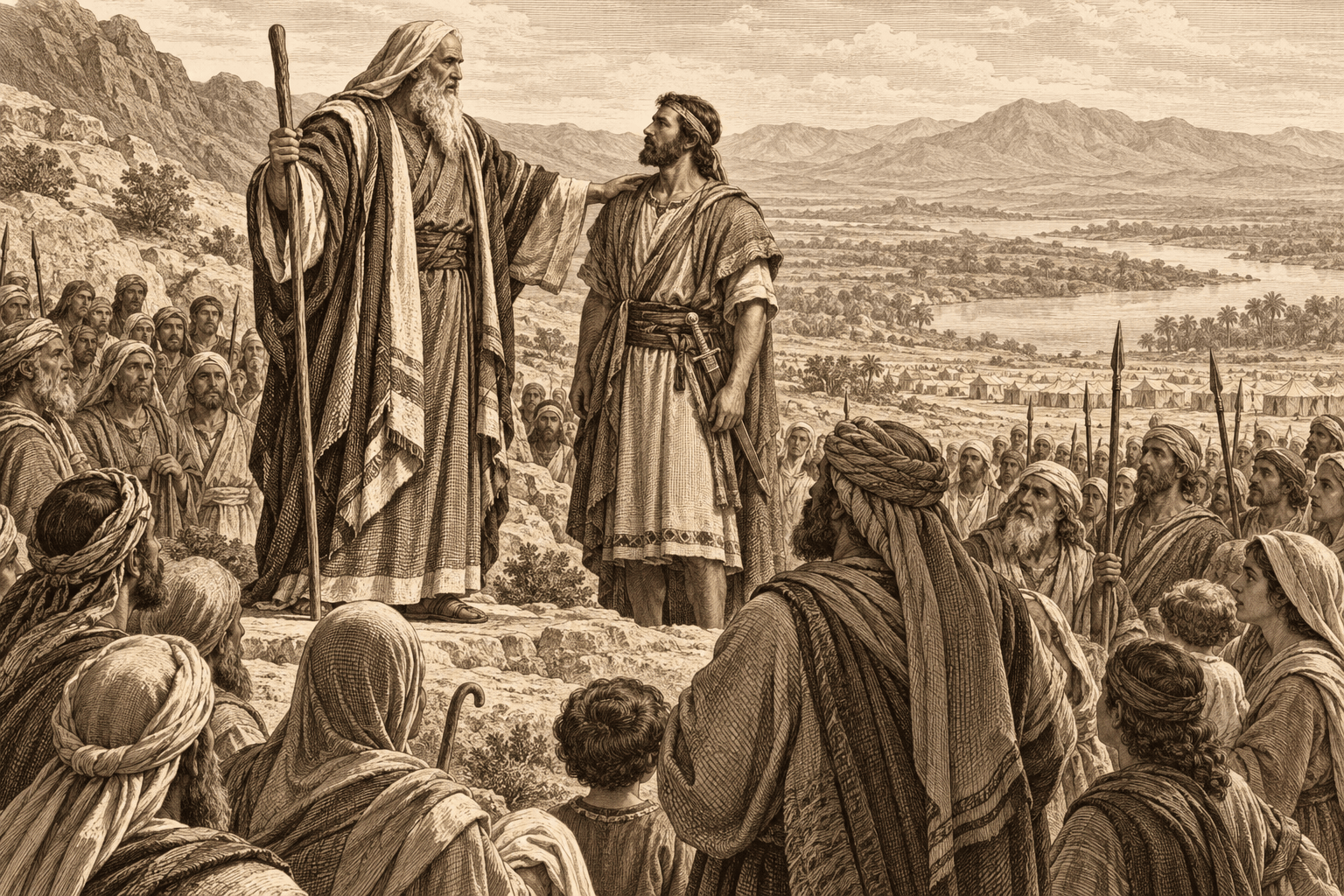
The decisive moments came in which Moses the prophet declared that he had reached one hundred and twenty years of age and no longer had the ability to work; so he handed the leadership to Joshua before his departure and encouraged him and all the people (see verses 1–3 above).
First: Moses lived 120 years, like Noah, who preached righteousness in a wicked world. He lived 40 years in Pharaoh’s palace learning the wisdom of the Egyptians (Acts 7:20–23), 40 years wandering in the land of Midian preparing for shepherding and service (Acts 7:29–30), and 40 years as leader of the people under the direction of God Himself.
Moses the prophet revealed his view of these years in his prayer in Psalm 90. He does not value his life by its years and their length, but by the blessing of the Lord: “For a thousand years in thy sight are but as yesterday when it is past, and as a watch in the night” (Psalm 90:4). Moses looked upon the first eighty years of his life as carrying bodily strength with labor and sorrow; but the last forty years, with the aging of the body, carried the strength of the spirit, God’s gift to him for the work. He says: “The days of our years are threescore years and ten; and if by reason of strength they be fourscore years, yet is their strength labour and sorrow; for it is soon cut off, and we fly away” (Psalm 90:10).
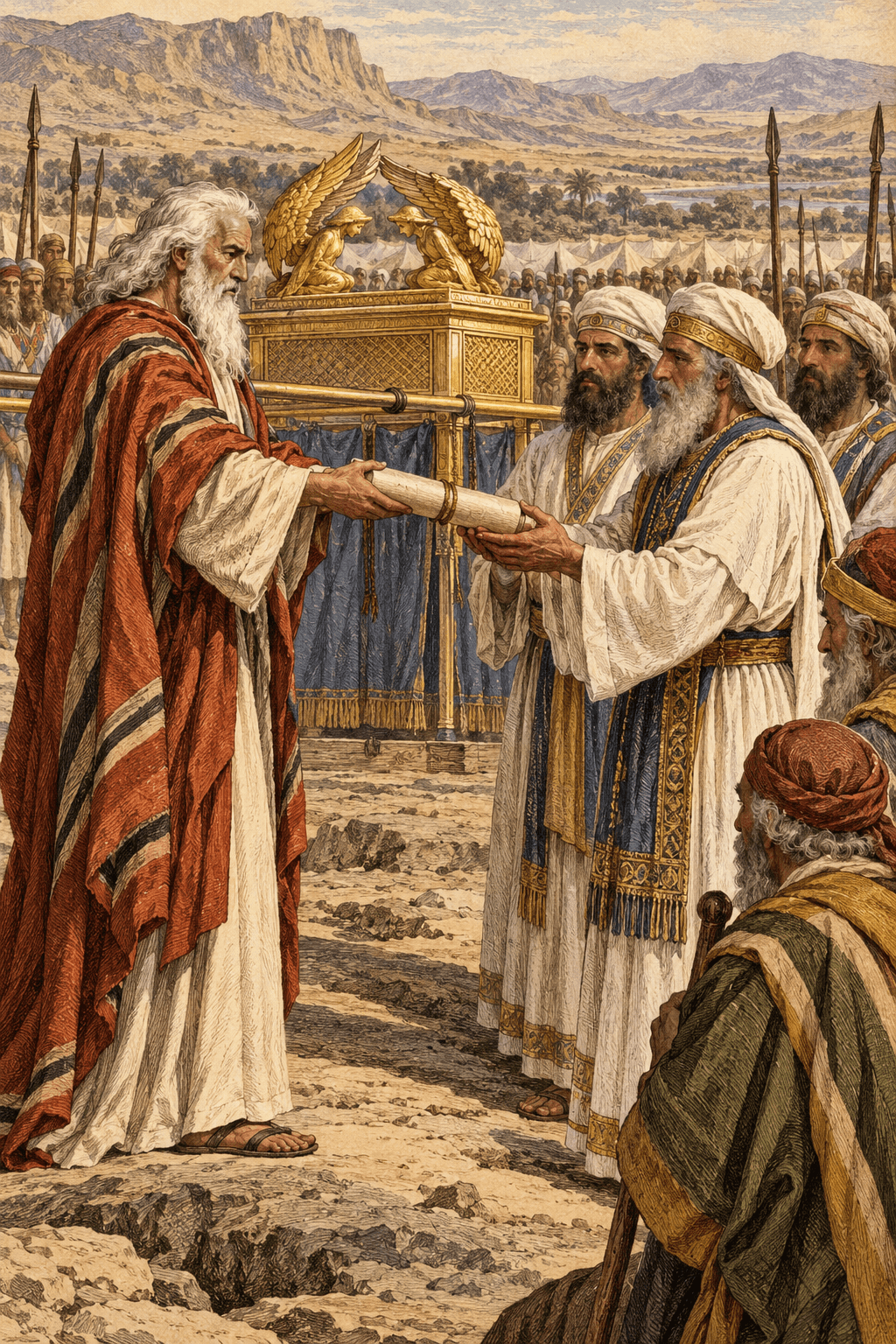
Second: Moses considers God’s work with his successor Joshua as His work with Moses personally; what Joshua enjoys, it is as though he himself enjoyed it. He confessed that he had aged bodily and could no longer go out and come in, yet God would go over before him. How? Because God works in Joshua! This is the spirit of true leadership, which carries nothing of selfishness: it prepares the coming leadership and counts its success as its own.
Moses the prophet never asked for one more day of life to complete the work and bring the people into the Promised Land, but he asked and worked as much as he could so that his successor might accomplish what he had begun. So we ought not to be anxious about the shortness of our days, but ask and work to prepare the coming leaders to complete what we have begun, or what we received from previous generations.
Third: Moses the prophet often repeats the divine sentence, “Thou shalt not go over this Jordan.” No doubt he longed to cross, but the people’s crossing after him is a crossing for him.
Fourth: We will not find a leader who encouraged his soldiers so strongly on leaving them as Moses the prophet did, for he assures them that the victories achieved in his days would multiply after his departure, because the secret of victory lies not in him but in the divine presence (see verses 4–6 above).
God, who dwells in the midst of His people, worked in the days of Moses and continues to work through the generations. As Paul the Apostle says: “So that we may boldly say, The Lord is my helper, and I will not fear what man shall do unto me” (Hebrews 13:6).
Fifth: Calling Joshua, appointing him as his successor, and charging him before all the people, assuring them of their continued success (see verses 7–8 above).
Since the Lord goes before them and is with them, there is no room at all for fear of the enemy’s resources and experience. Joshua had proven his success in many situations, but he needed a continual reminder of God’s work with him, especially as he was entering a new stage of the work.
Moses the prophet asked him to be a living example to the people, neither fearing nor being dismayed, for if the leader is confused, all collapse behind him. One of the most dangerous blows to ministers of the word and leaders is to lose their confidence in God, so that they do not appear truly strong in the Lord, working in a spirit of power, not weakness. For the leader’s fear, or his complaining to the people, crushes their spirit and shakes their faith.
Let the leader realize that God goes before him, preparing the way for him and leading him on the King’s highway, and that He is with him, that is, accompanies him on his journeys and supports him in every good work. He will not allow him to collapse, nor will He forsake him.
“Fear not, neither be dismayed” (8): Fear comes naturally to fallen man, so he needs a word of encouragement continually, and this we find from Genesis to Revelation (Genesis 15:1; Revelation 1:17).
2. Reading the Law in the Year of Release
KJV · Verses 9–13
9 And Moses wrote this law, and delivered it unto the priests the sons of Levi, which bare the ark of the covenant of the Lord, and unto all the elders of Israel. 10 And Moses commanded them, saying, At the end of every seven years, in the solemnity of the year of release, in the feast of tabernacles, 11 When all Israel is come to appear before the Lord thy God in the place which he shall choose, thou shalt read this law before all Israel in their hearing. 12 Gather the people together, men and women, and children, and thy stranger that is within thy gates, that they may hear, and that they may learn, and fear the Lord your God, and observe to do all the words of this law: 13 And that their children, which have not known any thing, may hear, and learn to fear the Lord your God, as long as ye live in the land whither ye go over Jordan to possess it.
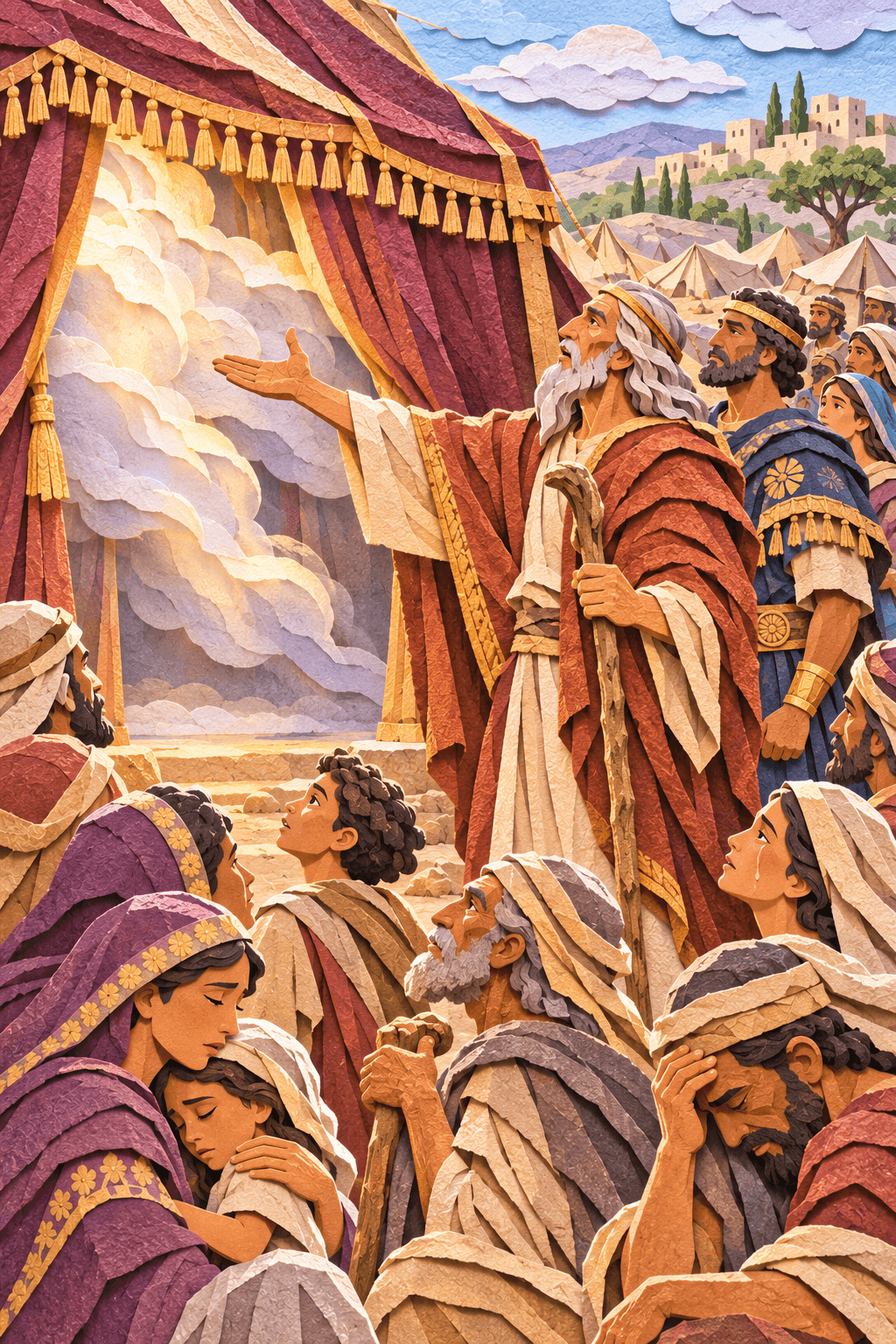
“And Moses wrote this law, and delivered it unto the priests the sons of Levi, which bare the ark of the covenant of the Lord, and unto all the elders of Israel” (9).
The Jewish Mishnah says that the reading of the first five chapters of the book, with other parts of it, took place at the feasts.
In his last moments, Moses the prophet wrote his sermons and the commandments contained in the previous chapters.
Some rabbis think that Moses the prophet wrote 13 copies of the five books, gave each tribe a copy, and put the thirteenth in the ark of the covenant. Others think he wrote two copies: he gave one to the priests and Levites for general use, as here (9), and the other was put in the ark of the covenant to be referred to, especially when the people broke the Law and turned aside to pagan worship; it was called “the Lord’s copy.” Bishop Patrick says that Moses wrote the five books, or completed them. [289]
As for reading it once every seven years, he says (see verses 10–11 above): he set the year of release, the seventh year, as the appointed time for the public reading of the Law to the whole people. This was besides the family’s daily reading of some passages of the Law; and Moses was also read every sabbath in the synagogues (Acts 15:21). These readings, whether private at home or weekly in the local communities, are not enough; a public reading to the whole people is needed.
The year of release was a fitting occasion for reading the whole Law, for in it slaves were freed, debtors were released from their debts, and lands sold or pledged were returned. So all, the rich through their giving and generosity, and the poor through being supported, felt that their souls had been prepared for obedience to the divine commandment. If the commandment drives a person to do good, doing good supports the soul in accepting the commandment and responding to it. Usually the whole Book of Deuteronomy was read, with a summary of the rest of the five books of Moses.
At the Feast of Tabernacles in particular, all rejoice before the Lord (Leviticus 23:40), and the people dwell for a week in booths made of tree branches, so that all feel that they are strangers on the earth; so they listen to the divine commandment. It is as though they say with the Psalmist: “I am a stranger in the earth: hide not thy commandments from me” (Psalm 119:19). The Law is read, for the Lord’s commandment is the source of true joy. All listen to it with gladness of heart and joy.
The Law is read every seven years, at the sabbath of years, for in God’s commandment is our true rest and sabbath. The seventh year points to the evangelical work, where there is freedom in Christ Jesus and the forgiveness of sins, the acceptable year of the Lord (Luke 1:74–75).
Women and their children were not obliged to go up at the other feasts, but at the Feast of Tabernacles all, men with women and children, were obliged to go up to the feast, so that all might hear the Law (see verse 12 above).
He asked that the children gather with their parents and with the proselytes, to listen to the word of God and take care to enjoy the fear of the Lord. So the leaven is offered to them, and the dough of the new generation is leavened. The children grow up in a scriptural atmosphere, occupied with nothing but the love of God and the enjoyment of His true promises.
Who Read the Law at the Feast of Tabernacles in the Year of Release?
Unfortunately, the people did not practice this, nor listen to this commandment, except on very limited occasions from the days of Joshua until the coming of the Lord Christ. Long centuries passed without the practice of this solemn rite. Joshua read all the words of the Law before the children of Israel, the people, the elders, the officers, and the judges, with the priests the Levites who bore the ark of the covenant of the Lord, and before the strangers who had entered the faith (Joshua 8:33–35).
When Solomon built the temple, he gathered all and also read from the Law; so he called himself “the Preacher” (Ecclesiastes 1:1–2, 12; 7:27; 12:8–10).
King Jehoshaphat sent the princes of Judah to teach, and with them was the book of the law of the Lord (2 Chronicles 17:9).
“And the king (Josiah) went up into the house of the Lord, and all the men of Judah, and the inhabitants of Jerusalem, and the priests, and the Levites, and all the people, great and small: and he read in their ears all the words of the book of the covenant that was found in the house of the Lord. And the king stood in his place, and made a covenant before the Lord” (2 Chronicles 34:30–31).
When the people returned from Babylon, all the people gathered as one man into the street, and Ezra the scribe read the book of the law of Moses (Nehemiah 8:1–3).
“And that their children, which have not known any thing, may hear, and learn to fear the Lord your God, as long as ye live in the land whither ye go over Jordan to possess it” (13).
3. The Lord Appears in the Tabernacle
KJV · Verses 14–23
14 And the Lord said unto Moses, Behold, thy days approach that thou must die: call Joshua, and present yourselves in the tabernacle of the congregation, that I may give him a charge. And Moses and Joshua went, and presented themselves in the tabernacle of the congregation. 15 And the Lord appeared in the tabernacle in a pillar of a cloud: and the pillar of the cloud stood over the door of the tabernacle. 16 And the Lord said unto Moses, Behold, thou shalt sleep with thy fathers; and this people will rise up, and go a whoring after the gods of the strangers of the land, whither they go to be among them, and will forsake me, and break my covenant which I have made with them. 17 Then my anger shall be kindled against them in that day, and I will forsake them, and I will hide my face from them, and they shall be devoured, and many evils and troubles shall befall them; so that they will say in that day, Are not these evils come upon us, because our God is not among us? 18 And I will surely hide my face in that day for all the evils which they shall have wrought, in that they are turned unto other gods. 19 Now therefore write ye this song for you, and teach it the children of Israel: put it in their mouths, that this song may be a witness for me against the children of Israel. 20 For when I shall have brought them into the land which I sware unto their fathers, that floweth with milk and honey; and they shall have eaten and filled themselves, and waxen fat; then will they turn unto other gods, and serve them, and provoke me, and break my covenant. 21 And it shall come to pass, when many evils and troubles are befallen them, that this song shall testify against them as a witness; for it shall not be forgotten out of the mouths of their seed: for I know their imagination which they go about, even now, before I have brought them into the land which I sware. 22 Moses therefore wrote this song the same day, and taught it the children of Israel. 23 And he gave Joshua the son of Nun a charge, and said, Be strong and of a good courage: for thou shalt bring the children of Israel into the land which I sware unto them: and I will be with thee.
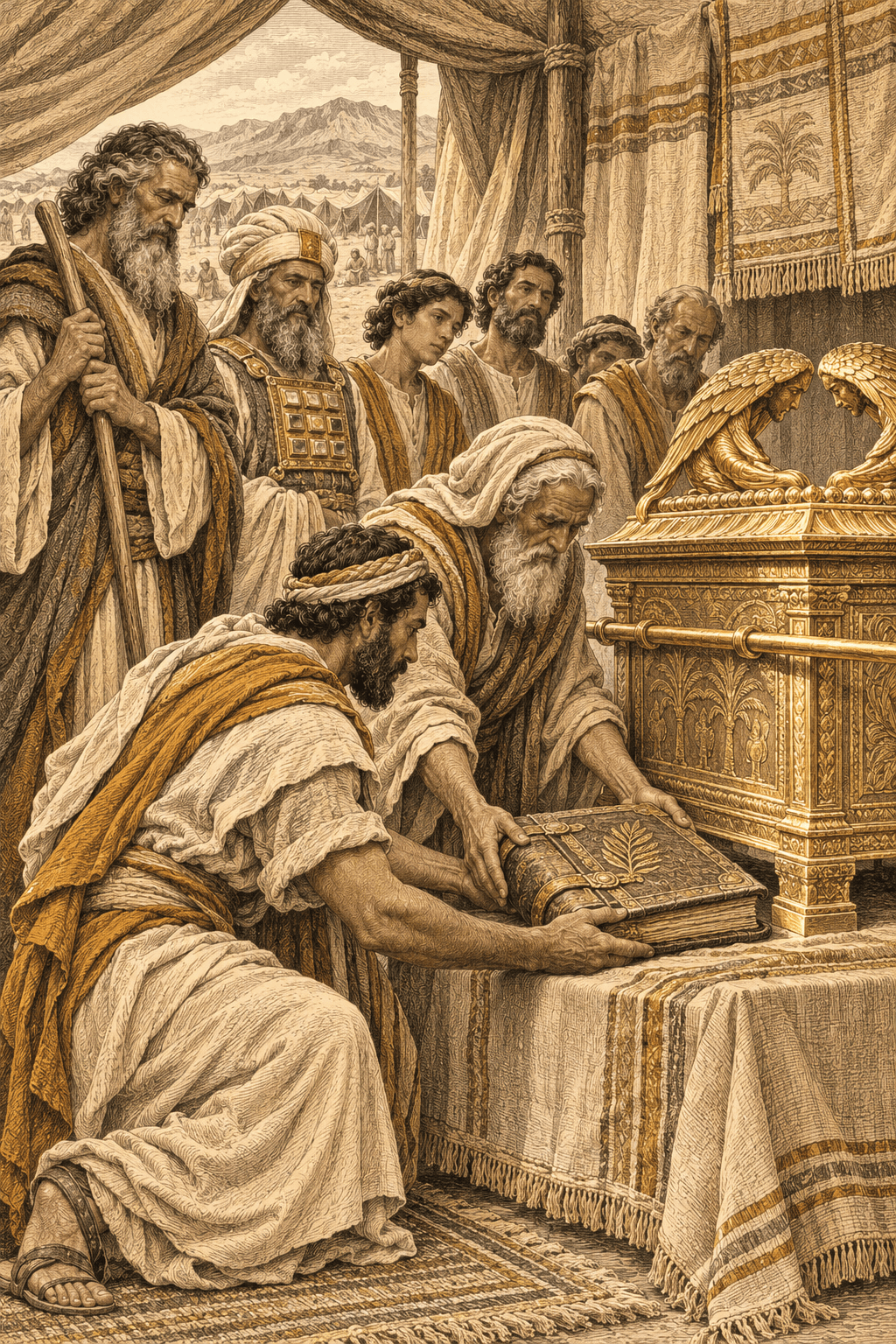
When the decisive moments came in which Moses the prophet would end his speeches with his people, the Lord said to him: “Behold, thy days approach that thou must die” (14). The nearer the days of Moses’ departure came, the more the Lord appeared to him, that he might realize that his departure was nothing but a crossing over to the Lord, to see Him face to face. It is a joyful divine gift. The more the Lord is manifested in the depths of the soul, the more a person’s heart is prepared for death with joy and gladness of heart.
Moses and Joshua were called to meet the Lord: the one to prepare for departure and hand the helm of leadership to his disciple, and the other to prepare to bear the sufferings of shepherding and to receive the spirit of true fatherhood and successful leadership.
The glory of the Lord appeared to Moses the prophet. This is the only time we read of the appearance of the Lord’s glory in this book, while we read of it three times in the previous books. Some see in the appearance of the Lord’s glory here, just before the death of Moses, a sign of the appearance of the new Law, the New Covenant, at the old age of the letter of the Old Covenant (15).
So the more we enjoy the evangelical life and realize our crossing toward heaven, the more the Lord appears in our tent, we who are sojourners, and declares His glory in us.
What Did the Lord Say to Moses?
First: That His people would break the covenant with God, the covenant for which Moses the prophet had striven forty years, so that the people might enjoy the divine love and have a portion in the Promised Land, the symbol of heaven. The cause of breaking the covenant would be their attachment to pagan worship and their forgetting God their Savior (see verses 16–18 above).
God affirms that the breaking of the covenant is on man’s side, for He says: “and will forsake me, and break my covenant which I have made with them.” The blame falls on man’s side alone.
Bitterly, God’s people fell into the worship of the gods of the Canaanites, who had been the owners of the land; and now the Lord calls them “strangers,” because He handed the ownership of their land to His people. But His people, after receiving the land, rejected God, the Giver of the land, and attached themselves to the strange gods that had been unable to protect their own people. So, when God gives us every possibility, some fall into the worship of money through greed, the worship of their bellies through gluttony, or the worship of pleasures through evil lusts.
Second: The Lord says to Moses: “thou shalt sleep with thy fathers” (16), though Moses slept on a mountain in Moab, far from the places where his fathers slept. So this divine saying cannot be interpreted of the sleep of the body alone, but of the rest of his soul, which sleeps in hope with the souls of his fathers who went before him. The Targum of Jonathan ben Uzziel says of this phrase: “You will sleep in the dust with your fathers, and your soul will rest in the treasury of the life to come with your fathers.” [290]
Third: God in His wonderful wisdom gives each person according to his heart. When His people seek to forsake God (16), God gives them their heart’s request by hiding His face from them (17). They gave God the back and not the face, so He withdrew His face from them, and they were deprived of the radiance of His love and no longer enjoyed the splendor of His glory. By saying, “I will hide my face from them,” He means withdrawing His grace and protection from them.
Fourth: Teaching Israel through hymns and songs, or praises. In the introduction to the Book of Proverbs, I spoke of the languages in which God speaks with man, among them the language of praise or hymnody. And here God Himself asks Moses, in the last moments of his life in the land of Moab, to teach his people in this language (see verse 19 above).
Moses composed the song by the revelation of the Spirit to him, giving in it a warning to his people, who would break the promise and the covenant.
Though the song did not prevent the people from turning away from the worship of the living God, it offered a door of repentance and return to God. For when they forsake the Lord and fall into bitterness, they remember through the song, memorized by heart, that God had warned them beforehand, and that He still waits for them, for He takes no pleasure in their fall. It is as though God had prepared the medicine, giving it to them beforehand, so that when they were struck they would find a divine remedy ready in their hands.
Fifth: God gave them possibilities for satisfaction and rest, but instead of offering a sacrifice of thanksgiving, they fell into apostasy (see verses 20–23 above).
4. Delivering the Book of the Law
KJV · Verses 24–30
24 And it came to pass, when Moses had made an end of writing the words of this law in a book, until they were finished, 25 That Moses commanded the Levites, which bare the ark of the covenant of the Lord, saying, 26 Take this book of the law, and put it in the side of the ark of the covenant of the Lord your God, that it may be there for a witness against thee. 27 For I know thy rebellion, and thy stiff neck: behold, while I am yet alive with you this day, ye have been rebellious against the Lord; and how much more after my death? 28 Gather unto me all the elders of your tribes, and your officers, that I may speak these words in their ears, and call heaven and earth to record against them. 29 For I know that after my death ye will utterly corrupt yourselves, and turn aside from the way which I have commanded you; and evil will befall you in the latter days; because ye will do evil in the sight of the Lord, to provoke him to anger through the work of your hands. 30 And Moses spake in the ears of all the congregation of Israel the words of this song, until they were ended.
When Moses the prophet finished writing the words of the Law, he delivered it to the Levites who bore the ark of the covenant (24–25), not in a formal rite with deadly flattery, but with frankness, clarity, and warning (see verses 26–27 above).
The summary of his long experience of forty years is not only that the people, with all their leaders, had resisted him many times, but that they had resisted the Lord Himself, despite God’s surpassing dealings with them at the hands of Moses. So what would their condition be after his departure?
He declared to them what would happen to them after his death (see verses 28–29 above).
When the Lord Christ came into the world and offered free salvation, He also declared before His death that false christs and false prophets would appear and deceive people (Matthew 24:24). This is also what Paul the Apostle said concerning the appearance of false teachers after his departure (Acts 20:29–30).
“And Moses spake in the ears of all the congregation of Israel the words of this song, until they were ended” (30).
5. A Meditation on Deuteronomy 31
Grant Me the Spirit of True Leadership
Grant me to imitate Moses, the first leader of his people.
I see in the success of new leaders a success for me.
I attribute none of the success to myself;
but as the Lord gave me success, He gives the new generations what is greater and stronger.
God is the One who works through all generations.
Teach me to bear a spirit of hope in the new generation,
that I may see You working in them with power.
I breathe into them a spirit of courage, that they may work by You in a spirit of power.
Let us imitate Moses, the receiver of the Law.
We give to the coming generations the Law of the Lord engraved in our hearts,
declared in our conduct and our life.
We keep the precious deposit of tradition,
which is the true, practical evangelical life.
The whole Law was read publicly in the year of release.
Even the children heard it in the fear of the Lord.
They heard it at the Feast of Tabernacles, while they were in booths!
Let us read it always to the new generations.
Let the word of God be planted in every heart,
that they may find their delight in it during their sojourning.
We give it to them in a spirit of true joy,
that they may see it as the secret of our inner gladness!
In the last days of Moses You appeared to him often.
His heart burned with longing to set out toward You,
and he handed the same spirit to the new leader!
I have nothing to give them but the vision of You!
Moses sealed his life by singing a spiritual song.
Grant me to bear the spirit of praise,
that the coming generations may receive the language of praise.
Notes and References
[289] Matthew Henry’s Commentary. (Addition from the St-Takla site: from the Commentary on Deuteronomy 31.)
[290] Adam Clarke’s Commentary.