
Having reminded them of the divine covenant and spoken of the danger of ignoring or breaking the covenant, even if only one person fell into this, he feared lest the hearers fall into despair. So he spoke of the possibility of fulfilling the covenant and keeping the commandment. Before man are two ways: life or death, obedience or disobedience.
1. God Awaits Your Return
KJV · Verses 1–10
1 And it shall come to pass, when all these things are come upon thee, the blessing and the curse, which I have set before thee, and thou shalt call them to mind among all the nations, whither the Lord thy God hath driven thee, 2 And shalt return unto the Lord thy God, and shalt obey his voice according to all that I command thee this day, thou and thy children, with all thine heart, and with all thy soul; 3 That then the Lord thy God will turn thy captivity, and have compassion upon thee, and will return and gather thee from all the nations, whither the Lord thy God hath scattered thee. 4 If any of thine be driven out unto the outmost parts of heaven, from thence will the Lord thy God gather thee, and from thence will he fetch thee: 5 And the Lord thy God will bring thee into the land which thy fathers possessed, and thou shalt possess it; and he will do thee good, and multiply thee above thy fathers. 6 And the Lord thy God will circumcise thine heart, and the heart of thy seed, to love the Lord thy God with all thine heart, and with all thy soul, that thou mayest live. 7 And the Lord thy God will put all these curses upon thine enemies, and on them that hate thee, which persecuted thee. 8 And thou shalt return and obey the voice of the Lord, and do all his commandments which I command thee this day. 9 And the Lord thy God will make thee plenteous in every work of thine hand, in the fruit of thy body, and in the fruit of thy cattle, and in the fruit of thy land, for good: for the Lord will again rejoice over thee for good, as he rejoiced over thy fathers: 10 If thou shalt hearken unto the voice of the Lord thy God, to keep his commandments and his statutes which are written in this book of the law, and if thou turn unto the Lord thy God with all thine heart, and with all thy soul.
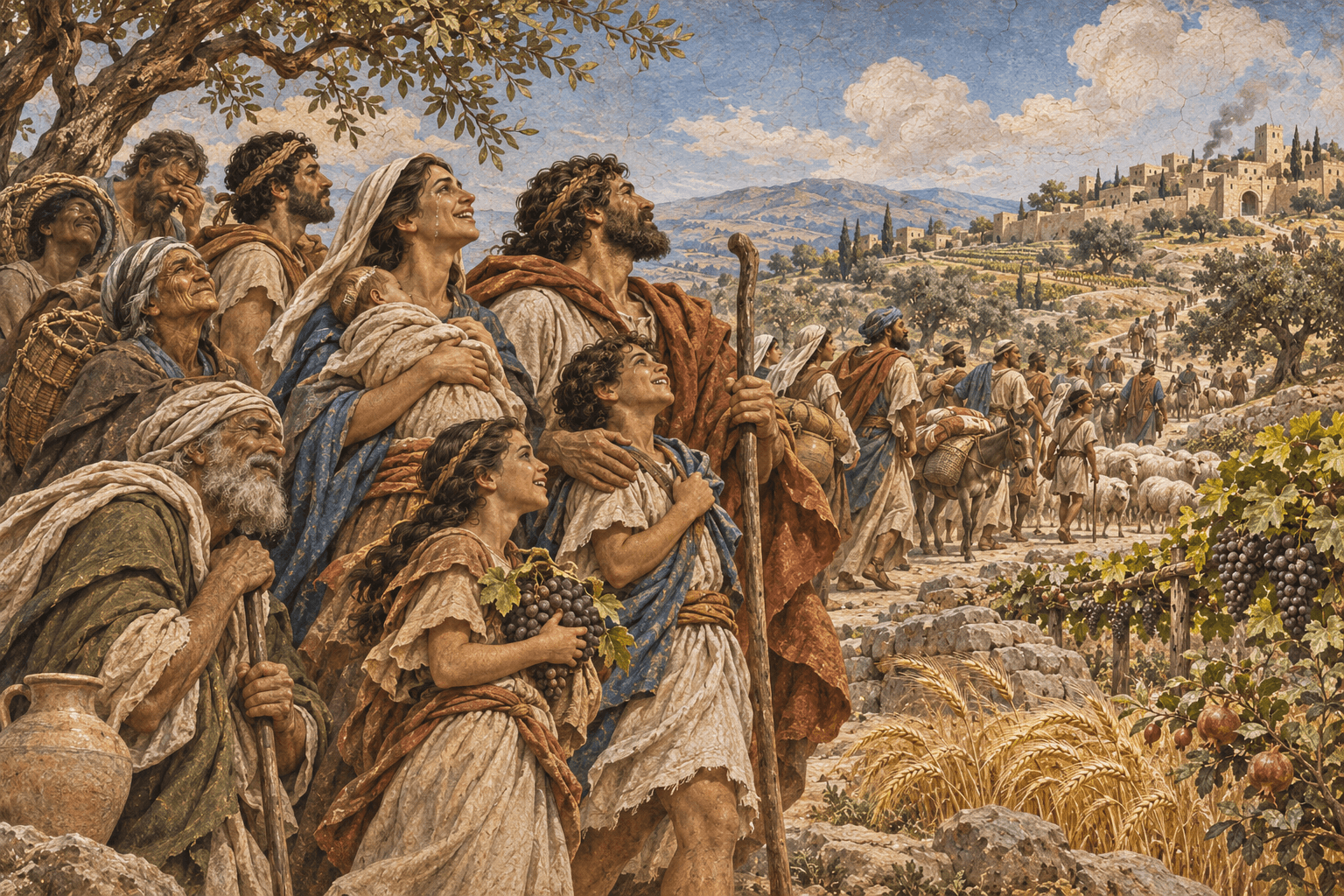
God gives His divine promise to those who return, though some see in this promise a prophecy of Israel’s return and acceptance of the faith at the end of the ages. He gives a conditional promise, and the condition is returning to God. It is a promise offered to every sinner or disobedient person (see verses 1–5 above).
First: There is no way of salvation from the curses and of enjoying the blessings except by returning to God. “Remember this, and shew yourselves men: bring it again to mind, O ye transgressors” (Isaiah 46:8). He calls the mind to return and remember God, which gives them spiritual manhood, that is, maturity and strength. The mind alone is not enough; the Lord must occupy the heart, so that it repeats His name in love continually. If remembering God’s dealings in the past drives a person to repentance, repentance ought to be translated into love.
Repentance is the way out from eating with the swine into the Father’s house, where the penitent finds his father running to him, kissing him, making him a banquet, and even standing to defend him before his brother (Luke 15).
Second: Full listening to the voice of the Lord, obedience to His commandments, and submission to His will (2). Repentance must be translated into practical obedience. This voice is addressed to the person and to his family, especially his children (2), that they may receive the commandment with all the heart and all the soul, that is, with all their strength, or with great joy and sincere desire.
By saying, “with all thine heart, and with all thy soul” (2), He declares that God will not accept less than all love and all ability. He asks for the heart and soul entirely, and without them He rejects any worship, service, or giving!
Third: Obedience to all the commandments, for He says: “and do all his commandments which I command thee this day” (8). As St. James the Apostle says: “For whosoever shall keep the whole law, and yet offend in one point, he is guilty of all” (James 2:10). The person consecrated to the Lord cares for all the commandments, as the Psalmist says: “Then shall I not be ashamed, when I have respect unto all thy commandments” (Psalm 119:6).
Fourth: When we return to the Lord, listen to Him, and obey all His commandments, He brings us back too from among the peoples and from the uttermost parts of heaven (3–4). What does he mean by the uttermost parts of heaven but that His ears hear the cries of the penitent heart, so that He does the impossible for it! God declares His surpassing tenderness toward those who return: “therefore my bowels are troubled for him; I will surely have mercy upon him, saith the Lord” (Jeremiah 31:20).
Fifth: We often look at God’s dealings with our fathers as wonderful and unique, never to be repeated. But here He affirms that God is ready to work with all generations with the same power; indeed, He says: “and multiply thee above thy fathers” (5).
Sixth: When we return to God, the Lord rejoices over us, for this is His delight: “for the Lord will again rejoice over thee for good, as he rejoiced over thy fathers” (9).
Seventh: By our return to Him, the curses that came upon us turn back on our enemies, that is, on the demons that were urging us to disobedience: “And the Lord thy God will put all these curses upon thine enemies, and on them that hate thee, which persecuted thee” (7).
Eighth: Some may ask, “What shall we do when we are unable to carry out the commandments? How can we love God with all the heart?” It is the work of the Lord Himself in us if we surrender our life to Him: “And the Lord thy God will circumcise thine heart, and the heart of thy seed, to love the Lord thy God with all thine heart, and with all thy soul, that thou mayest live” (6). A person can circumcise his body or the bodies of others, but who can circumcise the heart and the hearts of his seed except God alone, who searches the hearts, removes evil from them, and renews them?! As Paul the Apostle says: “In whom also ye are circumcised with the circumcision made without hands, in putting off the body of the sins of the flesh by the circumcision of Christ: Buried with him in baptism, wherein also ye are risen with him through the faith of the operation of God, who hath raised him from the dead” (Colossians 2:11–12). “For he is not a Jew, which is one outwardly; neither is that circumcision, which is outward in the flesh: But he is a Jew, which is one inwardly; and circumcision is that of the heart, in the spirit, and not in the letter; whose praise is not of men, but of God” (Romans 2:28–29).
Since circumcision is the seal of the covenant, this seal ought to touch not the body alone but the heart, so that it is wholly drawn into the love of God and committed to the terms of the covenant. Let us return to Him, and He will work by His Holy Spirit in us, who alone can circumcise the heart. “Turn you at my reproof: behold, I will pour out my spirit unto you, I will make known my words unto you” (Proverbs 1:23).
Ninth: Speaking of returning to God, he repeats the expression “the Lord thy God” twelve times in these ten verses, to affirm the intimacy between man and God, as his God who longs for him as His children. As it is said in Jeremiah the prophet: “Return, ye backsliding children, and I will heal your backslidings. Behold, we come unto thee; for thou art the Lord our God” (Jeremiah 3:22).
When he was threatening with the curses, he pointed to God, the God of power, the Judge of all; but when he calls them to repentance, he affirms their return to the divine bosom, since the Lord is their God, the God of the covenant and grace.
Finally, we notice that in speaking here of repentance and returning to God, he affirms God’s surpassing gift, namely freedom of will: man has the right to choose the way of blessings or the way of curses (1). And when a person longs for God his God, he finds divine resources in his hands (see verses 8–10 above).
2. The Commandment Is Near You
KJV · Verses 11–14
11 For this commandment which I command thee this day, it is not hidden from thee, neither is it far off. 12 It is not in heaven, that thou shouldest say, Who shall go up for us to heaven, and bring it unto us, that we may hear it, and do it? 13 Neither is it beyond the sea, that thou shouldest say, Who shall go over the sea for us, and bring it unto us, that we may hear it, and do it? 14 But the word is very nigh unto thee, in thy mouth, and in thy heart, that thou mayest do it.
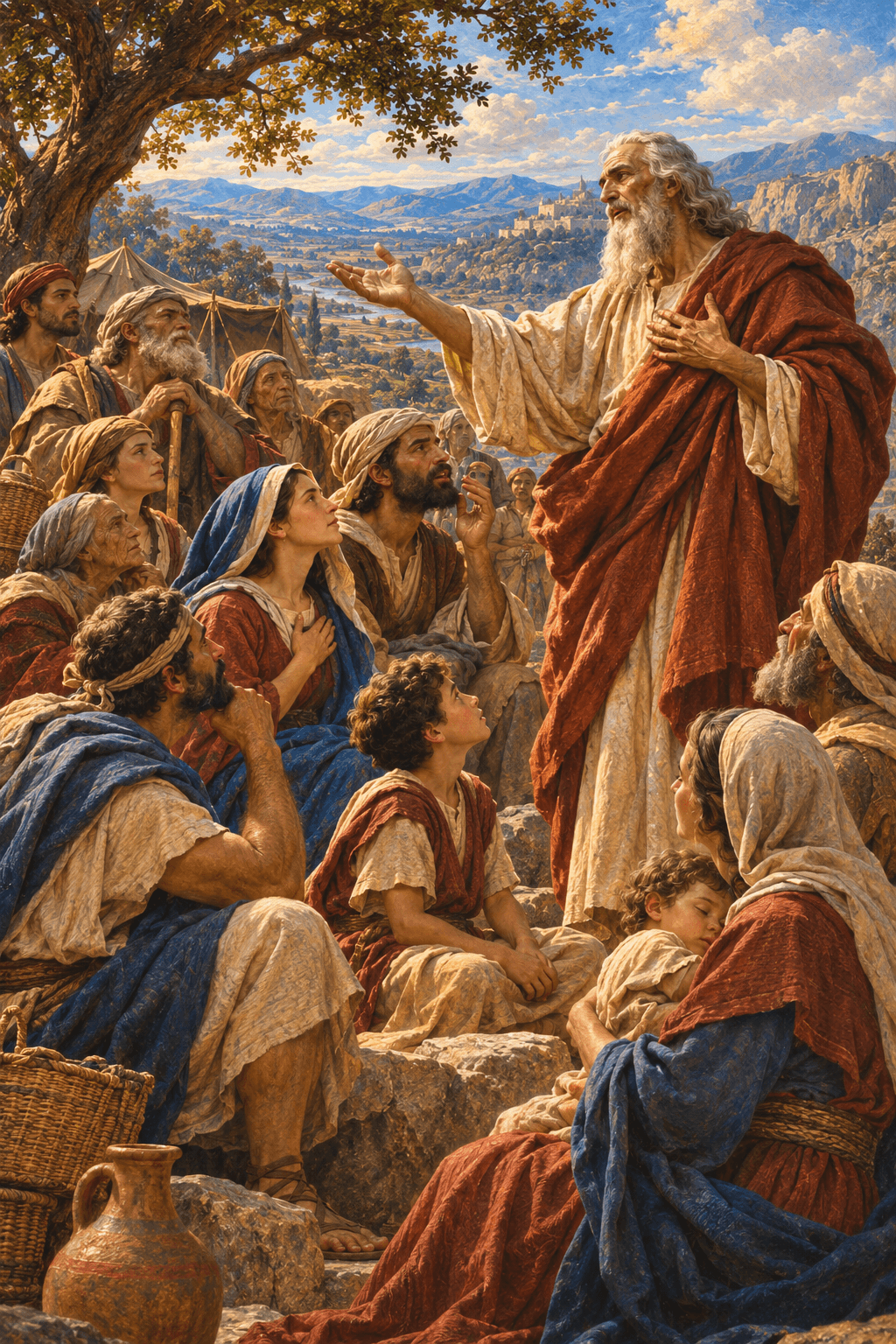
Before the surpassing blessings God promised to those who return to Him in repentance, it had to be affirmed that returning to Him is possible. The commandment in its essence is an entering through the narrow gate and the strait way to meet God, who loves man passionately and gives him every heavenly resource. Many flee from the commandment, thinking that it does not suit their nature, but suits heavenly beings. So the prophet who received the Law made clear that the commandment is easy, in our hands and in our hearts. Its place is the heart, filling it with sweetness and love (see verses 11–14 above).
What does he mean by the commandment that is not hard, or not hidden, but the Word of God who became flesh and dwelt among us, who was born in Bethlehem of Judea, who came to offer salvation for the whole world?! He is not isolated from us in heaven, so that we must go up to Him to possess Him, nor is He in the depths of the seas, so that we must go down to Him to enjoy Him; but He has become very near to us, dwelling in our depths. As St. John the Apostle says: “And the Word was made flesh, and dwelt among us” (John 1:14). And His Gospel has become spoken in our mouths and engraved in our hearts.
This is what Paul the Apostle realized, for he says: “Say not in thine heart, Who shall ascend into heaven? (that is, to bring Christ down from above:) Or, Who shall descend into the deep? (that is, to bring up Christ again from the dead.) But what saith it? The word is nigh thee, even in thy mouth, and in thy heart: that is, the word of faith, which we preach; That if thou shalt confess with thy mouth the Lord Jesus, and shalt believe in thine heart that God hath raised him from the dead, thou shalt be saved” (Romans 10:6–9). St. Paul sees that in Moses the prophet’s words here about the commandment that is in our hands and in our hearts, he means the Word of God who by His incarnation dwelt among us and lived in our depths, and so has come into our hands (Romans 10:6–8).
The philosophers of that time used to try out ideas, that perhaps they might learn philosophy; but our Christ came Himself to us to present Himself as the true “philosophy,” being “the wisdom of God.”
The word of preaching the Gospel has come to be in the mouth of the Church, for it is said: “For the priest’s lips should keep knowledge, and they should seek the law at his mouth: for he is the messenger of the Lord of hosts” (Malachi 2:7). It is in the mouth, where God speaks with every person in the language he understands; and it is in the heart, where the word is not wrapped in obscure expressions, but touches directly a person’s feelings, emotions, and all his depths.
God, who loves man, will not give him a commandment beyond his strength, nor is it far from him; it is easy and in his hands. He enters with it into his heart, and is able to grasp a true understanding of it and to discover the resources given to him.
In the Conferences of St. John Cassian, the apparent contradiction between the Lord Christ’s call to us to enter through the narrow gate and His saying, “For my yoke is easy, and my burden is light,” is dealt with.
Saint Athanasius the Apostolic speaks of the human soul’s ability to know God, using this statement:
Its knowledge and precise understanding need nothing but yourselves. Though God is above all, the knowledge is in us, and we can find it in ourselves. As a first example, Moses teaches us, saying: “The word of faith is in thy heart” (Deuteronomy 30:14; cf. Romans 10:8). And the Savior declared the same thing and confirmed it when He said: “the kingdom of God is within you” (Luke 17:21). For since we have within ourselves faith and the kingdom of God, we can quickly see and perceive the King of the universe, the saving Word of God. [284]
Saint Gregory of Nyssa says:
Paul the Apostle says: “But… the word is nigh thee” (Romans 10:8). Grace begins at home, for there is the workshop of all the virtues. [285]
Origen says:
If the kingdom of God, as our Lord and Savior says, comes not with observation, neither shall they say, Lo here! or, lo there! but the kingdom of God is within you (Luke 17:20–21), for the word is very nigh in our mouth and in our heart (Romans 10:8), then clearly whoever prays for the kingdom to come prays rightly that it may appear in him, bear fruit, and be perfected. Every saint takes God as his King and obeys the spiritual laws of God; God dwells in him as in a well-ordered city. [286]
3. The Decision Is in Your Hands
KJV · Verses 15–20
15 See, I have set before thee this day life and good, and death and evil; 16 In that I command thee this day to love the Lord thy God, to walk in his ways, and to keep his commandments and his statutes and his judgments, that thou mayest live and multiply: and the Lord thy God shall bless thee in the land whither thou goest to possess it. 17 But if thine heart turn away, so that thou wilt not hear, but shalt be drawn away, and worship other gods, and serve them; 18 I denounce unto you this day, that ye shall surely perish, and that ye shall not prolong your days upon the land, whither thou passest over Jordan to go to possess it. 19 I call heaven and earth to record this day against you, that I have set before you life and death, blessing and cursing: therefore choose life, that both thou and thy seed may live: 20 That thou mayest love the Lord thy God, and that thou mayest obey his voice, and that thou mayest cleave unto him: for he is thy life, and the length of thy days: that thou mayest dwell in the land which the Lord sware unto thy fathers, to Abraham, to Isaac, and to Jacob, to give them.
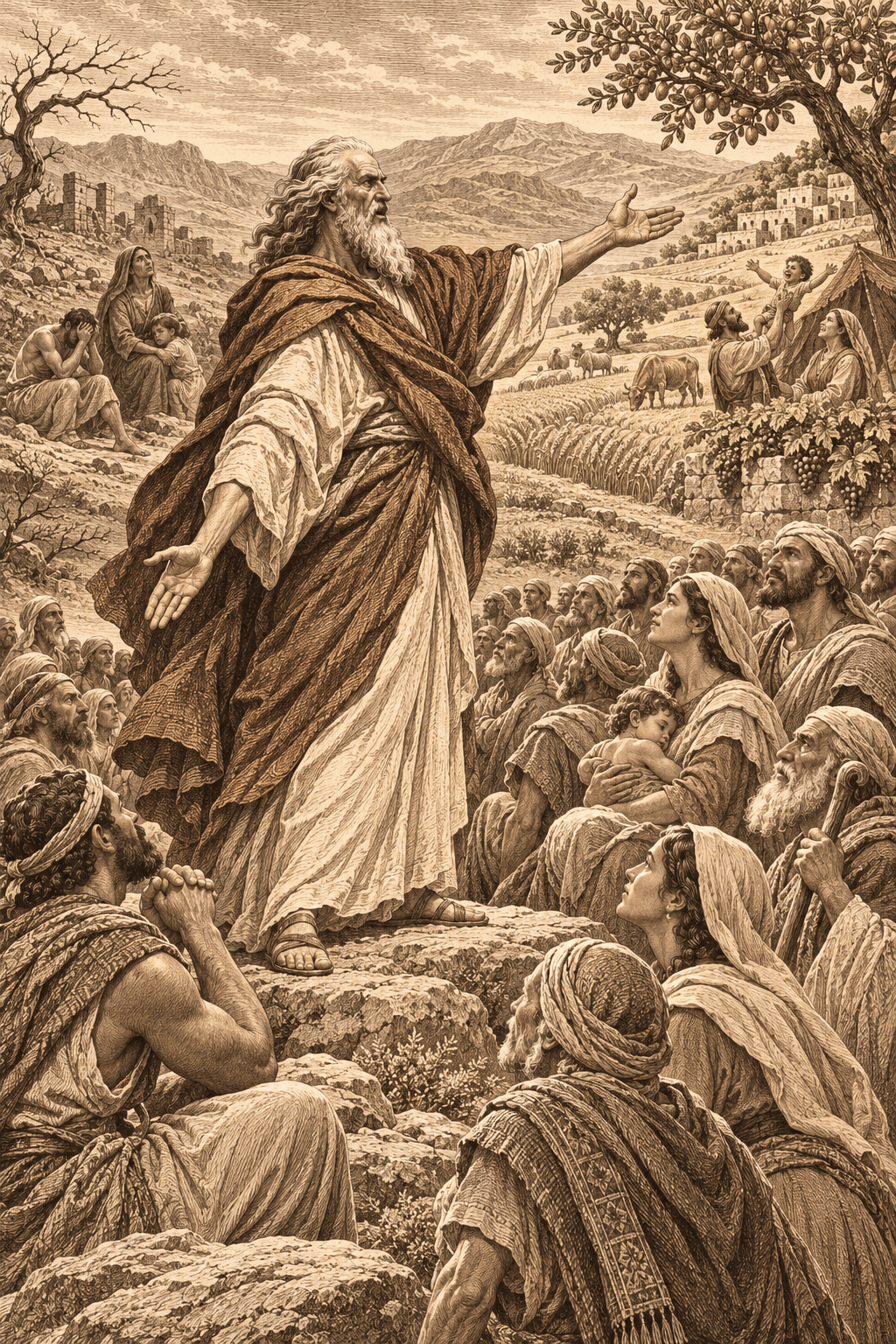
Once again, more clearly, he affirms that the commandment, which has become very near, awaits man’s decision without any pressure or compulsion: “See, I have set before thee this day life and good, and death and evil” (15).
Life and good are present now before the believer; if he accepts them, he enjoys them and passes on to the coming blessings. They are set before him so that he may grasp their secret and have no excuse afterward, so that he may feel their importance, and finally so that he may make his decisive choice.
God has used every means to urge free man to accept life and enjoy eternal happiness. Man is moved by two things, or one of them: fear and hope. On the side of fear, He speaks in verses 16–18; and on the side of hope, in verses 19–20.
Father Caesarius of Arles says:
Now, since we are placed as it were between water and fire, between the highest good and the most dangerous evils (Sirach 15:17–18), between the destruction of the lower hell and the paradise above, let us hear the Lord crying to us in the Scriptures, saying: “I have set before you life and death… therefore choose life, that ye may live.” [287]
Concerning these two ways the Lord counsels us in the Gospel, saying: “Wide is the gate, and broad is the way, that leadeth to destruction, and many there be which go in thereat: Because strait is the gate, and narrow is the way, which leadeth unto life, and few there be that find it” (Matthew 7:13–14). The return to paradise is accomplished by the strait and narrow way, while the descent into the lower hell is accomplished by the broad way. Therefore, while we are still able, and it is in our power by divine help to choose, let us go up to the joy of paradise through the strait and narrow way, rather than arrive at the punishments of hell through the broad gate.
Behold, O man, before you are “fire and water… life and death” (good and evil) (Sirach 15:17–18), heaven and hell, the lawful King and the cruel tyrant, the vain sweetness of the world and the true blessedness of paradise. You have been given the power by the grace of Christ: “stretch forth thy hand unto whether thou wilt” (Sirach 15:16). [288]
God had already made clear His longing for man to live blessed and happy: “that thou mayest live and multiply: and the Lord thy God shall bless thee in the land whither thou goest to possess it” (16).
He declared the seriousness of the situation: God called heaven and earth to witness against man that He had given them every possibility of blessing on His part, and it remained for the believer to choose it on his part: “I call heaven and earth to record this day against you, that I have set before you life and death, blessing and cursing: therefore choose life, that both thou and thy seed may live” (19).
Finally he affirms the two commandments, “love of God” and “obedience to Him”: “That thou mayest love the Lord thy God, and that thou mayest obey his voice, and that thou mayest cleave unto him: for he is thy life, and the length of thy days: that thou mayest dwell in the land which the Lord sware unto thy fathers, to Abraham, to Isaac, and to Jacob, to give them” (20).
4. A Meditation on Deuteronomy 30
I Am Waiting for You, My Son!
Many times I have broken Your covenant,
but Your sweet voice rings in my ears:
“I am waiting for you, My son.”
You watch for my return to You;
You long for my coming back to Your bosom.
Let me remember Your work with me,
and open my heart to You in love, translating repentance into love.
Let me translate my return in thought into practical obedience,
and listen to the voice of Your life-giving commandment.
When You give me Yourself, I possess You;
You will accept no less than the whole mind, the whole heart, and the whole life.
You possess me and acquire me, giving Yourself to me.
I draw near to You, and You draw near to me.
I want to return to You.
Bring me back from among the peoples;
free me from the captivity that kills my soul.
You are the God of the impossible!
I return to You, and You flood me with Your blessings
and take from me all the curses of my disobedience.
You turn all the curses that came upon me onto the head of my enemies.
I rejoice, for You rejoice over me and carry me to Your bosom.
You support me by Your Spirit and circumcise my heart, so that I work with strength to carry out Your commandment.
Who can draw near to my heart and circumcise it but You?
Who can bury it but You, O You who rose from the dead?
I return and find You my God;
You attribute Yourself to me, and I am Yours.
I am Your own son, and You are my God.
Let me return to You, for You are within me, waiting for me.
I do not need to go up to the clouds to meet You,
nor to go down to the depths of the seas,
but to enter into the depths of my soul to meet You!
You taught me to make the decisive choice.
Before me are You, O Life,
and the enemy, death, is also present before me.
Let me choose You, O All-Good!
Notes and References
[284] Saint Athanasius the Apostolic, Against the Heathen (Contra Gentes) 30:1–2.
[285] Saint Gregory of Nyssa, On Virginity, ch. 23.
[286] Origen, On Prayer 25:1.
[287] Father Caesarius of Arles, Sermon 150:2.
[288] Father Caesarius of Arles, Sermon 151:5.