
The Possibility of Fulfilling the Covenant (Deuteronomy 29–30)
Now, as Moses the prophet gives his last farewell sermon (Deuteronomy 27–30), he speaks of the future in the Promised Land. In it we find what is called the Palestinian covenant, which God established with Israel.
God entered into covenants with humanity, beginning with the first man and ending with the surpassing covenant that the Lord Christ recorded in His body on the cross:
- The covenant with Adam (the Adamic Covenant): Adam received a divine promise opening the door of hope in the salvation that crushes the serpent’s head, fulfilled by the cross.
- The covenant with Noah (the Noahic Covenant): Noah received a divine promise after the renewal of the earth by the waters, which is fulfilled by the Holy Spirit of God through the sacrifice of Christ.
- The covenant with Abraham (the Abrahamic Covenant): Abraham received a promise that in his seed all the nations would be blessed, as Christ opened the doors of His Church to the whole world.
- The covenant with Moses (the Mosaic Covenant): Moses received a promise when he received the Law and the divine commandments; and when Christ came, the divine Word Himself came to dwell among us.
- The covenant in Palestine (the Palestinian Covenant): the promises given in Canaan are a symbol of entering the heavenly Canaan, heaven opened through the King of glory. All this was fulfilled by the covenant we have received in Christ Jesus.
- The messianic covenant, or the New Covenant.
That this people might keep the covenant the Lord made with them in the land of Moab and in Horeb (Deuteronomy 29:1), Moses called them and gave them this sermon as a renewal of the covenant. After speaking of the blessings of obedience to the commandment and the curses of disobedience, and the tribes’ sharing in proclaiming them publicly before all the people, he delivered the third and last sermon, though some scholars consider that the third sermon begins with chapter 27. This sermon included the following:
1. Reminding them of the Lord’s blessings to them (Deuteronomy 29:1–17): He freed them from Pharaoh’s bondage, shepherded them in the wilderness, gave them victory over kings, and gave them the Promised Land, so that the nations would serve them. The aim of all this was entering into a covenant with God as His own holy people, they being His and He theirs (Deuteronomy 29:13). He establishes this covenant with all: leaders and people, children and women (Deuteronomy 29:10).
2. A warning against turning aside after strange gods, on the level of the individual or of groups (Deuteronomy 29:18). He warns them against turning away from God, the Giver of life. Our teacher Paul the Apostle warns us: “Looking diligently lest any man fail of the grace of God; lest any root of bitterness springing up trouble you, and thereby many be defiled” (Hebrews 12:15). For they are deceivers, like tares that creep into the field to spoil the wheat, like roots that bear “gall and wormwood” (Deuteronomy 29:18).
3. The fruit of disobedience is the curses recorded in the previous sermon (Deuteronomy 28), so that they become an example to the generations (Deuteronomy 29:22–29).
4. To encourage them to enjoy obedience to the commandment, he made clear:
A) The door of repentance is open: we do not despair as long as we are in the world, for God awaits our repentance to bring us back to Himself (Deuteronomy 30:1–10). He is able to sanctify us by circumcising our hearts (Deuteronomy 30:6), so that they burn with love for Him. God rejoices in our good and delights in us (Deuteronomy 30:9), if we return to Him sincerely “with all thine heart, and with all thy soul” (Deuteronomy 30:10).
B) The commandment is not hard, nor is it outside us (a symbol of the Lord Christ dwelling in us): “But the word is very nigh unto thee, in thy mouth, and in thy heart, that thou mayest do it” (Deuteronomy 30:14; Romans 10:6–8).
C) The freedom of our will: “See, I have set before thee this day life and good, and death and evil” (Deuteronomy 30:15). So we have no excuse, since God hallows the freedom of our will to choose our way without compulsion or coercion.
In the whole Book of Deuteronomy, indeed in the whole of Holy Scripture, nothing occupies the minds of the men of God like the enjoyment of the covenant with God, which God gave to Abraham and his seed after him. Moses the prophet and the company of the prophets were occupied with it through the ages, until the Lord Christ came and sealed it with His precious blood.
Moses returned to remind them of God’s dealings with them in the exodus and in the wilderness (2–9), urging them to be faithful to the divine covenant as a new generation the Lord chose to represent God Himself on earth (10–21). It is a communal covenant, in which God declares that He affirms the people’s belonging to Him among the nations (22–29). The rite of covenant renewal practiced by the new generation is not mentioned.
1. A Reminder of the Covenant
KJV · Verses 1–9
1 These are the words of the covenant, which the Lord commanded Moses to make with the children of Israel in the land of Moab, beside the covenant which he made with them in Horeb. 2 And Moses called unto all Israel, and said unto them, Ye have seen all that the Lord did before your eyes in the land of Egypt unto Pharaoh, and unto all his servants, and unto all his land; 3 The great temptations which thine eyes have seen, the signs, and those great miracles: 4 Yet the Lord hath not given you an heart to perceive, and eyes to see, and ears to hear, unto this day. 5 And I have led you forty years in the wilderness: your clothes are not waxen old upon you, and thy shoe is not waxen old upon thy foot. 6 Ye have not eaten bread, neither have ye drunk wine or strong drink: that ye might know that I am the Lord your God. 7 And when ye came unto this place, Sihon the king of Heshbon, and Og the king of Bashan, came out against us unto battle, and we smote them: 8 And we took their land, and gave it for an inheritance unto the Reubenites, and to the Gadites, and to the half tribe of Manasseh. 9 Keep therefore the words of this covenant, and do them, that ye may prosper in all that ye do.
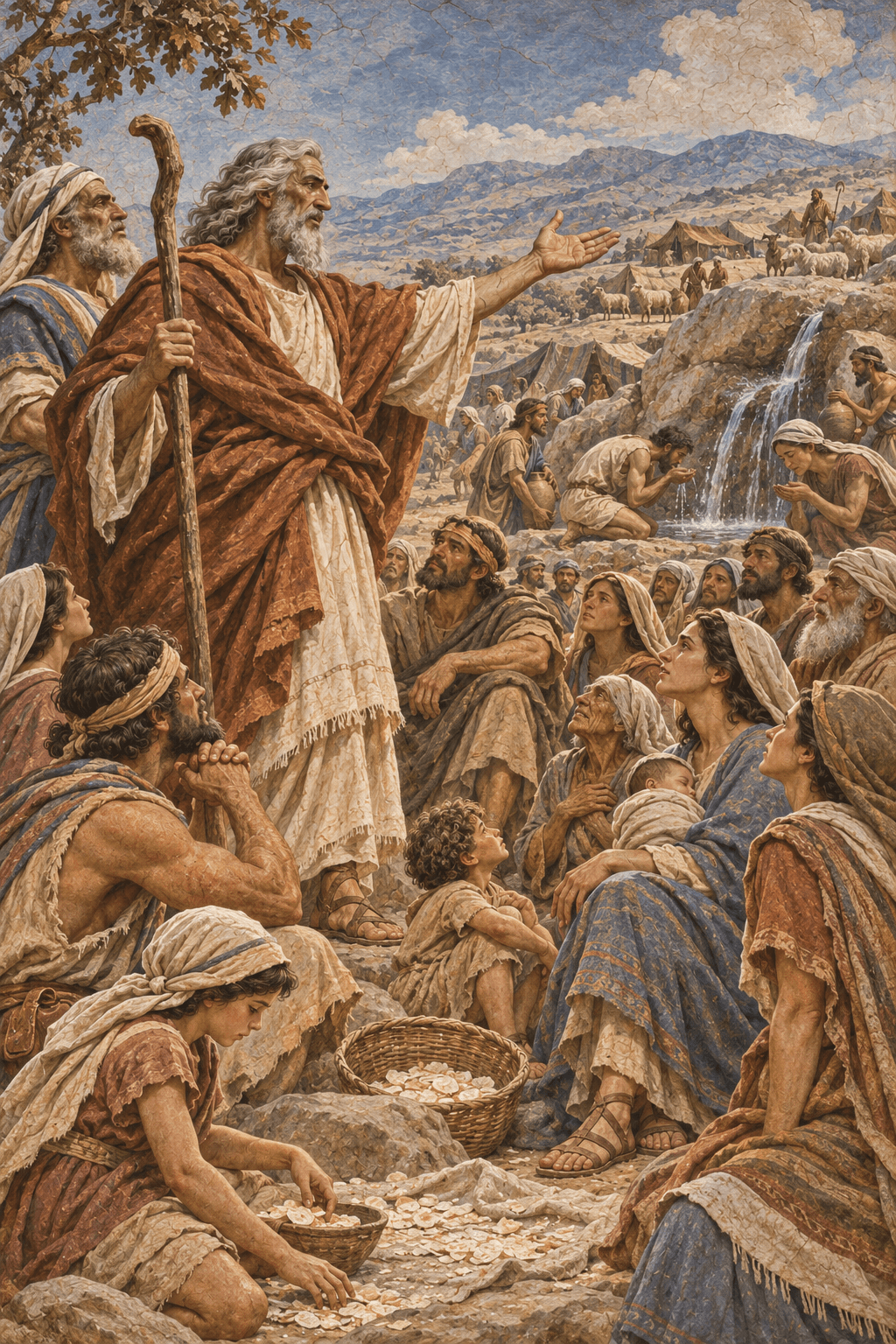
Human nature tends to forget, especially concerning its relationship with God; so God urges us to renew the covenant with Him, reminding us of His dealings with us in the past. Now, before Moses the prophet departed from this world, he reminded the people again and again of what God had done with them and with their fathers, from the time they suffered bondage in Egypt until they reached the plains of Moab. He had already made a covenant with their father Abraham. He is not giving a new covenant different from the one established at Sinai, but wants to confirm, establish, and renew that same covenant.
God is faithful in His eternal covenant, which does not change; but man, with his corrupt heart, forgets, or chooses to forget, for the sake of a lust, pride, or material gain. So he needs someone to remind him continually to renew the covenant with the Lord.
Moses the prophet made clear that the terms of the covenant are not his own; he only has to loose the seals and reveal what the Lord Himself set (1).
Though the covenant carries the same spirit, whether the one He made before at Horeb or the one He makes now in the land of Moab, God gives it to each generation as suits their circumstances, as one who renews it. God wants to assure each generation that the covenant is theirs, not only the covenant of past generations. It is a covenant suited to every generation.
First: The covenant always begins by pointing to the great events that took place, which reveal God’s dealings (2–3). The exodus from Egypt, liberation from Pharaoh’s bondage, and the signs and wonders that accompanied it reveal God’s plan for His people and His aim in the covenant He makes with them.
Though he is speaking with a new generation born in the wilderness, he speaks of the exodus from Egypt, saying to them: “Ye have seen… before your eyes… thine eyes have seen.” What their fathers saw and spoke of to their children as a tangible experience is counted as though the next generation had seen the events themselves and beheld the Lord’s work with them.
Second: The past events testify to God’s dealings and reveal His covenant, but the problem is in man, who does not seek understanding and wisdom, which grieves Moses’ heart concerning them (4).
God wants to give a heart to understand. As the wise man says: “The hearing ear, and the seeing eye, the Lord hath made even both of them” (Proverbs 20:12). But He does not give it to one who resists.
Many have eyes that see and at the same time do not see, because they do not want the truth, but seek what serves their lusts. The Lord Christ came to His own, and His own saw Him, but did not see Him with the eyes of faith, and so did not receive Him. As Paul the Apostle says: “for had they known it, they would not have crucified the Lord of glory” (1 Corinthians 2:8).
God gave man a heart bearing inner insight and spiritual ears, so that the believer can see and hear. But when he refuses obedience to God, he becomes as one who was not given a heart to understand, eyes to see, or ears to hear. With every practice of obedience in a spirit of love, the soul rises as on a rung of the ladder of heaven, led by the light of the Holy Spirit, who purifies its depths so that it becomes able to see and to hear the divine voice.
So renewing the covenant with God is not merely making promises to God to respond to His love, but responding practically to the Spirit of God and accepting divine grace in practical life, so that the soul rises day by day as it were to heaven itself.
Third: God’s work is continual and ongoing. It did not stop at their exodus from Egypt, nor at the destruction of Pharaoh and his soldiers, but He sustained the people forty years in the wilderness, where they lacked nothing. In pointing to God’s dealings full of tenderness toward His people in the midst of the wilderness, it is not Moses the prophet who speaks, but God presents Himself (5–6). He took the role of leader, walking with them and caring for their clothes, shoes, food, and drink. He gives them not only what is necessary, but even wine, which symbolizes joy.
Fourth: They received a life of overcoming and victory over enemies (7–8). With the victory He also gave them abundant riches, for He delivered the enemies’ land to them as their portion.
Moses the prophet calls them to keep the covenant and fulfill it practically, so that they may have success in everything (9).
In renewing the covenant, Moses the prophet did not mention animal sacrifices or the rites of purification, for he knew that the people would not forget these things. What Moses focused on in renewing the covenant was “obedience,” or sincerity of heart in meeting God on the level of love. This is the subject of covenant renewal: the heart consecrated to God in love and obedience! The holy eye to see, and the holy ear to hear.
2. Being Faithful to the Divine Covenant
KJV · Verses 10–15
10 Ye stand this day all of you before the Lord your God; your captains of your tribes, your elders, and your officers, with all the men of Israel, 11 Your little ones, your wives, and thy stranger that is in thy camp, from the hewer of thy wood unto the drawer of thy water: 12 That thou shouldest enter into covenant with the Lord thy God, and into his oath, which the Lord thy God maketh with thee this day: 13 That he may establish thee to day for a people unto himself, and that he may be unto thee a God, as he hath said unto thee, and as he hath sworn unto thy fathers, to Abraham, to Isaac, and to Jacob. 14 Neither with you only do I make this covenant and this oath; 15 But with him that standeth here with us this day before the Lord our God, and also with him that is not here with us this day:
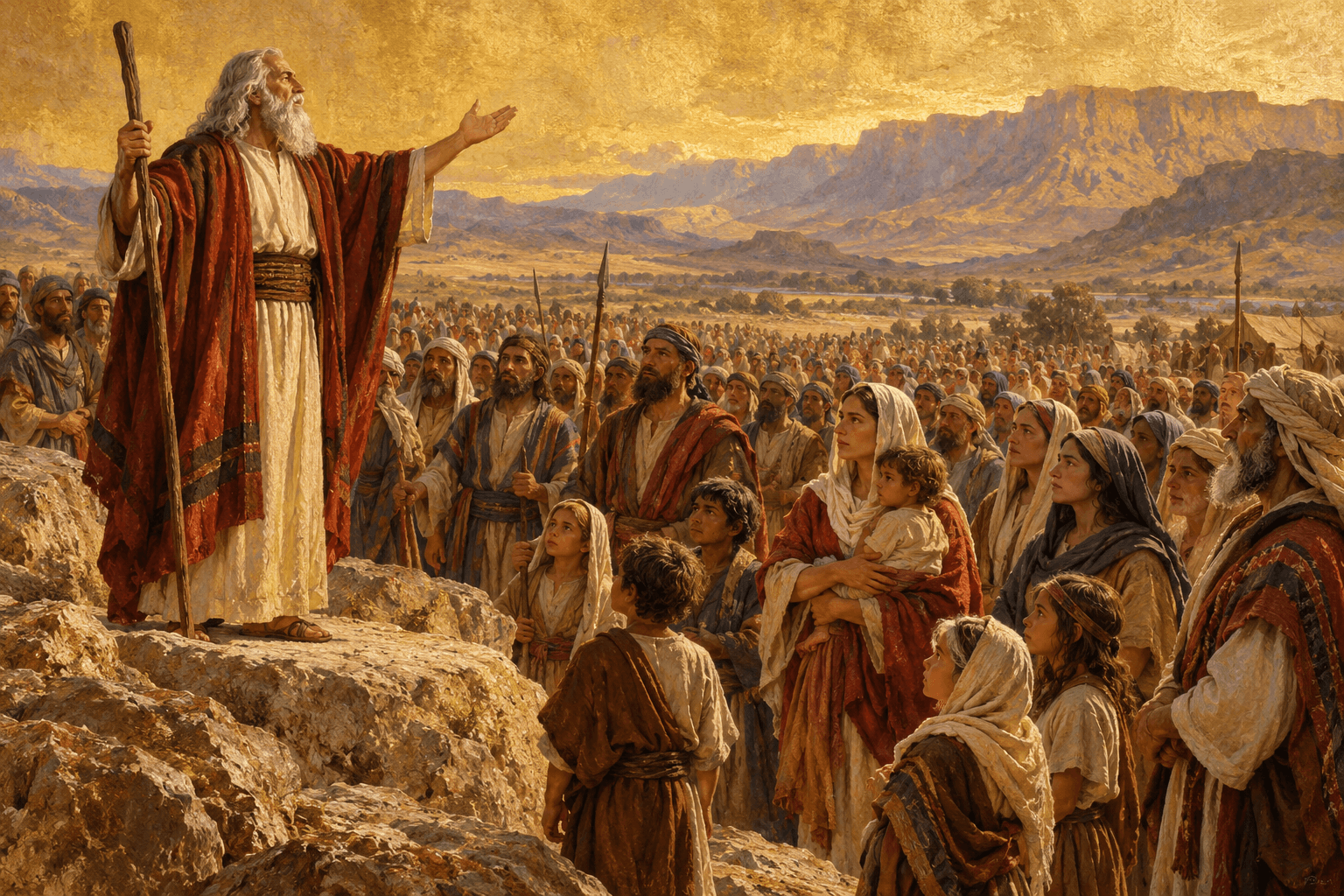
The two parties of the covenant are:
- God, who wants to make them His people and to be their God (12); He has perfect knowledge of His people and absolute authority over them.
- The other party is the whole people: heads of tribes, elders, men, women, and children, and also the strangers who entered the faith with them (10–11).
God establishes His covenant with the community in all its elements: leaders and people, great and small, men and women, Hebrews and proselytes, the present generation and coming generations.
He begins with the great ones, the heads of the tribes, for they ought to bow their necks under the divine yoke and enter into a covenant with Him, finding in the yoke of the covenant surpassing love, abundant mercies, and success in everything.
Women and little children share in the covenant, for all are called to enjoy this covenant. So the Lord Christ says: “Suffer little children, and forbid them not, to come unto me: for of such is the kingdom of heaven” (Matthew 19:14).
The strangers who renounced paganism and entered into faith in God share in the call. When the Lord Christ entered the house of Zacchaeus, the chief of the publicans, He said: “forsomuch as he also is a son of Abraham” (Luke 19:9).
The slaves, who are obliged to gather wood or draw water, are not deprived of enjoying the covenant. In other words, there is no person so great that he is above entering into a covenant with God and being bound by its bonds, and no person who is not called to enjoy the blessings of the covenant. In Christ Jesus there is neither bond nor free (Colossians 3:11). Paul the Apostle says: “Art thou called being a servant? care not for it” (1 Corinthians 7:21).
The call is given to those who were present at a holy spiritual gathering (12–13), and it also includes the absent (14–15).
The word “enter” in Hebrew carries a meaning hard to translate. It does not mean signing a joint contract as a formality, but entering into the depths of the contract. It is as though the contract were a place of meeting into which God enters together with the holy community, as in a bridal chamber, or in a wonderful union!
God wants to make His covenant with all His people, whether those who were present before Him or those who for some reason, such as illness, could not come. These are not excluded from the covenant; though they did not share in the worship nor come to the house of the Lord, they are present in it in spirit, not in body.
Perhaps by those not present he means the coming generations, for the covenant extends to the end of the ages.
The summary of the whole covenant is: “That he may establish thee to day for a people unto himself, and that he may be unto thee a God” (13), presenting the life of our fathers as a living example of entering into the covenant with God: “as he hath sworn unto thy fathers, to Abraham, to Isaac, and to Jacob” (13).
3. Idolatry Breaks the Covenant
KJV · Verses 16–28
16 (For ye know how we have dwelt in the land of Egypt; and how we came through the nations which ye passed by; 17 And ye have seen their abominations, and their idols, wood and stone, silver and gold, which were among them:) 18 Lest there should be among you man, or woman, or family, or tribe, whose heart turneth away this day from the Lord our God, to go and serve the gods of these nations; lest there should be among you a root that beareth gall and wormwood; 19 And it come to pass, when he heareth the words of this curse, that he bless himself in his heart, saying, I shall have peace, though I walk in the imagination of mine heart, to add drunkenness to thirst: 20 The Lord will not spare him, but then the anger of the Lord and his jealousy shall smoke against that man, and all the curses that are written in this book shall lie upon him, and the Lord shall blot out his name from under heaven. 21 And the Lord shall separate him unto evil out of all the tribes of Israel, according to all the curses of the covenant that are written in this book of the law: 22 So that the generation to come of your children that shall rise up after you, and the stranger that shall come from a far land, shall say, when they see the plagues of that land, and the sicknesses which the Lord hath laid upon it; 23 And that the whole land thereof is brimstone, and salt, and burning, that it is not sown, nor beareth, nor any grass groweth therein, like the overthrow of Sodom, and Gomorrah, Admah, and Zeboim, which the Lord overthrew in his anger, and in his wrath: 24 Even all nations shall say, Wherefore hath the Lord done thus unto this land? what meaneth the heat of this great anger? 25 Then men shall say, Because they have forsaken the covenant of the Lord God of their fathers, which he made with them when he brought them forth out of the land of Egypt: 26 For they went and served other gods, and worshipped them, gods whom they knew not, and whom he had not given unto them: 27 And the anger of the Lord was kindled against this land, to bring upon it all the curses that are written in this book: 28 And the Lord rooted them out of their land in anger, and in wrath, and in great indignation, and cast them into another land, as it is this day.
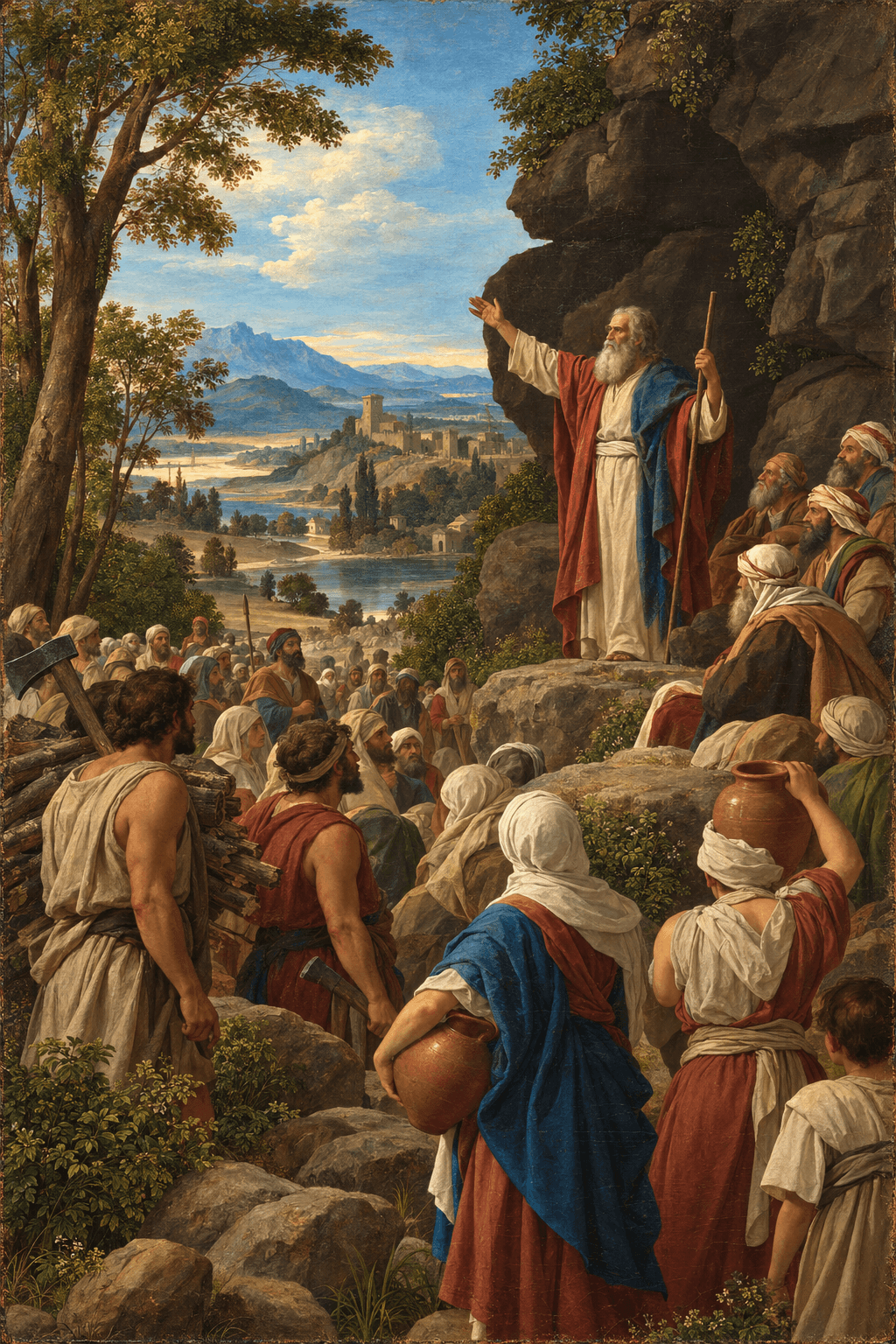
We have seen that on the positive side God wants to make them His own people, and on the negative side He wants them to turn their backs on pagan worship, the source of every sin at that time.
Some may ask: Why does he speak of the negatives? Was it not enough to speak of the positives? The practical reality in which the Jews lived at the beginning of their origin in Egypt confirms the necessity of speaking of the negatives, for the Jews carried Egyptian pagan worship in their hearts. How much more when they would settle in Canaan and inherit places of pagan worship, with some pagans dwelling among them and pagan nations surrounding them?!
First: Even after their exodus from Egypt, they were in danger of carrying pagan worship with its abominations in their hearts (16–18).
The word “idols” in Hebrew means huge, shapeless masses, hard to carry, so that they roll them along; it is used often in Holy Scripture to mean “idol statues.” So their gods are like a shapeless weight, unable to move and hard to carry, deserving only to be rolled into the temples of the idols; indeed, to be rolled out of the heart, so that the heart may be emptied for the dwelling of God alone.
He warns them lest the disease creep into one person, man or woman, and then come upon the whole family, and then the whole tribe. So the corrupt leaven corrupts the whole lump. One person becomes a root bearing gall and wormwood, carrying poison and bitterness, embittering the life of the whole community and destroying it. As Paul the Apostle says: “Looking diligently lest any man fail of the grace of God; lest any root of bitterness springing up trouble you, and thereby many be defiled” (Hebrews 12:15).
So one person may begin to doubt the faith, and become like a weed in the middle of a field, creeping in to spoil the whole field, so that it becomes full of weeds that deprive the wheat of the desired fruit. Paul the Apostle warns us of one who denies the faith, saying, “Looking diligently” (Hebrews 12:15), for he becomes like hidden roots bearing fruit, and whoever picks it eats deadly poison and bitterness for his soul. So in every age there are those who spring up within the community, as some surround it from outside, to kill the living faith and destroy the new life, so that souls perish. The Lord Christ Himself warned us of this, especially of the apostasy that will happen in the last days, so that if it were possible even the elect would be deceived. Many stray from “the faith which was once delivered unto the saints” (Jude 3).
Corrupt teachings become a root of bitterness that corrupts the hearts of believers and deprives them of the fruits of the Spirit, becoming a source of bitterness to them.
Saint John Chrysostom says:
For even if a root of this (bitter) kind is found, do not let it grow, but cut it off, so that it does not bear its own fruit, nor defile and corrupt others also. For good reason he called sin bitterness, for nothing is more bitter than sin. [283]
Of old the people were in danger of turning aside toward pagan worship and denying faith in the living God. But now that divine salvation has been accomplished, the war of the enemy of good has turned to drawing believers toward denying the work of salvation, denying the divinity of the Lord Christ, and making light of His redeeming work on the cross. So in every age the enemy of good knows how to destroy faith.
Second: The sinner, especially the idolater, thinks he is in peace and safety, and draws others with him. Instead of being wary of this deadly plant full of poison and bitterness, he congratulates himself as one who has acquired peace through the imaginations of his hard heart, which persists in evil (19).
In the Old Testament, the enemy of good worked with all his energies to make man deceive himself, so that he became drunk and staggered, thinking that in worshipping idols he rejoiced and practiced life without depriving himself of the lusts of the flesh and abominations. The war is still going on, the war of self-deception: a person seeks a faith bound to the broad way, so as to fulfill all the lusts of his flesh with an easy conscience, instead of the narrow cross. So we find the world marked by a kind of laxity in faith; many proclaim that they do not deny God’s existence, but they deny Him by pouring themselves into the broad, easy way.
Many deceive themselves with false hope under cover of faith, while they have turned from the truth, claiming that they are full of peace.
Therefore His wrath comes upon this person; he falls under the curses, and the Lord blots out his name from under heaven. The matter does not stop with the person who has fallen into paganism; when he draws many into evil, he pushes the nation as a whole toward destruction (20–21).
When the wicked man destroys himself by binding himself to pagan worship and persisting in it, and destroys those around him, He does not spare him, but allows him to be disciplined, bringing him as it were into the furnace of divine wrath, as the “smoke” of the wrath rises to destroy him. He blots out his name from under heaven and separates him from the holy community, for he does not deserve to enjoy the divine covenant with them, but falls under the curses.
When the coming generations and the foreign nations hear of what befell the people who possessed the land and inherited it, and then disasters came upon them because of their pagan worship, they will stand amazed, asking the cause of all this (22–28).
The Lord begins His disciplines with pestilence and diseases, that perhaps they may repent and return (22); if they do not respond, He destroys the whole nation like Sodom, Gomorrah, Admah, and Zeboim, which the Lord overthrew in His anger and wrath (23). The destruction of the cities of the plain became a famous example of divine punishment, and Hosea referred to this verse (Hosea 11:8); his prophecy shows that he knew the Book of Deuteronomy.
So they become an example to the coming generations when they study the history of the fathers and hear what the wicked did to themselves, and an example to the foreign nations too. As St. Peter the Apostle says: “For the time is come that judgment must begin at the house of God: and if it first begin at us, what shall the end be of them that obey not the gospel of God?” (1 Peter 4:17).
The land given to them, flowing with honey and milk, becomes a byword before the world through its destruction because of sin. For there is no respect of persons with God; He judges His own as He judges others. Those who know more have a harsher and more bitter judgment. The Lord says: “You only have I known of all the families of the earth: therefore I will punish you for all your iniquities” (Amos 3:2). And in Daniel: “Yea, all Israel have transgressed thy law, even by departing, that they might not obey thy voice; therefore the curse is poured upon us, and the oath that is written in the law of Moses the servant of God, because we have sinned against him. And he hath confirmed his words, which he spake against us, and against our judges that judged us, by bringing upon us a great evil: for under the whole heaven hath not been done as hath been done upon Jerusalem” (Daniel 9:11–12).
“Gods whom they knew not” (26): The pagans believe that each people has a god whose worship they inherit as a tribal heritage; so the nations would be astonished if the Jews left their God to worship another whom they did not know.
4. The Secret Things Belong unto the Lord
KJV · Verses 29
29 The secret things belong unto the Lord our God: but those things which are revealed belong unto us and to our children for ever, that we may do all the words of this law.
Moses the prophet concludes his speech about Israel’s rejection by affirming that God alone knows the secret things; His plan is surpassing and hard to grasp (see verse 29 above).
This statement has special importance in revealing the aim of divine visions and revelations. God does not give them to satisfy our curiosity, nor to satisfy us intellectually, but for our edification and our practical growth. Revelations and miracles are not a display of God’s secrets and power, but a call to enjoy them in our practical life.
When Holy Scripture revealed creation to us, for example, it spoke simply for our benefit, without speaking in a scientific or philosophical style. The word of God is not a scientific or philosophical book, but a divine word that carries man practically to the bosom of God. It declares God’s fatherhood, His longing to enter into a covenant with us, and His saving work, so that we may respond to Him with living, practical faith and perfect obedience.
Divine revelations are not intellectual dialogues, but a divine condescension through love, that man may know his Beloved and long to set out toward Him and enjoy dwelling with Him now and on an eternal level. So they are given to every person as much as he can bear and what is for his benefit, and God’s infinite secrets remain an inexhaustible treasure that we enjoy in eternity, grasping it with new and continual depths, with great longing and increasing desire.
Moses the prophet says: “The secret things belong unto the Lord… but those things which are revealed belong unto us,” as though what He reveals to us is what concerns us, not the grasping of God absolutely as He is! Saint John Chrysostom has a lengthy treatise “On the Incomprehensible Nature of God,” revealing God’s revelations of His nature to the heavenly and earthly creation as much as they are able to enjoy.
“Those things which are revealed belong unto us”: since we have become “stewards of the mysteries of God” (1 Corinthians 4:1), God’s revelations have come to mean for us an obligation and a responsibility to bear witness to them before others. Visions and revelations are not a matter of boasting, but a call to work and preaching. So when the Apostle speaks of the revealing of the divine mystery, he links it with ministry, saying: “Even the mystery which hath been hid from ages and from generations, but now is made manifest to his saints: To whom God would make known what is the riches of the glory of this mystery among the Gentiles; which is Christ in you, the hope of glory: Whom we preach, warning every man, and teaching every man in all wisdom; that we may present every man perfect in Christ Jesus” (Colossians 1:26–28).
Whoever enjoys the mystery longs for all to share the same experience, and does not cease to pray and work to accomplish this. As Paul the Apostle says: “That the God of our Lord Jesus Christ, the Father of glory, may give unto you the spirit of wisdom and revelation in the knowledge of him: The eyes of your understanding being enlightened…” (Ephesians 1:17–18).
Moreover, however many revelations we receive, we know the divine mystery in part (1 Corinthians 13:9), as long as we are still in the body in this present world.
It is as though Moses the prophet affirms our submission to God’s surpassing wisdom: He reveals to us as much as we can bear and what is for our benefit, but God’s plan remains beyond the mind. The Lord Christ says to His disciples: “It is not for you to know the times or the seasons, which the Father hath put in his own power” (Acts 1:7). And He said to His disciple Peter concerning John the beloved: “If I will that he tarry till I come, what is that to thee? follow thou me” (John 21:22). And Paul the Apostle says: “Let no man beguile you of your reward in a voluntary humility and worshipping of angels, intruding into those things which he hath not seen, vainly puffed up by his fleshly mind” (Colossians 2:18).
The Lord calls us to seek knowledge and strive in it, for He longs for us to bear true knowledge from Him, but in what is for our edification and as much as we can bear, so that we do not think more highly than we ought to think (Romans 12:3). So every knowledge and every vision is not without purpose, but for our benefit and edification.
This statement has special esteem among the Jews, who count it as presenting subjects of the utmost importance concerning them.
5. A Meditation on Deuteronomy 29
Renew the Covenant with Me!
It is not the cries of my heart toward You:
“Renew the covenant with me.”
It is the cries of Your fiery Spirit, for You long for me.
You want to renew Your covenant with Your people in every generation.
You long for every believer to seal it, responding to the covenant.
You worked signs and wonders with my fathers,
and You are still the same yesterday, today, and forever.
You work with me and give me more than I ask and above what I seek!
You are the wonderful Leader,
caring for my salvation and my victory,
caring even for my clothes, my food, and my drink.
You long to fill my life with true joy.
You are the Giver of victory.
You crush before me the powers of darkness with all their energies,
and bring me into the new land to possess it.
With the victory You give me surpassing riches,
and success accompanies me in every work my hands reach out to.
Let me stand before You in Your presence,
not that You may judge me, but that You may sign the covenant of love between us.
You know me with perfect knowledge.
You know my falls, my corruption, and my weaknesses,
yet You do not disdain to make a covenant with me.
You established Your covenant with the great and with slaves,
with men, women, and children,
with Hebrews and proselytes, even the captives among them.
Here I come, that You may raise me from the dunghill
and set me, as Your true promise, among the princes of Your people.
Let me turn my back on the devil and all his enticements.
I will not allow a thought to creep into my depths,
for it would become a root of gall and bitterness to my whole being!
Is there any sweetness better than Your love?!
Is there any bitterness harsher than sin?!
You are the sweetness of my love, who takes from me all the bitterness of sin!
Let me make a covenant with You, O heavenly Wisdom,
that You may reveal to me Your secrets,
and declare in my depths Your truth and Your plan!
You are Wisdom itself and the Revealer of all secrets!
Notes and References
[283] Saint John Chrysostom, Homilies on Hebrews 31:1.