
This chapter is considered a continuation of the previous one, in which God’s care for the rejected, or those who have no one to ask after them, appeared. Here the Law reveals its aim: tenderness toward everyone, together with holiness. The believer’s heart is enlarged with love and filled with tenderness toward his brother, as also toward animals and birds. This tenderness is bound up with holiness; the community ought to be marked by firmness so that uncleanness does not creep into the community of believers.
1. Caring for What Belongs to a Neighbor or a Stranger
KJV · Verses 1–4
1 Thou shalt not see thy brother’s ox or his sheep go astray, and hide thyself from them: thou shalt in any case bring them again unto thy brother. 2 And if thy brother be not nigh unto thee, or if thou know him not, then thou shalt bring it unto thine own house, and it shall be with thee until thy brother seek after it, and thou shalt restore it to him again. 3 In like manner shalt thou do with his ass; and so shalt thou do with his raiment; and with all lost thing of thy brother’s, which he hath lost, and thou hast found, shalt thou do likewise: thou mayest not hide thyself. 4 Thou shalt not see thy brother’s ass or his ox fall down by the way, and hide thyself from them: thou shalt surely help him to lift them up again.
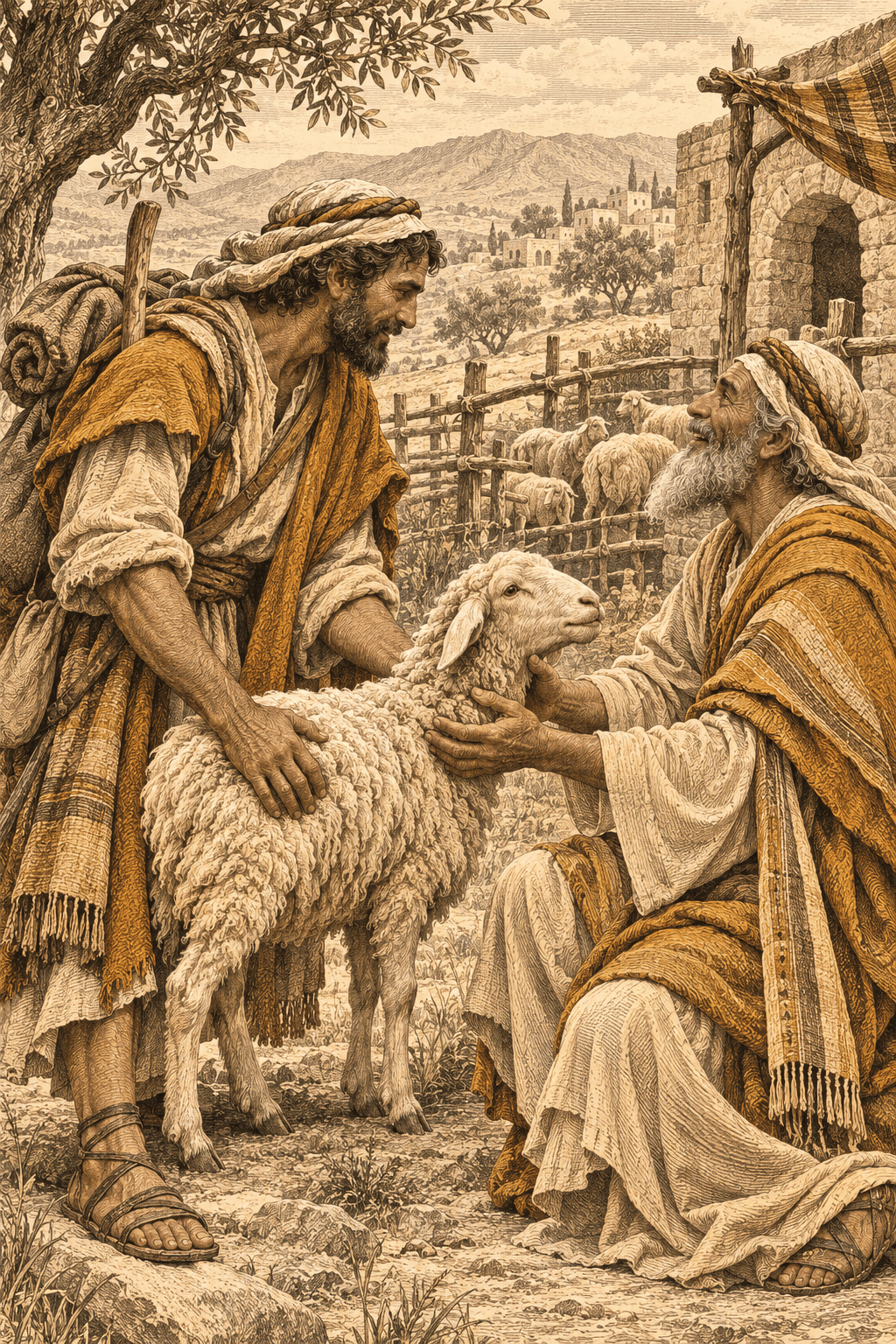
The believer ought not to overlook anything his brother has lost, but should take care to return it to him. He cares even for an animal fallen by the way.
So God cares even for our care of animals. In Exodus 23:4 the Law asks a person to care for the ass of his enemy or of one who hates him; however great the enmity between a man and his brother, he must be gentle with the animal, which is guiltless. If this is so with an enemy, what of a neighbor or a stranger, whether Jew or Gentile? Note the following in this law:
First: The word “brother” here is understood in a broad sense, not only the brother according to the flesh. This is clear from verse 2, “or if thou know him not.” So care for others’ animals is not based on caring for the needs of one’s relatives according to the flesh; it is a work of mercy offered to the animal or bird, whoever its owner.
Saint Jerome says:
“The Law itself teaches us how to love our enemy, for if our enemy’s animal falls, we must raise it up. [241]”
Second: The straying flock must be returned to its owner or to the pasture from which it strayed, for the sake of the right of neighborliness and of gentleness toward the animal. So the believer cannot overlook or ignore his neighbor’s straying animal, but through his nature that loves doing good he returns the straying animal.
If God cares even for straying animals, how much more does He care for the souls that have left their heavenly home, strayed from the divine pasture, and lost their way in the whirlpool of this life. The Word of God Himself came down to our earth to bring back the lost sheep, so that heaven rejoices at its return. And we, as members of the body of Christ, will not rest in our hearts until we bring every soul back to its heavenly Shepherd and bring every person into his home, the eternal bosom of the Father.
Third: The Law requires us to take in the lost ox or sheep, not to send a message to its owner to come and take it, for time is of the utmost importance. Every delay in taking in the sheep may harm it. Let us carry the sheep and bring it to its owner or its pasture as soon as possible.
Fourth: If we do not know the owner of the animal or its pasture, let us carry it to our home or our pasture as a trust we keep and spend on until we know its owner.
Fifth: The literal translation of the word “go astray” is “being driven away,” [242] meaning that when a person sees one of his brother’s animals being driven off by another, he does not stand with folded arms or behave passively, but acts as befits a faithful person toward the owner of the animal. Just as God did not stand passive before our collapse, when we handed ourselves over to the enemy of good and became like a sheep he drove and led astray far from its fold; but the Good Shepherd came and gave Himself for every lamb, to bring it back to the heavenly fold. So we do not stand passive if someone takes one of our brother’s animals, nor if the enemy of good takes our brother’s soul, mind, or will from the heavenly pasture to drag him down to Hades.
We ought to rise above the requirements of the Law, but sadly we sometimes sink so low that we do not even carry out the requirements of Deuteronomy. If Deuteronomy urges us to care even for our neighbor’s ass or ox, how can we be indifferent to his thoughts, heart, and inner being when Satan drags him into the fires of hell, offering many vain and unfitting excuses?
If we cannot bear to see our neighbor’s ass straying, what is our position if the owner of the ass himself is straying?! Let us rise above every justification and be reconciled with our brother if he is in a quarrel with us, whatever it costs, and seek the soul of our lost brother wherever he is, for this is what even the Law of the Old Testament requires.
Saint John Chrysostom says:
“You ought to realize that separating from those with whom you are in conflict, or being reconciled with them, is lighter than raising an animal fallen under a load. If help must be given to raise the ass of enemies, must we not much more raise the souls of friends, especially when the fall is serious, for souls do not fall into mud but into the fire of hell, unless we lift from them the weight of the wrath that has come upon them? When you see your brother fallen under the load, and Satan standing by kindling the wood with fire, you run from him with a cruelty that knows no mercy, which you ought not to do even to beasts. When the Samaritan saw a wounded man unknown to him and in no way related to him, he stopped, set him on his beast, brought him to the inn, hired a physician, gave money, and promised to give more. But you see a man fallen, not among robbers but among a gang of demons, under wrath, not in the wilderness but in the public square; and what is asked of you is not to give money, nor hire an animal to carry him, nor walk a long road with him, but only to say a few words to him; yet you hesitate! You turn your back on him and run away cruelly and without mercy! How then do you think you will call upon God and find Him full of compassion?! [243]”
The Law asks us to return our brother’s lost garment so that he may cover his body; how much more ought we to restore to him his reputation and dignity, which cover his person and human being. Whoever enjoys listening to slander of his brother is like one who does not return what his brother lost, leaving him naked, not of material clothes, but of his heavenly dignity.
Our Christianity is not a call to close our eyes and flee and look through a narrow lens, saying, “This concerns me, and that concerns my brother”; rather, it is a call to work in a spirit of love, breadth of heart, and unity, for all mankind and caring for their rights and edification. As the Apostle Paul says: “Let no man seek his own, but every man another’s wealth” (1 Corinthians 10:24).
2. Forbidding Sexual Perversion
KJV · Verses 5
5 The woman shall not wear that which pertaineth unto a man, neither shall a man put on a woman’s garment: for all that do so are abomination unto the Lord thy God.
A person ought not to wear the clothes of the other sex. This means that each sex prizes what God created it to be, so that no one desires to be of the other sex. Nature itself teaches a person to be distinguished by his sex, even in his hair (1 Corinthians 11:14), and so in his dress. The reason is:
First: Saint John Chrysostom sees in this commandment each person prizing the sex God has given him. The man prizes his manhood, and the woman her womanhood; the male does not desire to be female, nor the female male. The beauty and goodness of each sex lie in prizing what God has given it, together with esteeming and honoring the other sex as complementing it, not as opposed or contrary to it. One does not despise the other sex nor be arrogant toward it, but sees a complementarity between the sexes, achieving human success, progress, and edification. He sees God’s wonderful hand and surpassing plan in the whole human race.
“Whoever disobeys the command causes confusion in all things, betrays God’s gifts, and throws to the ground the honor granted him from above, not only the man but also the woman. For her too it is a great honor to keep her rank, while murmuring against her position truly brings dishonor upon her. [244]”
Second: Each sex feels its responsibilities, so that the man does his fitting work without effeminacy and the woman plays her living role; so society becomes complete.
Third: Some see in this commandment something deeper than outward appearance, namely not turning aside to homosexuality; for one sex wearing the clothes of the other means a desire to take the place of the other sex in bodily relations.
Saint Clement of Alexandria condemns the practice of homosexuality together with adultery, saying:
“The Logos declares this loudly and clearly through Moses: ‘Thou shalt not lie with mankind, as with womankind: it is abomination’ (Leviticus 18:22). When the wise Plato counseled that ‘one must abstain from every female field that is not one’s own,’ [245] he took this from his reading of the scriptural commandments: ‘Moreover thou shalt not lie carnally with thy neighbour’s wife, to defile thyself with her’ (Leviticus 18:20). ‘One must not sow what is fruitless, an illegitimate seed,’ [246] nor sow ‘where you do not want the seed to grow.’ [247] ‘Touch no one but your own wife.’ [248] With your wife alone you are permitted to enjoy bodily pleasure for the begetting of children, for this is all the Logos permits. We who share in the divine work of creation must not scatter seed at random, nor behave without reverence, nor cast seed where it cannot grow. [249]”
Fourth: Some see this as a pagan custom, for among the worshipers in the temple of Venus women appeared armed like strong soldiers, and men wore women’s clothes.
3. Gentleness Toward Sitting Birds
KJV · Verses 6–7
6 If a bird’s nest chance to be before thee in the way in any tree, or on the ground, whether they be young ones, or eggs, and the dam sitting upon the young, or upon the eggs, thou shalt not take the dam with the young: 7 But thou shalt in any wise let the dam go, and take the young to thee; that it may be well with thee, and that thou mayest prolong thy days.
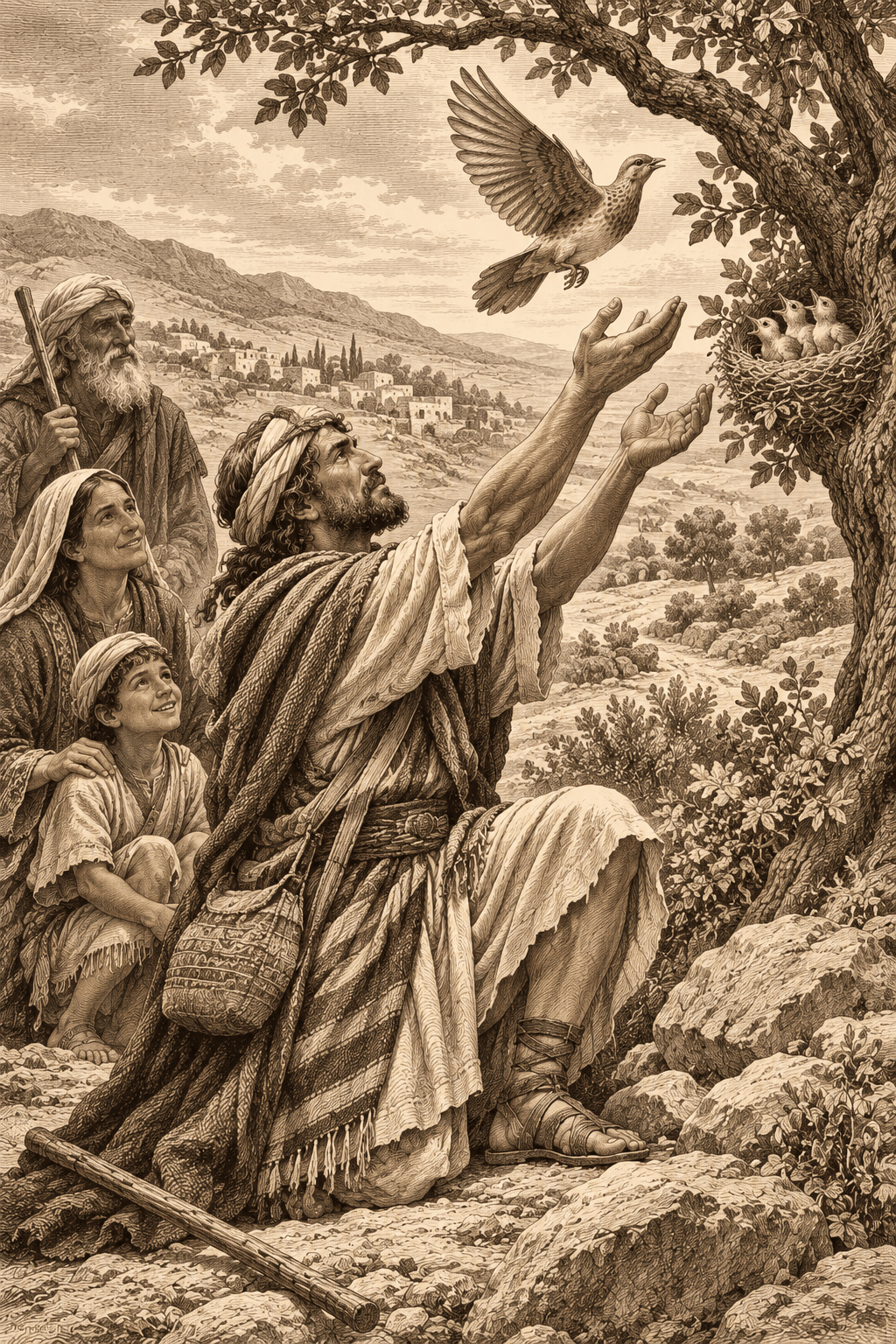
Some explain the speaking of releasing the sitting mother, after speaking of keeping the distinction between the sexes, men and women, by saying that the Law wanted to affirm the importance of the mother and the sanctity of her role in preserving the species. Even among birds the mother has her important role.
Perhaps some women in ancient societies thought that the man had the more important role, and longed to be men so as to enjoy more freedom and greater positions; so the Law affirmed that the mother is the living foundation for raising up a new and strong generation, so that women should not belittle their role.
God gave man authority over the birds of the air, as over the fish of the sea, the cattle, and all the earth (Genesis 1:26), not to exercise it without restraint, but in a spirit of mercy and compassion on creation. It is said in the Book of Isaiah: “Thus saith the Lord, As the new wine is found in the cluster, and one saith, Destroy it not; for a blessing is in it” (Isaiah 65:8).
The life of birds is important for preserving the species, so this law was necessary, wise, and humane (Matthew 10:29). The Jews say that this is the least of the commandments in the Law of Moses, which cares even for a bird by the way sitting on eggs or young; one is allowed to take the eggs and the young and to let the sitting mother fly away. Remarkably, the reward is like that of one who honors his father and mother, that is, who keeps the fifth commandment: God prolongs his life.
The Lord always declares His care for His creation, even for sparrows that seem worthless (Luke 12:6; 1 Corinthians 9:9).
4. Preserving the Lives of Others
KJV · Verses 8
8 When thou buildest a new house, then thou shalt make a battlement for thy roof, that thou bring not blood upon thine house, if any man fall from thence.
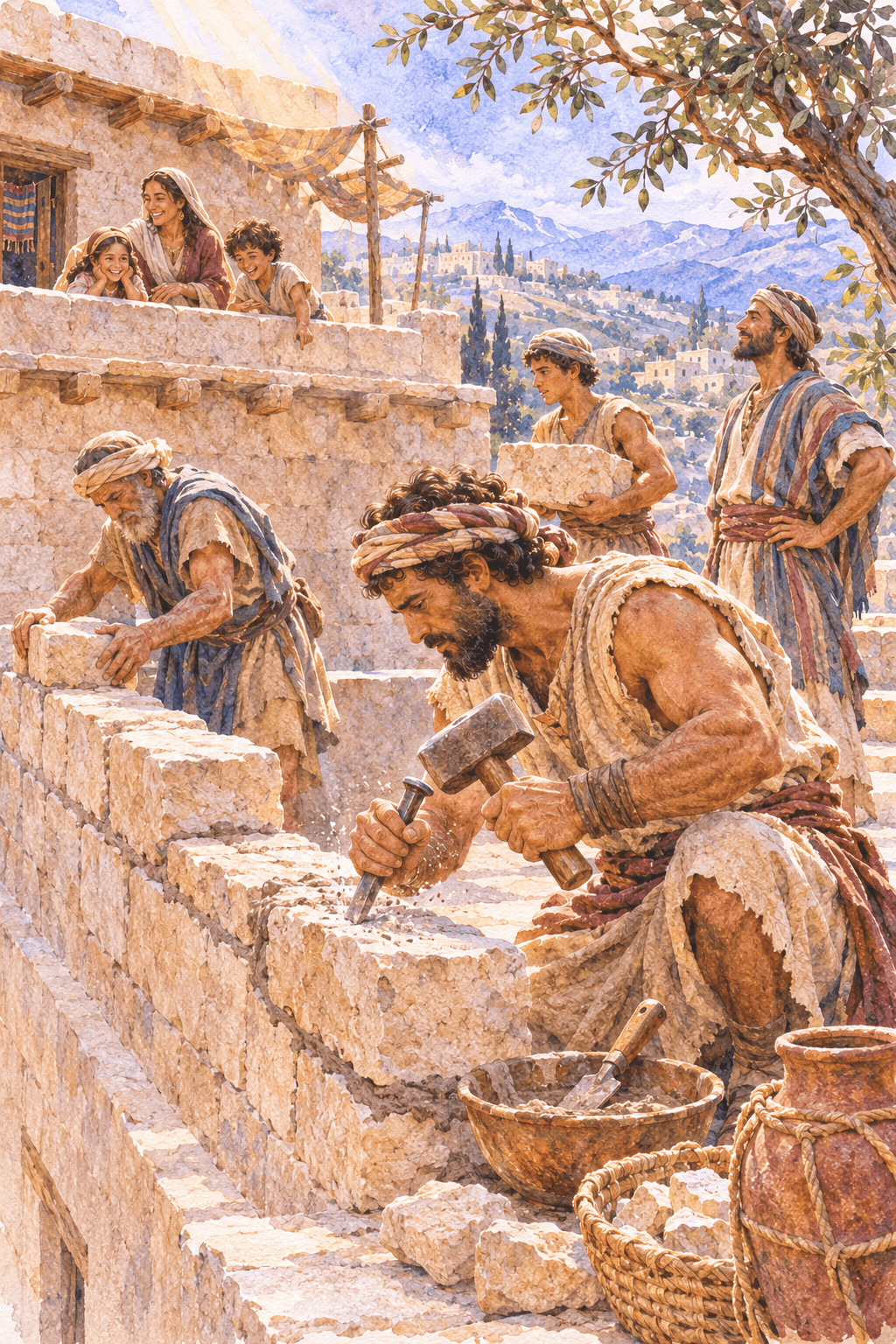
This law presents a clear concept of freedom. A person has full freedom to build a house and make a roof, but he is obliged not to rejoice at his brother’s expense. He may be careful himself, or have no children whom he fears might fall from the roof; yet he must build a parapet, lest one of his relatives visit him, or he, his children, grandchildren, or servants not be careful… If one of them falls, his blood is required of him!
God, in His love for man, protects him not only by His divine care but also by His Law. Man is precious in God’s eyes, and also in the eyes of His believers.
Whoever does not build a parapet for the roof of his house brings upon himself the blood of whoever falls from the roof through negligence.
The roof of a house in the Middle East is usually flat, and the owner entertains his guests on it at night, so a parapet for protection and safety was necessary. The roof is flat, so a person can walk on it; indeed many families slept on the roofs in summer because of the heat. The owner was obliged to build a wall around the roof so that no one would fall from it. They built a wall about three and a half feet high. If a person fell where there was no such wall, his blood was required of the owner of the house.
According to this law the Jews hold the obligation to do everything that keeps the lives of others from danger, such as covering wells, maintaining bridges, and so on.
5. Not Mixing
KJV · Verses 9–11
9 Thou shalt not sow thy vineyard with divers seeds: lest the fruit of thy seed which thou hast sown, and the fruit of thy vineyard, be defiled. 10 Thou shalt not plow with an ox and an ass together. 11 Thou shalt not wear a garment of divers sorts, as of woollen and linen together.
Unnatural mixing leads to disorder and chaos, and so does mingling with the world. Nor is it easy to wash a garment mixed in this way.
First: Not sowing two kinds in one field, so that the seeds are not mixed together and then sown, which makes the harvest difficult. This field points to the mixing of believers and unbelievers together in the Church. It also points to the heart that wavers between the way of light and the way of darkness and lacks the spirit of discernment, that is, the heart that does not know simplicity, or the single way.
Second: Not using an ox and an ass together to pull one plow, for the weak hinders the strong, or the strong crushes the weak. There ought to be discernment in teaching between the strong and the weak, between those firm in faith and those new to faith, giving each what builds him up.
Third: Not using two kinds of thread in one fabric, such as wool and linen, for this may cause irritation of the body. The Church of God ought to be one harmonious fabric, of one spirit and one mind.
All these are symbolic pictures of the obligation not to mix the truth with the vain philosophy of the world (Leviticus 19:19). Perhaps He wanted God’s people to be distinguished by purity and uprightness.
We spoke earlier of not mixing, from the literal side, in practice, and in its symbols, in our commentary on Leviticus, chapter 19. The reason for the prohibition is:
First: To keep them from such pagan customs. The Lord warned His people against strange apparel mixing wool and linen, not because there is sin in the garment itself, but because of what it carried in meaning of fellowship with the pagans: “And it shall come to pass in the day of the Lord’s sacrifice, that I will punish the princes, and the king’s children, and all such as are clothed with strange apparel” (Zephaniah 1:8).
Second: This law carries a symbol of the believer’s obligation to purity and cleanness. There is no fellowship between the believer and the unbeliever, between light and darkness, between Christ and Belial.
6. The Fringes of the Garment
KJV · Verses 12
12 Thou shalt make thee fringes upon the four quarters of thy vesture, wherewith thou coverest thyself.
As for the “fringes,” their purpose was to make the people appear different from the other peoples, because they are the Lord’s people (Numbers 15:37–41); so no one should be ashamed of belonging to God’s people. They also point to remembering the divine commandments even in simple things that seem trivial, like the fringe of a garment. The aim of this law is that the believer be distinguished from the people of the world; whoever sees him knows even from his appearance that he belongs to God’s people. The commandment is perhaps repeated here because the Jews made light of it, as something touching only appearance and not their inner life. God wants us to declare that we are consecrated to the Lord by our inner life as well as by our outward appearance, so that we are not ashamed of our bond with Him. The woman with the issue of blood touched this fringe of Christ’s garment and was healed (Luke 8:44).
7. Accusing a Wife of Not Being a Virgin
KJV · Verses 13–19
13 If any man take a wife, and go in unto her, and hate her, 14 And give occasions of speech against her, and bring up an evil name upon her, and say, I took this woman, and when I came to her, I found her not a maid: 15 Then shall the father of the damsel, and her mother, take and bring forth the tokens of the damsel’s virginity unto the elders of the city in the gate: 16 And the damsel’s father shall say unto the elders, I gave my daughter unto this man to wife, and he hateth her; 17 And, lo, he hath given occasions of speech against her, saying, I found not thy daughter a maid; and yet these are the tokens of my daughter’s virginity. And they shall spread the cloth before the elders of the city. 18 And the elders of that city shall take that man and chastise him; 19 And they shall amerce him in an hundred shekels of silver, and give them unto the father of the damsel, because he hath brought up an evil name upon a virgin of Israel: and she shall be his wife; he may not put her away all his days.
The Law cares to reveal the sanctity of marriage. Here it presents six cases.
A deceitful bride who cleaves to her husband defiles the whole people, so she is sentenced to stoning. Every corruption in married life touches the life of the whole community. But whoever falsely damages the reputation of his wife, claiming that she was not a virgin on the day he married her, is disciplined by the elders of the city, usually by beating with rods, and pays a hundred pieces of silver as a fine to her father as a kind of restoring of honor. So the discipline is public, to restore the reputation of the wife and her father’s house; and the wife falsely accused is compensated by the husband not being allowed to divorce her all the days of his life or hers.
The Law looks to purity as an honored virtue; whoever casts doubt on a person’s purity insults his inner dignity. Defaming a person’s reputation is a great crime, as the Psalmist says: “Thou sittest and speakest against thy brother; thou slanderest thine own mother’s son” (Psalm 50:20). If this is so for defaming a brother, how much more for defaming a wife who has become one flesh with him, or a husband. He is like a bird that spoils and defiles its own nest.
8. The Law of the Wife Without Tokens of Virginity
KJV · Verses 20–21
20 But if this thing be true, and the tokens of virginity be not found for the damsel: 21 Then they shall bring out the damsel to the door of her father’s house, and the men of her city shall stone her with stones that she die: because she hath wrought folly in Israel, to play the whore in her father’s house: so shalt thou put evil away from among you.
As the bride unjustly accused is honored publicly, together with her household, the adulterous bride is judged publicly. Adultery is a great crime whose punishment is stoning, because it is directed against the Holy God Himself, the King of this people, which ought to be holy to the Lord.
9. Marital Unfaithfulness
KJV · Verses 22
22 If a man be found lying with a woman married to an husband, then they shall both of them die, both the man that lay with the woman, and the woman: so shalt thou put away evil from Israel.
Stoning was the punishment for adultery between married or betrothed persons, to show the horror of marital unfaithfulness.
10. Adultery with a Betrothed Virgin
KJV · Verses 23–27
23 If a damsel that is a virgin be betrothed unto an husband, and a man find her in the city, and lie with her; 24 Then ye shall bring them both out unto the gate of that city, and ye shall stone them with stones that they die; the damsel, because she cried not, being in the city; and the man, because he hath humbled his neighbour’s wife: so thou shalt put away evil from among you. 25 But if a man find a betrothed damsel in the field, and the man force her, and lie with her: then the man only that lay with her shall die. 26 But unto the damsel thou shalt do nothing; there is in the damsel no sin worthy of death: for as when a man riseth against his neighbour, and slayeth him, even so is this matter: 27 For he found her in the field, and the betrothed damsel cried, and there was none to save her.
Betrothal in the East was equal to marriage, so that the betrothed woman was called a wife. Speaking of the perpetual virginity of Saint Mary, Saint Jerome wrote that no one should be confused by her being called the wife of Joseph although she was only his betrothed, for Holy Scripture is accustomed to call the betrothed a wife, as in Deuteronomy 20:7; 22:24–25. [250]
11. Adultery with a Virgin Not Betrothed
KJV · Verses 28–29
28 If a man find a damsel that is a virgin, which is not betrothed, and lay hold on her, and lie with her, and they be found; 29 Then the man that lay with her shall give unto the damsel’s father fifty shekels of silver, and she shall be his wife; because he hath humbled her, he may not put her away all his days.
Whoever humbles a virgin is obliged to marry her and not to divorce her all his life.
12. Lying with a Father’s Wife
KJV · Verses 30
30 A man shall not take his father’s wife, nor discover his father’s skirt.
Finally, the son is obliged to respect the sanctity of his father’s bed.
13. A Meditation on Deuteronomy 22
You Shepherd Me with Your Love and Care for Me Through Your Law
You shepherd me with Your love and care for me through Your Law.
By Your love I long to become like You.
The enemy of good dragged me, as it were, from my heavenly pasture;
You loosed me and brought me back to the arms of Your heavenly Father.
Grant me to care for my brother and all he owns!
Let me not cease praying and working until he returns to Your arms.
Let me care for his soul, his heart, his mind, and his will,
so that he becomes wholly holy.
Let me return to him his straying ass, that is, his body that was corrupted,
and his lost garments, that is, his dignity in the Lord,
and everything lost to him, so that he becomes rich in You!
Grant me to imitate You,
and to work for all my brothers without slackening!
By Your divine providence You always embrace me.
By Your Law You care for the details of my life.
In Your love You take care to make me a being who loves even animals and birds;
let me be gentle with every creature as far as I can!
As a Father occupied with His children,
You oblige every householder to build a wall around the roof of his house.
You teach us to care for the lives of our brothers without negligence.
You long for my purity,
that I may not mix seeds together,
nor fabrics in one garment.
I realize that there is no mixing of light and darkness,
and no fellowship between Christ and Belial.
You want to distinguish us from the people of the world!
You make us a special people, holy to You.
You long for us to have our own language, our own mind, even our own appearance.
You care even for the fringes of our garment, so that we realize we are consecrated to You alone.
You care for the reputation of every person,
and do not accept that a man should falsely defame his wife;
You count this a great crime!
You call me to holiness, because You are holy,
that I may be faithful in my relationship with You.
Accept my soul as a bride without spot or blemish;
let Your fiery Spirit sanctify it
and grant it union with You.
Take away all corruption from me;
You alone are the Holy One;
through You I am sanctified, and without You I do not know holiness.
Notes and References
[241] St. Jerome, Against the Pelagians, Book 1:30.
[242] Joseph Parker, The People’s Bible, vol. 4, p. 305.
[243] St. John Chrysostom, Homilies on Matthew, 15:15.
[244] St. John Chrysostom, Homilies on 1 Corinthians, 26:4.
[245] Plato, Laws, 8:839A.
[246] Plato, Laws, 8:841D.
[247] Plato, Laws, 8:839A.
[248] Plato, Laws, 8:841D.
[249] St. Clement of Alexandria, Paedagogus, 2:10:91; David G. Hunter, Marriage in the Early Church, Minneapolis, 1992.
[250] St. Jerome, The Perpetual Virginity of Blessed Mary, 4.