
The Law takes care for the holiness of the believers, affirming to them that they are the congregation of the Lord, the army of the Holy One, and the house of the Holy Lord. This is what this chapter affirms, for it allows no defilement to come upon the holy congregation, nor to seep into the army in its holy war, nor into His house. This book also takes care to warn against man’s true enemies: the evil world, the lusts of the flesh, and the devil. They fight the believer in his daily life, in every moment of his life.
Note that the view here of the four nations, the Ammonites, Moabites, Edomites, and Egyptians, is the view of the Mosaic age, and differs completely from that of the later days of the monarchy.
1. Those Excluded from the Congregation of the Lord
KJV · Verses 1–8
1 He that is wounded in the stones, or hath his privy member cut off, shall not enter into the congregation of the Lord. 2 A bastard shall not enter into the congregation of the Lord; even to his tenth generation shall he not enter into the congregation of the Lord. 3 An Ammonite or Moabite shall not enter into the congregation of the Lord; even to their tenth generation shall they not enter into the congregation of the Lord for ever: 4 Because they met you not with bread and with water in the way, when ye came forth out of Egypt; and because they hired against thee Balaam the son of Beor of Pethor of Mesopotamia, to curse thee. 5 Nevertheless the Lord thy God would not hearken unto Balaam; but the Lord thy God turned the curse into a blessing unto thee, because the Lord thy God loved thee. 6 Thou shalt not seek their peace nor their prosperity all thy days for ever. 7 Thou shalt not abhor an Edomite; for he is thy brother: thou shalt not abhor an Egyptian; because thou wast a stranger in his land. 8 The children that are begotten of them shall enter into the congregation of the Lord in their third generation.
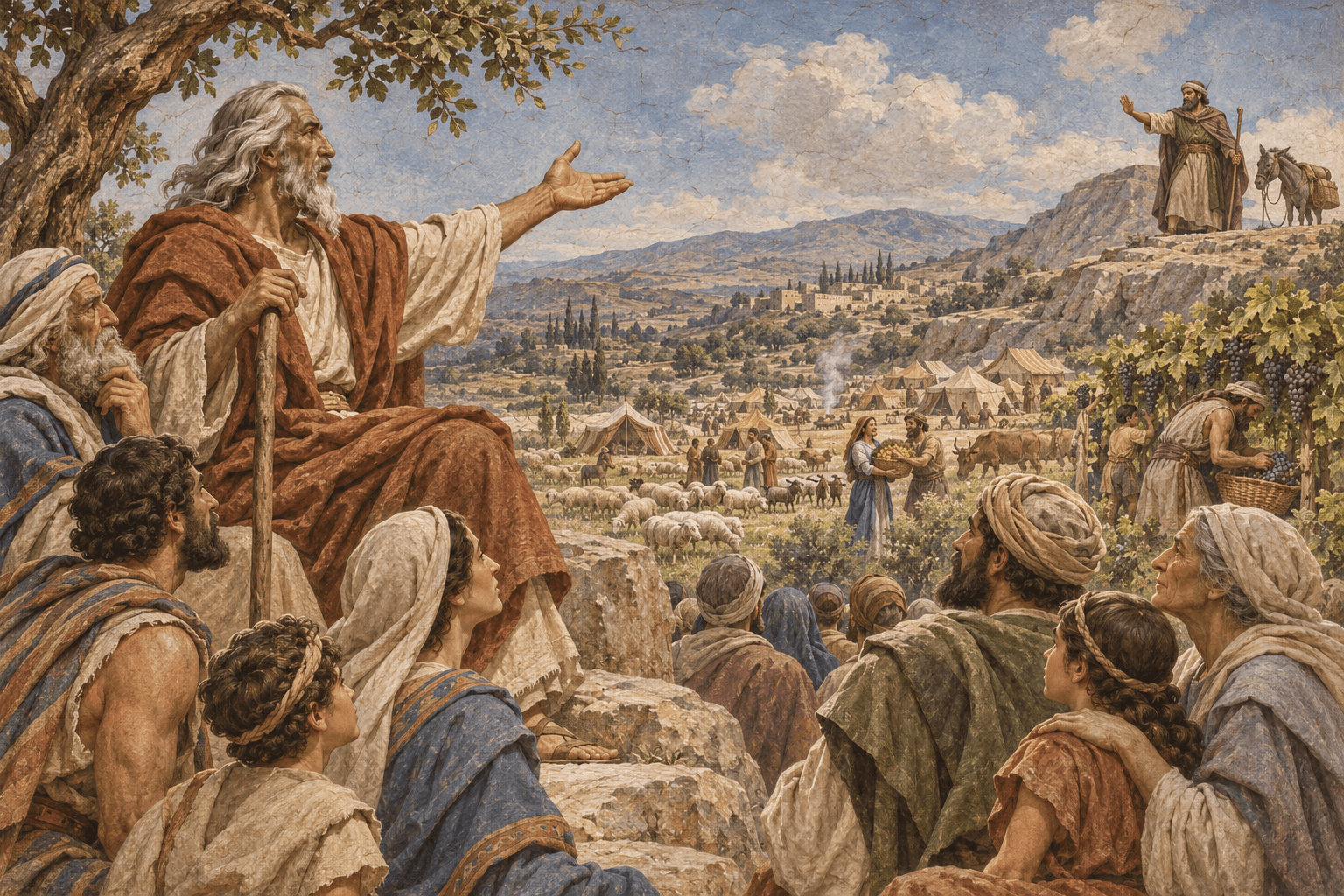
Here the Law gives a list of some who are excluded from entering “the congregation of the Lord,” so that the congregation may remain holy to the Lord. But what does the congregation of the Lord mean here? Some think it means “God’s people during their religious service.” It does not mean depriving them of the salvation of their souls and their worship of the Lord, but depriving them of full rights, such as receiving certain responsibilities, entering the sanctuaries, or holding positions of leadership among the people, so that none of them could be an elder of Israel or a judge. Others think that what is meant here is simply refraining from marrying them, so that there is no mixed marriage between them and the Israelites.
Which Groups Are Excluded?
A) Eunuchs: “He that is wounded in the stones, or hath his privy member cut off, shall not enter into the congregation of the Lord” (1). This teaching about excluding eunuchs from the congregation of the Lord had special importance at that time, for it was common among the nations for groups of eunuchs to serve the pagan temples, and also to hold great positions in the royal palace, especially those serving in the queen’s wing and the women’s quarters, so that the word “eunuchs” came to be used of officials in the palace even if they were not physically eunuchs. [251]
Eunuchs were barred from the priesthood (Leviticus 21:17–21), and their children to the tenth generation, to affirm the holiness of all the members of the body. This law came to prevent a person from castrating himself, especially if it was because he regarded the sexual organs as unclean, or the bodily relations of marriage as defilement. The Church forbade those who castrate themselves, even if they are celibate, from receiving any priestly rank, because they defile the view of what God created good and holy.
Hence, even in the Old Testament, the eunuch is not deprived of membership in the congregation of the Lord if he is holy to the Lord. As is said in the Book of Isaiah: “Neither let the son of the stranger, that hath joined himself to the Lord, speak, saying, The Lord hath utterly separated me from his people: neither let the eunuch say, Behold, I am a dry tree. For thus saith the Lord unto the eunuchs that keep my sabbaths, and choose the things that please me, and take hold of my covenant; Even unto them will I give in mine house and within my walls a place and a name better than of sons and of daughters: I will give them an everlasting name, that shall not be cut off” (Isaiah 56:3–5).
Clearly what occupies God’s mind is not the outward form, such as whether a person is a eunuch or not, but the inner depths, where the eunuch experiences keeping the Sabbath, that is, enjoying the weekly feast and continual joy in the Lord, and hallowing the Sabbath as a sign of hallowing his whole life for the Lord. Whoever chooses to please God and holds fast to His covenant, that is, wants continual fellowship with Him, is counted a son (or daughter) of God more than others, has a portion in the house of the Lord, and is fortified by its walls.
B) Children of fornication: “A bastard shall not enter into the congregation of the Lord; even to his tenth generation shall he not enter into the congregation of the Lord” (2).
What is the son’s guilt? The father sinned, so why is the son deprived of entering the congregation of the Lord? The illegitimate son is not deprived of cleaving to God and enjoying the eternal inheritance if he walks in a fitting, holy life in the Lord. But this law aims at forbidding fornication, for the fornicator feels that the fruit of his fornication will not enter the congregation of the Lord.
Among the men of faith whose stories are in the Book of Judges (Judges 11), and whom Paul the Apostle mentions in the list of men of faith, is Jephthah the Gileadite (Hebrews 11:32). It is said of him: “Now Jephthah the Gileadite was a mighty man of valour, and he was the son of an harlot: and Gilead begat Jephthah… and they… said unto him, Thou shalt not inherit in our father’s house; for thou art the son of a strange woman” (Judges 11:1–2).
C) The descendants of Ammon and Moab: their father Lot separated from Abraham (Genesis 13:11), and so cut off his descendants from what the children of Abraham, the man of faith, enjoyed. Ammon and Moab came as the fruit of their father’s drunkenness and his lying with his two daughters. But it may be said: what is their guilt, and that of their descendants after them? The answer came that their descendants took a hostile stand toward God’s people, for he says:
An Ammonite or Moabite shall not enter into the congregation of the Lord; even to their tenth generation shall they not enter into the congregation of the Lord for ever: Because they met you not with bread and with water in the way, when ye came forth out of Egypt; and because they hired against thee Balaam the son of Beor of Pethor of Mesopotamia, to curse thee. Nevertheless the Lord thy God would not hearken unto Balaam; but the Lord thy God turned the curse into a blessing unto thee, because the Lord thy God loved thee. Thou shalt not seek their peace nor their prosperity all thy days for ever. [3–6]
The Ammonite or Moabite has no right to enter the holy congregation until the tenth generation, so as to keep the congregation from the influence of paganism. Yet whoever withdraws from the corruption of these nations and does not cleave to their pagan gods is received by the congregation. Ruth the Gentile surpassed many women of faith in faith; a book of Holy Scripture bears her name, the Lord Christ came from her descendants, and her name is mentioned in the Lord’s genealogy.
If Ammon and Moab, the sons of Lot, lived far from God, their descendants filled up their measure. These two peoples were marked by two serious traits in facing the people of Israel: violence and envy. The violence appeared in their refusal to support the people in the wilderness, and the envy in Moab’s asking Balaam to curse them; and when he failed in his mission, he gave them a plan to make the people stumble. They did not offer bread and water to the people in the midst of the wilderness, though this is a human duty, especially as the people did not ask for it free, but wanted to pay the price. They refused, so God gave them bread from heaven and water from the rock freely. So whoever deprives himself of giving deprives himself of enjoying what is God’s on the great day of the Lord, for He says to them: “Inasmuch as ye did it not to one of the least of these, ye did it not to me” (Matthew 25:45).
The children of Moab asked Balaam to curse God’s people, and God turned the curse into a blessing; but this does not excuse them from the evil hidden in their hearts. As the Psalmist says: “Give them according to their deeds, and according to the wickedness of their endeavours: give them after the work of their hands; render to them their desert” (Psalm 28:4).
Saint Gregory of Nazianzus sees that not allowing the Moabites and Ammonites the right to enter the house of God points to rejecting the use of the destructive sophistical arguments of curiosity. [252]
What Is the Portion of the Edomites and the Egyptians?
The children of Ammon and Moab refused to let the people pass through their land, so they must not be trusted (1–6). But the children of Edom and the Egyptians hosted them at one time, though later they enslaved them, so they can enjoy the covenant with them (7–8). So we ought not to ignore a good deed done to us, however small it seems.
Lest, because of what was said about the children of Ammon and Moab, the people bear a spirit of hatred toward all peoples, He asks them to take a kind stand toward the children of Edom and the Egyptians, saying:
Thou shalt not abhor an Edomite; for he is thy brother: thou shalt not abhor an Egyptian; because thou wast a stranger in his land. The children that are begotten of them shall enter into the congregation of the Lord in their third generation. [7–8]
If an Edomite or an Egyptian became a proselyte, that is, left his idols and accepted faith in the true God, his grandson had the right to enter the congregation of the Lord.
The Edomites opposed them (Numbers 20:20), and the Egyptians enslaved them; but the people ought to forget all this when the Edomite or Egyptian meets God and the sincerity of his faith is confirmed to the third generation. He is then received, remembering of the Edomite that he is his brother, and of the Egyptian that he once hosted him in his country.
God often reminded them of their bondage to the Egyptians, not to stir up a spirit of enmity against them, but so that they would remember God’s wonderful saving work. As for the Egyptians, they remember how they opened their country to host them for about four centuries.
In short, God asked for the sanctification of His people through the following:
A) Depriving whoever defiles his view of the body and despises God’s good creation of sharing in the spiritual leadership of the congregation of the Lord.
B) Whoever bears a spirit of hatred and envy toward God’s children, and whoever puts a stumbling block before them, has no portion in the holy fellowship.
C) The holy congregation ought to bear a spirit of love toward others, not ignoring any good deed done to them, even for a time, but treating them with love mingled with wisdom.
2. A Holy Army
KJV · Verses 9–14
9 When the host goeth forth against thine enemies, then keep thee from every wicked thing. 10 If there be among you any man, that is not clean by reason of uncleanness that chanceth him by night, then shall he go abroad out of the camp, he shall not come within the camp: 11 But it shall be, when evening cometh on, he shall wash himself with water: and when the sun is down, he shall come into the camp again. 12 Thou shalt have a place also without the camp, whither thou shalt go forth abroad: 13 And thou shalt have a paddle upon thy weapon; and it shall be, when thou wilt ease thyself abroad, thou shalt dig therewith, and shalt turn back and cover that which cometh from thee: 14 For the Lord thy God walketh in the midst of thy camp, to deliver thee, and to give up thine enemies before thee; therefore shall thy camp be holy: that he see no unclean thing in thee, and turn away from thee.
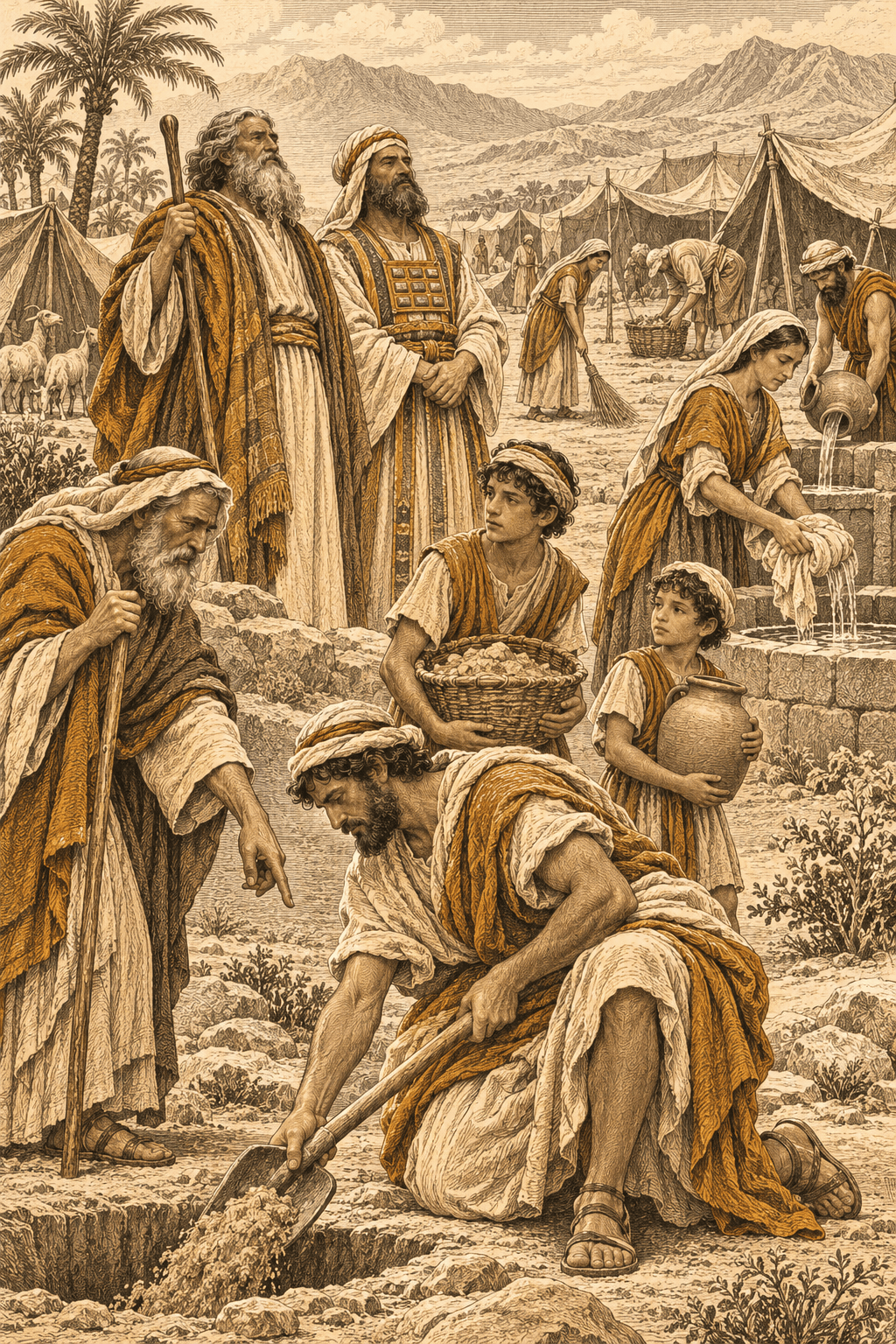
The people were about to enter the Promised Land, where they would enter a continuous series of battles against the Canaanites; so it was necessary to lay special foundations for the men of the army, so that they might enjoy the life of overcoming. Therefore, after speaking of “the congregation of the Lord,” of those excluded from entering the congregation, and of the possibility of the Edomites and Egyptians entering the congregation of the Lord, he spoke of the army and its sanctification, speaking of three kinds of sanctification.
First: Sanctification from sin: “When the host goeth forth against thine enemies, then keep thee from every wicked thing” (9). Sin draws a person’s heart toward cowardice, for it binds him to the earth and temporal life. But the righteousness of Christ lifts our hearts to heaven and gives them a strength that defies death. So temporal battles ought to be living opportunities for entering inner battles, so that all are purified from every evil thing. By this Holy Scripture draws us toward God, who hears the prayers of the righteous and grants them the spirit of success and victory. As the Psalmist says: “If I regard iniquity in my heart, the Lord will not hear me… Blessed be God, which hath not turned away my prayer, nor his mercy from me” (Psalm 66:18, 20). Samuel the prophet assured the people that the sanctification of the heart is the way of victory, saying: “If ye do return unto the Lord with all your hearts, then put away the strange gods and Ashtaroth from among you, and prepare your hearts unto the Lord, and serve him only: and he will deliver you out of the hand of the Philistines” (1 Samuel 7:3).
Second: A ritual, spiritual sanctification, together with purification from all evil. They must practice the rite of purifications, even if the defilement is involuntary, such as a nocturnal emission.
If there be among you any man, that is not clean by reason of uncleanness that chanceth him by night, then shall he go abroad out of the camp, he shall not come within the camp: But it shall be, when evening cometh on, he shall wash himself with water: and when the sun is down, he shall come into the camp again. [10–11]
Since God is holy, He wants His people to be holy inside and out. If a person has a dream that stirs him unconsciously, this is not counted a sin, but he ought to wash so that his body may be clean, and also wash his clothes, as in Leviticus 15:16: “And if any man’s seed of copulation go out from him, then he shall wash all his flesh in water, and be unclean until the even. And every garment, and every skin, whereon is the seed of copulation, shall be washed with water, and be unclean until the even.”
The soldier in the midst of the camp has no right to excuse himself from applying this law of purifying his body and clothes; the battle pushes him, on the contrary, not to ignore the Law but to be careful in carrying it out. Let him withdraw from the battle that day and fulfill this law of purification, so that God may stand on the side of the whole army. By human calculations the withdrawal of these men causes a gap in the army and reduces its strength and ability; but by divine calculations their withdrawal affirms care for the holiness of the people and the army, so that the Holy One Himself is the Commander and the Giver of victory.
If God cares so much for the sanctification of all even in what happens unconsciously, how much more ought all to be holy in body, thought, and feelings.
By saying, “Thou shalt have a place also without the camp, whither thou shalt go forth abroad” (12), he affirms the importance of cleanliness within the camp for preserving health and personal purity. The Lord’s presence in their midst is a continual incentive to holiness.
Third: Natural cleanness. To affirm God’s presence in the midst of His people, especially during their battles, which are His battle against the devil and his works, He wanted them to be clean even in natural necessities, so that there was nothing filthy in the camp, for He says:
And thou shalt have a paddle upon thy weapon; and it shall be, when thou wilt ease thyself abroad, thou shalt dig therewith, and shalt turn back and cover that which cometh from thee: For the Lord thy God walketh in the midst of thy camp, to deliver thee, and to give up thine enemies before thee; therefore shall thy camp be holy: that he see no unclean thing in thee, and turn away from thee. [13–14]
Some ask: how can the divine Law care for a matter like this, spoken by Moses, the greatest of the prophets?
A) He wanted to affirm that nature itself teaches us to distinguish ourselves from animals, so we ought to be clean in everything.
B) If God cares for the purification of the heart and the sanctification of the whole person, then through caring even for the cleanliness of the place we realize how important purity and holiness are in the eyes of the Holy One. Since the war was not meant to seize land or possessions but to prepare God’s people as a leaven for sanctifying the peoples, its preparation was not by military equipment and organization, but by holy inner and outer life, such as cleanliness.
C) The Law as a whole reveals the unity of life: it does not separate the laws of worship from conduct, nor moral conduct from conduct concerning public or personal health, nor the laws for times of war from those for life in peace. The believer, living in the Lord, cares for all aspects of his life: spiritual, social, academic, health, national, and family. It is one indivisible life.
D) The Law reveals the divine presence even in moments of war: “For the Lord thy God walketh in the midst of thy camp” (14). It is as though what occupies the believer’s mind even in caring for matters of health is his being occupied with the Holy God. If the high priest was obliged to wear a golden plate engraved “Holiness to the Lord,” the believer, when he senses God’s presence in his home, cares for all the furnishings of the house as though he engraves on them “Holiness to the Lord.” Wherever he is, he feels he is as in a holy temple where he meets the Holy One.
E) God created the beautiful world for man, but man loved the world more than its Creator. Therefore, while He calls him to renounce the love of the world, He asks him to preserve all that is beautiful in the world. He wants us to live in a healthy atmosphere without pollution. Now we hear the world crying out from the pollution of the environment, the air, the water, the food, and the land! This is what man did after his heart was polluted by sin: he polluted the world in many ways. Today we hear warnings lest we carry pollution even to the planets to which we send spacecraft.
May we, by the Spirit of the Lord, keep our depths from all pollution, and so long to live even in a world without pollution. Now countries set up special ministries for the environment to deal with all pollution! Let us begin with cleanliness within, and not ignore cleanliness without as well!
F) What one person does, even without evil intention, may harm and grieve the whole community, and may even destroy it. Therefore every member ought to do what he can, not only for himself but for the whole community.
3. The Fugitive Slave
KJV · Verses 15–16
15 Thou shalt not deliver unto his master the servant which is escaped from his master unto thee: 16 He shall dwell with thee, even among you, in that place which he shall choose in one of thy gates, where it liketh him best: thou shalt not oppress him.
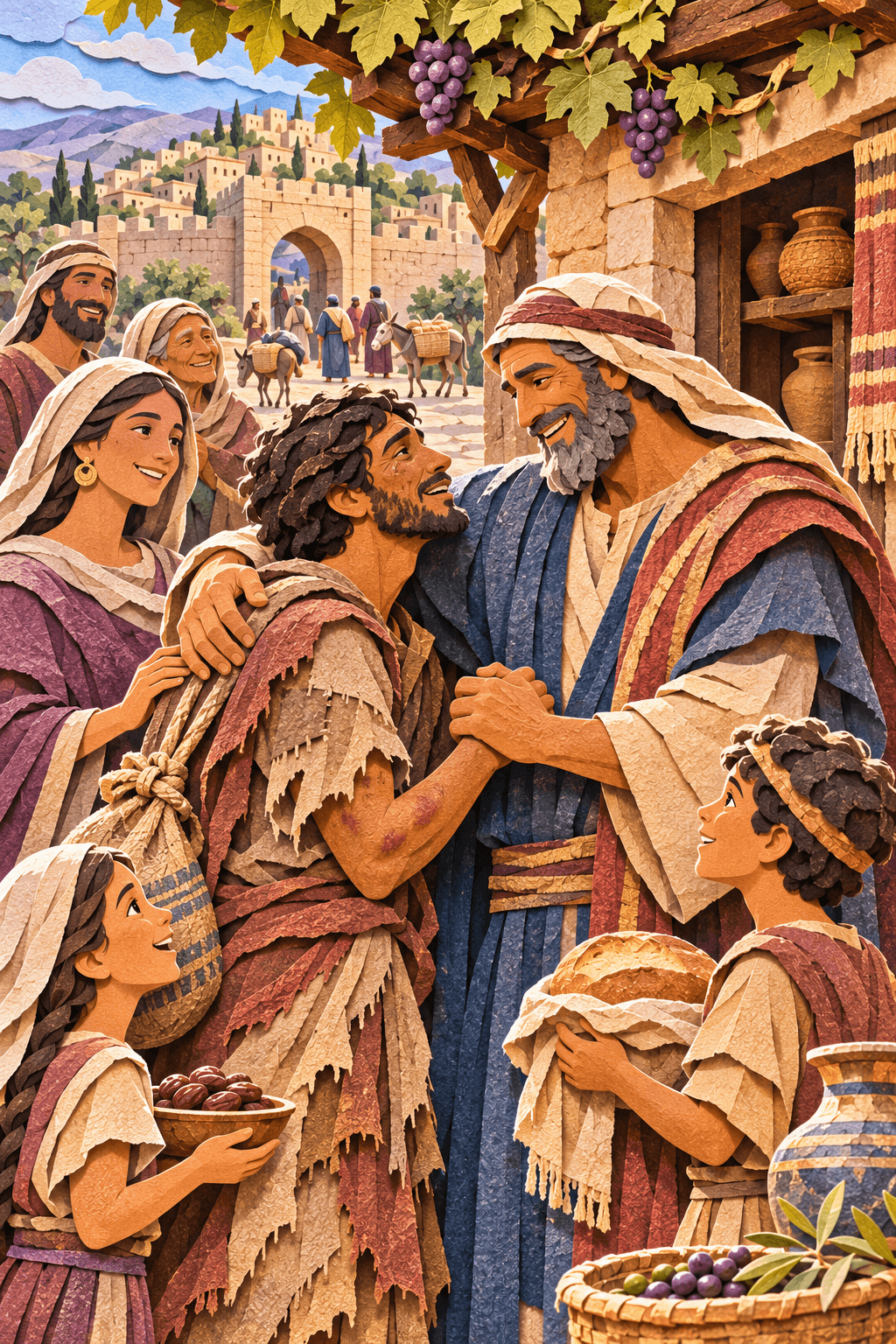
After speaking of exactness in purity and cleanness, spiritually, bodily, and ritually, even in the natural necessities that seem trivial, he gives us laws that reveal how exact a person ought to be in all matters of life. He began by speaking of the foreign slave who flees from his master because of the injustice that befalls him (see verses 15–16 above).
Clearly the Mosaic Law, though it did not abolish the system of slavery, urges the believer in every way to be gentle with slaves and to treat them as brothers. If God gave the people the Promised Land as a refuge for them after freeing them from Pharaoh’s bondage, He longs for His people to imitate Him, opening their hearts and their homes to every suffering or distressed soul.
Is It Just to Protect a Fugitive?
First: This law is not to be understood as protecting a fugitive from the law, especially if he has committed a crime, for the law ends by saying, “thou shalt not oppress him” (16), which shows that it speaks of a slave fleeing from the injustice that was pursuing him.
Second: Some think that the slave here is fleeing from a pagan master in a neighboring country, and has come to take refuge among God’s people and to worship, where he finds his inner peace and fitting rest in God.
Third: God wants His people and His children to be a refuge, especially for those in distress, such as protecting a slave fleeing from his master’s cruelty, while caring for the weak and oppressed. The kings of Israel were known for this virtue, as appears from what the servants of Ben-hadad said to him: “Behold now, we have heard that the kings of the house of Israel are merciful kings” (1 Kings 20:31).
Fourth: Some see that this legislation reveals God’s opposition to slavery. In the same book, God insists that the believer return everything lost to his brother, whether Hebrew or Gentile; yet here He insists that the slave not be returned to his master. For no person has the right to own another person and enslave him. We have spoken before of the Holy Scripture’s view of slavery.
The matter does not stop at not returning the slave to his master; the believer is obliged to prepare a place for him to live and work.
Fifth: While Holy Scripture affirms that no person has the right to own another, it makes clear that God alone has the right to own us for Himself: “For ye are bought with a price: therefore glorify God in your body, and in your spirit, which are God’s” (1 Corinthians 6:20). Whoever is enslaved to God is set free inwardly from every bondage. As Saint Arsenius says:
It is better to be the servant of one master than the servant of many masters.
4. Rejecting Immorality and Uncleanness
KJV · Verses 17–18
17 There shall be no whore of the daughters of Israel, nor a sodomite of the sons of Israel. 18 Thou shalt not bring the hire of a whore, or the price of a dog, into the house of the Lord thy God for any vow: for even both these are abomination unto the Lord thy God.
If it befits God’s people to be a refuge even for the slave fleeing from injustice, this must not be so for the immoral and unclean. Prostitution is utterly rejected, and no gain from such work will be accepted as an offering to the Holy One (see verses 17–18 above).
No daughter of Israel was allowed to remain among her people practicing harlotry, nor any son of Israel to practice sodomy, for the people must remain “an holy nation.” When Amnon the son of David asked his sister Tamar to sin with him, she said to him: “Nay, my brother, do not force me; for no such thing ought to be done in Israel: do not thou this folly” (2 Samuel 13:12).
The hire of a harlot or the price of sexual corruption (the price of a dog) is not allowed to be offered to the house of the Lord. Here those who commit sexual corruption are called dogs, as in the Book of Revelation: “For without are dogs, and sorcerers…” (Revelation 22:15). So God does not accept the offering of a corrupt person, for “The sacrifice of the wicked is an abomination to the Lord: but the prayer of the upright is his delight” (Proverbs 15:8). God wants the repentant heart that returns to Him, not sacrifices and offerings without purity of heart. God is not honored by what we offer Him, but is glorified by our holy life in Him. So He is not concerned with what we offer, but with the heart that offers it. He is not bribed with money and offerings.
The wise man warns us of the wicked woman who seduces the simple under the cover of religiosity: “So she caught him, and kissed him, and with an impudent face said unto him, I have peace offerings with me; this day have I payed my vows. Therefore came I forth to meet thee, diligently to seek thy face, and I have found thee” (Proverbs 7:13–15).
Unlike the pagan atmosphere around them, He asks them to reject harlotry and lying with males for the sake of the temple. Some priestesses lived beside the temple of Venus, offering their bodies for a hire given to the temple, and some worshippers of both sexes gave themselves to evil practices. As Herodotus says, abominations were an inseparable part of pagan worship, especially the worship of the goddess Ashtoreth. [253] The Book of Micah says of the pagan worship in Samaria: “And all the graven images thereof shall be beaten to pieces, and all the hires thereof shall be burned with the fire, and all the idols thereof will I lay desolate: for she gathered it of the hire of an harlot, and they shall return to the hire of an harlot” (Micah 1:7).
5. Usury
KJV · Verses 19–20
19 Thou shalt not lend upon usury to thy brother; usury of money, usury of victuals, usury of any thing that is lent upon usury: 20 Unto a stranger thou mayest lend upon usury; but unto thy brother thou shalt not lend upon usury: that the Lord thy God may bless thee in all that thou settest thine hand to in the land whither thou goest to possess it.
That God may be a fortress for His people, granting them the spirit of overcoming and victory, He asked them not only to be sanctified in everything great and small, even in the offerings they bring to His house; together with sanctification He asks for mutual love among them. In His love He gave the people the Promised Land, so that all might live together in a spirit of fellowship, not greed, and all might feel that what is in their hands is a divine gift. Therefore He forbade them usury when a brother or sister needs to borrow money, food, or anything (see verses 19–20 above).
He refused lending to a brother with usury, because it is assumed that he asks out of want and need. So the Lord asked us not only not to seek usury, but not even to seek repayment of the debt, saying: “And if ye lend to them of whom ye hope to receive, what thank have ye? for sinners also lend to sinners, to receive as much again” (Luke 6:34). The Apostle affirmed that the covetous shall not inherit the kingdom of God (1 Corinthians 6:10).
As for strangers, loans were given with interest, because it was assumed that the stranger asked for it for the sake of trade. The benefit is mutual: the stranger trades with the money, and the Jew receives a share of his profit through the interest.
6. Not Being Hasty in Vows
KJV · Verses 21–23
21 When thou shalt vow a vow unto the Lord thy God, thou shalt not slack to pay it: for the Lord thy God will surely require it of thee; and it would be sin in thee. 22 But if thou shalt forbear to vow, it shall be no sin in thee. 23 That which is gone out of thy lips thou shalt keep and perform; even a freewill offering, according as thou hast vowed unto the Lord thy God, which thou hast promised with thy mouth.
Together with holiness and love, He also asks for seriousness, so that no one utters any word in haste, especially when he vows something to the Lord. He had already dealt with the subject of the obligation of vows in the Book of Numbers (Numbers 30) (see verses 21–23 above).
God has no need of vows, so it is not counted a sin to one who refrains from vowing; but He asks for seriousness in every word the lips utter. He did not say “what your heart vows” but what “thou hast promised with thy mouth,” lest anyone be troubled merely because he has many longings for consecration and giving that are sometimes impossible for a person to carry out. So He did not want to burden the conscience of the believers.
The wise man says: “Be not rash with thy mouth, and let not thine heart be hasty to utter any thing before God: for God is in heaven, and thou upon earth: therefore let thy words be few… When thou vowest a vow unto God, defer not to pay it; for he hath no pleasure in fools: pay that which thou hast vowed” (Ecclesiastes 5:2, 4).
In our full freedom we may vow or refrain from vowing, for God does not want to burden anyone. Whoever vows, let him do so with joy of heart and fulfill it. The New Testament declares clearly about giving: “Every man according as he purposeth in his heart, so let him give; not grudgingly, or of necessity: for God loveth a cheerful giver” (2 Corinthians 9:7).
7. The Right of Neighborliness
KJV · Verses 24–25
24 When thou comest into thy neighbour’s vineyard, then thou mayest eat grapes thy fill at thine own pleasure; but thou shalt not put any in thy vessel. 25 When thou comest into the standing corn of thy neighbour, then thou mayest pluck the ears with thine hand; but thou shalt not move a sickle unto thy neighbour’s standing corn.
The law of the holy congregation is love. No one has the right to trespass on his neighbor’s property, his field or his vineyard. If he is hungry, he has the right, through love, to eat from his neighbor’s field, without carrying anything away with him and without abusing this right (see verses 24–25 above).
The vineyards and fields in Palestine were open to those walking by, and the fruit was so plentiful that whoever wished could eat what he liked.
Some primitive tribes keep this law, so that any passer-by has the right to turn aside into a field and eat his fill without taking anything with him. Many civilized groups keep it too: those who work in factories of food or drink have the right to eat or drink of what is in the factories, but not to carry any of it outside. Canaan was famous for the abundance of its crops and vineyards, so however much a neighbor ate or drank, it would be nothing compared with the abundance God gives to the owners of the vineyards and fields.
When the disciples were hungry, they began to pluck ears of corn and eat. When the Pharisees noticed this, they said to the Lord: “Behold, thy disciples do that which is not lawful to do upon the sabbath day” (Matthew 12:2; Luke 6:2). They did not criticize them for taking ears from the field, for this was a right the Law gave to all; but they criticized them because they plucked, which they counted as reaping, and rubbed the ears in their hands, which they counted as work forbidden on the Sabbath!
The Jews hold that this law was given for two groups: for those working in the fields, who have the right while they work to eat and drink their fill of what is in their hands; and for poor travelers, so that they would not faint on the way.
This law carries an important principle: while a person is exact in his spiritual life, he ought to be lenient with his brothers in material matters not worth being occupied with, especially if the brother (or sister) does this out of want and according to his need, without abusing this love and simplicity.
This law also gives a person the opportunity to be generous with his brother, letting him eat or drink in his field or vineyard without limit, except that he take nothing with him or exploit his presence in the field by putting his sickle to the ears and then leaving what he gathered scattered in the field. While the Law asks for our love toward our neighbor, it asks the stranger to be committed and not to abuse the right of friendship or neighborliness, knowing the limits of what he receives.
8. A Meditation on Deuteronomy 23
A Holy Congregation, a Holy Army, and a Holy House
Grant me to be careful for the holiness of Your congregation, O Holy One!
You reject from the priesthood the one who castrates himself.
Grant me to honor every member of my body.
You created nothing unclean in me.
I wait for when You will reflect Your splendor on my soul and body and all my being,
and I will bear Your likeness and become an icon of You!
Let every lustful thought flee from me!
Let there be no Ammonite or Moabite within me.
Let me bear love for all with a spirit of discernment.
I open my heart to every Edomite and Egyptian, and receive them through Your love.
You chose me as a soldier in the army of Your salvation.
May I be exact in the purity of my heart and body!
Let me always wash in the waters of Your love,
and always be sanctified by Your purifying blood,
so that Your camp within me may be wholly pure.
States set up ministries of the environment to deal with all pollution.
Let Your Holy Spirit rise up, purifying me from every defilement.
Grant me to live without pollution within and without,
to breathe the breezes of Your pure love,
and drink from the springs of Your living waters, which no pollution will touch!
You ask for the cleanness of my depths:
cleanness of heart and thought, of senses and feelings.
You ask for the cleanness of the body with all its energies,
and You ask me for the cleanness of the world around me.
So I take care even for the purity of the air I breathe
and the land on which I live.
My cleanness is an inseparable part of the righteous life in You, O You who alone are righteous.
Let me be a brave soldier in the spiritual battle,
and a tender father toward every oppressed slave.
Let my courage be mingled with my love and kindness.
You have set up Your temple within me!
I will not offer in it the hire of a harlot or the price of a dog.
I will not mix my worship with defilement, nor my offering with any corruption.
I long to offer my whole life as a vow to You.
Without haste, accept it as an offering of love to You.
Grant me to open the field of my heart to every person.
Grant me love for every neighbor and every stranger.
If I hire someone, let me not wait for him to ask for his wage,
but hasten in love to give him his due.
In every work let me always remember the distressed,
and care for every stranger and needy one!
Notes and References
[251] See the commentary on Daniel, p. 19.
[252] Saint Gregory of Nazianzus, The Last Farewell (Oration 42), 17.
[253] Herodotus, Histories 1:199.