
God, who finds His pleasure in attributing Himself to orphans, widows, the outcast, and the rejected, gives His law in order to turn every person’s life into a Sabbath life, so that all his days become “a Sabbath to the Lord.” He wants to turn our life into true rest in Him. The poor man finds his rest in God, and the rich man enjoys the same life. Holy Scripture had spoken earlier of the Sabbath year (Exodus 23:10; Leviticus 25:1–7).
In this chapter he makes clear that debtors unable to pay their debts are not deprived of benefiting from the Sabbath year. This does not mean that the debt was entirely removed, but that debtors were no longer obliged to repay it, while whoever was unable to pay was released from it. He also spoke of the freeing of the Hebrew servant (Exodus 21:2–10) and of boring through the ear of the servant who accepts servitude by his own will.
1. The Sabbath Year
KJV · Verses 1–6
1 At the end of every seven years thou shalt make a release. 2 And this is the manner of the release: Every creditor that lendeth ought unto his neighbour shall release it; he shall not exact it of his neighbour, or of his brother; because it is called the Lord’s release. 3 Of a foreigner thou mayest exact it again: but that which is thine with thy brother thine hand shall release; 4 Save when there shall be no poor among you; for the Lord shall greatly bless thee in the land which the Lord thy God giveth thee for an inheritance to possess it: 5 Only if thou carefully hearken unto the voice of the Lord thy God, to observe to do all these commandments which I command thee this day. 6 For the Lord thy God blesseth thee, as he promised thee: and thou shalt lend unto many nations, but thou shalt not borrow; and thou shalt reign over many nations, but they shall not reign over thee.
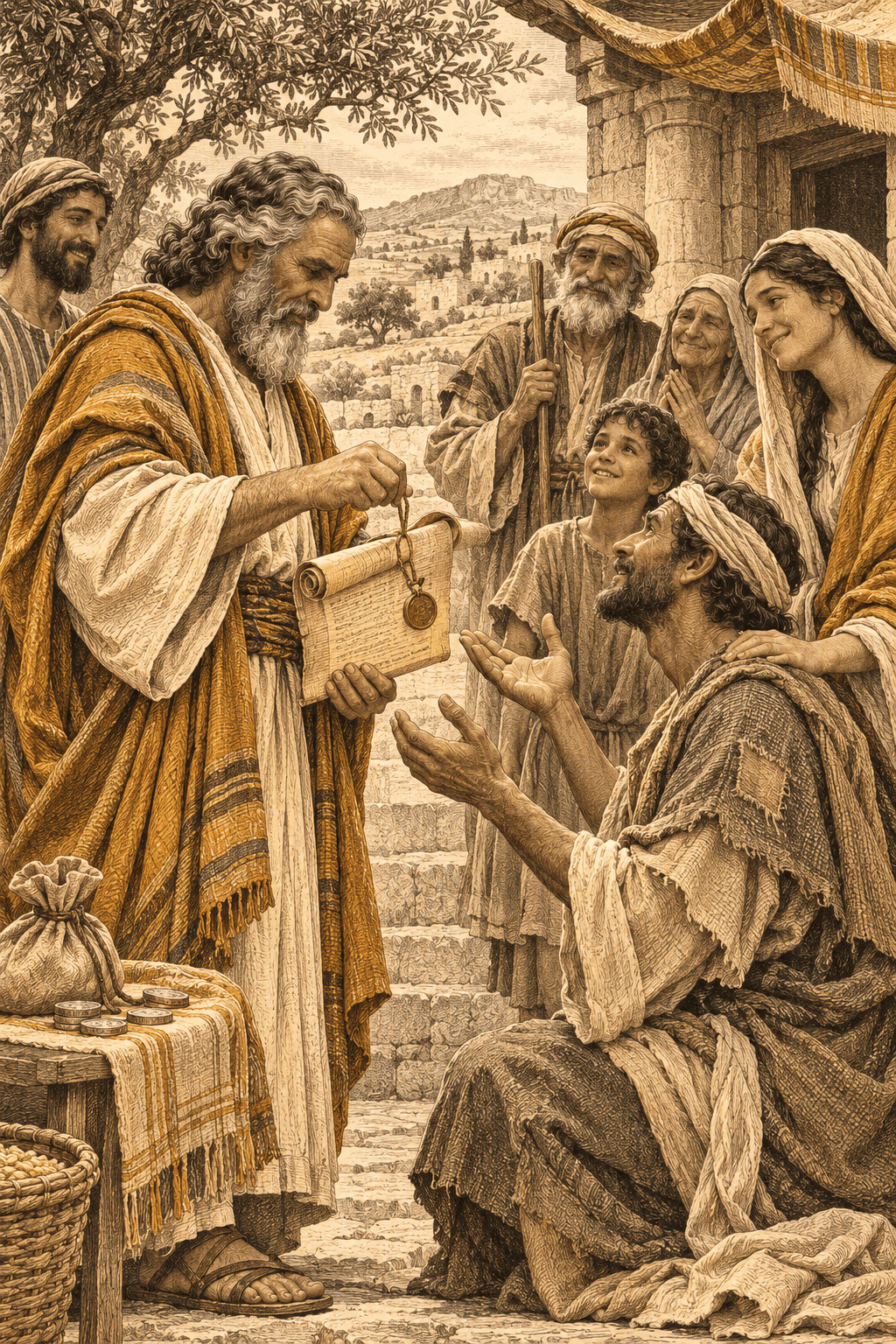
Since the holy life does not stop at certain practices but touches our relationships with ourselves, God, and people, the law of “the year of release” came to reveal God’s care, and therefore the care of His children, for debtors unable to repay, releasing them for the sake of the Lord Himself; and also for the destitute and for servants who found no one to care for them.
At the end of every seven years thou shalt make a release. And this is the manner of the release: Every creditor that lendeth ought unto his neighbour shall release it; he shall not exact it of his neighbour, or of his brother; because it is called the Lord’s release. [1–2]
First: God is the God of all, and He attributes Himself to the needy and suffering; therefore He gave them the law of the Sabbath year (the seventh year) as a year of release. This shows how much God cares for His children, for He counts whoever is in debt to his brother as though the Lord Himself were the debtor. Therefore, when He insists on releasing needy brothers from their debts in the Sabbath year, “at the end of every seven years,” He calls this release “the Lord’s release” (2).
Second: God wants to make all the days of our life a joyful Sabbath and a rest in Him. Every week He sets up a Sabbath for the Lord, or “the Lord’s day,” in which He declares His rest after creating the world in the first six days; having created man on the sixth day, He rested, longing to give the rest of love to His beloved man on the seventh day. Now that the divine Word has come and re-created us, raising us with Him from the dead and making His Holy Spirit dwell in us, He has made Sunday a Sabbath for Him and for us. This day has become “the Lord’s day,” which turns all the days of our life into a holy life, risen in the Lord.
Every seven years He sets up the seventh year as a year for the Lord, to bless all the years of our life; and every fifty years, that is, after seven times seven years (7 × 7 = 49), He sets up for us a joyful jubilee in the Lord. In other words, God continually gives us every possible opportunity to enjoy our life as a feast and a rest in the Lord. By saying “the Lord’s release” he declares that all that the believer practices of worship, celebration of feasts, giving, or yielding his rights is done in the name of the Lord and for His sake; as though the believer lives in the Lord in all his inner thoughts and conduct.
How wonderful is the expression “the Lord’s release,” for it points to the work of the Lord Christ, who preached “the acceptable year of the Lord” (Luke 4:19). He came to preach the gospel to the poor and deliverance to the captives (Isaiah 58:6; Luke 4:18). He came to us, the poor, burdened with debts, to give us reconciliation with God freely by His blood (2 Corinthians 5:20).
All the children of God since Adam were looking forward to the year of “the Lord’s release.” When our Christ went down into Hades, He met thousands upon thousands and myriads of fathers, prophets, priests, and people, great and small, awaiting the One who alone pays their debt and brings them into the enjoyment of the year of the Lord’s release.
Third: Just as the Lord’s Sabbath, or His rest, is in releasing our souls from the debt we owed because of our sins, paying the price by giving His life for us, so we ought to return this love with love toward our brothers, forgiving them their wrongs toward us and releasing them from every debt.
Fourth: Not abusing the release, for he says: “Of a foreigner thou mayest exact it again: but that which is thine with thy brother thine hand shall release” (3). Requiring the debt from a foreigner is not unjust, for as a stranger living in Canaan he owned no land but lived by trade or craft; he did not lose his income in the year of release as the Jew did. Therefore he was required to repay what he borrowed. Some think the release was for the Sabbath year alone, after which the debtor repaid the debt. Their reasons are, first, that in the Sabbath year no one farmed, so there were no crops to sell to repay debts; and second, that if the debt were wiped out completely, many would refuse to lend to others lest their loans be lost when the Sabbath year arrived.
The word “release” in Hebrew means “to let go,” that is, the creditor leaves the debt in the hands of the debtor, as the land is left unfarmed in that year.
Fifth: God allows there to be poor people and debtors among His people, but for a time and within certain limits: “Save when there shall be no poor among you” (4). Since the release takes place every seven years, there is no one among them in abject poverty, and no one on whom severe misery falls. He allows temporary poverty within certain limits, so that the poor man together with the rich practices the life of thanksgiving. The rich man rejoices when he gives and releases, counting what he gives as given to the Person of the Lord Himself; and the poor man and the debtor rejoice when they see the loving Lord revealed and shining in the conduct of the rich and the creditors.
Some think that by saying, “Save when there shall be no poor among you” (4), he affirms that the release is not general but is a release for the needy poor, for the aim of the Sabbath year is not that debtors should exploit their creditors, but that believers be kept from abject poverty.
Sixth: If God asked creditors to release debtors, He offered Himself as committed to compensating them for the loss:
Save when there shall be no poor among you; for the Lord shall greatly bless thee in the land which the Lord thy God giveth thee for an inheritance to possess it: Only if thou carefully hearken unto the voice of the Lord thy God, to observe to do all these commandments which I command thee this day. For the Lord thy God blesseth thee, as he promised thee: and thou shalt lend unto many nations, but thou shalt not borrow; and thou shalt reign over many nations, but they shall not reign over thee. [4–6]
Instead of being creditors to their brothers, He makes them creditors to many nations, and gives them strength and authority over many nations. It is as if He does not command the rich to release for nothing, but asks for them greater wealth, strength, and authority; not at the expense of their brothers, but in relation to strangers.
The Apostle Paul shows his care for the giver as well as for the receiver, saying: “For I mean not that other men be eased, and ye burdened: But by an equality… As it is written, He that had gathered much had nothing over; and he that had gathered little had no lack” (2 Corinthians 8:13–15).
Seventh: If the land given to the people is a free gift from God, who wants them to have wealth and freedom, they ought not to leave the poor borrowers in poverty and humiliation, for it is said: “The rich ruleth over the poor, and the borrower is servant to the lender” (Proverbs 22:7).
Eighth: Lest the rich stop lending to the poor, He asked them to release only in the seventh year, after making sure the debtor was unable to repay. And God offered Himself as guarantor of compensation for every loss.
Ninth: The law of the Sabbath year, in which “the Lord’s release” takes place, came as a practical lesson in renouncing the love of money, or the covetousness that rules hearts as idolatry. As the Apostle Paul says: “For this ye know, that no… covetous man, who is an idolater, hath any inheritance in the kingdom of Christ and of God” (Ephesians 5:5). “Mortify therefore your members which are upon the earth;… and covetousness, which is idolatry” (Colossians 3:5). Man ought to work not to gather for himself but to give to others: “but rather let him labour, working with his hands the thing which is good, that he may have to give to him that needeth” (Ephesians 4:28).
In fact this law of releasing poor debtors was like a declaration of “brotherhood” among all believers in the one God. The release rests on the basis that God is the Father of all, whose nature is to forgive sins; whoever pardons his brother is worthy to receive pardon from God. The Lord Christ illustrated this by the parable of the servant who owed ten thousand talents and whom the creditor released; but when he refused to forgive his fellow servant who owed him a hundred pence, the creditor again required him to pay the ten thousand talents. Solomon the Wise says: “he that watereth shall be watered also himself” (Proverbs 11:25); whoever waters others with love waters himself with the greater love of God.
2. Caring for the Poor
KJV · Verses 7–11
7 If there be among you a poor man of one of thy brethren within any of thy gates in thy land which the Lord thy God giveth thee, thou shalt not harden thine heart, nor shut thine hand from thy poor brother: 8 But thou shalt open thine hand wide unto him, and shalt surely lend him sufficient for his need, in that which he wanteth. 9 Beware that there be not a thought in thy wicked heart, saying, The seventh year, the year of release, is at hand; and thine eye be evil against thy poor brother, and thou givest him nought; and he cry unto the Lord against thee, and it be sin unto thee. 10 Thou shalt surely give him, and thine heart shall not be grieved when thou givest unto him: because that for this thing the Lord thy God shall bless thee in all thy works, and in all that thou puttest thine hand unto. 11 For the poor shall never cease out of the land: therefore I command thee, saying, Thou shalt open thine hand wide unto thy brother, to thy poor, and to thy needy, in thy land.
If we consider what is in this chapter as part of a program God set for the poor, a “program for the poor,” as most countries of the world do today, then God has taken us to the roots of the problem. Many systems claiming to be “socialist” arose and thought they would completely eliminate abject poverty in society, and the advanced capitalist countries set special programs for the needy; yet in both kinds we find in the same city the excessively rich and the utterly destitute. [149] But God declared: “thou shalt not harden thine heart… Beware that there be not a thought in thy wicked heart” (7–9). The problem of the serious material gap between classes goes back to the heart corrupted by sin, and no outward system can cure it unless the heart is changed and renewed, rejecting sin.
First: Through love we must give or lend according to our circumstances and the need of others. “Thou shalt not harden thine heart” (7), for charity springs from the heart, just as God’s charity springs from His loving heart.
Second: God cares for our sanctification, shaping our depths together with our outward conduct; therefore He commands: “thou shalt not harden thine heart, nor shut thine hand from thy poor brother” (7). When the hand is closed or shut against giving, it reveals the inner hardness of the heart. For “If the clouds be full of rain, they empty themselves upon the earth” (Ecclesiastes 11:3). When we have faith, we stretch out our hands to give generously. As James the Apostle says: “If a brother or sister be naked, and destitute of daily food, And one of you say unto them, Depart in peace, be ye warmed and filled; notwithstanding ye give them not those things which are needful to the body; what doth it profit?” (James 2:15–16).
He warns the rich not only against refusing to lend, but against what is more important, the corruption and meanness of the heart:
Beware that there be not a thought in thy wicked heart, saying, The seventh year, the year of release, is at hand; and thine eye be evil against thy poor brother, and thou givest him nought; and he cry unto the Lord against thee, and it be sin unto thee. [9]
He warns us against the hidden thoughts springing from a corrupt heart; it is not enough to beware of wrong conduct, but also of corrupt depths. The evil or wicked eye here is the opposite of the single eye that the Lord Christ called blessed (Matthew 6:22; Luke 11:34).
Saint John Chrysostom says:
“This is the summit of virtue, the foundation of all God’s commandments: that the love of God be joined to the love of neighbor (Matthew 22:39; Mark 12:31; Luke 10:27). Whoever loves God does not despise his brother, nor count money better than the member that belongs to him, but shows him great generosity, mindful of Him who said, ‘Inasmuch as ye have done it unto one of the least of these my brethren, ye have done it unto me’ (Matthew 25:40). He realizes that the Lord of all counts what is done generously to the poor for his relief as done to Himself. So let no one look at the simple appearance of the poor man, but at the greatness of Him who promises to receive what is given to the poor as though given to Himself. [150]”
Third: By saying, “the Lord thy God shall bless thee” (10), he affirms that the creditor who yields the debt to the poor debtor with a pure heart full of love for God loses nothing; rather his whole life becomes a “blessing.” All his works are blessed, and all that he puts his hand to. When the creditor sees in his debtor the Lord Himself receiving the payment of the debt, he becomes as one who carries the Lord within him; he is blessed by Him, and all he touches becomes blessed. Wherever he goes, the blessing of the Lord working in him comes upon all around him!
Fourth: A person may refuse to lend, especially as the seventh year approaches, counting this a kind of wisdom, seeking what is his own and ignoring what is God’s and others’. As the Psalmist says: “Though while he lived he blessed his soul: and men will praise thee, when thou doest well to thyself” (Psalm 49:18). God wants us to give cheerfully (2 Corinthians 9:7). His gift to the generous is as He says in Isaiah the prophet: “And the Lord shall guide thee continually, and satisfy thy soul in drought, and make fat thy bones: and thou shalt be like a watered garden, and like a spring of water, whose waters fail not” (Isaiah 58:11).
Fifth: The divine commandment warns us against ignoring the poor and needy, for when they cry out, God hears their voices full of bitterness. The New Testament has warned us of this: in Matthew 25:31–46 God counts whoever ignores the poor as losing the eternal inheritance, because ignoring them is directed against God Himself. James the Apostle warns us against the injustice that falls on poor workers, saying: “Behold, the hire of the labourers who have reaped down your fields, which is of you kept back by fraud, crieth: and the cries of them which have reaped are entered into the ears of the Lord of sabaoth” (James 5:4). And in 1 John 3:17: “But whoso hath this world’s good, and seeth his brother have need, and shutteth up his bowels of compassion from him, how dwelleth the love of God in him?”
One of the gifts God gives His people is that there are poor among them, so that their hands may reach out in love and giving, and they receive the blessing of giving and enjoy God’s work with them: “For the poor shall never cease out of the land” (11), and the Lord shows us His tender love. The presence of poor or needy people among us is nothing but an opportunity to open our hearts in love and our hands in giving (Deuteronomy 15:11). The Lord Christ says: “For the poor always ye have with you” (John 12:8). It is a blessing, so that good rich people find the opportunity to give with all their heart, and the poor lift up their hearts in thanksgiving to God, the Giver of love. But the serious gap and the existence of the destitute is one of the fruits of our sins and the corruption of our hearts. Knowing that sin does not leave the present world, the Lord affirmed that the poor are always with us. So the need is for the sanctification of the heart, so that we do what we can with the poor and in love lift this gap in its harsh form.
3. The Hebrew Servant
KJV · Verses 12–18
12 And if thy brother, an Hebrew man, or an Hebrew woman, be sold unto thee, and serve thee six years; then in the seventh year thou shalt let him go free from thee. 13 And when thou sendest him out free from thee, thou shalt not let him go away empty: 14 Thou shalt furnish him liberally out of thy flock, and out of thy floor, and out of thy winepress: of that wherewith the Lord thy God hath blessed thee thou shalt give unto him. 15 And thou shalt remember that thou wast a bondman in the land of Egypt, and the Lord thy God redeemed thee: therefore I command thee this thing today. 16 And it shall be, if he say unto thee, I will not go away from thee; because he loveth thee and thine house, because he is well with thee; 17 Then thou shalt take an aul, and thrust it through his ear unto the door, and he shall be thy servant for ever. And also unto thy maidservant thou shalt do likewise. 18 It shall not seem hard unto thee, when thou sendest him away free from thee; for he hath been worth a double hired servant to thee, in serving thee six years: and the Lord thy God shall bless thee in all that thou doest.
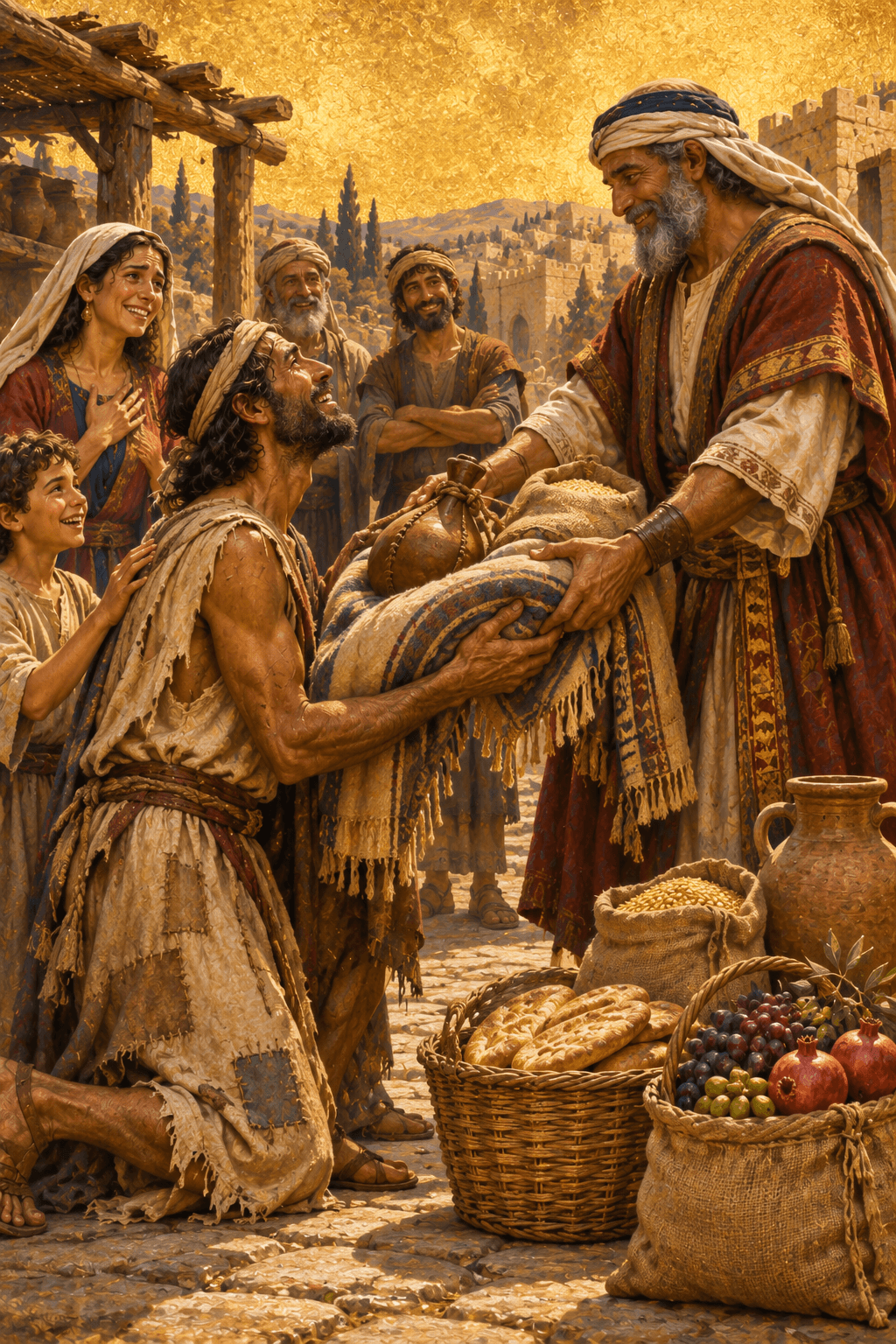
The people had been called to freedom; so if a person was forced to sell himself as a servant, he must not be left in permanent servitude but be set free, either in the seventh year or in the year of jubilee, whichever came first (Exodus 21:2).
John Newton, who had been a slave trader before his conversion, hung this verse in his study to remind him of the special debt he owed.
When Saint Jerome defended the virginity of Saint Mary, he made clear that those called the brothers of Jesus were the sons of His mother’s sister Mary, according to the custom of the Jews, who call fellow Jews, and especially relatives, brothers. He relied on the Book of Deuteronomy (Deuteronomy 15:12; 17:15; 22:1). [151]
And when thou sendest him out free from thee, thou shalt not let him go away empty: Thou shalt furnish him liberally out of thy flock, and out of thy floor, and out of thy winepress: of that wherewith the Lord thy God hath blessed thee thou shalt give unto him. And thou shalt remember that thou wast a bondman in the land of Egypt, and the Lord thy God redeemed thee: therefore I command thee this thing today. And it shall be, if he say unto thee, I will not go away from thee; because he loveth thee and thine house, because he is well with thee; Then thou shalt take an aul, and thrust it through his ear unto the door, and he shall be thy servant for ever. And also unto thy maidservant thou shalt do likewise. It shall not seem hard unto thee, when thou sendest him away free from thee; for he hath been worth a double hired servant to thee, in serving thee six years: and the Lord thy God shall bless thee in all that thou doest. [13–18]
When the master is asked to release his servants, he ought not to think that he has done a great thing; he is only paying back the debt he owes the Lord. The Lord brought him out of the land of Egypt when He brought out his fathers, and gave them at their departure much gold with countless blessings. So the believer pays back this divine debt to his brother the servant, releasing him and giving him, together with freedom, many gifts.
Releasing the servant in the seventh year of his servitude is not a favor from the master to his servant or maid; it is the right of every human being to live free, and no one may take this right away. The six years in which the servant works are an obligation to work, not a loss of the freedom God has given to man.
But if the servant wants to stay in the master’s house, not out of want or need or lack of opportunity for work, but “because he loveth thee,” his ear is bored at the door as a sign, not of servitude, but of surpassing love. With his full will he preferred servitude joined with love to freedom accompanied by separation from the one he loves! Love gives voluntary servitude a surpassing sweetness.
Although verses 16–17 show us that slavery was permitted in Israel, the condition of servants was often happy, and the laws supported them.
“Thy maidservant” (17): This applies to women who offered themselves for service by their own choice, as it applies to the men mentioned above; it does not apply to those sold as concubines (Exodus 21:7).
4. The Firstborn
KJV · Verses 19–23
19 All the firstling males that come of thy herd and of thy flock thou shalt sanctify unto the Lord thy God: thou shalt do no work with the firstling of thy bullock, nor shear the firstling of thy sheep. 20 Thou shalt eat it before the Lord thy God year by year in the place which the Lord shall choose, thou and thy household. 21 And if there be any blemish therein, as if it be lame, or blind, or have any ill blemish, thou shalt not sacrifice it unto the Lord thy God. 22 Thou shalt eat it within thy gates: the unclean and the clean person shall eat it alike, as the roebuck, and as the hart. 23 Only thou shalt not eat the blood thereof; thou shalt pour it upon the ground as water.
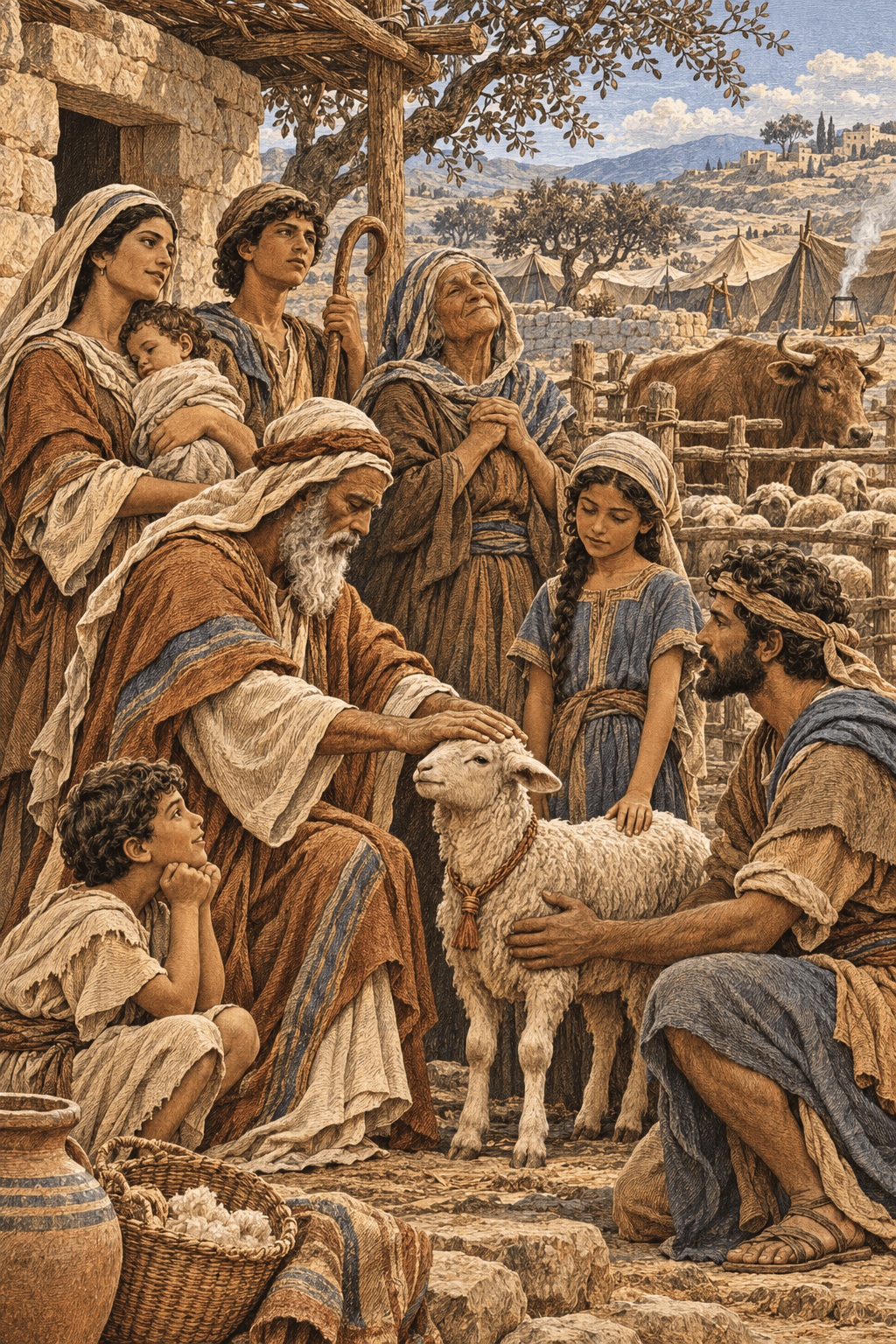
This was spoken of before (Exodus 13:2, 15; 34:19; Numbers 18:17–18).
Since God redeemed every firstborn of His people, so that they did not perish with the firstborn of the Egyptians during the tenth plague (Exodus 13:11–16), they ought to offer the firstborn of their animals as a sign of their desire to consecrate all they have to the Lord (19–23).
God, who is all pure and holy, does not accept from the hands of His people a sacrifice with a blemish, especially since it is a shadow of the sacrifice of Christ, who is without sin. Any blemish in a sacrifice or offering makes it not for the forgiveness of sins, but adds to the sinner the sin of disobeying the commandment.
It is said of the sacrifice of Christ: “For if the blood of bulls and of goats, and the ashes of an heifer sprinkling the unclean, sanctifieth to the purifying of the flesh: How much more shall the blood of Christ, who through the eternal Spirit offered himself without spot to God, purge your conscience from dead works to serve the living God?” (Hebrews 9:13–14). The Lord Christ offers Himself as a sacrifice without blemish to present to Himself His Church redeemed by His blood, “a glorious church, not having spot, or wrinkle, or any such thing; but that it should be holy and without blemish” (Ephesians 5:27). Therefore the Apostle Peter commands us: “be diligent that ye may be found of him in peace, without spot, and blameless” (2 Peter 3:14). This is the work of the Savior Himself, as Jude the Apostle says: “Now unto him that is able to keep you from falling, and to present you faultless before the presence of his glory with exceeding joy” (Jude 24). And it is said of the redeemed in their heavenly glory: “And in their mouth was found no guile: for they are without fault before the throne of God” (Revelation 14:5).
When we are united with Christ Jesus our Lord, the Sacrifice without blemish, we bear His righteousness and become without blemish in the Father’s eyes, offering our lives given up with our Christ as a sacrifice of love and thanksgiving united with the sacrifice of Christ.
When Laeta asked Saint Jerome for advice on raising her daughter Paula (named after her grandmother), he cited this text to show her that she must not neglect to offer her daughter to the Lord as a pure offering without blemish:
“I speak in general terms, for in your case you have no choice, since you offered your child even before she was conceived. Whoever offers a sacrifice that is lame or blind, or has any ill blemish, is guilty of sacrilege. How much more is she punished who, being ready to offer a part of her own body and the purity of her blameless soul to the kisses of the King, then neglects her offering? [152]”
As we care for the land (agriculture), the poor, and the servants, so we must care for the house of God by offering the firstborn without blemish to the Lord (see Exodus 13:1–2; 34:19–20; Leviticus 27:26–29; Numbers 18:15–19). The firstborn of the herd and flock that were without blemish were offered to God as peace offerings, while those with a blemish were slaughtered in their homes.
These firstborn are nothing but shadows of the true Firstborn, Jesus Christ, who is without blemish, offered for all mankind as a peace offering to His Father, who smells in Him a sweet savor of good pleasure toward us all.
5. A Meditation on Deuteronomy 15
Let My Whole Life Be a Sabbath for You
Let my whole life be a Sabbath for You.
When You created man on the sixth day,
the seventh day became a Sabbath for You.
You found Your rest in man because of Your pleasure in him,
and You gave man Your Sabbath as a rest for him.
Let my whole life be a Sabbath for You, O Source of all rest!
Since You find Your rest in the needy and the weary,
You asked me to care for everyone in need and in pain!
Let me be gentle with them for Your sake.
Let me release every needy debtor!
You repay, You make up for every concession on my part!
You paid with Your precious blood all the debts of my soul;
grant me to yield every material debt for Your sake!
You became a brother to me, who am unworthy to be Your servant;
grant me to accept every poor man as my brother in the Lord.
When You accepted me as Your servant,
You took me to the doors of Your heaven and opened my ear to hear Your voice.
You received me as a blessed son, a partner with You in eternal glory!
You gave me everything,
that I may offer You of Your own the tithes and firstfruits.
Accept my offering, which is Your gift!
I am ashamed when I see the Giver of all stretch out His hand and accept my offering!
Glory be to You, who stooped to accept my offering!
6. Appendix: Slavery in Holy Scripture and the Thought of the Fathers
Appendix to Chapter 15
(An appendix to chapter 15. [153])
The Meaning of Slavery
A slave is a person bound in servitude to another human being, obliged to work for him as he commands, with no freedom, having lost nearly all his human rights. The slave is described as “his money” (Exodus 21:21), like a piece of furniture that his master may dispose of as he wishes and hand on as property to his children after him as an inheritance (Leviticus 25:45–46); his value is estimated as a sum of money.
Paganism and the System of Slavery
The pagan peoples knew the system of slavery, the backward as well as the civilized such as the Greeks and Romans. Some philosophers of the pagan world supported this system as natural and necessary; Aristotle declared that all barbarians (the uncivilized) are slaves by birth and fit only for this work. Roman law gave slaves no civil or human right; the master was not punished or held accountable if he tortured a slave (male or female), killed him, abused him, or took his wife to be one of his concubines or to become a prostitute! [154]
Slavery Among the Jews
Compared with the systems of other nations, slavery among the Jews is counted moderate and merciful. It cannot be said that the Law of Moses approved this system; but since the system prevailed in the world, it was not possible for the Jewish Law to abolish it at once. So it gave rules and regulations to limit the harshness of the system, to preserve the slave’s human rights, and to remove from him, to a great extent, humiliation, so that he might live as a human being and a brother in his harsh circumstances. It gave rights to slaves as well as to masters, as far as could be carried out at that time. The Jews knew two kinds of slavery: the slavery of Hebrews and the slavery of Gentiles.
The Law forbade kidnapping people for the slave trade and made its penalty death. Concerning trading in Israelites it is said: “If a man be found stealing any of his brethren of the children of Israel, and maketh merchandise of him, or selleth him; then that thief shall die; and thou shalt put evil away from among you” (Deuteronomy 24:7). And concerning the slave trade in general, whether the person was an Israelite or a foreigner: “And he that stealeth a man, and selleth him, or if he be found in his hand, he shall surely be put to death” (Exodus 21:16).
Kinds of Slavery
The system of slavery goes back to the age of Noah, for the curse that fell on Canaan the son of Ham because of the dishonor shown to Noah was: “a servant of servants shall he be unto his brethren” (Genesis 9:25). Various systems of slavery have appeared since ancient times, which can be divided into three kinds:
1. Domestic slavery (in the household): the most common kind. Besides hired workers, there were Hebrews or foreigners of both sexes working as servants, owned by the head of the house. Hagar, who served Abraham and Sarah, may be an example (Genesis 16:1). The Lord Christ also referred in His parables to “the servants of the householder” (Matthew 13:27; 21:34).
2. Slaves of the state (forced labor): another common kind, into which the Israelites fell when they worked under Egyptian taskmasters (Exodus 3:6–19; 13:3). Solomon also levied on the Canaanite peoples “a tribute of bondservice” (1 Kings 9:20–21).
3. Slaves for the service of the sanctuary: Moses and Joshua appointed people as servants to serve those working in the sanctuary, including hewers of wood and drawers of water for the house of God (Numbers 31:25–47; Joshua 9:21–27).
Sources of Slaves
There were two main sources of slaves: poverty in times of peace, and captivity in times of war. Slaves could be acquired in the following ways:
1. By purchase: a person could buy a slave, as happened with Joseph the son of Jacob, whose brothers sold him for twenty pieces of silver (Genesis 37:28). An Israelite could also buy a slave (Leviticus 25:39, 44). A person could sell those closest to him, as a father might sell his daughter (Exodus 21:7; Nehemiah 5:5); the sons of a widow could be sold to pay their father’s debt (2 Kings 4:1); and a man in abject poverty could sell himself to work to pay his debts until the jubilee came and he was freed from his servitude (Leviticus 25:39, 47). A woman could also sell herself (Deuteronomy 15:12–13, 17).
The price of a slave was not fixed. The common price, according to Exodus 21:32, was 30 shekels for a slave; Leviticus 27:3–7 gives a price from 3 to 50 shekels according to the slave’s age and sex, with recourse to the priest when the price could not be determined (Leviticus 27:8). The price of a boy was 20 shekels, matching what was paid for Joseph (Genesis 37:28). But 2 Maccabees 8:11 gives the price of a slave as about 90 for a talent, that is, about 40 shekels.
If a man sold his daughter because of poverty, the master had no right to sell her to a foreigner; if he gave her to his son, he was to deal with her as with a betrothed girl; and if he married her and then took another wife, he could not reduce her food, clothing, or marital rights; otherwise she went out free.
2. Exchange of slaves: a Hebrew could exchange a foreign slave for another slave, a flock, or any provisions.
3. As payment of a debt: the poor unable to pay their debts could offer themselves as slaves in return for the debt (Exodus 21:2–6; Nehemiah 5:1–5), but the creditor must not exploit the debtor’s poverty; he was to treat him as a brother. “And if thy brother be waxen poor, and fallen in decay with thee; then thou shalt relieve him: yea, though he be a stranger, or a sojourner; that he may live with thee. Take thou no usury of him, or increase: but fear thy God; that thy brother may live with thee… And if thy brother that dwelleth by thee be waxen poor, and be sold unto thee; thou shalt not compel him to serve as a bondservant: But as an hired servant, and as a sojourner, he shall be with thee” (Leviticus 25:35–40).
4. As a gift: a slave could be given as a gift (Genesis 29:24).
5. By inheritance: children could inherit foreign slaves as their property (Leviticus 25:46).
6. Voluntary servitude: when the slave was released in the seventh year, he had the choice between freedom or remaining a servant all his days out of love for his master (Exodus 21:6). But history records not a single case of a slave who chose by his free will to remain in servitude.
7. A thief unable to restore what he stole: “if he have nothing, then he shall be sold for his theft” (Exodus 22:3); by his work he could repay what he stole together with the penalty for his theft.
8. By birth: the children of a Hebrew slave became the master’s servants by birth; if the father was freed, having married a maid belonging to the master, the wife and her children remained servants. The number of slaves increased because of children born in the house to slaves.
9. Prisoners of war: prisoners of war usually became slaves (Genesis 14:21). The enemy would kill some men and spare others, men, women, and children, making them slaves, and the women their concubines (Deuteronomy 21:10–11, 14).
Many Israelites became slaves of foreign states when they fell captive in war at various times: by the Phoenicians (Joel 3:6), the most famous slave traders of antiquity; the Philistines (Amos 1:6); the Syrians (Judges 3:8; 1 Kings 20:1–3; 2 Kings 8:12); the Egyptians; [155] and the Romans.
Most of the slaves among the Jews were prisoners of war, either from some Canaanite peoples who remained in the land when Joshua took it, or from the surrounding nations over whom Israel was victorious (Numbers 31:26–28). They also bought many foreign slaves (Leviticus 25:44–45), and some became slaves because of poverty or crimes they committed.
The Rights of Slaves
As for the service slaves owed their Hebrew masters, it differed according to whether the slave was a Hebrew, and so a brother of the Hebrew master, or a foreigner.
A) The Hebrew slave enjoyed with his Hebrew master what Greek, Roman, or other slaves did not. The Hebrew slave was treated as a brother, not in humiliation. Since the Israelites were God’s servants, when they became servants of their brothers they were treated as hired servants, companions together on their journey, and the masters were gentle with them (Leviticus 25:39; Deuteronomy 15:14). “Thou shalt not compel him to serve as a bondservant: But as an hired servant, and as a sojourner… For they are my servants, which I brought forth out of the land of Egypt: they shall not be sold as bondmen. Thou shalt not rule over him with rigour; but shalt fear thy God” (Leviticus 25:39–43). So the Law gave a new view of the slave: he is a partner in servitude to the one God.
In any case, the treatment of slaves usually depended on the master’s character (Genesis 24; 39:1–6). The true men of God feared God in their treatment of their servants and maids. Job says: “If I did despise the cause of my manservant or of my maidservant, when they contended with me; What then shall I do when God riseth up?… Did not he that made me in the womb make him? and did not one fashion us in the womb?” (Job 31:13–15). Yet certainly the slave was a slave in humiliation, and many masters broke the Law and wronged their brother slaves. Sadly the women’s share of violence was greater, for they were treated with all the harshness that knows no humanity.
B) Slaves had the right to acquire money or possessions; so a poor slave who came to have money could redeem himself with it (Leviticus 25:49). In the story of Saul, he asked the servant whether he had money to offer as a gift to Samuel the man of God, and he said: “I have here at hand the fourth part of a shekel of silver” (1 Samuel 9:8).
C) The slave had the right to take his wife and children with him when freed, if he had been married while free.
D) Slaves could enjoy special honor, as happened with Eliezer of Damascus, a foreign servant to whom Abraham entrusted the management of his house, and with the Hebrew servant Joseph, whom Pharaoh made second in all Egypt after himself (Genesis 15:2; 39:4).
E) The slave did not go out empty after his release, but took with him of the grain, the flock, the threshingfloor, and the winepress (Deuteronomy 15:13–14; Leviticus 25:43). So the Lord Christ not only set us free, but also gave us the riches of His Holy Spirit, so that we go forth bearing His righteousness and holiness in us.
F) A slave could marry his master’s daughter (1 Chronicles 2:35), and the master could marry a maid or give her as a wife to his son; he had no right to sell her. The maid became one of the household, with all the rights of a member of the family. This is a living picture of God’s work with us, who presented us His servants as a bride to His Son, so that we came to share His heavenly glories.
G) If the master or his son neglected the rights of the maid he married, in food, clothing, or her marital rights, the maid became free!
H) If the slave was circumcised (Genesis 17:12), he had the right to share in the Passover sacrifice and in the other religious celebrations (Deuteronomy 12:12, 18; 16:11, 14), and to enjoy the Sabbath (Exodus 20:10; Deuteronomy 5:14).
Finally, the custom of Hebrew slaves was abolished and forbidden after the return from the captivity.
The Freeing of Slaves
Slaves were freed by one of the following means:
1. By redemption: a person could redeem a slave by paying his price to the master and setting the slave free.
2. After completing the period of servitude: according to the Law of Moses a Hebrew could not keep his Hebrew brother in servitude forever; the slave was freed after six years of work. “If thou buy an Hebrew servant, six years he shall serve: and in the seventh he shall go out free for nothing. If he came in by himself, he shall go out by himself: if he were married, then his wife shall go out with him. If his master have given him a wife, and she have born him sons or daughters; the wife and her children shall be her master’s, and he shall go out by himself” (Exodus 21:2–4). The slave enjoyed release from servitude in the seventh year of his servitude, that is, so to speak, in the Sabbath year, the year of rest. This points to the freedom that has become ours through the coming of the Lord in the Sabbath year, that is, in the fullness of time, when He gave us Himself, “the secret of true rest,” putting an end to the bondage of sin. Of this He says: “If the Son therefore shall make you free, ye shall be free indeed” (John 8:36).
The slave had the choice to leave his master’s house or to ask to remain with him all the days of his life. If the slave loved his master, his wife, and his children, he was to bind himself to his master by his own free will to the end; his master would bring him to the door and bore his ear, a sign of complete obedience, as David the Psalmist says: “mine ears hast thou opened” (Psalm 40:6). This is what the Lord Christ did: being the Son, He became a servant for our sake; He loved His Father, His bride, and His children (Ephesians 5:25–27), and bore in His body the wounds of the cross for our salvation. He became a servant to lift us from servitude to sonship to God.
3. According to the law of jubilee: the year of jubilee was the great year in which all slaves were freed regardless of how many years they had served. “And shall serve thee unto the year of jubile: And then shall he depart from thee, both he and his children with him, and shall return unto his own family, and unto the possession of his fathers shall he return” (Leviticus 25:40–41). The jubilee took place in the fiftieth year, a symbol of the work of the Holy Spirit, who grants the Church perfect freedom in the merits of the blood of Christ. By the Holy Spirit we receive the forgiveness of sins, enjoy fellowship with God in His Son, and bear the spirit of adoption by which we call God our Father.
4. If the slave suffered harm: at that time it was counted a small matter if a slave lost an eye or a tooth; he was compensated by being freed from servitude (Exodus 21:26–27). If a man struck his servant or maid with a rod so that he died under his hand, he was to be punished (Exodus 21:20).
5. Escape: some slaves resorted to escape to be freed from servitude.
6. Restitution: if a person became a slave because of theft, once he paid what he owed through his work as a slave he was set free (Exodus 22:1–4).
7. The death of the master without an heir, as Abraham said in Genesis 15:2. This statement raised the question: did slaves have the right to enjoy freedom and inherit what the master left if he died without an heir? Or did Abraham say this because he feared that after his death the chief servant would take possession of everything by force of circumstances and not according to law?
8. By a direct divine command, as in Jeremiah: “This is the word that came unto Jeremiah from the Lord, after that the king Zedekiah had made a covenant with all the people which were at Jerusalem, to proclaim liberty unto them; That every man should let his manservant, and every man his maidservant, being an Hebrew or an Hebrewess, go free; that none should serve himself of them” (Jeremiah 34:8–9).
The Freeing of a Maidservant
If a Hebrew maid was sold to a Hebrew as a housekeeper or a concubine, she could not leave the house in the seventh year after her work, nor in the year of jubilee, as long as the man had bought her for this purpose (Exodus 21:7). But she received complete freedom for nothing in the following cases:
If she did not please her master, she could not be sold to a foreigner (Exodus 21:8).
If she was betrothed to his son and was not dealt with as betrothed women are (Exodus 21:9).
If he or his son married her and then married a second wife and neglected her rights of food, clothing, or marital relations (Exodus 21:11; Deuteronomy 21:14).
The Rights of Masters over Slaves
1. To keep his non-Hebrew slaves as his permanent possession (Leviticus 25:45).
2. To leave his non-Hebrew slaves as an inheritance to his children (Leviticus 25:46).
3. To keep the wife and children of all slaves who were unmarried when they became slaves (Exodus 21:4).
4. To pursue runaway slaves and bring them back (1 Kings 2:39–41).
5. To grant freedom to any slave at any time he wished, besides his obligation to free slaves according to the Law in the seventh year and the year of jubilee, as we have seen.
6. To circumcise his Jewish and Gentile slaves in his house (Genesis 17:13, 23, 27).
7. To sell or exchange slaves (Genesis 29:24); for the Hebrew slave there were special conditions on his sale.
8. To discipline the slave, male or female, but not to the point of death (Exodus 21:20).
9. To marry the maid or give her as a wife to another (1 Chronicles 2:35).
10. The master had the right to marry his slave’s daughter (1 Chronicles 2:35, etc.).
11. To buy slaves from foreign markets (Leviticus 25:44).
12. To keep a slave who had fled from a (harsh) foreign master, though not keeping him as a slave (Deuteronomy 23:15–16).
13. To enslave or sell a captured thief (Genesis 44:8–33; Exodus 22:3).
14. To seek the counsel of his servants (1 Samuel 25:12–14).
15. To ask his servants to perform service (Genesis 14:14; 24).
The Slavery of Gentiles
They were usually prisoners of war (Numbers 31:9; 2 Kings 5:2), bought (Genesis 17:27; 37:28, 36; Ezekiel 27:13; Joel 3:6, 8), or born in the house (Genesis 17:12). But we find no hint in Holy Scripture or in history that there was a slave market among the Jews. [156]
Before the Law of Moses, Abraham, the father of the patriarchs, gave us a living example of dealing with slaves. He had resolved in his heart, if he had no child, to leave his inheritance to one of his servants, “Eliezer of Damascus” (Genesis 15:2), whom he made steward over all his possessions. In the marriage of Isaac to Rebekah (Genesis 24) Abraham’s trust in his servant appeared, and the servant by his conduct showed himself worthy of this trust.
When the Law of Moses came, it gave slaves rights that preserved their humanity, among them:
1. Whoever stole a man and sold him, or was found with him in his hand, was to be put to death (Exodus 21:16).
2. The crime of killing a slave was equal to killing a free man (Leviticus 24:17, 22).
3. The Law allowed slaves to worship their own gods, that is, freedom of belief, even if they were mistaken; but the Hebrew master had the right to circumcise his slaves.
4. It gave them the right to share with their masters in the feasts (Exodus 20:10; 23:12).
Christianity and Care for Slaves
Christianity dealt with the problem of slavery in a realistic way, for it did not want to stir up the slaves against their masters. Slaves made up half the population of the Roman Empire; Pliny mentions that a rich Roman named Claudius Isidorus, in the days of Augustus, left 4,116 slaves among his possessions. [157]
The New Testament did not come with a command abolishing slavery, nor did the Church in its beginning issue laws forbidding slavery. But by the strong and living concepts of love it presented, Christianity was able to shake the foundations of this system and transform it from a system marked by injustice, violence, and humiliation, leading masters toward love, gentleness, and compassion. It also raised the dignity of slaves, not so that they would revolt with violence against their masters, but it asked them to obey (Ephesians 6:5–8; Colossians 3:22–25; 1 Timothy 6:1–2; 1 Peter 2:18–21), so that they might bear witness to the Christ dwelling in them.
The life of the Lord Himself was a practical revolution against the system of slavery. God the Word, the Creator, became a servant, to carry slaves to sonship. The Lord Christ was handed over for thirty pieces of silver, sold as a slave; He entered the company of slaves and did not disdain them, but sanctified the life of the believers among them. So when slaves see that their Lord has become their partner, living among them as one of them, they do not give up in humiliation, but see that no one, however great his wealth, power, or violence, can crush their spirit; they are partners of the Lord Christ in His life and sufferings. They bear an inner freedom that no being can crush or take away from them.
When many masters who owned slaves accepted faith in the incarnate Creator, who by His will and His Father’s good pleasure became a servant, they took one of two positions: either freeing their slaves, or treating them as beloved brothers, so as to win every soul for the kingdom of God. Both directions pushed the world toward freeing slaves.
The Lord Christ came directing all mankind to the inner slavery that had destroyed the freedom of their will, saying: “And ye shall know the truth, and the truth shall make you free… Whosoever committeth sin is the servant of sin… If the Son therefore shall make you free, ye shall be free indeed” (John 8:31–36).
With pride the Apostle Paul calls himself a servant (Romans 1:1; Titus 1:1), for he believes that he has been sold to his Savior, who leads his life and all his conduct according to His divine will. The true believer feels that with his full freedom he throws his whole being into the hands of his Beloved, to move him as He wills.
The Church believed that even a slave could influence his master through a holy life in the Lord. So we do not wonder when we see Saint John Chrysostom saying to the listeners at his gatherings: “Let each of them teach those outside that he has been in the company of the seraphim. Let the father teach his son, the mother her daughter, and also the slave his master.” The Council of Gangra required that slaves submit to their masters in the Lord and bear witness to the living gospel in them, not trying to flee from their masters nor using violence against them. [158]
The Apostle Paul affirmed that there is neither bond nor free in Christ Jesus (Galatians 3:28). He asked both masters and slaves to imitate the Lord Christ (Ephesians 6:5–9). Saint Paul the Apostle dealt with the problem of slaves from the viewpoint of faith: while he asked slaves to obey their masters in the Lord, not at the expense of their faith and salvation, he asked masters to bear a new view of their slaves as brothers equal to them, partners with them in servitude to God, the Lord of all. The Apostle Paul asked us to submit to the human order, but within the limits of faith, so that the slave bears the courage of martyrdom if his master asks of him what is against his salvation, and the master is asked to esteem the slave as his brother.
The system of slavery began to collapse from its roots, and this was one of the main reasons for the rage of the Roman state against the Christian Church. [159] The secret of its collapse lies in the following reasons:
A) The Church obliged its children to treat slaves as their brothers (1 Corinthians 7:21–22; Philemon 1:16; Colossians 3:11).
B) The Apostle Paul gave us a practical example in his epistle to his disciple Philemon, for he sent the runaway slave Onesimus back to his master Philemon. He sent with him a letter considered the most wonderful thing an apostle could write about a runaway, thieving slave, for he considered the runaway thief Onesimus, after his repentance, his brother, his son whom he had begotten in his bonds, his own bowels, his equal, and his helper in the ministry; and he was later ordained a bishop. The letter says: “For perhaps he therefore departed for a season, that thou shouldest receive him for ever; Not now as a servant, but above a servant, a brother beloved, specially to me, but how much more unto thee” (Philemon 1:15–16).
C) When some masters lived in the spirit of the Gospel, they freed their slaves out of an inner conviction, without any explicit command to do so.
D) Many who had been slaves attained high ranks or great honor in the Church. Among them were martyrs such as Blandina, Biblis, and Felicitas, whom the Church remembers as heroes of faith. [160] Bishops too were ordained from among slaves, such as Onesimus, the disciple of Saint Paul the Apostle, who became bishop of Beroea in Macedonia, [161] and Callistus, bishop of Rome in the third century.
E) The early Church writings encouraged the collapse of this system. We mention, for example, what is in the Didache: “Do not give orders in bitterness to your servant or maid, who hope in the same God, lest they cease to fear God, who is over both; for He does not come to call according to outward appearance.” [162]
Saint Clement of Alexandria says: “Slaves are people like us.” [163]
Lactantius says: “Slaves are not slaves to us; we count them brothers in the spirit, and fellow servants in religion.” [164]
And in the writings of Saint Ignatius of Antioch: “Do not despise slaves, nor let them be puffed up with pride; rather let them be humble for the glory of God.” [165]
Saint Augustine considered the appearance of slavery a fruit of sin, for the divine purposes do not accept that a man should rule over and dominate his fellow man. [166] Saint John Chrysostom proclaimed the same idea, [167] saying: “Slavery appeared only when Canaan fell under the curse (Genesis 9:25).”
Saint John Chrysostom, a contemporary of Saint Gregory of Nyssa, urged Christians that no one should own more than two slaves to serve his house, and not to humiliate them. [168] He spoke of masters who owned a thousand slaves, [169] and some masters in Antioch had hundreds of them. He made clear that slavery is not part of God’s original plan. [170]
The great Cappadocian theologian Saint Gregory of Nazianzus declared that slavery is a wicked distinction, yet it is part of present reality. [171]
In the same spirit Saint Basil the Great says: “No one is a slave by nature.” Yet at the same time he did not call for resisting the order of society, for he says: “Though one man is made a master and another a slave, nevertheless, in our view of equality of rank, we are all the flock of our Creator, fellow slaves.” [172]
Saint Gregory of Nyssa’s View of Slavery
Some scholars consider Saint Gregory of Nyssa the first theologian to lead an intellectual revolution against slavery. In the middle of his fourth homily on Ecclesiastes he laid a theological foundation for resisting slavery, which can be summed up in the following points:
• For a human being to think himself master of his own kind is to count himself different from those subject to him (as if he were of a nature other than theirs).
• God created human nature free; each has the right to make his own decisions about his destiny.
• A distinction must be made between possessions and irrational creatures on the one hand, and the free rational being, the image and likeness of God, on the other.
• It is impossible to rule over the free image of God, for no man can pay the price of another!
• The title (master) does not give lordship over those subject to it.
• Who are you who think you are master of a human being?
The following are passages from his writings:
1. We are all equal by nature:
“We are all equal by nature. [173]”
“It is not nature but (the love of) power that divided mankind into slaves and masters. [174]”
“God gave mankind the right to determine its own destiny (the master has no right to control the life of the slave). [175]”
“He who is subject to you by custom and law is your equal in the dignity of nature. [176]”
“(Mankind was originally created complete;) each had the authority to direct his own life without a master, and to live a life without sorrow or toil. What does it mean to be led but to be enslaved? [177]”
“To divide the creation, which keeps the right of nature to equality, into slaves and a ruling power, one part commanding and the other submitting, is tyranny and a usurpation of the order God established. [178]”
“(Slavery is) a mutilation of the wholeness of the living being. [179]”
“The state of independence and freedom is the call of wisdom to man’s will. [180]”
“The greatest matter of freedom is for man to be master of himself. [181]”
2. God is the Master of all:
“(The master) says: ‘I got me servants and maidens, and had servants born in my house’ (Ecclesiastes 2:7). Do you see the enormity of the arrogance? Such talk is a challenge to God. For we hear from the prophecy that all things are servants of the power that is above all. So when someone turns God’s property into his own, and claims for himself authority over his own kind, thinking that he owns men and women, what he does is nothing but to transgress his own nature through pride, thinking himself something different from those subject to him. [182]”
3. Human nature is free:
“‘I got me servants and maidens.’ What do you mean? You condemn to slavery a man whose nature is free and who has free will (the right to determine his own destiny), and you legislate in competition with God, overturning His law for a human law. He set certain marks so that man would be the king of the earth and his life be directed by the Creator; this one you bring under the yoke of slavery, as though you were defying and fighting the divine law. [183]”
4. Why do you exceed the limits of your authority?
“You have forgotten the limits of your authority. Your law is to rule over irrational things, for it is written: ‘have dominion’ over birds, fish, four-footed beasts, and creeping things. Why do you exceed the limits of what is subject to you and set yourself over those who are free, counting those of your own kind on the level of four-footed beasts, and even of footless creatures? All things have been put in subjection to man, the word of prophecy declares, and the text names the things subjected: sheep, oxen, and cattle. Surely man was not born of your herd! Cows have not conceived a human herd! Irrational beings alone are slaves to man. By dividing people into ‘slaves’ and ‘owners’ you make mankind enslave itself and own itself! [184]”
5. What price did you pay to buy your slaves?
“‘I got me servants and maidens.’ Tell me, at what price? What did you find in the world that equals human nature? What price do you give for reason (for the slave is a rational human being)? How many obols can be paid for the likeness of God (for the slave is in the likeness of God)? How many staters did you get when you sold a being that God formed? God says: ‘Let us make man in our image, after our likeness.’ If he is in the image of God and rules the earth, and has been given authority over everything on earth by God, who is the buyer? Tell me! Who is his seller? God does not want to bring the human race down into slavery, for He Himself, when we had become slaves to sin, freely called us to freedom. If God does not enslave what is free, who is he who sets his authority above God? [185]”
6. Is the slave sold with what he owns? The whole earth! Some see that under Roman law, when a slave was sold, the sale did not include the slave’s possessions (such as his clothes). But Saint Gregory, rebuking those who take part in selling or buying slaves, speaks in the language of the spiritual man and the preacher, not of the lawyer, for he sees it as a shame that man, a free being, should be sold together with what he owns, since God set man to rule over the whole earth.
“How is the one who has authority over all the earth and all earthly things put up for sale? For what the person sold owns is bound up with him and sold with him too. What is the value of the whole earth? How much are the things on earth worth? If they are beyond price, what price is given for the one who is above all? Tell me… He who truly knows human nature says that the whole world is not worth offering in exchange for a human soul. So when a human being is put up for sale, the owner of the earth is put up for auction. Suppose then that the things he owns are also put up for auction. That means the whole earth, the islands, the seas, and all that is in them are offered for sale. What will the buyer pay? What will the seller accept, reckoning in detail how great are the possessions in the deal? [186]”
7. How is the deed of sale of a slave written? Saint Gregory asks how a piece of paper and a pen can record the sale and purchase of man, to whom God gave dominion over the whole world.
“Does a piece of paper, a written contract, and the counting of coins deceive you into thinking that you have become master of the image of God? What folly is this?! If the contract is lost, if moths eat the writing, or a drop of water falls on it and spoils it, what guarantee do you have of their servitude? What supports your title as owner? [187]”
Saint Gregory did not speak explicitly of the price paid for every human soul, which is the blood of the Lord Christ who bought us; no power can take away, spoil, or erase this deed. We have all been bought with a price, and none of us can buy his brother!
8. A difference in title only: Saint Gregory sees that the difference between the master and the slave is in title only; they are partners in everything.
“I see no superiority you have over those subject to you except the title alone. What does this authority give you as a person? It gives you neither length of life, nor beauty, nor health, nor superiority in virtue. Your origin is from the same ancestors to whom he belongs, and your life is of the same kind as his. The passions of soul and body surround you who own him and him who is subject to your ownership: pains and pleasures, gladness and misfortunes, sorrows and joys, outbursts and fears, diseases and death. Is there any difference in these things between the slave and his owner? Does he not draw the same air he breathes? Do not both become one dust after death? Is there not one judgment for both? One kingdom and one Gehenna! If you are equal in all such things, in what are you greater than he? Tell me, you who are human, do you think you are master of a human being? And he says, ‘I got me servants and maidens,’ as though they were a herd of goats or swine. [188]”
9. A call to free slaves: In a homily on the glorious feast of the Resurrection, Saint Gregory of Nyssa urged masters to free their slaves, as the Lord Christ freed us by His resurrection from the bondage of sin:
“Now have the prisoners been released, debtors forgiven, and slaves set free by a good and gracious proclamation of the Church?! You have heard, O masters; pay attention to my word as to a faithful voice. Take away the pain from afflicted souls, as the Lord takes death away from bodies; turn their shame into honor, their distress into joy, and their fear of speaking into openness. Bring out those cast into corners as from their tombs; let the beauty of the feast blossom like a flower over everyone. [189]”
In another place he says:
“Kindness blossoms in… offering a generous hand to slaves who received little happiness at the beginning of their servitude, and have since suffered bitterness in their lives. [190]”
And in another discourse Saint Gregory holds that Christian society must be committed to equality, so slavery and all injustice must be removed from the church community:
“Let social differences be wiped out, so that there is no submission and domination, no poverty and excessive wealth, no lowly commoner and honored family, and no room for inequality… Let us rule with political and legislative equality, and let it be granted to each one, in full freedom and in a way full of peace, to choose what he wants. [191]”
Notes and References
[149] J. Vernon McGee, Deuteronomy, chapter 15.
[150] St. John Chrysostom, Homilies on Genesis, 55.
[151] St. Jerome, The Perpetual Virginity of Blessed Mary, 10.
[152] St. Jerome, Letter 107:7.
[153] From the author’s From the Interpretations and Meditations of the Early Fathers: Exodus, chapter 21. See also Nelson’s Illustrated Bible Dictionary, “Slave, Slavery”; New Unger’s Bible Dictionary, “Service”; International Standard Bible Encyclopaedia, “Slave, Slavery”; R. H. Barrow, Slavery in the Roman Empire (1928); I. Mendelsohn, Slavery in the Ancient Near East (1949); W. L. Westermann, The Slave Systems of Greek and Roman Antiquity (1955); M. I. Finley, ed., Slavery in Classical Antiquity (1960); J. Vogt, Ancient Slavery and the Idea of Man (1974); N. Turner, Christian Words (1980), pp. 389–90.
[154] Fr. Shenouda El-Souriany (Bishop Youannes), The Christian Church in the Apostolic Age (Arabic), 1971, p. 41; Schaff, History of the Christian Church, vol. 1, pp. 445–6.
[155] Josephus, Antiquities, 12:2:2–3.
[156] The New Westminster Dictionary of the Bible, p. 889.
[157] J. Hastings, Dictionary of the Apostolic Church, 1954, vol. 2, p. 509.
[158] Council of Gangra, Canon 3.
[159] Fr. Tadros Malaty, The Coptic Church, “Church of Alexandria”, Melbourne, 1975, p. 77.
[160] Frend, Martyrdom and Persecution in the Early Church, 1965, p. 297.
[161] Apostolic Constitutions, 7:46.
[162] Didache, 4 (see the author’s The Apostles’ Creed and the Didache, p. 36).
[163] St. Clement of Alexandria, Paedagogus, 3:12.
[164] Lactantius, Divine Institutes, 5:16.
[165] St. Ignatius, Epistle to Polycarp, 4.
[166] St. Augustine, The City of God, 19:15.
[167] St. John Chrysostom, Homilies on 1 Corinthians, 40.
[168] St. John Chrysostom, Homilies on 1 Corinthians, 40:5.
[169] St. John Chrysostom, Homilies on Matthew, 63:4.
[170] St. John Chrysostom, Homilies on 1 Corinthians, 40:5; Homilies on Ephesians, 22:2.
[171] St. Gregory of Nazianzus, De rebus suis, 80–82.
[172] St. Basil, On the Holy Spirit, 20:51.
[173] St. Gregory of Nyssa, On the Beatitudes, 1.
[174] St. Gregory of Nyssa, On the Lord’s Prayer, 5.
[175] Ibid.
[176] Ibid.
[177] St. Gregory of Nyssa, On the Beatitudes, 3.
[178] St. Gregory of Nyssa, Against Eunomius, 1:35.
[179] St. Gregory of Nyssa, Antirrheticus against Apollinarius, 23.
[180] St. Gregory of Nyssa, On the Making of Man, 16:14 (PG 44:185A).
[181] St. Gregory of Nyssa, On the Beatitudes, 8.
[182] St. Gregory of Nyssa, Homilies on Ecclesiastes, 4.
[183] Ibid.
[184] Ibid.
[185] Ibid.
[186] Ibid.
[187] Ibid.
[188] Ibid.
[189] St. Gregory of Nyssa, On Holy Pascha.
[190] St. Gregory of Nyssa, Against the Usurers.
[191] St. Gregory of Nyssa, On the Dead.