
As Moses the prophet drew near the end of his farewell address to his people, who were about to enter the Promised Land, he gave them the right to choose between obedience and disobedience, revealing the blessings of obedience to the divine commandment, or faithfulness to the divine covenant, and the curses of disobedience, or breaking the covenant. This chapter affirms man’s freedom to choose one of the two ways; the matter is in his hands, for God’s grace is always ready to work in the lives of those who desire it.
Notice the following in the speech about the blessings and the curses:
1. God gives His blessings to His people and His children as a free gift, or grace from Him; but in His love for man He asks him not to live in a spirit of carelessness and confusion, but to walk as befits a people belonging to God, or as a son bound to the spirit of his father. He wants to see them spiritually mature.
2. At the beginning of its spiritual way, it was not possible to present rewards and penalties to the people on the eternal level, but on the level of their temporal life; so that when the Word of God came and the believer matured, his outlook would become greater and his mind more mature, to seek heavenly things and fear eternal punishment.
3. These gifts or curses have their own meaning for the Christian in the light of the evangelical mind and the meeting with the Lord Christ, who lifts him up not to seek temporal blessings nor to fear earthly plagues, but to seek for himself the Giver of blessings, and to fear being deprived of fellowship with Him in the eternal glories.
1. The Blessings of Obedience
KJV · Verses 1–14
1 And it shall come to pass, if thou shalt hearken diligently unto the voice of the Lord thy God, to observe and to do all his commandments which I command thee this day, that the Lord thy God will set thee on high above all nations of the earth: 2 And all these blessings shall come on thee, and overtake thee, if thou shalt hearken unto the voice of the Lord thy God. 3 Blessed shalt thou be in the city, and blessed shalt thou be in the field. 4 Blessed shall be the fruit of thy body, and the fruit of thy ground, and the fruit of thy cattle, the increase of thy kine, and the flocks of thy sheep. 5 Blessed shall be thy basket and thy store. 6 Blessed shalt thou be when thou comest in, and blessed shalt thou be when thou goest out. 7 The Lord shall cause thine enemies that rise up against thee to be smitten before thy face: they shall come out against thee one way, and flee before thee seven ways. 8 The Lord shall command the blessing upon thee in thy storehouses, and in all that thou settest thine hand unto; and he shall bless thee in the land which the Lord thy God giveth thee. 9 The Lord shall establish thee an holy people unto himself, as he hath sworn unto thee, if thou shalt keep the commandments of the Lord thy God, and walk in his ways. 10 And all people of the earth shall see that thou art called by the name of the Lord; and they shall be afraid of thee. 11 And the Lord shall make thee plenteous in goods, in the fruit of thy body, and in the fruit of thy cattle, and in the fruit of thy ground, in the land which the Lord sware unto thy fathers to give thee. 12 The Lord shall open unto thee his good treasure, the heaven to give the rain unto thy land in his season, and to bless all the work of thine hand: and thou shalt lend unto many nations, and thou shalt not borrow. 13 And the Lord shall make thee the head, and not the tail; and thou shalt be above only, and thou shalt not be beneath; if that thou hearken unto the commandments of the Lord thy God, which I command thee this day, to observe and to do them: 14 And thou shalt not go aside from any of the words which I command thee this day, to the right hand, or to the left, to go after other gods to serve them.
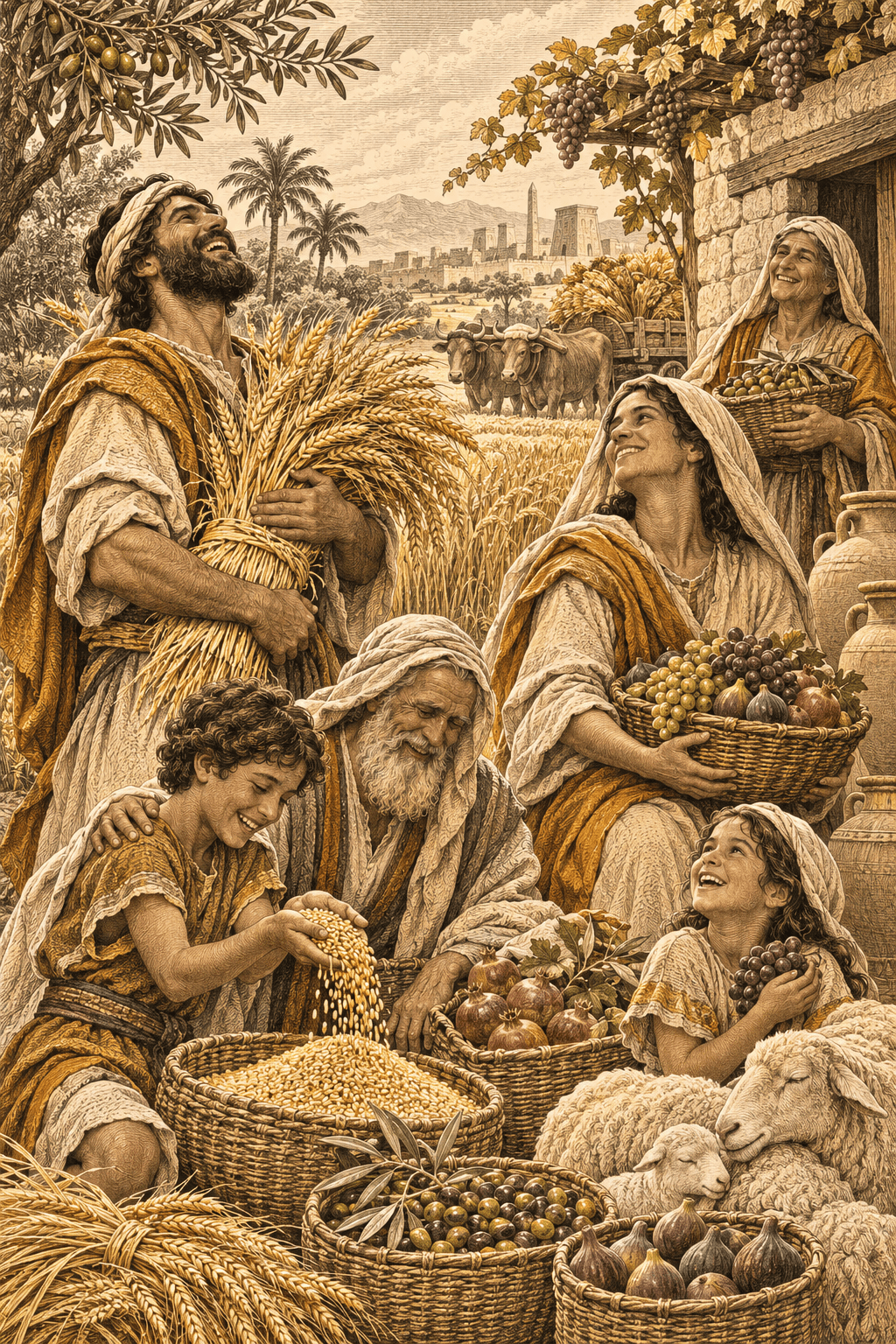
The blessings come here before the curses, so that God may declare that He is slow to anger and quick to show love and mercy. He delights to bless, longing that no one fall under the curse. He made clear God’s desire for the success and sanctification of His people (1–14). The promise came with an abundance of bodily and material blessings for whoever is faithful to the covenant in obedience to the commandment. In our dealings with God, we ought to be filled with the hope of sons in the love of God our Father, rather than be terrified of Him with the fear slaves have of their master’s wrath.
He presents to us the conditions on which we receive the blessings:
- Listening diligently to the voice of God (1–2), so that we bear within us His holy will (13).
- Obeying the commandment and walking in His divine way (9), not once nor several times, but keeping it always, and walking in His way to its end, not to the middle.
- That a person not turn aside from the way to the right or to the left, by not exaggerating matters and not being lax in them.
He distinguishes here between two kinds of blessings, complementary to each other: the blessings that come upon the people as a whole together, and those that come upon the member and his family, though the member cannot be separated from the whole community. Concerning the communal blessing he says: “if thou shalt hearken diligently unto the voice of the Lord thy God, to observe and to do all his commandments which I command thee this day, that the Lord thy God will set thee on high above all nations of the earth” (1).
He begins the blessings with God’s work with the community, raising it above all the nations of the earth. If God dwells on high, He makes of His Church a heavenly community, which His Holy Spirit carries as it were to the throne, so that it becomes high above all the nations of the earth.
This is the work of obedience: while we bow our will before God, He lifts our thought, our will, and all our depths, that we may bear heavenly marks and become as those not counted among the earthly, enjoying fellowship with the heavenly ones. In speaking of the divine blessing, God attributes Himself to the people, repeating the expression, “the Lord thy God.”
First: The Blessing Cleaves to the Obedient
Every person longs to enjoy the blessing, asking: How can I attain it? But the prophet here reveals to us God’s surpassing love, who wants to carry us into His blessed life so that we may experience it. It is the blessings that pursue man, for he often thinks he is unworthy of them; even on the great day of the Lord the faithful will say: “when saw we thee an hungred, and fed thee?” (Matthew 25:37). We need not to run after the blessing, but to open the doors of our heart to it. The prophet sees the blessing as a being, or a person, pursuing the believer to overtake him, cleave to him, and unite with him, for he says: “And all these blessings shall come on thee, and overtake thee, if thou shalt hearken unto the voice of the Lord thy God” (2).
He addresses the speech to the people as a whole as though they were one person, for the secret of the blessing is the unity of the people together, so that all may enjoy together what builds them up if they walk in obedience to the voice of the Lord.
It comes to the believer to overtake him and give itself to him with all its surpassing riches and divine resources. It comes to bless every aspect of his inner and outer life and all his relationships, giving him peace in his heart and with others.
Having revealed the divine blessings as a being that works in us and dwells within us, for they are a shadow of the person of the Lord Christ who came to us, he made clear the following aspects of these blessings:
- Their kinds: earthly, psychological, and spiritual blessings.
- Their extent: they work in the city as in the countryside (3). The blessing comes in every place; that is, we enjoy heavenly blessings belonging to the city of the heavenly Jerusalem, and temporal blessings belonging to the field of service in this world.
- Their work: blessings that touch every aspect of our life: “Blessed shall be the fruit of thy body (sanctification of the spirit), and the fruit of thy ground (sanctification of the body), and the fruit of thy cattle (sanctification of human energies)”: the inner and outer life.
- Their care: they care even for man’s daily needs: “Blessed shall be thy basket (luxuries, such as fruit at that time) and thy store (necessities, such as daily bread)” (5).
- Their place: they accompany a person and cleave to him in every movement, in his coming in and going out (6).
- Their power: they keep him from enemies and give him a spirit of victory (7).
- Their resources: they give him true riches, a blessing in the storehouses; indeed, he himself becomes “an holy people,” that is, a “blessing” to others (8).
- Their aim: they make us saints for the Holy One (9).
- Their reward: they give the believer honor and awe (10).
- Their results: continual fruitfulness (11).
- Their role: they open the doors of heaven to the believer, an abundance of blessing without measure: “The Lord shall open unto thee his good treasure, the heaven to give the rain unto thy land in his season (that is, He sends His Holy Spirit into us), and to bless all the work of thine hand” (12).
- Their mission: they make the believer a growing leader (13).
A) “Blessed shalt thou be in the city, and blessed shalt thou be in the field” (3). The blessing comes upon the believer regardless of his circumstances, whether he is a man of the city working in trade or industry, or in the field working in farming or shepherding. He enjoys the divine, blessed life whatever his work, position, or role in society.
It used to be said, “God made the country, and man made the town.” Yet here God affirms His care for the city as for the village. He blesses the city with His divine righteousness, removing its polluted atmosphere, so that evil has no place in it, but it breathes the sweet fragrance of Christ.
B) “Blessed shall be the fruit of thy body, and the fruit of thy ground, and the fruit of thy cattle, the increase of thy kine, and the flocks of thy sheep” (4). God created the earth and all that is on it and in it for man; so if man is blessed, the blessing comes upon the earth that serves him with all its resources and animals. But if the curse comes upon him, God says to him: “cursed is the ground for thy sake; in sorrow shalt thou eat of it all the days of thy life; Thorns also and thistles shall it bring forth to thee; and thou shalt eat the herb of the field” (Genesis 3:17–18).
The blessing comes upon the inner depths, “the fruit of thy body”; upon the outer life, “the fruit of thy ground”; and upon the body with all its instincts, “the fruit of thy cattle.”
C) “Blessed shall be thy basket and thy store” (5). Some see that the basket represents the place where a person stores fruit and crops, and the (small) kneading trough is the vessel in which he kneads enough bread for the family for one day. So God blesses man’s daily needs, and he does not lack.
D) “Blessed shalt thou be when thou comest in, and blessed shalt thou be when thou goest out” (6). As the Psalmist says: “The Lord shall preserve thy going out and thy coming in from this time forth, and even for evermore” (Psalm 121:8). The Lord’s blessing not only comes into a person’s inner and outer life to bless his whole being, his works, and his possessions, but walks with him and accompanies him wherever he goes, in his going out as in his coming in.
Second: Victory over Enemies
God did not promise the obedient believer that no enemy would fight him; on the contrary, He affirms that enemies will rise against him, but the resistance leads him to victory and overcoming, so that he enjoys glories and crowns. The enemies are nothing but a step toward glory. Our life is a continual battle, in which the enemy of good comes out with all his soldiers and evil works, with his long experience, cunning, and deceit, to attack the believer, concentrating on him as in one way; but the enemy quickly scatters before the grace of God that gives victory, and flees from before the believer’s face, scattered as in seven ways (7).
Third: Enjoying Riches
When the Lord’s blessing accompanies the believer and dwells in him, it not only lifts him to heaven so that he has a name higher than all the peoples, but it blesses even his temporal resources, his “storehouses,” and makes his hands a blessing, so that all he sets his hand to is blessed; even the land is blessed because of him (8). By the Lord’s blessing the believer praises, saying: “A little that a righteous man hath is better than the riches of many wicked” (Psalm 37:16).
God opens the doors of heaven before the faithful one, as One who gives him from His treasure all that is new. The blessing knows no limits: if it opens the doors of heaven before the believer to find in it all his satisfaction, at the same time it sanctifies the land on which he walks and the work he sets his hands to, so that his storehouses are filled with riches. But riches not accompanied by the Lord’s blessing become a disaster and will not satisfy a person. As the wise man says:
He that loveth silver shall not be satisfied with silver; nor he that loveth abundance with increase: this is also vanity. When goods increase, they are increased that eat them: and what good is there to the owners thereof, saving the beholding of them with their eyes?… There is a sore evil which I have seen under the sun, namely, riches kept for the owners thereof to their hurt. But those riches perish by evil travail: and he begetteth a son, and there is nothing in his hand. As he came forth of his mother’s womb, naked shall he return to go as he came, and shall take nothing of his labour, which he may carry away in his hand. [Ecclesiastes 5:10–15]
St. James the Apostle says: “Go to now, ye rich men, weep and howl for your miseries that shall come upon you. Your riches are corrupted, and your garments are motheaten” (James 5:1–2). On the contrary, if the Lord’s blessing is present, even if a person’s storehouses are not full, he is counted rich. The Psalmist says: “A little that a righteous man hath is better than the riches of many wicked” (Psalm 37:16).
Fourth: Enjoying Holiness
“The Lord shall establish thee an holy people unto himself, as he hath sworn unto thee, if thou shalt keep the commandments of the Lord thy God, and walk in his ways” (9).
“Establish” is the same word Christ used for raising the daughter of Jairus (Mark 5:41), and it occurs in Deuteronomy 18:15, 18; it declares the raising up of something new. One of the most precious divine gifts and blessings is that God raises up from among men a holy people, and makes man a being belonging to God, bearing His divine righteousness and holiness.
The meaning of sanctification is the dedication of a person with all his being to the Holy God. If God is occupied with man’s salvation and glory, the believer, in responding to His love for God, consecrates his energies by the Holy Spirit of God to work for the sake of His kingdom.
This blessing also carries the meaning of stability and firm foundation, for the Church of God, and every home, indeed every heart, needs God’s surpassing hand for His kingdom to be established in it. As Luke the Evangelist says: “And so were the churches established in the faith, and increased in number daily” (Acts 16:5). Paul the Apostle says to the Romans: “For I long to see you, that I may impart unto you some spiritual gift, to the end ye may be established” (Romans 1:11); and to the Colossians: “As ye have therefore received Christ Jesus the Lord, so walk ye in him: Rooted and built up in him, and stablished in the faith” (Colossians 2:6–7); and in his Epistle to the Hebrews: “Be not carried about with divers and strange doctrines. For it is a good thing that the heart be established with grace” (Hebrews 13:9). And St. Peter the Apostle says: “But the God of all grace, who hath called us unto his eternal glory by Christ Jesus, after that ye have suffered a while, make you perfect, stablish, strengthen, settle you” (1 Peter 5:10). “Wherefore I will not be negligent to put you always in remembrance of these things, though ye know them, and be established in the present truth” (2 Peter 1:12).
So God establishes His people in His holiness, that we may become an icon of Him that no powers can remove. This is the work of the Holy Spirit in our depths.
Fifth: Enjoying Honor
“And all people of the earth shall see that thou art called by the name of the Lord; and they shall be afraid of thee” (10).
“The name of the Lord” is the Lord as He reveals Himself. When His name is called upon us, we possess Him, and bear His awe and His honor in us; so all the peoples of the earth fear us. It was said of the spiritual Israelites: “to whom pertaineth the adoption, and the glory” (Romans 9:4). Israel received the shadow, but we receive grace and truth, for the Apostle says: “For the law having a shadow of good things to come, and not the very image of the things” (Hebrews 10:1).
Through obedience the fear of God working in us is revealed; and when we fear lest we wound the feelings of His love, He returns this fear to us as the awe of others for us. Whoever honors God, God honors; and whoever fears Him, He gives dignity and awe. It was said of the early Church: “And fear came upon every soul” (Acts 2:43).
The world fears the prayers of the righteous, though these carry no hatred or enmity toward them. They feel awe before God, who delights in them and dwells in them.
Since the name of the Lord is called upon us, we ought to bear it, not outwardly, but by abiding in Him. As Paul the Apostle says: “For they are not all Israel, which are of Israel” (Romans 9:6). On the great day of the Lord a separation will be made between those who bear His name formally and those who bear His power spiritually, for “Not every one that saith unto me, Lord, Lord, shall enter into the kingdom of heaven; but he that doeth the will of my Father which is in heaven. Many will say to me in that day, Lord, Lord, have we not prophesied in thy name? and in thy name have cast out devils? and in thy name done many wonderful works? And then will I profess unto them, I never knew you: depart from me, ye that work iniquity” (Matthew 7:21–23).
Sixth: Enjoying Fruitfulness
Together with the honor the believer enjoys as a divine gift, God gives him increasing good that does not diminish: good in his children, the fruit of his body; good in his possessions, such as cattle; and good in the land in which he dwells (11).
Seventh: Nature Serves the Obedient
When the believer opens his heart to God in obedience, heaven opens its doors to rain down, not its treasures, but the Giver of all treasures, the rain of the Holy Spirit, who works in the believer’s life, giving him a spirit of blessing and victory together with immortality (12).
Saint John Chrysostom says:
Even the heaven is also called new when it no longer becomes brass but gives rain, and the earth likewise becomes new when it is no longer barren… [274]
The person who is faithful in his relationship with God sees the doors of heaven open before him, to draw from the storehouses not rains of water, but the nature of love; so he longs to lend and give, not to take. His heart is enlarged with tenderness and overflows on all around him without measure.
Eighth: Enjoying the Spirit of Leadership
With obedience being bound to humility, God gives His children not a spirit of servility and humiliation, but a spirit of true, living leadership, so that the believer becomes the head and not the tail (13–14). The wise man says of acquiring divine wisdom: “Exalt her, and she shall promote thee: she shall bring thee to honour, when thou dost embrace her. She shall give to thine head an ornament of grace” (Proverbs 4:8–9). God gives His children a spirit of continual growth, so that they always rise and do not go down; they grow slowly, but it is a continual, steady growth that will not be overcome.
When the believer is bound to his Savior, the Only-begotten Son, the Firstborn, he too becomes a firstborn; and in his obedience to the King of kings he becomes a king. He remains in continual movement of growth, longing to reach the measure of the stature of the fulness of Christ.
Saint Gregory of Nyssa says:
The Law requires of the one who keeps it not to leave the way which the Lord says is “strait and narrow” (Matthew 7:14), so that he does not turn aside to the left or to the right.
This teaching rests on the fact that virtue is marked by this (moderation). For every evil naturally works through a deficiency of virtue or an excess of it. In the case of courage, cowardice is a deficiency of the virtue, and rashness an excess of it. So in all the other matters in which you strive to attain what is better, you take the middle way between neighboring evils.
Wisdom holds the way between cunning and simplicity. Neither the wisdom of the serpent nor the simplicity of the dove (Matthew 10:16) can be praised if a person chooses one of them alone; rather, virtue is the union of these two together, strongly, on the way.
The person who lacks moderation is dissolute, and the one who goes beyond moderation has his conscience seared (1 Timothy 4:2), as the Apostle says. The one gives himself to pleasures without restraint, and the other defiles marriage as though it were adultery. But walking in the middle way between them is moderation. [275]
2. The Curses of Disobedience
KJV · Verses 15–68
15 But it shall come to pass, if thou wilt not hearken unto the voice of the Lord thy God, to observe to do all his commandments and his statutes which I command thee this day; that all these curses shall come upon thee, and overtake thee: 16 Cursed shalt thou be in the city, and cursed shalt thou be in the field. 17 Cursed shall be thy basket and thy store. 18 Cursed shall be the fruit of thy body, and the fruit of thy land, the increase of thy kine, and the flocks of thy sheep. 19 Cursed shalt thou be when thou comest in, and cursed shalt thou be when thou goest out. 20 The Lord shall send upon thee cursing, vexation, and rebuke, in all that thou settest thine hand unto for to do, until thou be destroyed, and until thou perish quickly; because of the wickedness of thy doings, whereby thou hast forsaken me. 21 The Lord shall make the pestilence cleave unto thee, until he have consumed thee from off the land, whither thou goest to possess it. 22 The Lord shall smite thee with a consumption, and with a fever, and with an inflammation, and with an extreme burning, and with the sword, and with blasting, and with mildew; and they shall pursue thee until thou perish. 23 And thy heaven that is over thy head shall be brass, and the earth that is under thee shall be iron. 24 The Lord shall make the rain of thy land powder and dust: from heaven shall it come down upon thee, until thou be destroyed. 25 The Lord shall cause thee to be smitten before thine enemies: thou shalt go out one way against them, and flee seven ways before them: and shalt be removed into all the kingdoms of the earth. 26 And thy carcase shall be meat unto all fowls of the air, and unto the beasts of the earth, and no man shall fray them away. 27 The Lord will smite thee with the botch of Egypt, and with the emerods, and with the scab, and with the itch, whereof thou canst not be healed. 28 The Lord shall smite thee with madness, and blindness, and astonishment of heart: 29 And thou shalt grope at noonday, as the blind gropeth in darkness, and thou shalt not prosper in thy ways: and thou shalt be only oppressed and spoiled evermore, and no man shall save thee. 30 Thou shalt betroth a wife, and another man shall lie with her: thou shalt build an house, and thou shalt not dwell therein: thou shalt plant a vineyard, and shalt not gather the grapes thereof. 31 Thine ox shall be slain before thine eyes, and thou shalt not eat thereof: thine ass shall be violently taken away from before thy face, and shall not be restored to thee: thy sheep shall be given unto thine enemies, and thou shalt have none to rescue them. 32 Thy sons and thy daughters shall be given unto another people, and thine eyes shall look, and fail with longing for them all the day long; and there shall be no might in thine hand. 33 The fruit of thy land, and all thy labours, shall a nation which thou knowest not eat up; and thou shalt be only oppressed and crushed alway: 34 So that thou shalt be mad for the sight of thine eyes which thou shalt see. 35 The Lord shall smite thee in the knees, and in the legs, with a sore botch that cannot be healed, from the sole of thy foot unto the top of thy head. 36 The Lord shall bring thee, and thy king which thou shalt set over thee, unto a nation which neither thou nor thy fathers have known; and there shalt thou serve other gods, wood and stone. 37 And thou shalt become an astonishment, a proverb, and a byword, among all nations whither the Lord shall lead thee. 38 Thou shalt carry much seed out into the field, and shalt gather but little in; for the locust shall consume it. 39 Thou shalt plant vineyards, and dress them, but shalt neither drink of the wine, nor gather the grapes; for the worms shall eat them. 40 Thou shalt have olive trees throughout all thy coasts, but thou shalt not anoint thyself with the oil; for thine olive shall cast his fruit. 41 Thou shalt beget sons and daughters, but thou shalt not enjoy them; for they shall go into captivity. 42 All thy trees and fruit of thy land shall the locust consume. 43 The stranger that is within thee shall get up above thee very high; and thou shalt come down very low. 44 He shall lend to thee, and thou shalt not lend to him: he shall be the head, and thou shalt be the tail. 45 Moreover all these curses shall come upon thee, and shall pursue thee, and overtake thee, till thou be destroyed; because thou hearkenedst not unto the voice of the Lord thy God, to keep his commandments and his statutes which he commanded thee: 46 And they shall be upon thee for a sign and for a wonder, and upon thy seed for ever. 47 Because thou servedst not the Lord thy God with joyfulness, and with gladness of heart, for the abundance of all things; 48 Therefore shalt thou serve thine enemies which the Lord shall send against thee, in hunger, and in thirst, and in nakedness, and in want of all things: and he shall put a yoke of iron upon thy neck, until he have destroyed thee. 49 The Lord shall bring a nation against thee from far, from the end of the earth, as swift as the eagle flieth; a nation whose tongue thou shalt not understand; 50 A nation of fierce countenance, which shall not regard the person of the old, nor shew favour to the young: 51 And he shall eat the fruit of thy cattle, and the fruit of thy land, until thou be destroyed: which also shall not leave thee either corn, wine, or oil, or the increase of thy kine, or flocks of thy sheep, until he have destroyed thee. 52 And he shall besiege thee in all thy gates, until thy high and fenced walls come down, wherein thou trustedst, throughout all thy land: and he shall besiege thee in all thy gates throughout all thy land, which the Lord thy God hath given thee. 53 And thou shalt eat the fruit of thine own body, the flesh of thy sons and of thy daughters, which the Lord thy God hath given thee, in the siege, and in the straitness, wherewith thine enemies shall distress thee: 54 So that the man that is tender among you, and very delicate, his eye shall be evil toward his brother, and toward the wife of his bosom, and toward the remnant of his children which he shall leave: 55 So that he will not give to any of them of the flesh of his children whom he shall eat: because he hath nothing left him in the siege, and in the straitness, wherewith thine enemies shall distress thee in all thy gates. 56 The tender and delicate woman among you, which would not adventure to set the sole of her foot upon the ground for delicateness and tenderness, her eye shall be evil toward the husband of her bosom, and toward her son, and toward her daughter, 57 And toward her young one that cometh out from between her feet, and toward her children which she shall bear: for she shall eat them for want of all things secretly in the siege and straitness, wherewith thine enemy shall distress thee in thy gates. 58 If thou wilt not observe to do all the words of this law that are written in this book, that thou mayest fear this glorious and fearful name, The Lord Thy God; 59 Then the Lord will make thy plagues wonderful, and the plagues of thy seed, even great plagues, and of long continuance, and sore sicknesses, and of long continuance. 60 Moreover he will bring upon thee all the diseases of Egypt, which thou wast afraid of; and they shall cleave unto thee. 61 Also every sickness, and every plague, which is not written in the book of this law, them will the Lord bring upon thee, until thou be destroyed. 62 And ye shall be left few in number, whereas ye were as the stars of heaven for multitude; because thou wouldest not obey the voice of the Lord thy God. 63 And it shall come to pass, that as the Lord rejoiced over you to do you good, and to multiply you; so the Lord will rejoice over you to destroy you, and to bring you to nought; and ye shall be plucked from off the land whither thou goest to possess it. 64 And the Lord shall scatter thee among all people, from the one end of the earth even unto the other; and there thou shalt serve other gods, which neither thou nor thy fathers have known, even wood and stone. 65 And among these nations shalt thou find no ease, neither shall the sole of thy foot have rest: but the Lord shall give thee there a trembling heart, and failing of eyes, and sorrow of mind: 66 And thy life shall hang in doubt before thee; and thou shalt fear day and night, and shalt have none assurance of thy life: 67 In the morning thou shalt say, Would God it were even! and at even thou shalt say, Would God it were morning! for the fear of thine heart wherewith thou shalt fear, and for the sight of thine eyes which thou shalt see. 68 And the Lord shall bring thee into Egypt again with ships, by the way whereof I spake unto thee, Thou shalt see it no more again: and there ye shall be sold unto your enemies for bondmen and bondwomen, and no man shall buy you.
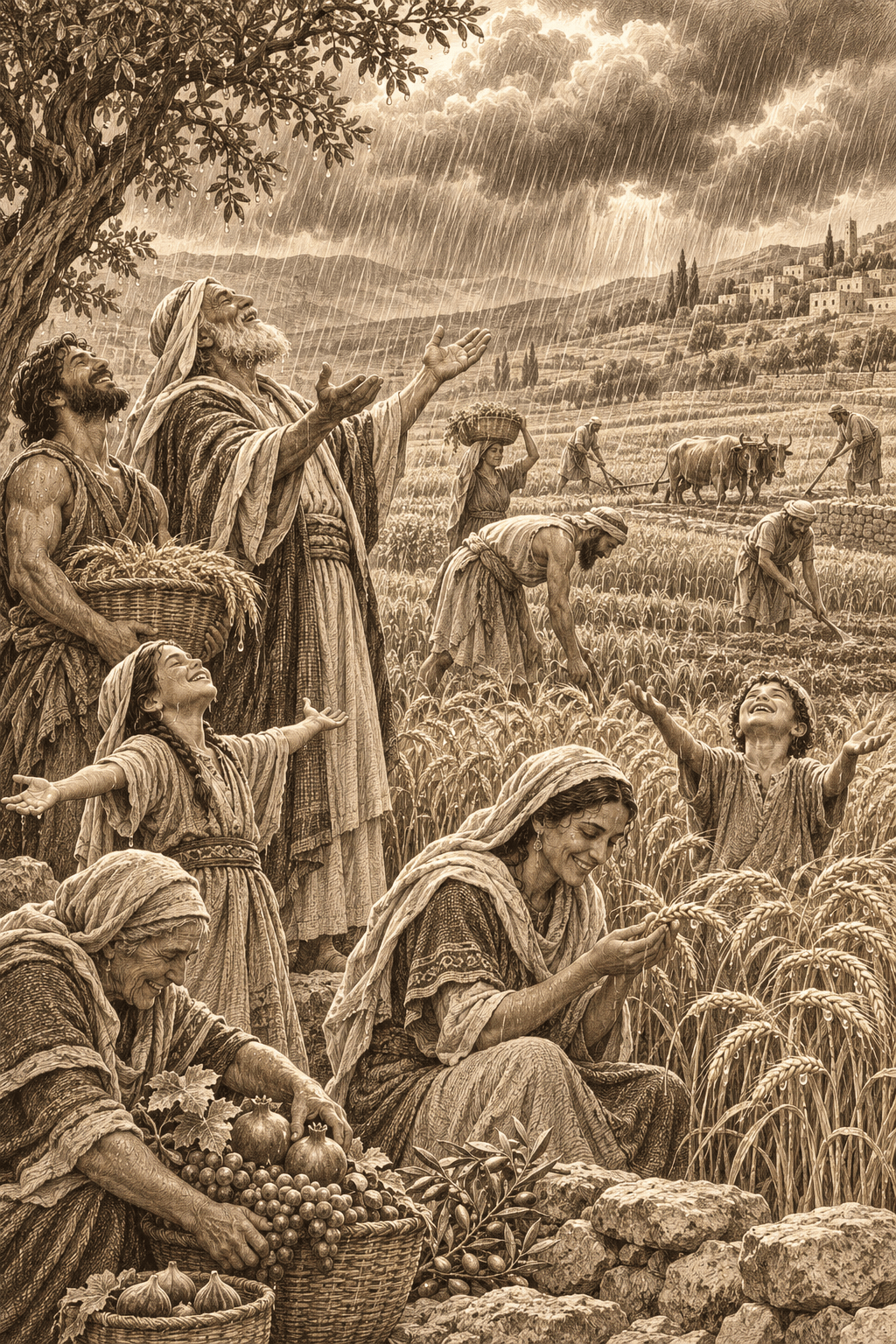
Having shown the bright side of the cloud turned toward obedience, he presents to us the dark side turned toward disobedience. For if we do not keep His commandments, we are not only deprived of the promised blessings, but we throw ourselves under the curse, which brings every misery as the blessings bring every happiness.
God declared the power and effectiveness of His blessings in the believer’s life, and at the same time revealed the danger of disobedience, so that the believer would not think that the spiritual life is love without discipline or law. He presents a hideous picture of what befalls the people because of their turning away from God, the Source of their life, growth, joy, satisfaction, sanctification, and inner freedom. Many see this part of the chapter as the most terrifying in Holy Scripture. Matthew Henry said that a certain man, reading this part, could not bear the curses in it, and tore this chapter out of the Bible. He did not realize that love must be wrapped in firmness, and that God’s surpassing love cannot be enjoyed without the divine fear.
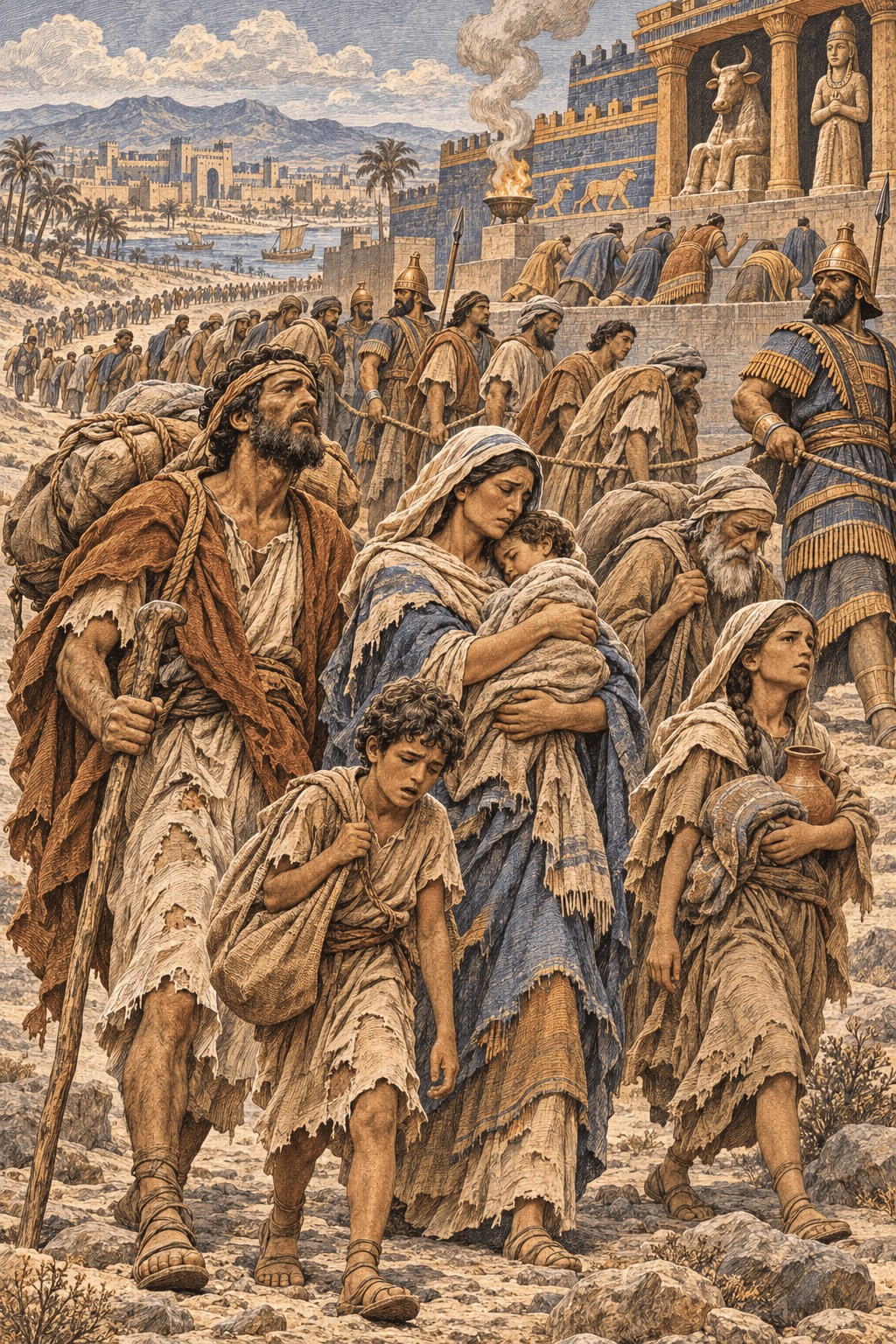
In every nation there are people who are spiritually children and need some fear to lift them to maturity, that they may accept obedience through love. What he calls curses here expresses the divine wrath against sin itself, or evil. The Lord’s wrath is holy and cannot be separated from love; He is angry at sin, longing to free the sinner from it. The curses are a natural fruit of man’s separating himself from God, the Source of every blessing. So when we speak of the curses God allows, their source is not God, who is all love and the Maker of good things; they are the fruit of our evil will, which separates itself from the Source of blessing.
True love is accompanied by sincerity and seriousness in action, not slackness, negligence, and insincerity.
The Curse in Holy Scripture
Blessings and curses represent an essential element in the spiritual life and in biblical thought. But how different is Holy Scripture’s view of the curse from that of the pagan world! The pagans look upon the curse as divine wrath or the work of sorcery, not removed from a person through repentance and living spiritual conduct, but through the use of spells and magical acts. Holy Scripture, however, sees the following in the curse:
- The curse is a natural fruit of sin. The disobedient tastes a pledge of its bitterness in this world, that perhaps he may reconsider and repent of his sin; otherwise he will taste the fulness of its bitterness in the world to come. If the blessing is God’s gift to the righteous, the curse is the fruit of the evil the disobedient commits (Proverbs 11:31). Sin brings confusion, disorder, and corruption into the soul, so that everything within and without a person becomes corrupt (see Galatians 6:8; Romans 6:21).
- The work of the curse is corruption: it corrupts the mind, the heart, the will, and the whole inner being of a person. It is among the Lord’s blessings upon us that we do not fully realize what the curse does in us, especially in the life to come, so that we do not fall into despair. What this chapter shows of the curse’s work in man’s life is a shadow of what happens in the depths of the soul and will be revealed on the great day of the Lord.
- The curse deprives nature of its natural fruit. God set laws for nature so that it might accomplish its work and bring forth increasing fruits for man’s happiness, but it is unable to achieve these fruits without divine help. The curse is man’s separation from God, the Ruler of all, and so the laws of nature are thrown into confusion because of it.
- The curse strips of life: wherever it comes, it separates a person from God, the Source of life, so that death creeps into him wherever he is.
We do not fall under the curse without reason, nor for a trivial reason, for God does not look for an opportunity to stand against us, nor does He want to enter into conflict with us. Those who fall under the curse are the following:
First: Those who despise God and refuse to listen to Him (15), counting His voice as not worth hearing.
Second: Those who disobey Him (20). God does not cast us out unless we cast Him out of our lives.
The Possibility of the Curse
God does not want the curse for man but the blessing, for He created him to enjoy the fellowship of life with Him. But sin turns light into darkness, the sweetness of life into bitterness, and food into poison.
- It turns man’s mind, surpassing in its ability and resources, into a center of confusion for the whole person. It is like a virus that strikes a computer to corrupt all its memory and confuse all its data.
- It turns beautiful nature, which serves man, into an instrument of his pains and troubles.
- It turns the body, which shares with the soul in its exultation in God the Creator of all, into a center of lusts that destroy soul and body together.
- It turns children, instead of being a source of joy and gladness, into a source of anxiety.
- The curse makes possessions not a secret of contentment but a cause of disturbance.
- The curse corrupts the surpassing order of nature, with its precise laws, into a state of chaos.
- Finally, when the curse comes upon a person, he becomes as though out of his senses: he sees in the sun a furnace of fire, in nature an endless agency of curses, and in the future a destructive darkness.
Escaping the Curse
In general, all the curses come upon us and dominate us even if we try to escape them and overcome them (15). It is said of the sinner that God’s wrath pursues him, and he cannot escape from His hand (Job 27:22). No one escapes from God, but one may flee to Him; not flee from His justice, but flee to His mercy (Psalm 21:7–8).
Wherever the sinner goes, the curse follows him, and wherever he is, it comes upon him and settles there. The walls of the city do not protect him, and the pure air of the field does not keep him from the corrupting smoke. The curse comes upon the house of the wicked (Proverbs 3:33), and when he goes out of the house he cannot leave it in the house and escape it, for it enters his bowels and creeps into his bones.
The curse is to him like the ground he stands on, as happened with Cain (Genesis 4:11). The curse comes upon the basket and the store, that is, upon his mind and conscience (Titus 1:15), so that he finds no rest at all but loses the peace of his heart. The curse comes upon all he sets his hand to (20), and he enters a state of deep frustration.
God threatens severe judgments, as in Ezekiel 14:21. If a person is not deterred, he falls into doubled judgments.
The Curse and Prophecy
Some see that the curses mentioned here were prophecies fulfilled through the ages:
- The Assyrian and Chaldean invasions referred to in Jeremiah 4:13 (15).
- The Babylonian captivity for 70 years.
- The Roman occupation, as foreign enemies (49–50).
- The siege of Jerusalem by Titus, as recorded by Josephus the historian. [276]
- The sale of hundreds, indeed thousands, of Jews as slaves through the ages.
Saint Athanasius the Apostolic says:
These wicked men are heading toward killing themselves with every kind of lust… Yes, even when they live they are in shame, for they count their bellies their gods, and when they die they are tormented. [277]
First: The Curse Cleaves to the Disobedient
As he likened the blessings to a person running after the believer, wanting to overtake him and enter his depths, so do the curses. For the struggle is between God and the devil: God wants to gain man as His son, to give him fellowship in eternal glories, and the devil spends every effort to gain him as a son with him, sharing his perdition (15).
The curses try to track a person wherever he goes, to give him always everything opposed to the blessings. The curses want to reach out and work in a person whether he is in the city or the field, touching his inner life as well as his outer life, corrupting even his daily work, and accompanying him in his coming in as in his going out (see verses 16–19 above). The curse here is the stripping of the city, the village, and the person of every touch of life, so that death creeps into everything.
Second: Suffering from Turmoil
If the fruit of the Spirit is love mingled with joy (Galatians 5:22), where the Spirit carries the soul as it were to heaven to taste eternal joy while still amid the turmoil, cares, and trials of the world, the work of sin, especially disobedience, is to deprive a person of this heavenly atmosphere. By disobedience a person turns his back on God, the Source of true joy, and so throws himself into a hell of anxiety and turmoil, bearing a spirit of rebuke and ingratitude in every work he sets his hand to. He drives himself to destruction (20).
Third: Suffering from Pestilence
The word “pestilence” comes in the Septuagint as “death” (21), for when a person refuses to cleave to God, the Source of life, he drives himself by his disobedience to death. Diseases of every kind come upon him until his body withers along with his soul, and he loses all his vitality and becomes like a dead man who has perished!
Diseases of various kinds come upon a person, as crops are struck by diseases such as blasting. Amos says: “I have smitten you with blasting and mildew: when your gardens and your vineyards and your fig trees and your olive trees increased, the palmerworm devoured them: yet have ye not returned unto me, saith the Lord” (Amos 4:9). There is also the withering caused by the east winds, as in Pharaoh’s dream: “seven ears, withered, thin, and blasted with the east wind” (Genesis 41:23), where the hot winds strike the ears before they bear grain, so that they dry up (22).
Fourth: Nature Resists the Disobedient
Nature, which God created for man’s satisfaction and happiness, stands against him: the heaven becomes brass that gives no rain, and the earth iron in which seeds do not sprout, so that famine comes upon the land and man suffers from a lack of crops (23–24). As the Lord had warned them before: “And I will break the pride of your power; and I will make your heaven as iron, and your earth as brass: And your strength shall be spent in vain: for your land shall not yield her increase, neither shall the trees of the land yield their fruits” (Leviticus 26:19–20).
Instead of rains falling from heaven on the earth to water it, heavy sand and dust that blinds the eyes fall. A person loses his rest and his right view of things.
So when a person turns his back on God, he loses the gift of His Holy Spirit; his soul, “the heaven,” becomes like brass, bearing no fruit of the Spirit, and the body bears a spirit of stubbornness and resistance, becoming like iron.
Fifth: Defeat before Enemies
Before their entering the Promised Land and enjoying victory over the nations dwelling in Canaan, He assured them that if they transgressed His commandment, they would lose their victory and their honor, and their carcasses would become food for the birds of the air and the beasts of the field, whether on the level of the people as a whole or of the individual (25–26). As Ahijah the prophet said to the wife of Jeroboam: “Him that dieth of Jeroboam in the city shall the dogs eat; and him that dieth in the field shall the fowls of the air eat: for the Lord hath spoken it” (1 Kings 14:11). And in the Psalm: “O God, the heathen are come into thine inheritance; thy holy temple have they defiled; they have laid Jerusalem on heaps. The dead bodies of thy servants have they given to be meat unto the fowls of the heaven, the flesh of thy saints unto the beasts of the earth” (Psalm 79:1–2). And the Lord says by Jeremiah the prophet: “Therefore, behold, the days come, saith the Lord… And the carcases of this people shall be meat for the fowls of the heaven, and for the beasts of the earth; and none shall fray them away” (Jeremiah 7:32–33).
The literal translation of the phrase “removed into all the kingdoms of the earth” is “all the kingdoms of the earth shall toss thee here and there, up and down”; that is, you will become like a ball that all the kingdoms of the earth play with. As it is said: “And I will cause them to be removed into all kingdoms of the earth” (Jeremiah 15:4), and “I will deliver them to be removed into all the kingdoms of the earth for their hurt, to be a reproach and a proverb, a taunt and a curse, in all places whither I shall drive them” (Jeremiah 24:9; see Jeremiah 29:18).
Sixth: Deprivation of Every Gift
If God struck the Egyptians who enslaved the people, when Pharaoh refused to let the people go out to sacrifice to the Lord in the wilderness and keep the feast, this people, when it disobeys the Lord and refuses to meet Him through obedience and faithfulness to the covenant, falls under the plagues without partiality. God does not favor one nation over another; a nation enjoys the Lord’s blessings or is subjected to the plagues according to its stand toward the commandment. So He says: “The Lord will smite thee with the botch of Egypt” (27). These are bodily, mental, psychological, social, family, economic, and military plagues, and so on.
A) Bodily plagues: the body is struck with boils, emerods, scab, and itch, and is filled with malignant sores from the sole of the foot to the crown of the head (27).
B) Mental plagues: a person is struck with a kind of madness, so that he cannot make a wise decision in managing the affairs of his life. He is struck with mental blindness in the middle of the day; at noon he gropes in darkness and does not prosper in his ways, like the leaders of the Jews whose eyes were blinded from seeing the Lord Christ, “the Sun of righteousness,” so that they loved darkness and rejected the Light of the world. A person also falls into “astonishment of heart,” not knowing truth from falsehood, and becomes hesitant in his decisions (28–29).
The Jewish people were struck with spiritual blindness; though He called them His servant and messenger, for they ought to have preached the Messiah, the Savior of the world, their eyes were blinded from seeing Him, and their minds from understanding the prophecies about Him. So He rebukes them: “Hear, ye deaf; and look, ye blind, that ye may see. Who is blind, but my servant? or deaf, as my messenger that I sent? who is blind as he that is perfect, and blind as the Lord’s servant?” (Isaiah 42:18–19). As our teacher Paul the Apostle says of those who reject the word of the Gospel: “In whom the god of this world hath blinded the minds of them which believe not, lest the light of the glorious gospel of Christ, who is the image of God, should shine unto them” (2 Corinthians 4:4).
C) Social plagues: he falls under social injustice, crying out all the days of his life from the injustice that befalls him, with no one to answer or do him justice. He groans under the injustice, accusing those around him, not knowing that his disobedience to God and his rejection of God’s love deprive him even of enjoying his social rights: “and thou shalt not prosper in thy ways: and thou shalt be only oppressed and spoiled evermore, and no man shall save thee” (29).
D) Family plagues: the plague strikes him in his family; he betroths a girl and another takes her. He also falls into captivity, and his sons and daughters are given as slaves to another people (30–31).
E) Military plagues: in the military realm, his country is delivered to the enemy because of his sins, and his sons and daughters become slaves to strangers. He sees them with his eyes in humiliation until his eyes fail, and he is powerless to do anything for them. The enemy enjoys all the fruits of his country (32).
Some see the expression “there shall be no might in thine hand” as meaning “thy hand shall not be toward God Almighty,” though others see it as meaning “thy hand shall have no power.” The hand that does not reach out in work toward God Almighty loses its power and resources, and becomes powerless to work.
F) Economic and material plagues: he is struck in his possessions. He builds a house to settle in with his family, and it is taken from him, so that he remains unsettled. He plants a vineyard to enjoy the grapes and rejoice in the wine, but he does not eat a cluster from it nor drink a cup of its wine. His ox is slain before his eyes and he does not eat of it; his ass is taken by violence and not returned; and the enemies plunder his sheep, and there is none to save him from this injustice (33–35). As it is written in Zephaniah the prophet: “Therefore their goods shall become a booty, and their houses a desolation: they shall also build houses, but not inhabit them; and they shall plant vineyards, but not drink the wine thereof” (Zephaniah 1:13). And in Micah: “Thou shalt sow, but thou shalt not reap; thou shalt tread the olives, but thou shalt not anoint thee with oil; and sweet wine, but shalt not drink wine” (Micah 6:15).
Seventh: Loss of Honor
He spoke of the military plague, that is, the collapse of the nation because of sin so that the people go into captivity. Now he speaks to us of one of the curses concerning the loss of honor (36–37). Man was created to live on the earth as a master, not to be enslaved by anyone. The earth and all that is on it, under it, and around it was created to serve man, and man was not created to be a slave to his brother. But when he delivers himself to the bondage of sin instead of the freedom God gives him, God sometimes allows him to be deprived of honor and freedom, so that he may stand before his depths and examine them, until they regain their freedom and are freed from the bondage of the devil by returning to God.
Wonderfully, we notice the following here:
First: The bitterness that befalls us, such as captivity and the slavery, humiliation, and mockery that follow it, is by divine permission, for He says: “The Lord shall bring thee… whither the Lord shall lead thee.”
Second: It seems as though God is harsh in discipline, raising up a foreign nation to discipline His people. Whoever is harsh toward his own soul, not caring for its salvation and its liberation from bondage, He allows to undergo a harsh temporary bondage, but only for a time.
Third: When the people disobey God and reject His commandments, He allows them to be taken captive by a pagan nation. There the people fall into pagan worship, imitating those who took them captive, and remain in humiliation until they return to God, not only to worship Him, but also to respond to His commandment. This was literally fulfilled when Assyria took Israel captive and Babylon took Judah captive, and both kingdoms were in the humiliation of captivity until their return to Jerusalem.
Eighth: Deprivation of the Labor of One’s Hands
Many seeds go out to the field and little is gathered, for the locust consumes it; vineyards are planted and dressed, but their wine is not drunk, for the worms eat them; olive trees grow throughout the land, but their oil does not anoint, for the olives fall; sons and daughters are begotten but are not kept, for they go into captivity (38–46).
By saying “for ever” (46), He declares His final rejection of Israel as long as it rejects faith in the true Messiah; it is no longer a people chosen by God, since it resists the Savior of the world. But whoever returns to faith and accepts the One in whom the prophecies in their hands were fulfilled finds the arms of God stretched out to him in love and acceptance. He awaits the faithful remnant (Isaiah 6:13; 10:22; Romans 9:27; 11:5).
Saint John Chrysostom says:
(The word of God) is the food of the soul, its ornament, and its safety; so in not listening to it there is famine and deprivation. [278]
Ninth: Decline and Collapse
The stranger within the gates rises higher and higher while the disobedient people come down lower and lower; the stranger lends and is not lent to; he becomes the head, and they the tail (43–44).
Tenth: Falling into Bondage
Whoever refuses to serve God is obliged to serve others by force, and whoever does not worship God becomes a slave to many. So Saint Arsenius often repeated:
Be the servant of one master, and not the servant of many.
Because they did not serve the Lord their God with joyfulness and gladness of heart for the abundance of all things, they would serve their enemies in hunger, thirst, nakedness, and want of all things (47–51).
Because of disobedience, Assyria invaded Israel and took it captive (Isaiah 5:26; 7:18–19; 38:11), and the Babylonians invaded Judah and took it captive; but here he speaks mostly of the Roman state.
He likens the nation that disciplines the people to the flying eagle, and this was a prophecy of the Roman Empire’s occupation of them (after Assyria, Babylon, the Medes and Persians, and Greece). The eagle was the distinctive emblem of the Roman army; indeed, some Latin writers used the Latin word for eagle, aquila, to mean a military legion. [279]
This nation’s tongue they would not understand, for it spoke Latin. It is a nation of fierce countenance that does not regard the person of the old nor show favor to the young, for the Roman motto was “strength, or violence, is life.”
A person thinks he can take refuge in high, strong walls, but the curse drags him away from where he thinks his source of security is, and he finds himself without strength (52–55). The fortifications of cities cannot protect him (Deuteronomy 9:1), nor horses and chariots (Psalm 20:7), nor great numbers or wealth (Proverbs 10:15), nor political shrewdness or resorting to alliances with foreign powers (Isaiah 30), for God’s strong hand has departed from him.
May we not hide in self-righteousness, for every mouth is stopped before God (Romans 3:19); nor put our trust in vain things (Matthew 3:9; 7:22); nor justify ourselves with excuses (Matthew 25:26; Luke 14:18).
He gives an extremely bitter picture of the pampered queen, the woman of authority always carried on shoulders, humiliated by bondage (56–57). Queens used to go to great lengths in adornment and in affecting delicacy to win respect and honor. But a person’s honor, whatever their sex, man or woman, or their position, king or slave, is not in outward adornment nor in what they affect, but in the character, good strength, heavenly wisdom, and inner bond with God that their depths bear. Here he describes the queens, how they lived in luxury and delicacy so that the soles of their feet did not touch the ground; these suffer humiliation and bitterness because of the captivity.
Eleventh: The Plagues of Egypt Come upon Him
Clearly by this book he does not mean “the Book of Deuteronomy,” but what Moses the prophet had previously recorded of the commandments and laws he received from God (58–60).
“This glorious and fearful name” (58): The names of God in Deuteronomy deserve study. He is the living God (Deuteronomy 5:26), the God of our fathers (Deuteronomy 6:3), God of gods and Lord of lords (Deuteronomy 10:17; Revelation 19:16), the Rock… a God of truth (Deuteronomy 32:4), the Most High (Deuteronomy 32:8), and the eternal God (Deuteronomy 33:27). But the name most used is “the Lord thy God.”
What does he mean by “this book”? While the sermons were being delivered, the Book of Deuteronomy had not yet been recorded, so what does Moses the prophet mean by the book here? Some think it is the book of the Law that Moses the prophet received.
He links carrying out the commandment, or acting on it, with enjoying the fear of the Lord our God. Through the fear of the Lord we keep the commandment, and through keeping the commandment we taste the sweetness of the fear of the Lord, experience it practically, and grow in it.
God struck the Egyptians with the ten plagues recorded in the Book of Exodus (Exodus 7–11), so that His people might enjoy the exodus, receive the divine commandment, and realize the covenant with God. Now, when the people refuse to respond to the commandment and do not keep it, they deserve to fall under the same plagues the Egyptians fell under.
Twelfth: Destruction Comes
It was God’s pleasure to do good to His people, save them from bondage, and multiply them; this was His joy! Now, when the people refused to cleave to Him, He disciplines them even, as it were, to destruction, that perhaps the remnant may return to Him. So He also rejoices in disciplining them and scattering them among the peoples from one end of the earth to the other (61–67).
God has no pleasure in the death of the sinner, but that he return and live (Ezekiel 18:32); and the Lord Christ Himself wept over fallen Jerusalem (Luke 19:41).
Saint Athanasius the Apostolic sees in the words of Moses the prophet, “And thy life shall hang in doubt before thee” (66), a prophecy of the death of the Lord Christ, when He was hanged on the wood of the cross and the Jews did not believe in Him. [280] He says:
Had they paid attention to the prophecy of Moses, they would not have hanged Him who was their Life. [281]
By saying, “thy life shall hang in doubt before thee” (66), he means that it is like something hanging by a thread before a person, who waits for it to fall at any moment.
Thirteenth: Returning to Egypt
Perhaps the harshest curse is their return to Egypt to be sold as slaves to their enemies (68). They are put as it were in the slave market, and in disgust people refuse to buy them; that is, they have become worth less than slaves.
Some see “Egypt” here as a symbol of what befell the Jews when they fell into captivity to many states; but some see that this was literally fulfilled after Titus took Jerusalem, when a large number of Jews were carried to Egypt and fell into bitter, harsh slavery. Until the time of Hadrian, groups of Jews were sold as slaves. [282]
Some say that the harshest enemy of humanity on earth is man, for when he tyrannizes over his brother he becomes fiercer than ravening beasts. So the threat of captivity and slavery was left to the end of the curses.
3. A Meditation on Deuteronomy 28
Let Your Blessing Cleave to Me
In my foolishness I was searching for Your blessing,
thinking it very far from me; who can acquire it?!
I found it standing at the door of my heart, knocking,
seeking my friendship, my love, and my submission.
Let Your blessing enter my depths and cleave to me, for I am sick with love!
Let Your blessing work in my life:
in my work, in my home, and in my church.
Let it take possession of my whole being:
my soul, my body, my mind, and all my energies.
Let it reign within me and lead my whole being.
Let it work in my eating and drinking, my sleeping and my waking.
Yes, let Your blessing be the leader,
moving my whole being in the battle of the spirit.
By it I overcome every enemy and triumph over every corruption.
By it I enjoy crowns of eternal glory.
Let Your blessing set guards over the storehouses of my heart,
turning it into a sanctuary for You,
that I may enjoy imitating You, O All-Holy,
and become a living icon of You, O You who alone are Holy!
Let Your blessing carry me to Your heavens,
and reveal to me Your divine mysteries,
and give me a portion in Your surpassing bridal chamber.
I meet You and am united with You, O heavenly Bridegroom of my soul.
It turns my life into an unbroken heavenly joy.
Your blessing makes me the head and not the tail.
Your blessing opens to me the treasures of heaven,
blesses the good things of the earth,
and all that my hands reach out to.
Your blessing lifts me up to You, that I may remain with You forever!
Notes and References
[274] Saint John Chrysostom, Homilies on Hebrews 14:6.
[275] Saint Gregory of Nyssa, The Life of Moses 2:287–290.
[276] Josephus, The Jewish War 5:10:3; 6:3:3–4; 6:6:2.
[277] Saint Athanasius the Apostolic, Festal (Paschal) Letters 7.
[278] Saint John Chrysostom, Homilies on Matthew 2:10.
[279] Caesar, The Spanish War 30; cf. Matthew 24:28.
[280] Saint Athanasius the Apostolic, On the Incarnation of the Word 35:2.
[281] Saint Athanasius the Apostolic, Festal (Paschal) Letters 10:5.
[282] Josephus, The Jewish War 6:9:2; Philo, Against Flaccus and On the Embassy to Gaius.