
The last eleven chapters (Numbers 26–36) do not present stirring events like the earlier chapters, which recorded important glimpses of God’s dealings with man on his journey through the wilderness. Rather, they present the long preparations for readying the people for the most important event in the Old Testament, the entry into the land of promise and the division of the land by the hand of Moses, as a symbol of our entering the eternal inheritance by the hand of our Lord Jesus. The preparations began with a divine command to take a new census.
1. The Divine Command to Take the Census
KJV · Verses 1–4
1 And it came to pass after the plague, that the Lord spake unto Moses and unto Eleazar the son of Aaron the priest, saying, 2 Take the sum of all the congregation of the children of Israel, from twenty years old and upward, throughout their fathers' house, all that are able to go to war in Israel. 3 And Moses and Eleazar the priest spake with them in the plains of Moab by Jordan near Jericho, saying, 4 Take the sum of the people, from twenty years old and upward; as the Lordcommanded Moses and the children of Israel, which went forth out of the land of Egypt.
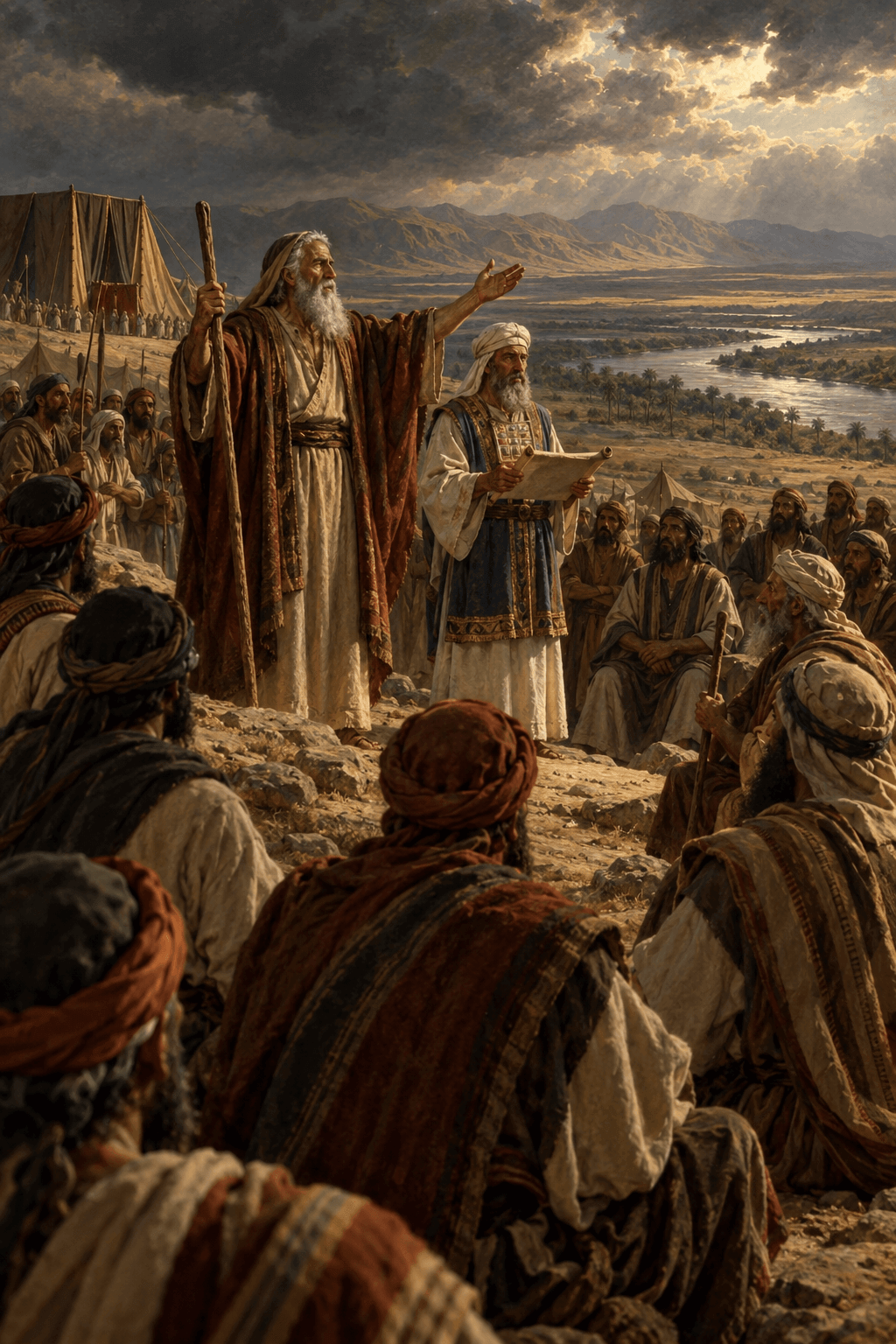
For the second time the divine command to take a census was given. The first time was a year and a month after the Exodus, to prepare for the struggle in the wilderness; now it is to prepare for entering the land of promise and dividing it. Therefore the command was not given until the plague had stopped (1), the stage of chastisement had ended, and the people had become ready to enjoy the land of promise. The census came with the same conditions as the first census (chapter 1), with slight differences that appeared in recording its facts and results.
2. The Record of the Census
KJV · Verses 5–51
5 Reuben, the eldest son of Israel: the children of Reuben; Hanoch, of whom cometh the family of the Hanochites: of Pallu, the family of the Palluites: 6 Of Hezron, the family of the Hezronites: of Carmi, the family of the Carmites. 7 These are the families of the Reubenites: and they that were numbered of them were forty and three thousand and seven hundred and thirty. 8 And the sons of Pallu; Eliab. 9 And the sons of Eliab; Nemuel, and Dathan, and Abiram. This is that Dathan and Abiram, which were famous in the congregation, who strove against Moses and against Aaron in the company of Korah, when they strove against the Lord: 10 And the earth opened her mouth, and swallowed them up together with Korah, when that company died, what time the fire devoured two hundred and fifty men: and they became a sign. 11 Notwithstanding the children of Korah died not. 12 The sons of Simeon after their families: of Nemuel, the family of the Nemuelites: of Jamin, the family of the Jaminites: of Jachin, the family of the Jachinites: 13 Of Zerah, the family of the Zarhites: of Shaul, the family of the Shaulites. 14 These are the families of the Simeonites, twenty and two thousand and two hundred. 15 The children of Gad after their families: of Zephon, the family of the Zephonites: of Haggi, the family of the Haggites: of Shuni, the family of the Shunites: 16 Of Ozni, the family of the Oznites: of Eri, the family of the Erites: 17 Of Arod, the family of the Arodites: of Areli, the family of the Arelites. 18 These are the families of the children of Gad according to those that were numbered of them, forty thousand and five hundred. 19 The sons of Judah were Er and Onan: and Er and Onan died in the land of Canaan. 20 And the sons of Judah after their families were; of Shelah, the family of the Shelanites: of Pharez, the family of the Pharzites: of Zerah, the family of the Zarhites. 21 And the sons of Pharez were; of Hezron, the family of the Hezronites: of Hamul, the family of the Hamulites. 22 These are the families of Judah according to those that were numbered of them, threescore and sixteen thousand and five hundred. 23 Of the sons of Issachar after their families: of Tola, the family of the Tolaites: of Pua, the family of the Punites: 24 Of Jashub, the family of the Jashubites: of Shimron, the family of the Shimronites. 25 These are the families of Issachar according to those that were numbered of them, threescore and four thousand and three hundred. 26 Of the sons of Zebulun after their families: of Sered, the family of the Sardites: of Elon, the family of the Elonites: of Jahleel, the family of the Jahleelites. 27 These are the families of the Zebulunites according to those that were numbered of them, threescore thousand and five hundred. 28 The sons of Joseph after their families were Manasseh and Ephraim. 29 Of the sons of Manasseh: of Machir, the family of the Machirites: and Machir begat Gilead: of Gilead come the family of the Gileadites. 30 These are the sons of Gilead: of Jeezer, the family of the Jeezerites: of Helek, the family of the Helekites: 31 And of Asriel, the family of the Asrielites: and of Shechem, the family of the Shechemites: 32 And of Shemida, the family of the Shemidaites: and of Hepher, the family of the Hepherites. 33 And Zelophehad the son of Hepher had no sons, but daughters: and the names of the daughters of Zelophehad were Mahlah, and Noah, Hoglah, Milcah, and Tirzah. 34 These are the families of Manasseh, and those that were numbered of them, fifty and two thousand and seven hundred. 35 These are the sons of Ephraim after their families: of Shuthelah, the family of the Shuthalhites: of Becher, the family of the Bachrites: of Tahan, the family of the Tahanites. 36 And these are the sons of Shuthelah: of Eran, the family of the Eranites. 37 These are the families of the sons of Ephraim according to those that were numbered of them, thirty and two thousand and five hundred. These are the sons of Joseph after their families. 38 The sons of Benjamin after their families: of Bela, the family of the Belaites: of Ashbel, the family of the Ashbelites: of Ahiram, the family of the Ahiramites: 39 Of Shupham, the family of the Shuphamites: of Hupham, the family of the Huphamites. 40 And the sons of Bela were ard and Naaman: of Ard, the family of the Ardites: and of Naaman, the family of the Naamites. 41 These are the sons of Benjamin after their families: and they that were numbered of them were forty and five thousand and six hundred. 42 These are the sons of Dan after their families: of Shuham, the family of the Shuhamites. These are the families of Dan after their families. 43 All the families of the Shuhamites, according to those that were numbered of them, were threescore and four thousand and four hundred. 44 Of the children of Asher after their families: of Jimna, the family of the Jimnites: of Jesui, the family of the Jesuites: of Beriah, the family of the Beriites. 45 Of the sons of Beriah: of Heber, the family of the Heberites: of Malchiel, the family of the Malchielites. 46 And the name of the daughter of Asher was Sarah. 47 These are the families of the sons of Asher according to those that were numbered of them; who were fifty and three thousand and four hundred. 48 Of the sons of Naphtali after their families: of Jahzeel, the family of the Jahzeelites: of Guni, the family of the Gunites: 49 Of Jezer, the family of the Jezerites: of Shillem, the family of the Shillemites. 50 These are the families of Naphtali according to their families: and they that were numbered of them were forty and five thousand and four hundred. 51 These were the numbered of the children of Israel, six hundred thousand and a thousand seven hundred and thirty.
The book gives us a record of the facts of the census and its results; in it we note the following:
First: in the first division the names of the families were not mentioned; it was content with the names of the tribes. Here, however, each tribe is divided into its families, with the names of the families made clear. Note that the tribe of Dan has one family, and yet its number comes directly after Judah. Zebulun has three families; Ephraim, Issachar, Naphtali and Reuben four families each; Judah, Simeon and Asher five families each; Gad and Benjamin seven each; and Manasseh eight. Though Benjamin begot ten sons in Egypt (Genesis 46:21), it seems that three of them had no children, or that their families had died out completely.
If we take the principle of the symbolism of numbers, we find the following:
A) The number (1) points to the Godhead, whose work in him no one can enjoy unless he finds himself a place in the tribe of Dan, that is, judges himself. When a man enters into membership of this tribe, he enjoys not only coming to know the one God but enjoying His features through union with Him.
B) The number (3) points to the divine Persons, whom the members of the tribe of Zebulun, that is, “dwelling,” enjoy. Whoever enjoys union with God, that is, abiding in Him and dwelling in Him, enjoys the work of the Holy Trinity in his life, for he is united with the Father in His Son by the Holy Spirit.
C) The number (4) points to the four Gospels, or the work of salvation (Incarnation, crucifixion, resurrection, ascension). It is enjoyed by the men of the tribes of Ephraim (much fruit), Issachar (reward), Naphtali (wide) and Reuben (son of vision): whoever has increasing fruit of repentance, receiving his recompense or reward from God, bearing a heart wide toward God and his brother, and having spiritual insight (son of vision).
D) The number (5) points to the sacrifices of the Old Testament, a symbol of the sacrifice of the cross in its many aspects. God accepts them for the tribes of Judah (confession or faith), Simeon (hearers) and Asher (happy). These three things, when joined together, faith and obedience with spiritual joy, bring us into the mysteries of the holy sacrifice.
E) The number (7) points to perfection, which is ascribed to the two tribes of Gad and Benjamin, that is, the men who strive, full of earnestness (Gad), and who stand at the right hand of God (Benjamin). When the earnestness of lawful striving is joined with abiding at God’s right hand, a man attains the perfection of his goal.
F) Finally, the number (8) points to the life to come, that is, what comes after the seven days of the week. It is enjoyed by the children of Manasseh, who forget the world for the sake of eternity, and forget every turmoil and care for the sake of heavenly joy.
Second: note that all the tribes that were under the standard of the camp of Judah, from whom Christ the Lord came according to the flesh, increased in number: Judah, Issachar and Zebulun. It is as though whoever takes refuge in the shade of Christ the Lord grows and increases and does not perish!
Third: no tribe increased like Manasseh, which was formerly the smallest of the tribes. Its number was 32,200, and it became 52,700. For whoever trains himself to forget the things of this age is counted here as least, but he carries an abundant blessing in the last census.
Fourth: no tribe decreased like Simeon. Its number was 59,300 and it became 22,200; that is, it lost more than half of its number. Some explain the secret of this by saying that the last plague fell mostly on this tribe, for Zimri, whom Phinehas the priest killed, was a prince of a chief house of this tribe (Numbers 25:14). If Zimri means “one who is like a wild ox,” then, instead of keeping the mark of the tribe (Simeon means “hearers”), he was drawn after the lusts and pleasures of the body like a wild ox, and lost much. This tribe came to represent the man who began in the Spirit, obedient and listening to God’s voice, and alas ended in the flesh, walking after bodily pleasure!
Fifth: during the census names were mentioned connected with the names of the heads of the tribes, who died under particular circumstances, to affirm that the wicked are deprived of enjoying a portion in the land of promise. The following names were mentioned:
- Dathan and Abiram, whom the earth swallowed with Korah (9–10); they usurped the priesthood and murmured against Moses and Aaron (chapter 16).
- Er and Onan, the sons of Judah (19). The first was wicked in the sight of the Lord, and He slew him without offspring (Genesis 38:7); and his brother Onan spilled his seed on the ground so as not to give seed to his brother, and bore the same reward (Genesis 38:9).
- Nadab and Abihu, the sons of Aaron the high priest, who offered strange fire before the Lord (61), and He killed them (Leviticus 10:1–7; Numbers 26:61).
3. Instructions concerning the Division
KJV · Verses 52–56
52 And the Lord spake unto Moses, saying, 53 Unto these the land shall be divided for an inheritance according to the number of names. 54 To many thou shalt give the more inheritance, and to few thou shalt give the less inheritance: to every one shall his inheritance be given according to those that were numbered of him. 55 Notwithstanding the land shall be divided by lot: according to the names of the tribes of their fathers they shall inherit. 56 According to the lot shall the possession thereof be divided between many and few.
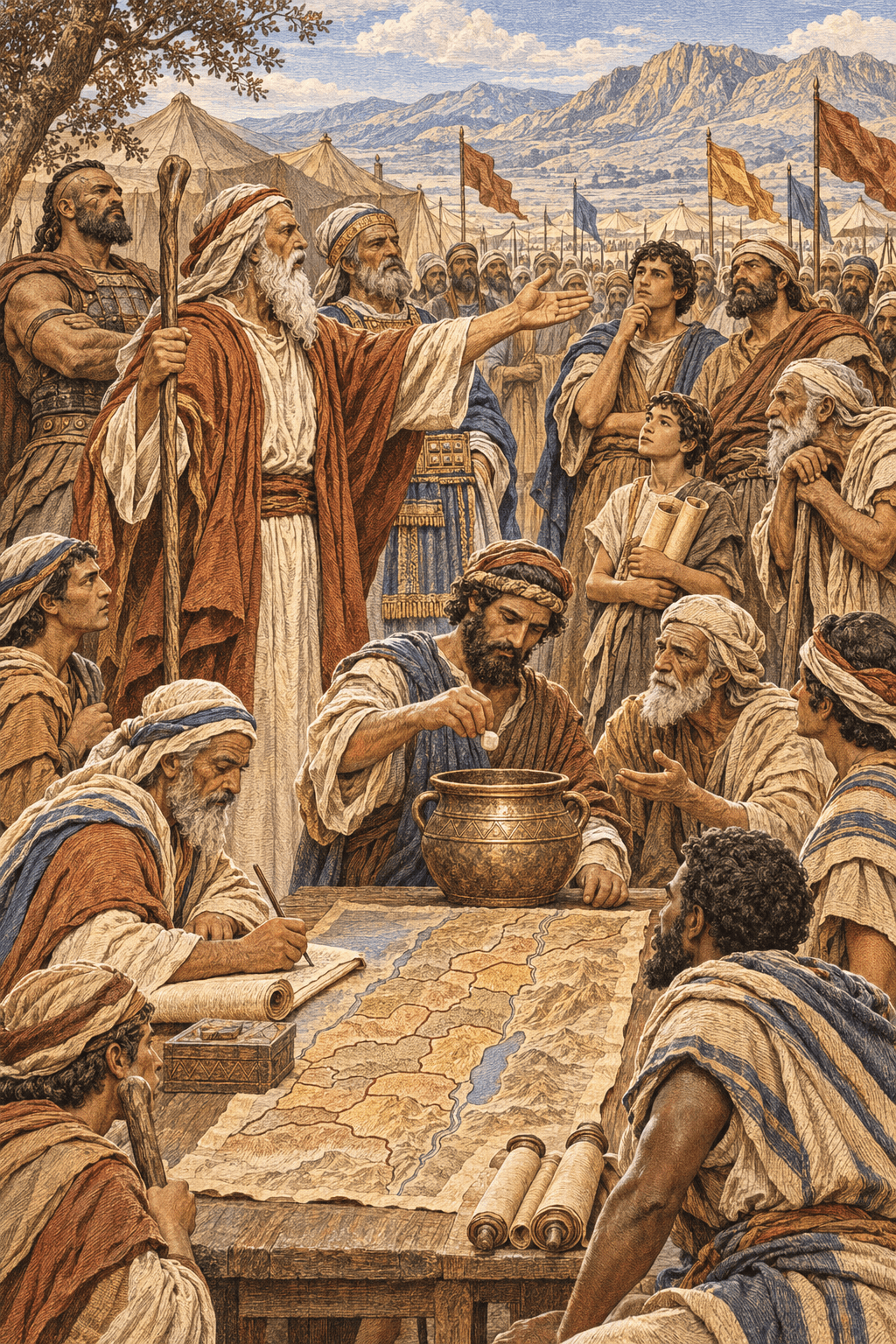
“And the LORD spake unto Moses, saying, Unto these the land shall be divided for an inheritance according to the number of names. To many thou shalt give the more inheritance, and to few thou shalt give the less inheritance” (52–54). Though Joshua the son of Nun was the one who divided the land, God gave the instructions concerning the division to Moses before his departure. Entering the promise will take place only through Joshua, the symbol of “Jesus” Christ our Lord; but Moses, the representative of the Law, received the instructions, for there is no separation between the Law and the Gospel.
Origen holds that this divine command, that the more numerous a family, the larger area it takes, points to those who want to live here in luxury, while the families fewer in number receive a smaller area, pointing to those who enter by the strait gate and the narrow way (Luke 13:23–24). They inherit little on earth so as to enjoy much in heaven. Therefore the Levites inherited nothing at all on earth, so that the Lord alone might be their portion. Noah’s ark gave an example: the lower part was the very wide part, occupied by the animals, while the upper, the smallest part in area, was occupied by Noah and his family, where they would be with the Lord on high. So the more the believing man rises toward heavenly things, the more he gives up earthly things, so that the Lord alone may be his portion.
Origen says:
Since the division of the land, and this land, is an earthly symbol and “a shadow of good things to come” (Hebrews 10:1), and offers a model of the heavenly inheritance which the believers and the saints long for, I ask about this inheritance we long for: do we seek the greater number or the lesser? I find that the latter are happier than the former. For “wide is the gate, and broad is the way, that leadeth to destruction, and many there be which go in thereat” (Matthew 7:13–14); but those who enter by the strait gate and the narrow way that leads to life are few. Elsewhere it is said: “Lord, are there few that be saved?” (Luke 13:23); and also: “because iniquity shall abound, the love of many shall wax cold” (Matthew 24:12), not the love of few. And in the building of Noah’s ark, whose measurements were given from heaven, it was to be made three hundred cubits long, fifty broad and thirty high. But the higher the building rose, the narrower it became and the fewer the cubits… The reason is that the lower parts, which include wide and spacious areas, are entered by the animals and the herds; the higher part is entered by the birds; but the top is narrow and small in capacity, and it is the place of rational man. [255]
The division was made by lot (55). Note that at the division Caleb the son of Jephunneh took Hebron as a privilege, without the lot (Joshua 14:6–15), because, with Joshua, he had strengthened the heart of the people forty-five years before the division. So too, after a battle, the outstanding warriors took their share of the spoil without lot, as a reward, while the others took by lot. Origen says:
It seems to me that my Lord Jesus Christ will do the same. Some, whom He knows to have suffered more than others, and whose great works and lofty virtues He knows, He presents with exceptional, great honours and glories, if I may say so, resembling His own glories.
Does it not seem to you that He grants His apostles some of His beatitudes, saying: “Father, I will that they also, whom thou hast given me, be with me where I am” (John 17:24); “ye also shall sit upon twelve thrones, judging the twelve tribes of Israel” (Matthew 19:28); “That they all may be one; as thou, Father, art in me, and I in thee” (John 17:21)? All these are not given by lot; they are granted as a chosen privilege by Him who alone searches hearts and knows men’s consciences. As for us, if we are not among the exceptional chosen ones who are above the lot, let us have the honour of enjoying a portion with the lot of the saints. [256]
4. The Census of the Levites
KJV · Verses 57–62
57 And these are they that were numbered of the Levites after their families: of Gershon, the family of the Gershonites: of Kohath, the family of the Kohathites: of Merari, the family of the Merarites. 58 These are the families of the Levites: the family of the Libnites, the family of the Hebronites, the family of the Mahlites, the family of the Mushites, the family of the Korathites. And Kohath begat Amram. 59 And the name of Amram's wife was Jochebed, the daughter of Levi, whom her mother bare to Levi in Egypt: and she bare unto Amram Aaron and Moses, and Miriam their sister. 60 And unto Aaron was born Nadab, and Abihu, Eleazar, and Ithamar. 61 And Nadab and Abihu died, when they offered strange fire before the Lord. 62 And those that were numbered of them were twenty and three thousand, all males from a month old and upward: for they were not numbered among the children of Israel, because there was no inheritance given them among the children of Israel.
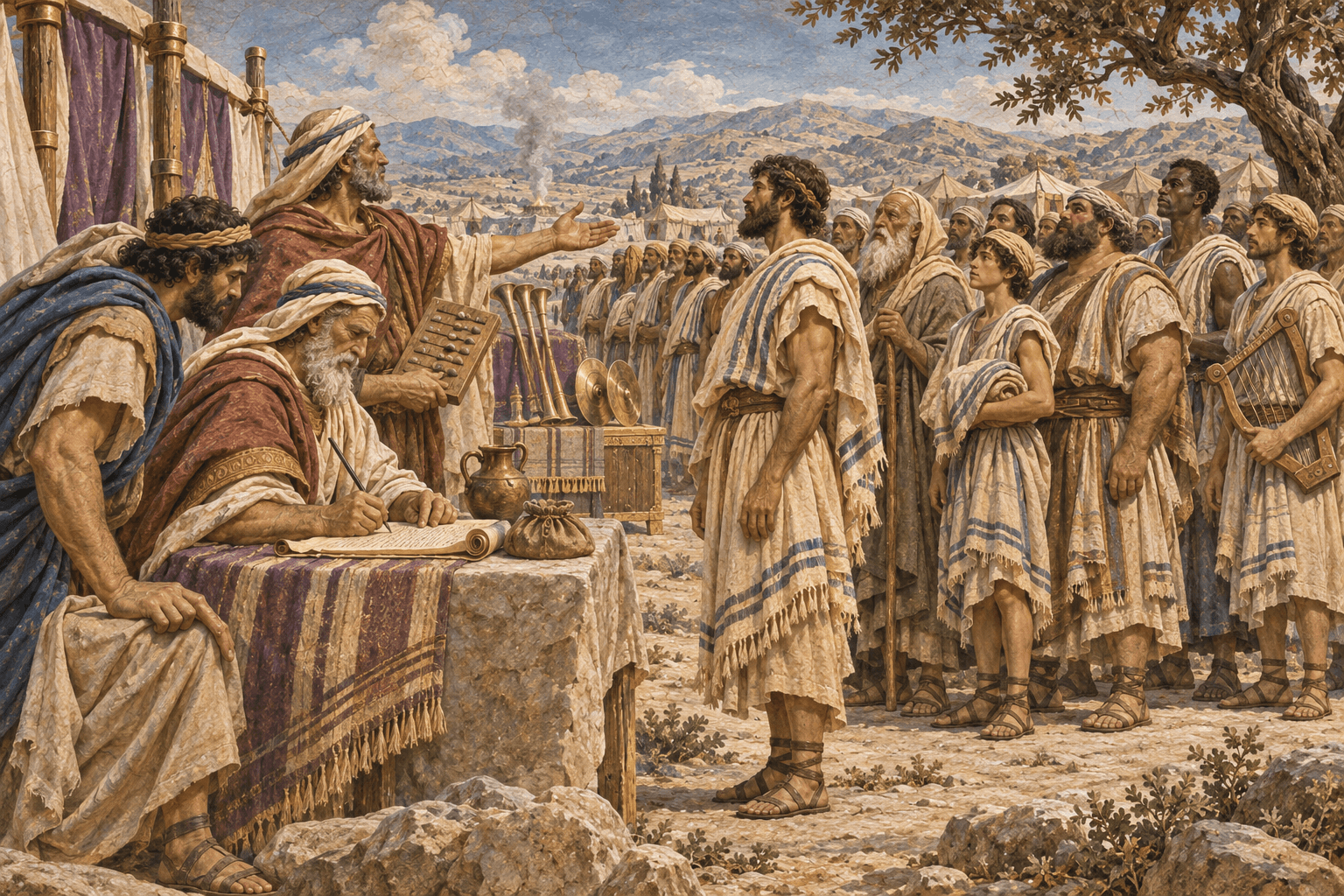
Though the Levites were not included in the general census, because they do not inherit with them in the land, but the Lord Himself is their portion and they themselves are His portion, He commanded that they be numbered separately, as a sign of His care for them.
If Caleb the son of Jephunneh had a special privilege because of his stand, full of faith, courage and hope in the Lord’s promises, the privilege of the Levites, who consecrated their lives to the service of the Lord and to watching in the guard, is that they did not enjoy a temporal inheritance, so that the Lord Himself might be their portion and inheritance, as we saw in our study of chapter 18.
Origen says:
At the time when the lot was cast, there were people with a special place who were not subject to the lot. They are all the Levites; that is, those who remain in the service of the Lord and watch by night in the guard have no portion on earth, but the Lord Himself is their portion and inheritance. They represent those who did not fail, because of the obstacles of bodily nature, to pass beyond the glory of all visible things and to place their whole life with its exercises in the Lord, seeking nothing bodily, that is, nothing foreign to the mind. These seek wisdom and the knowledge of God’s mysteries, for “where your treasure is, there will your heart be also” (Matthew 6:21). Having no inheritance on earth, they rise upward to heaven. There they are with the Lord forever, in His Word, His Wisdom and His very knowledge; they are satisfied with His sweetness, and He is their food, their shelter, their riches and their kingdom. This is their lot, and these are the possessions they know: that God is their only inheritance. [257]
5. A Remark on the Census
KJV · Verses 63–65
63 These are they that were numbered by Moses and Eleazar the priest, who numbered the children of Israel in the plains of Moab by Jordan near Jericho. 64 But among these there was not a man of them whom Moses and Aaron the priest numbered, when they numbered the children of Israel in the wilderness of Sinai. 65 For the Lord had said of them, They shall surely die in the wilderness. And there was not left a man of them, save Caleb the son of Jephunneh, and Joshua the son of Nun.
He concluded the census with this remark: “But among these there was not a man of them whom Moses and Aaron the priest numbered, when they numbered the children of Israel in the wilderness of Sinai. For the LORD had said of them, They shall surely die in the wilderness. And there was not left a man of them, save Caleb the son of Jephunneh, and Joshua the son of Nun” (64–65). By this He affirms that there is no place for evil in the eternal inheritance!
Notes and References
[255] Origen, Homilies on Numbers 21.
[256] Ibid.
[257] Ibid.