
Chapters 11–15: A Guide to the Laws of Purification
If the Holy God accepts us as a holy people to Himself through the sacrifice (Leviticus 1–7) which the priest offers (Leviticus 8–10), this holy life in the Lord has its law, that is, its rule and rite, to which every member of this congregation is bound. This law was given to the primitive Jewish people in their spiritual and social life in a material way, touching their food (Leviticus 11), even their bodily birth (Leviticus 12), the soundness of their bodies and clothes (Leviticus 13), and their cleanness (Leviticus 14–15)… things we must understand on the level of the spirit, not the letter, so as to live them with a living evangelical understanding that touches our inner depths.
Clean and Unclean Foods
God, in His fatherhood toward humanity, gave the men of the Old Testament the law of clean and unclean foods, since He cares even to guide them about food. This law came bearing spiritual meanings that touch our inner life, so He closed it by saying: “For I am the LORD your God: ye shall therefore sanctify yourselves, and ye shall be holy; for I am holy” (44), repeating: “For I am the LORD that bringeth you up out of the land of Egypt, to be your God: ye shall therefore be holy, for I am holy” (45)… It is as if the purpose of this law is not eating and drinking, but enjoying the holy life in the Holy Lord.
1. Clean and Unclean Beasts
KJV · Verses 1–8
1 And the Lord spake unto Moses and to Aaron, saying unto them, 2 Speak unto the children of Israel, saying, These are the beasts which ye shall eat among all the beasts that are on the earth. 3 Whatsoever parteth the hoof, and is clovenfooted, and cheweth the cud, among the beasts, that shall ye eat. 4 Nevertheless these shall ye not eat of them that chew the cud, or of them that divide the hoof: as the camel, because he cheweth the cud, but divideth not the hoof; he is unclean unto you. 5 And the coney, because he cheweth the cud, but divideth not the hoof; he is unclean unto you. 6 And the hare, because he cheweth the cud, but divideth not the hoof; he is unclean unto you. 7 And the swine, though he divide the hoof, and be clovenfooted, yet he cheweth not the cud; he is unclean to you. 8 Of their flesh shall ye not eat, and their carcase shall ye not touch; they are unclean to you.
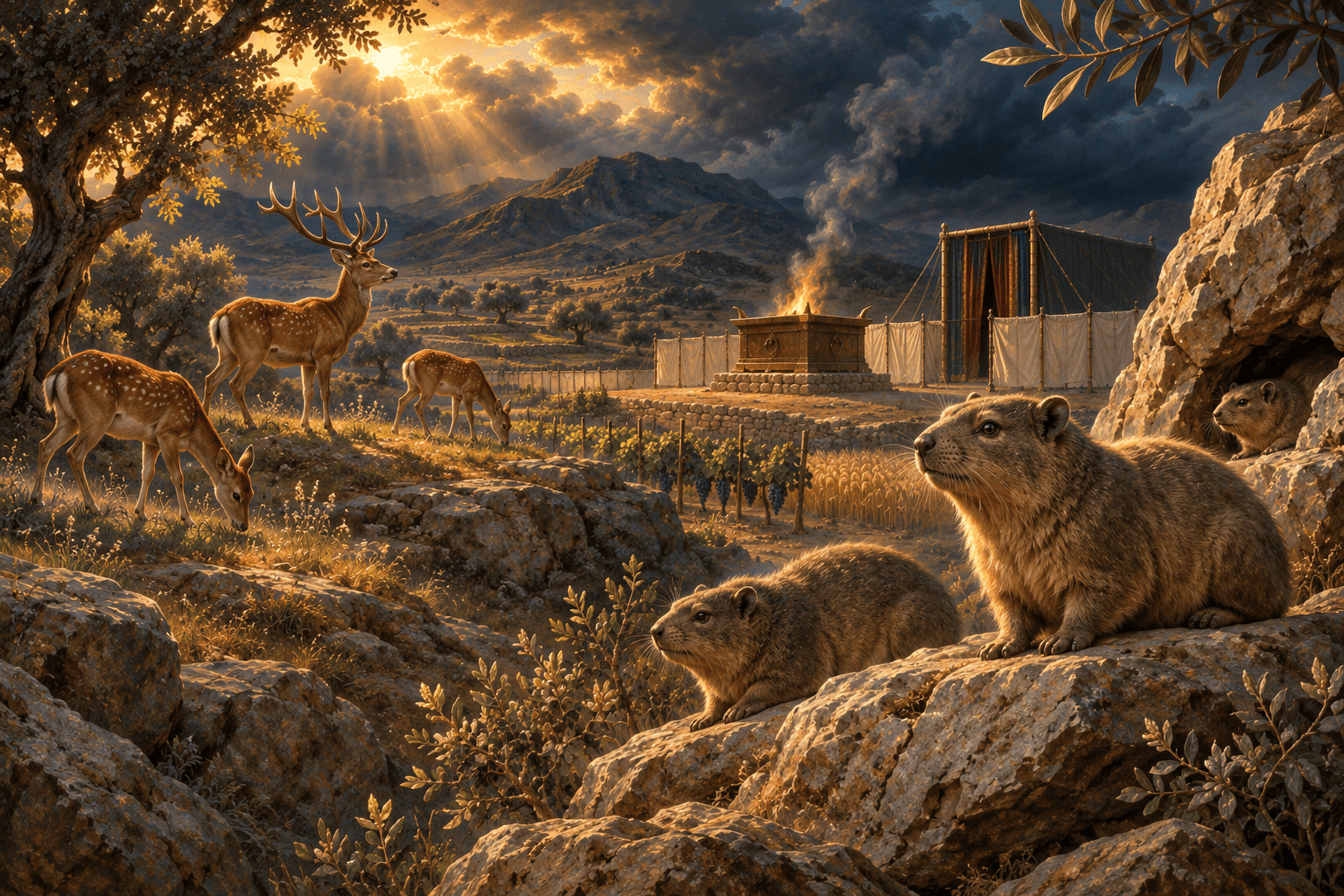
“These are the beasts which ye shall eat among all the beasts that are on the earth. Whatsoever parteth the hoof, and is clovenfooted, and cheweth the cud, among the beasts, that shall ye eat” (2–3).
God asked man to eat only those animals which have a parted hoof and at the same time chew the cud. This is the law of the animals allowed to man in the Old Testament. Many of the fathers saw in this law symbols touching the believer’s life and his relationship with God:
A) As for chewing the cud, many of the fathers, such as Barnabas, Saint Clement of Alexandria, Irenaeus, Jerome, and others, [138] hold that chewing the cud points to continual meditation and constant reflection on the word of God day and night. Barnabas says:
What does he (Moses) say about chewing the cud? Cleave to those who fear the Lord, who meditate in their humble hearts on His teaching, who speak of the will of God and keep it, and who in their joyful meditation ruminate on the word of God. [139]
In the view of Origen, [140] chewing again the food already eaten means moving from the literal meaning to the spiritual meaning of the divine word, and rising in its understanding from the lower visible things to the higher invisible things.
B) Saint Jerome sees in the animal with the parted hoof a reference to the believer who receives the word of God in both its Testaments, the Old and the New, and chews the cud of both together. The Jews, having rejected the New Testament, were counted as having an unparted hoof and so unclean. In the same way some Gnostics, having rejected the Old Testament, were counted as having an unparted hoof. But “the man of the Church is clovenfooted and chews the cud: he believes in both Testaments together and often meditates on them deeply; and what was buried in the letter (as in his stomach) he brings up again (to chew it) through the spirit.” [141]
C) Saint Clement of Alexandria confirms what Barnabas said: “The cloven hoof points to the man who knows how to walk in truth in this world as in what concerns the life to come.” [142] He says: “The spiritual man has the word of God in his mouth; he chews the spiritual food, and by righteousness his hoof is truly parted, for it sanctifies us in this life as it moves us on our way to the eternal life.” [143]
D) Saint Irenaeus [144] holds that the clovenfooted animals point to the believers who have a firm faith in the Father and the Son together, denying neither the divinity of the Father nor the divinity of the Son; while those with a single hoof are the heretics who deny the Son.
E) If the hoof, like the nails, is a dead part, the parted hoof points to splitting what is dead in us, that is, crucifying the lusts of the flesh. If chewing the cud represents the soul’s enjoyment of the word of God as the mystery of its inner life, parting the hoof points to crucifying the lusts of the flesh; the two works are complementary: the life of the spirit with the putting to death of the evil lusts of the flesh.
F) Origen holds that the animal is not counted clean unless both conditions are met together, for “we must not eat of those animals which seem unclean on one side and clean on the other.” [145] Those that chew the cud but have no parted hoof, and those that have a parted hoof without chewing the cud, are, as Origen says, the philosophers and the heretics. Some of them may show a kind of fear of judgment and walk with gravity and caution, but they do not meditate on the word of God and have not the true faith…
The Law gave examples of unclean animals that may not be eaten, such as the camel, the coney, and the hare, for they chew the cud but have no parted hoof; and the swine, which has a parted hoof but does not chew the cud.
The Coney
We all know these animals except the coney, [146] or rock badger (hyrax), a small animal resembling the hare, black inclining to yellow, though its fur usually takes the color of the land where it lives, so that it is hard to see. It dwells in the rocks (Psalm 104:18; Proverbs 30:26) but does not dig a place for itself. Scripture counted it among the animals that chew the cud because of its outward appearance, for it moves its lower jaw like one chewing the cud. It has no parted hoof; it has two front feet each with four toes ending in sharp claws, and two hind feet each ending in three sharp claws. It lives in small groups under the leadership of a guard who stands on a high place to give warning when danger approaches. It is hardly seen except in the morning or evening, when it comes out to look for food. It is found in the Arabian peninsula, northern Palestine, and the Dead Sea region. Its scientific name is Procavia syriaca, Hyrax syriacus. The coney is counted unclean because it has no parted hoof, and it represents the unclean man in his fierceness, for it is known for its harmful bite.
The Swine
The swine symbolizes gluttony, greed, and uncleanness. [147] Saint Clement of Alexandria speaks of it as an unclean animal:
The swine symbolizes much talk (because of its constant noise), its unclean greed, and its rashness in sexual relations in an unclean, lustful, and dissolute way. It is also material, wallowing in the mire, fattened for slaughter and destruction. [148]
And Barnabas comments on the swine as an unclean animal:
It is as if Moses says: Do not cleave to people who are like swine, that is, people who forget the Lord when they are in luxury and know Him only in want; for swine do not know their master while they are eating, but when they are hungry they begin to cry until they get their food, and then they are quiet again. [149]
The Phoenicians, Ethiopians, and Egyptians counted the swine unclean, though in Egypt they offered a swine and ate it as a sacrifice at the feast of the moon god and of Osiris. Even so, whoever touched a swine had to wash. A swineherd was not allowed to enter the temple, and it was hard for him to find a girl who would agree to marry him unless she was the daughter of herdsmen like himself. [150] Among the Jews, keeping swine was one of the most despised occupations, practiced only by the destitute (Luke 15:15). Sacrificing swine was used as a sign of pagan license (Isaiah 65:4), and so was eating its flesh (Isaiah 66:17). In the time of Antiochus IV orders were issued for the Jews to eat swine’s flesh as proof that they had denied their faith and were loyal to the religion of the conquering rulers (1 Maccabees 1:47, 50; 2 Maccabees 6:18, 21; 2 Maccabees 7:1). So the Maccabees refused to eat swine as a sign of faithfulness to their religious life. It is told of Eleazar (2 Maccabees 6:18–31) and the seven brothers (2 Maccabees 7:1–42) that they bore bitter tortures unto death rather than accept eating swine’s flesh.
In the days of the Lord Christ some kept swine not to eat them but to sell them to the Greeks and Romans; these herdsmen represented the man who loves money at the expense of his purity and cleanness. The Lord gave a lesson to the swineherds of the country of the Gergesenes when He allowed the demons to come out of the possessed men and enter the herd, so that the whole herd rushed down a steep place into the sea and perished in the waters (Matthew 8:32). And when He gave a parable of the fruits of going astray, He presented it as a prodigal son who lost his money and went out into a field to feed swine and eat their food with them (Luke 15:15–16). Also, when He wanted to picture the ugliness of one who does not care for the divine holy things, He said: “Neither cast ye your pearls before swine, lest they trample them under their feet, and turn again and rend you” (Matthew 7:6). So Scripture pictures the swine as a creature without hope when it says: “As a jewel of gold in a swine’s snout, so is a fair woman which is without discretion” (Proverbs 11:22).
2. Creatures of the Waters
KJV · Verses 9–12
9 These shall ye eat of all that are in the waters: whatsoever hath fins and scales in the waters, in the seas, and in the rivers, them shall ye eat. 10 And all that have not fins and scales in the seas, and in the rivers, of all that move in the waters, and of any living thing which is in the waters, they shall be an abomination unto you: 11 They shall be even an abomination unto you; ye shall not eat of their flesh, but ye shall have their carcases in abomination. 12 Whatsoever hath no fins nor scales in the waters, that shall be an abomination unto you.
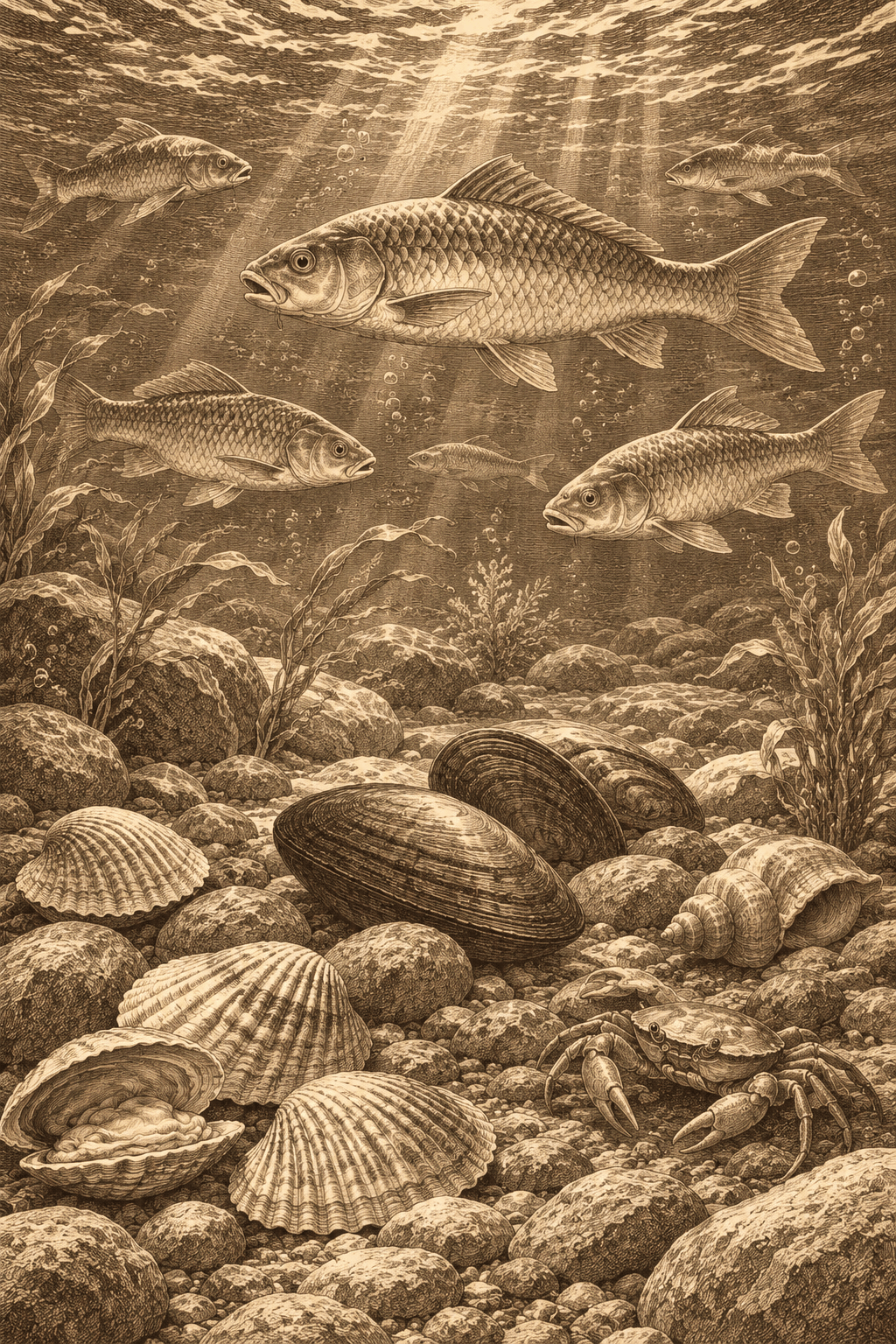
If the clean animals are marked by chewing the cud together with the parted hoof, pointing to the holy life in the Lord, which rests on chewing the cud of the word of God without ceasing in the Old and New Testaments, so that we may live holy on earth as in eternity, or in other words be sanctified here so that our hearts live in heaven awaiting the complete eternal reward, the clean creatures of the waters declare the believer’s need for the various means of grace, such as prayers, metanoias, and partaking of the holy sacraments, so that he may practice the practical life of faith in the Lord.
It was required of the creatures of the waters that they have fins to help them swim in the midst of the waters, and scales to protect them from the environment around them. What are these fins but the means of grace, which support the believer so that he swims amid the waters of this world by the work of the Spirit of God dwelling in him, without being swept away by the currents of the waters? And what are these scales but the work of these means, which protect him in the Lord from every resistance of evil against him?
3. The Birds
KJV · Verses 13–19
13 And these are they which ye shall have in abomination among the fowls; they shall not be eaten, they are an abomination: the eagle, and the ossifrage, and the ospray, 14 And the vulture, and the kite after his kind; 15 Every raven after his kind; 16 And the owl, and the night hawk, and the cuckow, and the hawk after his kind, 17 And the little owl, and the cormorant, and the great owl, 18 And the swan, and the pelican, and the gier eagle, 19 And the stork, the heron after her kind, and the lapwing, and the bat.
If the clean animals point to our bond with the word of God and the living faith in us, and the creatures of the waters reveal the need for the means of grace, the birds declare the need for practical conduct, especially toward our brethren. So our study of the divine word is joined to our worship and conduct in true oneness without separation.
How do the clean birds reveal practical conduct in our dealings with our brethren? The Law declared a list of unclean, abominable birds, most of which are marked by seizing, swooping, and eating corpses and carrion… In other words, the Law warns us against fierceness, plunder, injustice, greed, and the like in our dealings with our brethren. So Saint Clement of Alexandria says: “The eagle points to robbery, the hawk to injustice, and the raven to greed.” [151]
Origen speaks of the unclean birds:
Truly these birds feed on dead bodies. Those who live so are unclean: those, I think, who watch for the death of others and exchange agreements with deceit and cunning. There are also birds that live by seizing: people who have rational teachings and appear like birds, reading and searching into heavenly relations and divine providence, yet they walk in injustice and robbery of their neighbour, transgressing the law. By their learning and speech they are as though in heaven, but by their conduct they fulfil the works of the flesh. So they deserve to be called eagles and ossifrages swooping from the height of heaven upon the stinking dead bodies… Others do not seize, but are fond of darkness, like the owl and the cormorant (17), “For every one that doeth evil hateth the light, neither cometh to the light” (John 3:20). [152]
And Barnabas says:
He means (by the unclean birds) that you should have no fellowship with those who do not know how to earn their living by toil and sweat, but by wicked hunting and devouring others. You see them appear innocent while they are not; they lie in wait for their prey to swoop upon it, like these birds that do nothing but hunt their prey and tear its flesh. [153]
After this general word on the unclean birds and what marks them as a whole, I want to present each bird separately with a brief comment.
The Eagle
One of the strongest birds of prey, figuratively called the king of birds because of its strength, great size, sharp sight, and power of flight (Deuteronomy 28:49; Job 9:26; 39:27; Proverbs 23:5; 30:19; Isaiah 40:31; Ezekiel 17:3; Habakkuk 1:8). Eagles are known for their wonderful care of their young, hovering around them until the young eagles can fly (Exodus 19:4; Deuteronomy 32:11; Psalm 103:5). So when God wanted to declare His love and care for His people He said: “As an eagle stirreth up her nest, fluttereth over her young, spreadeth abroad her wings, taketh them, beareth them on her wings: So the LORD alone did lead him, and there was no strange god with him” (Deuteronomy 32:11–12).
The believer is likened to the eagle whose youth is renewed and does not grow old (Psalm 103:5), perhaps because the eagle lives long, or because of the famous story of the phoenix, which goes to the temple of the sun in Egypt and dies after preparing a place to be buried, then rises anew, and so on.
When God wanted to discipline His people, He assured them that He would send “a nation against thee from far, from the end of the earth, as swift as the eagle flieth; a nation whose tongue thou shalt not understand; A nation of fierce countenance, which shall not regard the person of the old, nor shew favour to the young” (Deuteronomy 28:49–50). He likened the Chaldeans to this: “they shall fly as the eagle that hasteth to eat” (Habakkuk 1:8). It was also said of proud Edom: “though thou shouldest make thy nest as high as the eagle, I will bring thee down from thence, saith the LORD” (Jeremiah 49:16); and: “Though thou exalt thyself as the eagle, and though thou set thy nest among the stars, thence will I bring thee down, saith the LORD” (Obadiah 4).
So the eagle symbolizes the care of God, who carries His people as on eagles’ wings, and at the same time it symbolizes violence and swiftness in seizing, so the nations that disciplined God’s people were counted as the eagle.
One of the cherubim bears a face like an eagle (Ezekiel 10:14; Revelation 4:7). In Christian art the eagle symbolizes John the Evangelist and points to theology soaring on high, and to the resurrection; at the same time it also points to brute force. The Persians used the eagle as the emblem of their ancient state, so Isaiah the prophet described them as “a ravenous bird from the east” (Isaiah 46:11); it became a symbol of the Roman army, and today it is used as an emblem by the American army and many countries. The secret of its being counted an unclean bird in the Mosaic Law is its violence in seizing its prey!
The Ossifrage
In Latin it is called ossifraga, meaning “bone-breaker,” and in Hebrew peres, “the breaker,” for it delights in breaking bones. It is its habit to carry a great bone or a tortoise, fly to a great height, and drop it on the rocks so that it shatters, then eat its marrow or the scattered pieces. It is also called the bearded vulture (lammergeier), Gypaetus barbatus, because black feathers appear under its chin. It is about three and a half feet long, and with outspread wings about nine feet across. It is a rare bird, found in the rocky mountains around the Dead Sea and in Sinai. [154]
The Ospray
A bird of prey that resembles the eagle. It is called the fishing eagle because it lives on the shores catching fish, though it also feeds on carrion. It flies swiftly and has sharp sight, and is known for its strength, so that the Arabs have a proverb: “harder to reach than the eagle of the sky.” In Hebrew it is called ozniyyah, and in the Septuagint haliaetos, that is, Pandion haliaetus.
The Vulture
Also an unclean bird because it is a bird of prey, of the family of the sparrowhawk, the buzzard, or the falcon. It resembles the eagle but is much smaller. It is black, and can stand still in the air with outspread wings to watch its prey. There are many kinds, and it is very widespread in Palestine.
The Kite
It resembles the vulture, of the same family, and is also a bird of prey. It is often confused with the vulture in translation… It is known for much crying and screaming. Perhaps it was called in Arabic bashiq from a verb meaning “to sharpen,” referring to its sharp sight; so it is said: “There is a path which no fowl knoweth, and which the vulture’s eye hath not seen” (Job 28:7), meaning a path not seen even by the kite in spite of its sharp sight. There are many kinds of kite (Deuteronomy 14:13), among them: [155]
- The black kite, Milvus migrans, a very well-known summer visitor that appears in Palestine in March, eats carrion, and builds its nest of many-colored rags.
- The Milvus aegyptius, the yellow-billed form.
- The red kite, Milvus milvus, gregarious and common in winter.
The kite lives on locusts when swarms of these insects attack the fields.
The Raven
Known for much seizing and plundering (Proverbs 30:17). It is greedy and eats whatever it comes across, even carrion and refuse. So when it went out of the ark (Genesis 8:7) it did not return to rest in Noah’s bosom like the dove, but found a place on the drowned carcasses. The raven loves to pluck out the eyes of its prey… When God wanted to declare how He cared for Elijah, He fed him with flesh and bread through ravens (1 Kings 17:2–7). It is as if God turned the instrument of seizing, plundering, and greed into an instrument by which He fed His prophet.
The Ostrich (KJV “Owl”)
One of the largest birds, reaching two and a half meters to the top of its head and weighing seventy-five kilograms. It is known for folly and harshness (Lamentations 4:3), perhaps because it does not make a nest for its eggs like other birds, but lays some of its eggs in the open, where it treads on them with its feet or animals eat them. Some accuse it of burying its head in the sand when it sees hunters, so that they will not see it, though some hold that it does so because it cannot bear to see itself the victim of the hunters. The ostrich usually lives in desolate sandy places, and was found in Africa, western Asia, and the Syrian desert. It is known for its swift running (Job 39:13–18), and its voice is like crying and wailing (Job 30:29; Micah 1:8).
The Night Hawk
Some hold that it is a kind of owl, swallow, or the bird known as the nightjar, but more probably it means the male ostrich, which is larger and more beautiful than the female.
The Cuckow
In Hebrew shahaph, in the Septuagint laros, and in the Vulgate larus. There are many kinds. It is called the sea crow or the gull, a sea bird that feeds on fish, insects, and carrion. It is very common on the shores and lakes of Palestine.
The Hawk
A bird of prey of the family of the falcon, with many kinds. One is Accipiter nisus, common in Lebanon and the hills of Galilee in summer and in Judea and Arabia in winter; the second is called Falco tinnunculus, more a falcon than a hawk, common in Palestine all year round. The hawk has a broad breast and a long neck. It is marked by swift flight and impatience of thirst. It is greedy, eating the flesh of animals and birds, and it is said to eat the flesh of its own kind, even its mate or one of its parents. The hawk was a sacred bird among the ancient Egyptians, and killing it was counted one of the greatest crimes, even if by mistake.
The Little Owl
Called Athene saharae (persica), a bird of prey marked by its broad head and wide eyes. Many in the East regard it as a bad omen because of its gloomy shape and sad voice, and because it lives in ruins and rocks. How far even some Westerners regard it as ill-omened appears in their calling an ugly or foolish person “owlish,” that is, like an owl; yet some in Australia, as among the Arabs, regard it as a good omen. The owl hides by day in its nests and comes out by night to catch mice and insects, attack birds in their nests, devour them, and eat their eggs.
The Cormorant
Called Phalacrocorax carbo, a bird that swims in the water and eats fish. It is very common in Palestine on the shore of the Mediterranean and the Sea of Galilee.
The Great Owl
It is said to be the size of a goose, grey with black spots on its cheeks, long-legged and short-tailed. It cries much at night, its cry like that of the owl, so some regard it as a bad omen. It is said to be beloved of kings because of its order in flight and sleep: it flies in a line led by a chief as a guide, and when the chief tires it falls back and another takes its place; and it sleeps in groups in a circle with a guard in the middle, and when his watch ends another takes his place. It usually lives in foul places (Isaiah 34:11), caves, and ruins, and is common in the region of Petra and Beersheba. In the Septuagint and the Vulgate its name is ibis, and in the Targum “owl”; some hold it is a kind of falcon or the Egyptian owl called Bubo ascalaphus. [156]
The Swan
In Hebrew tinshemeth, and in the Septuagint porphyrion; some hold it is “the water hen,” a water bird that loves water and feeds on fish, frogs, small birds, insects, and snakes. It is white with black wing tips, and there is a black kind. It is sometimes called the pouched bird because of its large pouch.
The Pelican
In Hebrew qa’ath, sometimes translated cormorant, falcon, or kite. It resembles the swan but is smaller, also loves water, and dwells in the wilderness (Psalm 102:6) and ruins (Isaiah 34:11; Zephaniah 2:14). There are two kinds: the white pelican, Pelecanus onocrotalus, and the Dalmatian, Pelecanus crispus; the first is more social than the second, which is usually seen alone. The toes of its feet are joined by a membrane of skin that helps it in its life in the water. Its neck and beak are long, and from its lower beak hangs a large pouch in which it stores the fish it catches, to throw up for its young to eat; so it is sometimes called “the vomiter” because it throws up the fish stored in its pouch. The pelican is seen in great numbers in winter on Lake Huleh and the Sea of Tiberias.
The Gier Eagle
Called in Hebrew racham or rachamah, sometimes translated kite or carrion vulture. Some hold that it is without doubt the Egyptian vulture, or Pharaoh’s hen, Neophron percnopterus. It is generally white with black wing tips, while the young is brown. It resembles the eagle in shape and is about two feet long. It flies swiftly, lives in ruins, and eats insects and carrion. It is a migrating bird that goes in summer from southern France across southern Europe and North Africa to western India. [157]
The Stork
Called in Hebrew chasidah. It loves its young, dwells in the fir trees (Psalm 104:17), and is a migrating bird (Jeremiah 8:7). [158] There are two kinds: the white, Ciconia alba, and the black, Ciconia nigra. The white spends the winter in central and southern Africa and in spring migrates to Europe, Palestine, and northern Syria in great numbers. It is about four feet tall, with a long neck and red legs, and its wing tips are black. It lives on frogs, snails, and insects, and if it finds none of these it feeds on filth. It is regarded as a sacred bird, so many peoples forbade hunting it, and it does not fear man, often entering his dwellings. The black kind was found in Palestine and is common in the Dead Sea valley. It is called in Arabic laqlaq because it makes a sound with its beak like “laqlaq laqlaq.”
The Heron
In Hebrew it is called anaphah, a word that means a family of birds called Ardeidae, belonging to the wading birds (Grallatores). They are usually large birds with long beaks and long bare legs, slow in flight, living on fish and reptiles. They are plentiful at Lake Huleh and go with the cattle in the pastures near the lake. The common heron, Ardea cinerea, is plentiful in the Jordan and its lakes and on the coast of Palestine, and with it the purple heron, Ardea purpurea, and other water birds such as the cattle egret. [159]
The Lapwing
In Hebrew dukiphath, in Latin Vanellus cristatus, a member of the family Charadriidae. It is a small, beautiful bird striped with black and grey, with a long, strong beak, and is known for the feathers on its head like a crown or a fan. It is a friend of the farmer, eating insects and worms. It is a migrating bird found in central and southern Europe, Asia, and northern and central Africa. It appears in Palestine in March, and as winter approaches it migrates to Egypt.
The Bat
Called in Hebrew atalleph. It is a mammal, counted among the birds because it flies with two wings, though they differ from a bird’s wings, and its body is covered with hair. It walks on four and is shaped like a mouse; it has no beak but teeth. It does not see well in bright light, so it hides by day; it sees well in faint light, so it flies at nightfall to hunt flies, gnats, and the like, eating them as it flies. Though it does not see in thick darkness, it does not strike the obstacles it meets in flight, for scientists discovered that it sends out sounds from its mouth that strike the objects in its path and make an echo that returns to its ears, so that it avoids them; radar was invented on this principle. [160] The bat lives in ruined and foul places and caves (Isaiah 2:20), and is said to live long. Scripture mentioned it last because it is not a bird, as people believed at that time.
4. Flying Creeping Things and Uncleanness by Touch
KJV · Verses 20–40
20 All fowls that creep, going upon all four, shall be an abomination unto you. 21 Yet these may ye eat of every flying creeping thing that goeth upon all four, which have legs above their feet, to leap withal upon the earth; 22 Even these of them ye may eat; the locust after his kind, and the bald locust after his kind, and the beetle after his kind, and the grasshopper after his kind. 23 But all other flying creeping things, which have four feet, shall be an abomination unto you. 24 And for these ye shall be unclean: whosoever toucheth the carcase of them shall be unclean until the even. 25 And whosoever beareth ought of the carcase of them shall wash his clothes, and be unclean until the even. 26 The carcases of every beast which divideth the hoof, and is not clovenfooted, nor cheweth the cud, are unclean unto you: every one that toucheth them shall be unclean. 27 And whatsoever goeth upon his paws, among all manner of beasts that go on all four, those are unclean unto you: whoso toucheth their carcase shall be unclean until the even. 28 And he that beareth the carcase of them shall wash his clothes, and be unclean until the even: they are unclean unto you. 29 These also shall be unclean unto you among the creeping things that creep upon the earth; the weasel, and the mouse, and the tortoise after his kind, 30 And the ferret, and the chameleon, and the lizard, and the snail, and the mole. 31 These are unclean to you among all that creep: whosoever doth touch them, when they be dead, shall be unclean until the even. 32 And upon whatsoever any of them, when they are dead, doth fall, it shall be unclean; whether it be any vessel of wood, or raiment, or skin, or sack, whatsoever vessel it be, wherein any work is done, it must be put into water, and it shall be unclean until the even; so it shall be cleansed. 33 And every earthen vessel, whereinto any of them falleth, whatsoever is in it shall be unclean; and ye shall break it. 34 Of all meat which may be eaten, that on which such water cometh shall be unclean: and all drink that may be drunk in every such vessel shall be unclean. 35 And every thing whereupon any part of their carcase falleth shall be unclean; whether it be oven, or ranges for pots, they shall be broken down: for they are unclean and shall be unclean unto you. 36 Nevertheless a fountain or pit, wherein there is plenty of water, shall be clean: but that which toucheth their carcase shall be unclean. 37 And if any part of their carcase fall upon any sowing seed which is to be sown, it shall be clean. 38 But if any water be put upon the seed, and any part of their carcase fall thereon, it shall be unclean unto you. 39 And if any beast, of which ye may eat, die; he that toucheth the carcase thereof shall be unclean until the even. 40 And he that eateth of the carcase of it shall wash his clothes, and be unclean until the even: he also that beareth the carcase of it shall wash his clothes, and be unclean until the even.
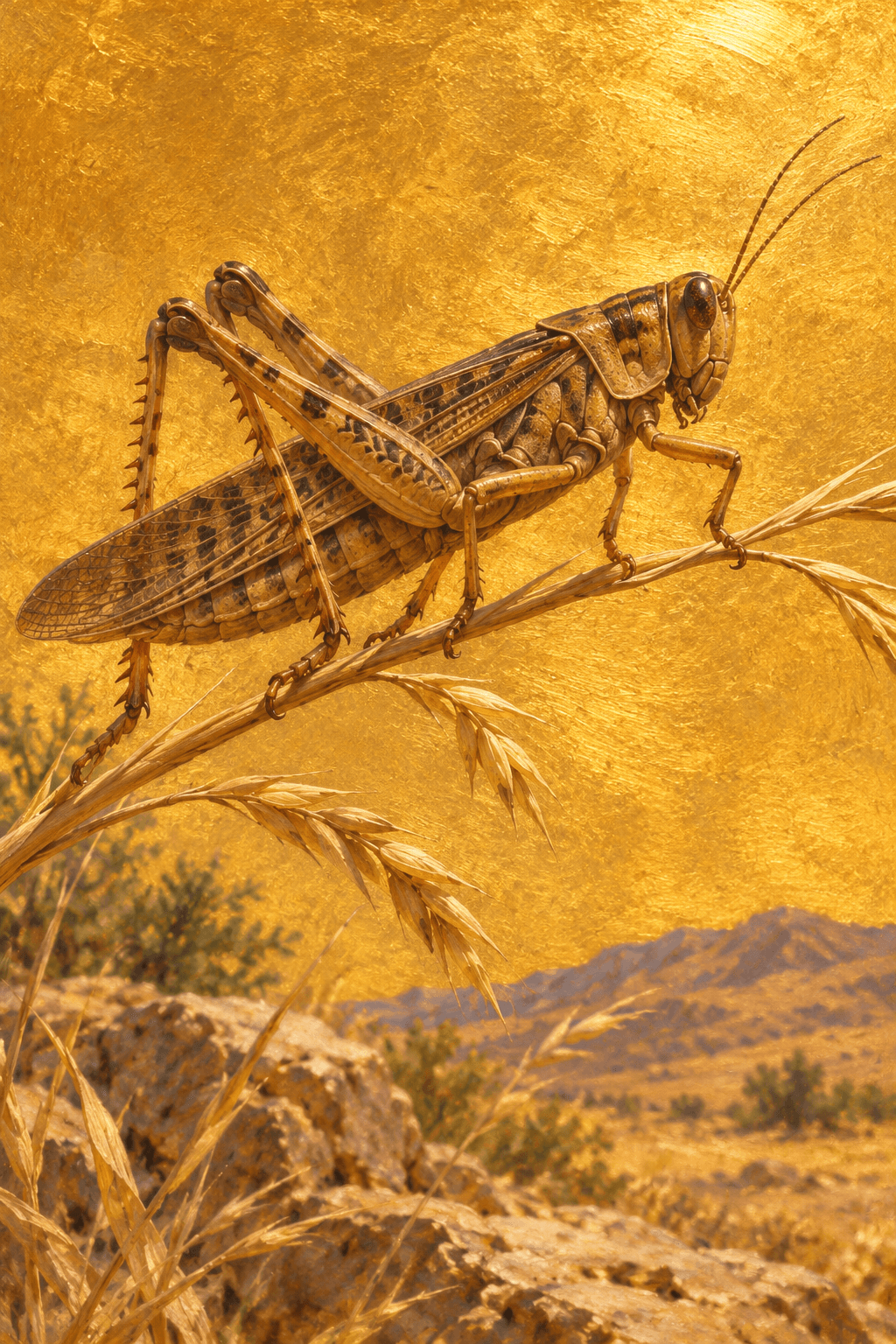
Insects in general are abominable, that is, forbidden, except four kinds which He named: the locust, the bald locust, the beetle, and the grasshopper (22), all of which are kinds of locusts… These may be eaten; but every flying creeping thing that goes upon all four is an abomination (23).
He allowed eating flying creeping things, though they go upon all four, if they have legs above their feet (21). This means that the two hind legs are longer than the front ones, having long shanks, as if the hind leg is made of three parts: a part corresponding to the thigh of an animal, a part corresponding to the shank, and a part corresponding to the foot.
After warning against eating unclean flying creeping things, He warned against certain cases of uncleanness:
A) Whoever touched the carcass of a dead unclean animal was counted unclean until the evening, that is, until the day ended and a new day began. Such a one was not to enter the house of the Lord, mix with the clean, eat of the sacrifices, or touch anything holy until the evening came and he washed his clothes (24–25). Whoever touched a dead unclean animal that does not divide the hoof or does not chew the cud falls under the same law (26).
B) Whoever touches the carcasses of dead unclean animals that go on their paws, such as the dog, the cat, the mouse, and the monkey, also falls under the same ruling (27–28).
C) Not touching the dead unclean creeping things; He named eight kinds (29–30):
- The weasel: some count it a kind of mouse; its shape is close to the mongoose. It lives in holes in the fields and open country, and sometimes in houses. It is very hostile to mice and devours them, and also eats small animals and carrion, and harms little children while they sleep. It snatches shining things like coins and hides them in its hole.
- The mouse: the Hebrew word means a family of rodents including the jerboa, rats, and others. It lives in houses or fields; the field mouse is very destructive, eating the crops, and it may carry plagues (1 Samuel 6:4–5). Some Israelites ate it in a pagan rite, disregarding the Law (Isaiah 66:17). The Arabs use it as a proverb for theft and robbery: “more thievish than a mouse.”
- The tortoise (great lizard): the Hebrew word tsab means a great lizard; the dabb, the gecko, and the monitor are closely related reptiles. The dabb is a wild animal resembling the crocodile, living in the wilderness, about two feet long, with a knotted tail, so that the common proverb says: “more knotted than the tail of a dabb.” It can change color according to its surroundings.
- The lizard: the name is given to many kinds of reptiles, such as the land crocodile, the sand lizard, and the monitor. The most beautiful lizard is the green, found in forests and farmland; another kind is called the gecko because of spots like leprosy on its skin; it climbs walls and rocks.
- The ferret (gecko): called in Hebrew anaqah, most probably a kind of wall lizard close to the gecko, with white spots on its back. Its feet have hollows that let it climb walls and ceilings by suction. The gecko common in Palestinian houses is called Hemidactylus turcicus, and in its cities Ptyodactylus syriacus.
- The chameleon (monitor): a kind of lizard very close to the chameleon. Its lungs are very large; when they expand they make it almost transparent. Its eyes bulge from its head and move independently, so it can see with one eye in one direction and with the other in another. Its long tail helps it climb trees. It feeds on insects, which it catches with its long tongue, which carries a sticky substance that makes the insects cling to it. There is a land monitor, Psammosaurus scincus, common in Palestine, Sinai, and Egypt, and a water (Nile) monitor, Hydrosaurus niloticus, marked by a prominent crest on its tail.
- The snail (skink): a kind of lizard called Chalcides sepsoides, found in the desert and sand dunes. Some call it “the snail”; its shape is close to the chameleon’s, and it is harmless.
- The mole (chameleon): see what we said about the monitor.
D) As for these eight kinds, their danger does not stop at touching them dead, making a person unclean until evening; it was feared that after death they might spread infection. So the Law was firm:
- If one of them fell dead on any vessel of wood, clothing, skin, or sack (cloth made of goats’ hair and the like, like sackcloth), the vessel was put into water until evening and washed to be cleansed (32).
- If it fell into an earthen vessel, the vessel was broken, for fear that the germ had crept into its pores, especially since earthen vessels were very cheap (33).
- If it fell on food with liquid in it, like water or oil, it was not eaten (34).
- If it fell into an oven or a range for pots, it was broken down and rebuilt (35).
- If it fell into a fountain or a pit of water, no uncleanness occurred; it was enough to draw out some of the water and throw it away (36).
- If it fell on dry seed, it was not counted unclean; but if the seed was wet, it was not used (37–38).
E) As for the clean animals allowed for food, if they died otherwise than by ordinary slaughter, their carcasses were counted unclean and might not be touched or eaten. If someone ate of one by oversight, he was counted unclean until evening (40); but if deliberately, he was cut off from the people (Deuteronomy 14:21; Numbers 15:30). Whoever carried the carcass was unclean all day until evening.
5. Creeping Things upon the Earth
KJV · Verses 41–43
41 And every creeping thing that creepeth upon the earth shall be an abomination; it shall not be eaten. 42 Whatsoever goeth upon the belly, and whatsoever goeth upon all four, or whatsoever hath more feet among all creeping things that creep upon the earth, them ye shall not eat; for they are an abomination. 43 Ye shall not make yourselves abominable with any creeping thing that creepeth, neither shall ye make yourselves unclean with them, that ye should be defiled thereby.
The creeping things that go upon the belly, like snakes, are counted unclean; so too everything that goes upon all four of them that was not previously allowed for food (29–30), and whatever has more than four feet.
6. Conclusion
KJV · Verses 44–47
44 For I am the Lord your God: ye shall therefore sanctify yourselves, and ye shall be holy; for I am holy: neither shall ye defile yourselves with any manner of creeping thing that creepeth upon the earth. 45 For I am the Lord that bringeth you up out of the land of Egypt, to be your God: ye shall therefore be holy, for I am holy. 46 This is the law of the beasts, and of the fowl, and of every living creature that moveth in the waters, and of every creature that creepeth upon the earth: 47 To make a difference between the unclean and the clean, and between the beast that may be eaten and the beast that may not be eaten.
At the end of this law He made clear its purpose: “For I am the LORD your God: ye shall therefore sanctify yourselves, and ye shall be holy; for I am holy: neither shall ye defile yourselves with any manner of creeping thing that creepeth upon the earth. For I am the LORD that bringeth you up out of the land of Egypt, to be your God: ye shall therefore be holy, for I am holy” (44–45).
It is as if He assures them that He did not give this law with its many details to deprive them of a certain pleasure or a certain food; but, being holy, He wants them holy in spirit and body. He brought them up out of Pharaoh’s bondage, so they should not go down with the creeping things of the earth, but be sanctified, rising toward the heavenly things.
Though the Mosaic Law gave the Jewish people a law about clean and unclean foods, whether of beasts, creatures of the waters, birds, flying creeping things, or creeping things, in the New Testament Peter went up on the housetop to pray and saw the vision of the sheet let down with all manner of beasts, and this was done three times, so that he heard the divine voice: “What God hath cleansed, that call not thou common” (Acts 10:9–16). As Origen says, [161] the repetition of the voice three times points to the enjoyment of the risen life that became ours in Christ Jesus, risen from the dead on the third day. We enjoy this risen life through the waters of baptism, where we are buried with the Lord and baptized in the name of the Holy Trinity, to bear the new nature in which there is no defilement, for the Apostle says: “Therefore if any man be in Christ, he is a new creature” (2 Corinthians 5:17).
Notes and References
[138] The source leaves this note without a reference.
[139] Epistle of Barnabas 10:12.
[140] Origen, In Lev. hom. 7:6.
[141] St. Jerome, On Ps., hom. 23.
[142] St. Clement of Alexandria, Stromata 5:8.
[143] St. Clement of Alexandria, Instructor 3:11.
[144] St. Irenaeus, Adv. Haer. 5:8:4.
[145] Origen, In Lev. hom. 7:6.
[146] Dictionary of the Bible (Arabic), p. 1016.
[147] New Oxford Illustrated Dictionary, p. 1693.
[148] St. Clement of Alexandria, Stromata 5:8.
[149] Epistle of Barnabas 10:2–3.
[150] The source leaves this note without a reference.
[151] St. Clement of Alexandria, Stromata 5:8.
[152] Origen, In Lev. hom. 7:7.
[153] Epistle of Barnabas 10:4.
[154] The source leaves this note without a reference.
[155] New Westminster Dictionary of the Bible, p. 543.
[156] Archdeacon Naguib Guirguis, The Book of Leviticus, p. 147; New Westminster Dictionary, p. 690.
[157] Ibid., p. 330.
[158] Ibid., p. 909.
[159] Ibid., p. 385.
[160] Archdeacon Naguib Guirguis, p. 149.
[161] Origen, In Lev. hom. 7:4.