
The people came out of Egypt as a nation without experience. Therefore God took responsibility for all their needs, not only for freeing them from the house of bondage, but also for caring for them materially: He provided their daily food, shaded them by day, and gave them light by night. He also gave them laws in matters of worship, civil life, and criminal matters, and even in medical, building, and agricultural matters. Since they were a primitive people, God became for them Father, Judge, Physician, civil engineer, and agricultural engineer, taking charge of all their obligations. This is what we explained before in the booklet on the Book of Leviticus, to which I hope to return later in some detail.
1. The laws in these three chapters (Exodus 21–23) are like a practical application of the Ten Commandments, suited to the circumstances in which the Jews were living at that time. They give us a living understanding, in faith, of our relationship with God and with our brethren, and even with animals and the land!! Therefore we do not study these chapters in detail as laws and statutes; we want to come to know the divine view of human life. For example, we find some rules governing the mutual relationship between servants and their masters. Now that there are no slaves we do not ignore these rules, for they carry the spirit of mutual relations between human beings.
2. In these laws justice appears clearly: there is no favoritism to the rich or the noble, in spite of what man was generally like at that time, when some sank so low as to lie with a beast (Exodus 22:19) or sacrifice to an idol (Exodus 22:20).
3. God was concerned not only with man’s relationship with his fellow man, especially if he was a servant, an orphan, a widow, or poor, but even with his relationship with the animals of the field. He commanded him to give them one day each week to rest (Exodus 23:12), required him to care for the fallen ass of his enemy (Exodus 23:5), and to give the land rest for one year in every seven, so that it might rest and the poor and the beasts of the field might eat of it (Exodus 23:11). If God cares to this degree not only for the servant, the poor, the orphan, the widow, and the stranger, but even for animals and the land, how much more is God’s care for His children?!
Saint Paul the Apostle sees that these laws carried hidden meanings concerning the people of God and our inner life, for he says: “For it is written in the law of Moses, Thou shalt not muzzle the mouth of the ox that treadeth out the corn (Deuteronomy 25:4). Doth God take care for oxen? Or saith he it altogether for our sakes? For our sakes, no doubt, this is written: that he that ploweth should plow in hope; and that he that thresheth in hope should be partaker of his hope” (1 Corinthians 9:9–10). Therefore Origen and other fathers who interpret symbolically were concerned to seek the hidden meanings behind these laws… Since there is no room here, I will give some examples.
4. In the Ten Commandments He began with the commandments concerning man’s relationship with God, and followed them with those concerning man’s relationship with his brother, until the Lord Christ summed up the commandments in one phrase: love God and your neighbor (Matthew 22:37–39). But here He begins with the commandments or laws concerning the neighbor, such as servants, the slain, the oppressed, debtors, strangers, widows, orphans, and so on, and follows them with the commandments concerning the feasts and then our relationship with God. Since these laws are an interpretation of the Ten Commandments, it is as if God wanted to make clear that there is no separation between commandments concerning our relationship with God and others concerning our relationship with our brethren in humanity. They form one unit, one life. Let us not think that we can please God by worship and giving at the expense of our relationship with others, nor that our good treatment of our brethren atones for our neglect of our relationship with God!
These chapters speak of: the Hebrew servant (21:1–11); killing and striking (21:12–36); theft (22:1–15); fornication (22:16–20); oppression (22:21–27); reviling (22:28); robbing God of His due (22:29–31); hypocrisy (23:1–3); helping others (23:4–6); justice and refusing bribes (23:7–9); the Sabbath and the rights of others (23:10–13); the feasts (23:14–19); the divine presence (23:20–23); and not mixing with the nations (23:24–33).
1. The Hebrew Servant
KJV · Verses 1–11
1 Now these are the judgments which thou shalt set before them. 2 If thou buy an Hebrew servant, six years he shall serve: and in the seventh he shall go out free for nothing. 3 If he came in by himself, he shall go out by himself: if he were married, then his wife shall go out with him. 4 If his master have given him a wife, and she have born him sons or daughters; the wife and her children shall be her master's, and he shall go out by himself. 5 And if the servant shall plainly say, I love my master, my wife, and my children; I will not go out free: 6 Then his master shall bring him unto the judges; he shall also bring him to the door, or unto the door post; and his master shall bore his ear through with an aul; and he shall serve him for ever. 7 And if a man sell his daughter to be a maidservant, she shall not go out as the menservants do. 8 If she please not her master, who hath betrothed her to himself, then shall he let her be redeemed: to sell her unto a strange nation he shall have no power, seeing he hath dealt deceitfully with her. 9 And if he have betrothed her unto his son, he shall deal with her after the manner of daughters. 10 If he take him another wife; her food, her raiment, and her duty of marriage, shall he not diminish. 11 And if he do not these three unto her, then shall she go out free without money.
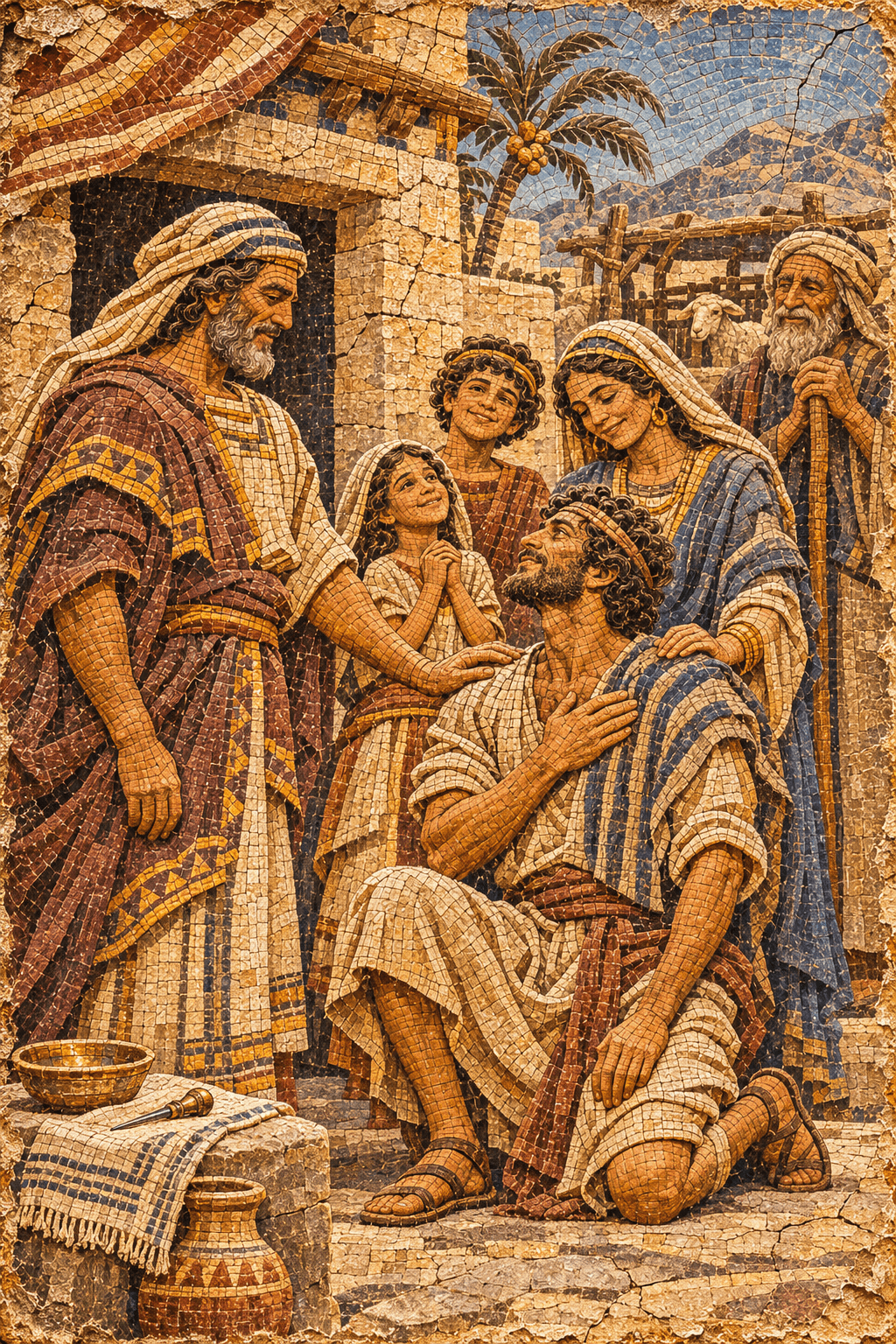
This chapter speaks of the rights of the Hebrew servant, for the Law distinguishes between the Hebrew servant and the foreign (Gentile) servant. To understand what is in the Law, we must understand the pagan view of slavery, the position of the Jewish Law, and the role of Christianity in this matter.
Paganism and Slavery
The pagan peoples knew slavery, the backward peoples and the civilized alike, such as the Greeks and the Romans… Some philosophers of the pagan world supported this system as natural and necessary, and Aristotle declared that all barbarians (the uncivilized) are slaves by birth and fit only for this work. Roman law gave slaves no civil or human rights… The master was not punished or held to account if he tortured a male or female slave or killed him, or committed lewdness with him, or took his wife from him to be his concubine or to become a harlot! [307]
Judaism and Slavery
It was not possible for the Jewish Law to abolish this system all at once. So it was bound to give rules and orders that preserved the servant’s human rights and removed from him, to a great extent, the humiliating side, so that he might live as a man and a brother under his hard circumstances. The Jews knew two kinds of servitude: the servitude of Hebrews and the servitude of Gentiles.
First: The servitude of Hebrews. It took place in one of the following circumstances:
A) Because of poverty a man might sell himself (Leviticus 25:39) or his children (2 Kings 4:1).
B) Because of theft: if he had nothing to make restitution, he was sold for his theft (Exodus 22:3).
C) A man might sell his son as a servant or his daughter as a maidservant (7; Nehemiah 5:5).
D) A man might become a servant by birth, if his father was a servant.
The rights which the Law gave the Hebrew manservant and maidservant are:
A) The Hebrew servant is to be treated as a brother, not in humiliation: “Thou shalt not compel him to serve as a bondservant: But as an hired servant, and as a sojourner, he shall be with thee… For they are my servants, which I brought forth out of the land of Egypt: they shall not be sold as bondmen. Thou shalt not rule over him with rigour; but shalt fear thy God” (Leviticus 25:39–43). In this way the Law gave a new view of the servant: he is a brother, a partner in servitude to the one God.
B) The servant enjoys release from servitude in the seventh year of his service (that is, after six years), in the sabbatical year, so to speak, the year of rest. This is a sign of the freedom that became ours when the Lord came in the sabbatical year, that is, in the fullness of time, and gave Himself to us as “the mystery of true rest,” putting an end to the bondage of sin. Of this He says: “If the Son therefore shall make you free, ye shall be free indeed” (John 8:36).
The servant has the right to choose whether to leave his master’s house or ask to remain with him all the days of his life. If the servant loves his master, his wife, and his children, he must bind himself to his master by his own free will to the end; then his master brings him to the door and bores his ear, a sign of complete obedience, as David the psalmist says: “Mine ears hast thou opened” (Psalm 40:6). This is what the Lord Christ did: He who is the Son became a servant for our sake; He loved His Father, His bride, and His children (Ephesians 5:25–27), and bore in His body the wounds of the Cross for our salvation. He became a servant to lift us from servitude to sonship to God.
C) In the year of jubilee (Leviticus 25:39–40) all these servants are set free, even those who have not completed their six years of service to their masters. For the jubilee comes in the fiftieth year, a symbol of the work of the Holy Spirit, who gives the Church the fullness of freedom in the merits of the blood of Christ. By the Holy Spirit we receive the forgiveness of sins, enjoy fellowship with God in His Son, and bear the Spirit of adoption, by whom we call God our Father.
D) The servant does not go out empty after his release, but takes with him of the flock, the threshing floor, and the winepress (Deuteronomy 15:13–14). So the Lord Christ not only set us free, but gave us the riches of His Holy Spirit, so that we set out bearing His righteousness and holiness in us.
E) The servant could marry his master’s daughter (1 Chronicles 2:35); and the master could marry the maidservant or give her as a wife to his son, and he had no right to sell the Hebrew servant or maidservant to a foreign master (7–11)… In this way the maidservant becomes one of the household, with all the rights of a member of the family. This is a living picture of God’s work with us: He has presented us, His servants, as a bride to His Son, so that we have a share in His heavenly glories.
F) If the master or his son neglected the rights of the maidservant he had married, in food, clothing, or her marital rights, the maidservant became free!
Finally, the custom of Hebrew servants was abolished and forbidden after the return from the captivity.
Second: The servitude of Gentiles. They were usually prisoners of war (Numbers 31:9; 2 Kings 5:2), or bought (Genesis 17:27; 37:28, 36; Ezekiel 27:13; Joel 3:6, 8), or born in the house (Genesis 17:12). But we find no trace, in Holy Scripture or in history, of a slave market among the Jews. [308]
Before the Mosaic Law, Abraham the father of the fathers gave us a living example of dealing with servants. He had set in his heart that, if he had no child, he would leave his inheritance to one of his servants, “Eliezer of Damascus” (Genesis 15:2), whom he made steward over all his wealth. And in the marriage of Isaac to Rebekah (Genesis 24) Abraham’s trust in his servant appeared, and the servant’s conduct showed that he was worthy of this trust.
When the Mosaic Law came, it gave servants rights that preserved their humanity, among them:
A) He that stealeth a man, and selleth him, or if he be found in his hand, shall surely be put to death (16).
B) The crime of killing a servant is equal to killing a free man (Leviticus 24:17, 22).
C) If a servant lost his eye or his tooth, he was to be set free (26–27).
D) The Law distinguished between the Hebrew servant and the foreign servant (Leviticus 25:44–46). It left foreign servants freedom of belief, even if they were mistaken, but the Hebrew master had the right to circumcise his servants, and only then could the servant eat of the Passover (Exodus 12:43–44).
E) It gave them the right to share with their masters in the feasts and the Sabbath rest (Exodus 20:10; 23:12).
Christianity and Slavery
Christianity dealt with the problem of “slavery” in a sober way. It did not wish to stir up the slaves against their masters, who in the Roman Empire made up half its population. Pliny mentions that a wealthy Roman named Claudius Isidorus, in the days of Augustus, left among his possessions 4,116 slaves. [309] Rather, it asked slaves to obey (Ephesians 6:5–8; Colossians 3:22–25; 1 Timothy 6:1–2; 1 Peter 2:18–21), and it even believed that a slave could influence his master through a holy life in the Lord. So we are not surprised to hear Saint John Chrysostom say to those attending his meetings: “Let each one of them teach those outside that he has been in the company of the seraphim: the father teaches his son, the mother her daughter, and the servant his master.”
The Church sent the runaway slave back to his master Philemon, so that he might free him by his own will and forgive him, without pressure or compulsion.
Slavery began to collapse from its roots, and this was one of the main reasons for the Roman state’s rage against the Christian Church. [310] The secret of its collapse lies in the following reasons:
A) The Church bound her children to treat slaves as their brethren (1 Corinthians 7:21–22; Galatians 3:28; Colossians 3:11). And let us not forget that the Lord Christ was handed over for thirty pieces of silver, as though sold as a slave; so He entered the company of slaves, did not disdain them, but sanctified the life of the faithful among them.
B) If Paul the Apostle sent the runaway slave Onesimus back to his master Philemon, he sent with him a letter that is considered the most wonderful thing an apostle could write about a runaway slave, for he calls him “my son Onesimus, whom I have begotten in my bonds… that is, mine own bowels… receive him as myself” (Philemon 10, 12, 17). The letter also says: “For perhaps he therefore departed for a season, that thou shouldest receive him for ever; Not now as a servant, but above a servant, a brother beloved, specially to me” (Philemon 15–16).
C) Some masters, living in the spirit of the Gospel, felt bound to free their slaves from an inner motive, without an explicit command to do so.
D) Many who had been slaves attained high ranks or lofty honor in the Church, among them martyrs such as Blandina, Felicity, and others, whom the Church commemorated as heroes of faith. [311] Among slaves there was also a bishop, Onesimus, the disciple of Saint Paul, who became bishop of Berea in Macedonia; [312] and Callistus, bishop of Rome in the third century.
E) The early writings of the Church encouraged the collapse of this system. We mention, for example, what is in the Didache: “Do not (bitterly) rebuke your manservant or maidservant who hope in the same God, lest they cease to fear God who is over both; for He is no respecter of persons.” [313]
Saint Clement of Alexandria says: “Slaves are men like us.” [314]
Lactantius says: “Slaves are not slaves to us, but we count them brethren in the spirit, and fellow servants in religion.” [315]
In the writings of Saint Ignatius of Antioch it is said: “Do not despise slaves, but neither let them be puffed up with pride; rather, let them be the more humble for the glory of God.” [316]
Saint Augustine considered that the appearance of slavery is the fruit of sin, for the divine purposes do not accept that a man should rule over his fellow man and dominate him. [317] Saint John Chrysostom proclaimed the same idea, [318] saying that slavery appeared only when Canaan fell under the curse (Genesis 9:25).
2. Killing and Striking
KJV · Verses 12–36
12 He that smiteth a man, so that he die, shall be surely put to death. 13 And if a man lie not in wait, but God deliver him into his hand; then I will appoint thee a place whither he shall flee. 14 But if a man come presumptuously upon his neighbour, to slay him with guile; thou shalt take him from mine altar, that he may die. 15 And he that smiteth his father, or his mother, shall be surely put to death. 16 And he that stealeth a man, and selleth him, or if he be found in his hand, he shall surely be put to death. 17 And he that curseth his father, or his mother, shall surely be put to death. 18 And if men strive together, and one smite another with a stone, or with his fist, and he die not, but keepeth his bed: 19 If he rise again, and walk abroad upon his staff, then shall he that smote him be quit: only he shall pay for the loss of his time, and shall cause him to be thoroughly healed. 20 And if a man smite his servant, or his maid, with a rod, and he die under his hand; he shall be surely punished. 21 Notwithstanding, if he continue a day or two, he shall not be punished: for he is his money. 22 If men strive, and hurt a woman with child, so that her fruit depart from her, and yet no mischief follow: he shall be surely punished, according as the woman's husband will lay upon him; and he shall pay as the judges determine. 23 And if any mischief follow, then thou shalt give life for life, 24 Eye for eye, tooth for tooth, hand for hand, foot for foot, 25 Burning for burning, wound for wound, stripe for stripe. 26 And if a man smite the eye of his servant, or the eye of his maid, that it perish; he shall let him go free for his eye's sake. 27 And if he smite out his manservant's tooth, or his maidservant's tooth; he shall let him go free for his tooth's sake. 28 If an ox gore a man or a woman, that they die: then the ox shall be surely stoned, and his flesh shall not be eaten; but the owner of the ox shall be quit. 29 But if the ox were wont to push with his horn in time past, and it hath been testified to his owner, and he hath not kept him in, but that he hath killed a man or a woman; the ox shall be stoned, and his owner also shall be put to death. 30 If there be laid on him a sum of money, then he shall give for the ransom of his life whatsoever is laid upon him. 31 Whether he have gored a son, or have gored a daughter, according to this judgment shall it be done unto him. 32 If the ox shall push a manservant or a maidservant; he shall give unto their master thirty shekels of silver, and the ox shall be stoned. 33 And if a man shall open a pit, or if a man shall dig a pit, and not cover it, and an ox or an ass fall therein; 34 The owner of the pit shall make it good, and give money unto the owner of them; and the dead beast shall be his. 35 And if one man's ox hurt another's, that he die; then they shall sell the live ox, and divide the money of it; and the dead ox also they shall divide. 36 Or if it be known that the ox hath used to push in time past, and his owner hath not kept him in; he shall surely pay ox for ox; and the dead shall be his own.
The Ten Commandments declared God’s hatred of killing, for the commandment came plainly: “Thou shalt not kill.” But the Law revealed more details of this commandment, and connected killing with striking that leads to permanent injuries in the body. This is summed up as follows:
A) Deliberate killing: Its punishment is the death of the murderer, and nothing can protect him, even if he takes refuge at the altar of the Lord (14). Killing a free man and killing a servant are alike (20). The Law also made striking one of the parents (15) or cursing them (17) a kind of killing, whose punishment is also death.
The Law forbade ransoming the murderer who deserves death with money, for the blood of the slain defiles the land (Numbers 35:31–34). In this way it made rich and poor, powerful and despised, equal. A murderer was not to be sentenced to death on the testimony of one witness (Numbers 35:30), but only after the crime was proved at the mouth of two or three witnesses.

B) Killing by responsibility: If a man neglected to restrain his goring ox, for example, and the ox killed a man, the ox was to be killed together with its owner. If that ox killed an animal, its owner paid compensation (36). But if the owner’s negligence was not proved, as when the ox was not known to gore, the ox was killed and its owner was innocent. And if one man’s ox killed another man’s ox, the live ox was sold and the two divided its price (35).
A man is subject to the same responsibility if he digs a pit and neglects to cover it (33). So too if he neglects to build a battlement for the roof of his house and someone falls from the roof, the owner of the house is counted as a murderer (Deuteronomy 22:8)… So the Lord made negligence a sin for which the one who commits it bears responsibility.
C) Killing without intent (13): The killer in this case had the right to flee from the avenger of blood to one of the cities of refuge. He could not be killed as long as he was inside the city, until the death of the high priest; then he could leave the city and could not be killed (Numbers 35:11; Deuteronomy 19:3; Joshua 20:3). These cities were a symbol of the Lord Christ, the refuge to whom the repentant soul flees and in whom she is protected, so that she does not fall under the sentence of death; but if she goes out from faith in Him and leaves Him, she perishes in her sin. God fixed the cities of refuge and commanded that signs be set up pointing to them, so that the fugitive might find his way… matters I hope to return to in our study of the Book of Numbers.
Here appears the sanctity of the view of human life against killing and striking. The Law commanded the death of the deliberate murderer, with no escape, to deter murderers; and at the same time it protected the unintentional killer, because he is without guilt, for it is God who allowed the death, as He says: “But God deliver him into his hand” (13).
D) Striking: God’s holy view of human life appears not only in the prohibition of killing, but also in His not tolerating harm to any person whatever. If a manservant or maidservant suffered a permanent injury, he was set free at once (26); and if harm came to a free man, then eye for eye, tooth for tooth, hand for hand, foot for foot (24)… so that the striker would be disciplined and the whole people warned. By this the Law prevented the one struck from avenging himself beyond what he had suffered. For we know that man in his primitive nature does not quiet his anger except by a harsher revenge, since the striker began it; but the Law wanted to set a limit for him, so that when man matured spiritually he would know how to meet evil with good. Saint Augustine spoke of five degrees of love and anger: [319]
The first degree is a man’s desire to attack his brother without cause, as happens among primitive tribes who rise against one another in selfishness.
The second degree is that a man does not begin the attack, but if he is attacked he returns the attack doubled.
The third degree is that if a man is attacked he returns the same attack and does not exceed it: eye for eye, tooth for tooth, hand for hand, foot for foot… The Mosaic Law raised man above the two previous stages and brought him to this stage, which was no small thing at that time. It does not oblige the one struck to return eye for eye, but forbids him to return two eyes for one eye! It is not a permission to return harm with equal harm, but a prohibition against returning it with greater harm.
The fourth degree is to return harm with lesser harm, for discipline only.
The fifth degree is to return harm with love, to resist evil with good, and to treat the aggressor as one who is sick… This is what the Lord Christ raised us to in His Sermon on the Mount (Matthew 5:43–48), so that we imitate God our Father, who makes His sun to rise on the evil and on the good, and sends rain on the just and on the unjust.
Returning to the Mosaic Law, we find it gives the one struck the right to compensation for what befell him: the striker pays for his treatment, and also compensates him for the loss of his time (18–19).
A Woman’s Miscarriage Because of Men Who Strive
“If men strive, and hurt a woman with child, so that her fruit depart from her, and yet no mischief follow: he shall be surely punished, according as the woman’s husband will lay upon him; and he shall pay as the judges determine. And if any mischief follow, then thou shalt give life for life, Eye for eye, tooth for tooth, hand for hand, foot for foot” (22–24).
Origen comments on this law:
Those who strive are those who argue about certain points of the Law, using what the Apostle calls “strifes of words” (1 Timothy 6:4). We know that such strifes often happen among brethren; therefore the Apostle commands: “Charging them before the Lord that they strive not about words to no profit, but to the subverting of the hearers” (2 Timothy 2:14); “But foolish and unlearned questions avoid, knowing that they do gender strifes. And the servant of the Lord must not strive” (2 Timothy 2:23–24). Those who strive about these matters do so to the subverting of the hearers; that is, they strike the woman with child, and the fruit departs. This woman with child is the soul that has conceived the word of God. We read of this conception in a certain place: “We have been with child, we have been in pain” (Isaiah 26:18). Those who conceive and give birth are likened not to women but to perfect men. Hear the prophet say: “Shall the earth be made to bring forth in one day? or shall a nation be born at once?” (Isaiah 66:8). This is the generation of the perfect, who give birth on the same day they conceive.
Do not think I am saying something strange when I declare that men give birth, for I have told you before in what sense these words should be taken, avoiding the carnal interpretation and seeking the interpretation of the inner man… Hear also what the Apostle says: “My little children, of whom I travail in birth again until Christ be formed in you” (Galatians 4:19). So those who give birth immediately after conceiving are strong and perfect men, who bear fruit by doing the word of faith they have received. But the soul that conceives and keeps the fruit within her and does not give birth is called a woman, as the prophet says: “The children are come to the birth, and there is not strength to bring forth” (Isaiah 37:3). This is the soul called a woman because of her weakness; she is tormented and stumbles when men strive and strike one another. This is the inevitable result of strife: it drives away from her the word of faith she had conceived, and she rejects it. This is the strife that leads to the subverting of the hearers.
If the soul that has stumbled has cast off the word that was not yet formed in her, the one who caused her to stumble must bear the punishment. Do you want to know whether the word has been formed in some souls or not…?! The Apostle teaches us: “until Christ be formed in you” (Galatians 4:19). Christ is the Word of God. By this Paul the Apostle indicates that at the time of his writing the Word of God had not yet been formed in them. If the word is rejected before it is complete within her, she deserves judgment. Paul the Apostle also tells us of the punishment of teachers, for he says: “If any man’s work shall be burned, he shall suffer loss: but he himself shall be saved; yet so as by fire” (1 Corinthians 3:15). And the Lord Himself says in the Gospel: “For what is a man profited, if he shall gain the whole world, and lose his own soul?” (Matthew 16:26). [320]
Origen comments on the phrase, “according as the woman’s husband will lay upon him,” saying:
The husband of the soul that is being taught is her master… Christ, who is the head of the Church. [321]
This Master cuts off the teachers who cause stumbling from the body of the Church.
What does it mean that he struck her eye, her teeth, her hand, her foot, or caused her burning…? Origen sees that the eye that is struck in little souls is their perception of God and their inner sight. The teeth point to their ability to digest the word of God, grasp its mysteries, and be satisfied by it. The hand points to the soul’s ability to hold fast to spiritual things and be established in them. The foot points to the ability to walk toward God. And the burning means what the soul suffers as she burns because she is deprived of God. These are the stumbling blocks into which the spiritually little ones fall because of foolish quarrels.
Notes and References
[307] Hegumen Shenouda el-Souriany (later Bishop Youannes), The Christian Church in the Apostolic Age (Arabic, 1971), p. 41; Schaff, History of the Christian Church, vol. 1, pp. 445–446.
[308] The New Westminster Dictionary of the Bible, p. 889.
[309] J. Hastings, Dictionary of the Apostolic Church, 1954, vol. 2, p. 509.
[310] Fr. Tadros Y. Malaty, The Coptic Church, “Church of Alexandria”, Melbourne, 1975, p. 77.
[311] Frend, Martyrdom and Persecution in the Early Church, 1965, p. 297.
[312] The Apostolic Constitutions 7:46.
[313] Didache, ch. 4 (see the author’s The Apostles’ Creed and the Didache (Arabic), p. 36).
[314] Clement of Alexandria, Paedagogus 3:12.
[315] Lactantius, Divine Institutes 5:16.
[316] St. Ignatius, Epistle to Polycarp 4.
[317] St. Augustine, City of God 19:15.
[318] St. John Chrysostom, In 1 Cor. hom. 40.
[319] St. Augustine, On the Sermon on the Mount.
[320] Origen, In Exod. hom. 10:3.
[321] Ibid. 10:4.