
Having concluded His words on offerings and sacrifices with personal offerings, He wanted to make clear how far the believer is bound by his vows, distinguishing between the mature man, the daughter under her father’s guardianship, and the wife obedient to her husband.
1. The Vow of a Man
KJV · Verses 1–2
1 And Moses spake unto the heads of the tribes concerning the children of Israel, saying, This is the thing which the Lord hath commanded. 2 If a man vow a vow unto the Lord, or swear an oath to bind his soul with a bond; he shall not break his word, he shall do according to all that proceedeth out of his mouth.
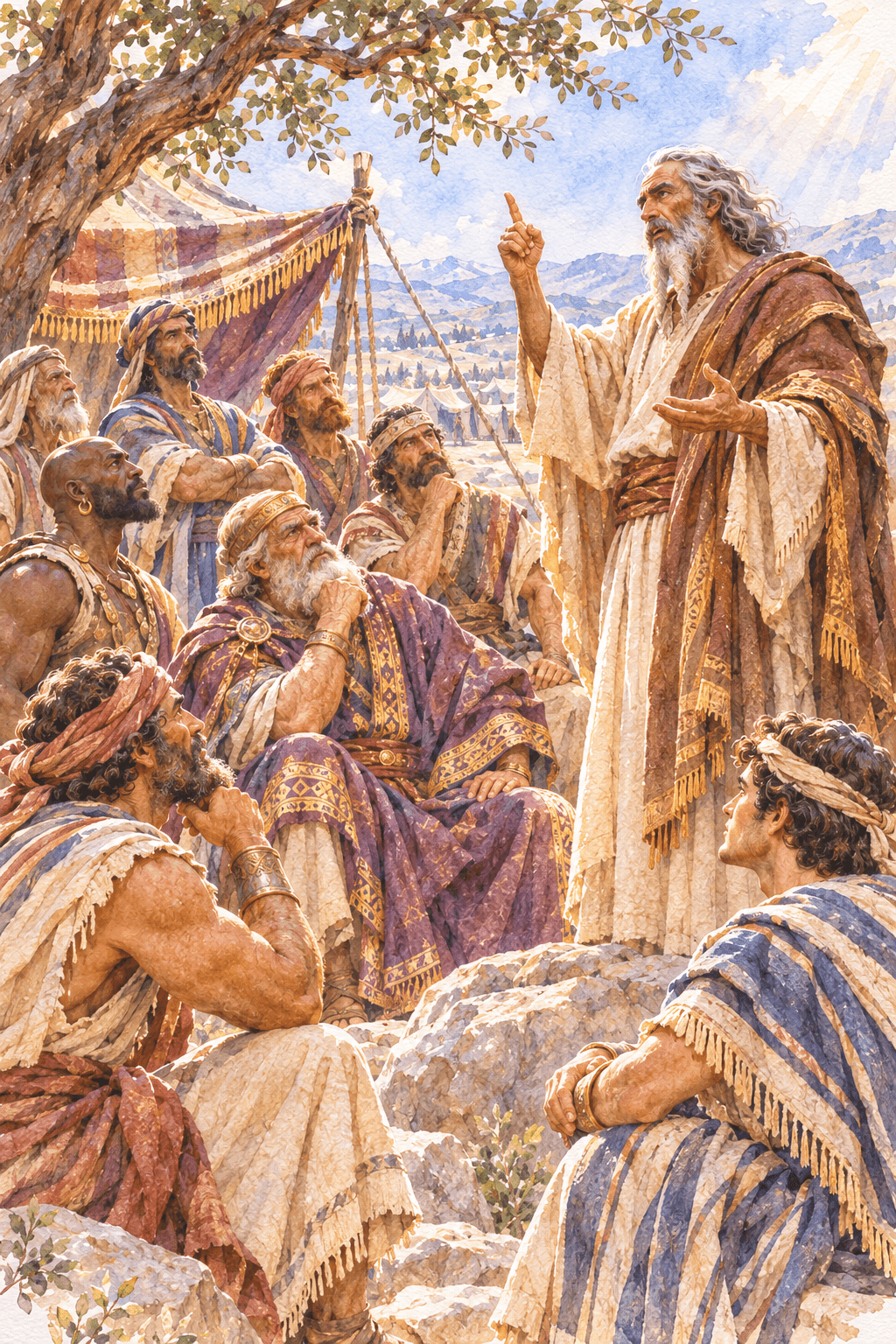
The general principle of the vow is that the one bound by the vow “shall not break his word, he shall do according to all that proceedeth out of his mouth” (2). He is bound by this vow or oath as long as it is “unto the LORD”: he vows a vow befitting the Lord, in which there is obedience to His commandments; otherwise it is not counted a vow or an oath subject to what is set down in this chapter.
Origen noted that the phrase here in the original repeats the word “man” twice: “If a man, a man, vow a vow unto the LORD.” He asks the reason for the repetition, and at the same time answers that it points to an important spiritual principle: the one who vows a vow is “the man, a man,” that is, a person who bears within him “the new man” or “the inner man.” For man cannot offer anything to the Lord, nor pay Him a vow, unless he bears within him the new man, who bears spiritual powers that gladden God. He says:
You cannot offer vows to the Lord unless we possess in ourselves or in our nature something to offer. The outer man cannot receive the law of God nor offer vows by himself, for nothing can be found in him that is fitting for the Lord. On the contrary, the inner man has in his (new) nature what he offers to the Lord, for in him all the virtues are gathered, and the sum of learning and knowledge; in him the image of God is renewed. When he receives the image which God gave him in the beginning, when he revives the virtues, and when he returns to his first beauty, then he can offer vows to the Lord; and we do not call him “a man” but he is called “a man, a man.” If the inner man is not trained and guarded by us, adorned with the virtues, prepared with good habits and exercised with divine exercises, and if he does not seek the wisdom of the Lord and strive in the knowledge of the Holy Scriptures, he cannot be called “a man, a man,” but only “a man,” or “the carnal man”… If we see the inner man in us hidden under the filth of sins and the decay of vices, we must hasten to free him from defilements, tear him away from the uncleanness of flesh and blood, and persuade him to repent, that he may remember God and hope for salvation… In this way we can offer vows to the Most High and be called “a man, a man.” [277]
So much for the man who offers vows. But we ask: what is the vow the Lord asks for? Origen answers:
What doth the LORD thy God require of thee, but to fear the LORD thy God, to walk in all his ways, and to love him, and to serve the LORD thy God with all thy heart and with all thy soul? (Deuteronomy 10:12). If we do not first give to Him, we do not receive from Him… If you give glory to God, you will receive glory, for God Himself says: “them that honour me I will honour” (1 Samuel 2:30). For my part I say that if we offer purity, I mean purity of body, we receive from Him purity of spirit. And if we hand over our mind to Him, He gives us His mind, as in the words of the Apostle: “But we have the mind of Christ” (1 Corinthians 2:16). [278]
So God wants the whole heart; He asks for our depths, our love and our struggle, and He does not forget the labour of love. He takes what is His in us as His vow, to return it to us doubled. We give an example from the life of Moses, when he declared his love for God and for His people by insisting: “If thy presence go not with me, carry us not up hence” (Exodus 33:15). Moses the prophet offered love, resolving not to move unless the Lord took His place in the midst of His people, as though he said to God: You have a place in our midst; who can take it but You? Therefore a little later the Lord says to Moses: “Behold, there is a place by me” (Exodus 33:21). God returned love for love! On the contrary, when Israel carried in its heart the idols of the nations instead of the love of God, and they went to ask the prophet, the Lord said: “I the LORD will answer him that cometh according to the multitude of his idols; That I may take the house of Israel in their own heart” (Ezekiel 14:4–5), so that they would turn from their idols.
In the Old Testament Hannah vowed to the Lord the fruit of her womb and consecrated Samuel to the temple (1 Samuel 1:11, 24). Alas, Jephthah vowed that whatever came out of the doors of his house to meet him on his return from his battle with the children of Ammon he would offer up as a burnt offering to the Lord; and behold, the one who came out to meet him was his only daughter, receiving him with timbrels and dances, and he rent his clothes, was filled with grief and trouble, and offered her as a burnt offering (Judges 11:30–40).
Others offered houses and animals as vows to the Lord. But Christ the Lord offered His life as a Nazirite to the Father, carrying His cross as a sacrifice of love for mankind and an offering made by fire of a sweet savour to the Father. The Father smelled it as a savour of good pleasure toward believing mankind, sanctified in Him. We too, carrying this unique Nazirite within us, receive the marks of His vow in us: we carry His cross within us and offer our whole life to God, so that we no longer live for ourselves but for God who redeemed us. The sign of our vows is: “I am crucified with Christ: nevertheless I live; yet not I, but Christ liveth in me” (Galatians 2:20); “For if we be dead with him, we shall also live with him” (2 Timothy 2:11).
2. The Daughter in Her Father’s House
KJV · Verses 3–5
3 If a woman also vow a vow unto the Lord, and bind herself by a bond, being in her father's house in her youth; 4 And her father hear her vow, and her bond wherewith she hath bound her soul, and her father shall hold his peace at her; then all her vows shall stand, and every bond wherewith she hath bound her soul shall stand. 5 But if her father disallow her in the day that he heareth; not any of her vows, or of her bonds wherewith she hath bound her soul, shall stand: and the Lord shall forgive her, because her father disallowed her.
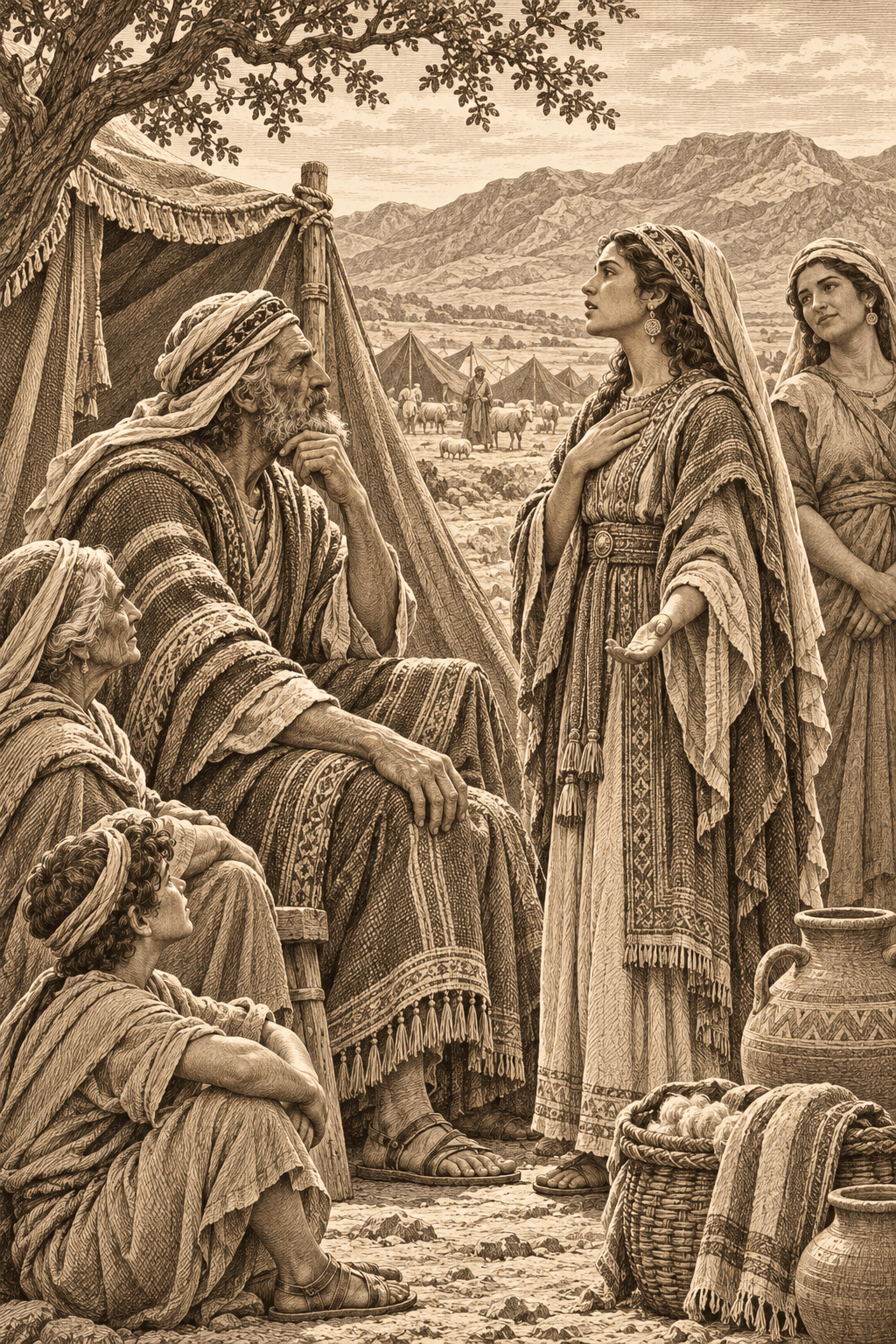
If a daughter vowed a vow while in her father’s house, and her father heard the vow and did not disallow her on the same day, the daughter was bound by all she had vowed. This is the state of the Church of the Old Testament, which was like a young girl under age in her father’s house. She vowed a vow when she heard the commandments and laws of the Lord, and said by the tongue of “all the people… with one voice… All the words which the LORD hath said will we do” (Exodus 24:3). The Church became bound to fulfil this vow; but alas she broke it, for all were found breakers of the commandment.
3. The Wife in Her Husband’s Care
KJV · Verses 6–8
6 And if she had at all an husband, when she vowed, or uttered ought out of her lips, wherewith she bound her soul; 7 And her husband heard it, and held his peace at her in the day that he heard it: then her vows shall stand, and her bonds wherewith she bound her soul shall stand. 8 But if her husband disallowed her on the day that he heard it; then he shall make her vow which she vowed, and that which she uttered with her lips, wherewith she bound her soul, of none effect: and the Lord shall forgive her.
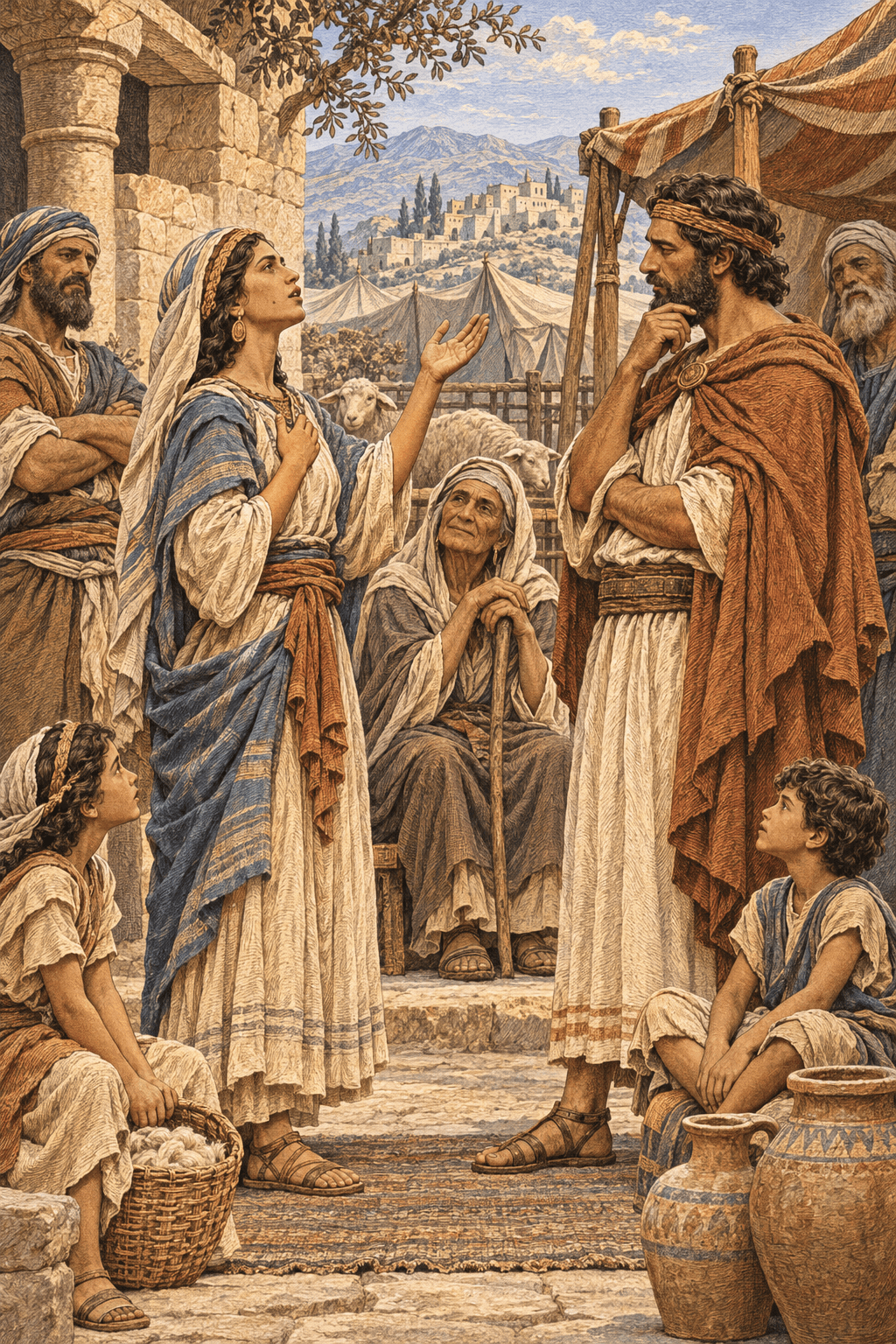
If a wife vowed a vow while in her husband’s house, and he heard the vow and did not disallow her on the same day, she was bound by all she had vowed. It is the state of the Church of the New Testament, who has become a bride of the Lord and is bound to offer her life holy to Him. Truly she cannot fulfil the vow except by the Spirit of her Bridegroom, whom she has received within her, to sanctify her continually and prepare her for the eternal wedding.
4. The Widow and the Divorced Woman
KJV · Verses 9–16
9 But every vow of a widow, and of her that is divorced, wherewith they have bound their souls, shall stand against her. 10 And if she vowed in her husband's house, or bound her soul by a bond with an oath; 11 And her husband heard it, and held his peace at her, and disallowed her not: then all her vows shall stand, and every bond wherewith she bound her soul shall stand. 12 But if her husband hath utterly made them void on the day he heard them; then whatsoever proceeded out of her lips concerning her vows, or concerning the bond of her soul, shall not stand: her husband hath made them void; and the Lord shall forgive her. 13 Every vow, and every binding oath to afflict the soul, her husband may establish it, or her husband may make it void. 14 But if her husband altogether hold his peace at her from day to day; then he establisheth all her vows, or all her bonds, which are upon her: he confirmeth them, because he held his peace at her in the day that he heard them. 15 But if he shall any ways make them void after that he hath heard them; then he shall bear her iniquity. 16 These are the statutes, which the Lord commanded Moses, between a man and his wife, between the father and his daughter, being yet in her youth in her father's house.
I think the widow and the divorced woman point to the souls that rejected the faith and were deprived of their Bridegroom’s house… Can such a one fulfil her vow?
Notes and References
[277] Origen, Homilies on Numbers 24.
[278] Ibid.