
For the sanctification of God’s people He gave laws special to the people, so that they might avoid everything that could harm their holy life in the Lord; and He bound the priests to walk in a holy life befitting those who serve for the sanctification of the people. Finally He speaks of the holy sacrifice, through which the people are sanctified, since it is a symbol of the slain Lord Christ, the Giver of holiness.
1. Preparing to Eat the Holy Sacrifice
KJV · Verses 1–9
1 And the Lord spake unto Moses, saying, 2 Speak unto Aaron and to his sons, that they separate themselves from the holy things of the children of Israel, and that they profane not my holy name in those things which they hallow unto me: I am the Lord. 3 Say unto them, Whosoever he be of all your seed among your generations, that goeth unto the holy things, which the children of Israel hallow unto the Lord, having his uncleanness upon him, that soul shall be cut off from my presence: I am the Lord. 4 What man soever of the seed of Aaron is a leper, or hath a running issue; he shall not eat of the holy things, until he be clean. And whoso toucheth any thing that is unclean by the dead, or a man whose seed goeth from him; 5 Or whosoever toucheth any creeping thing, whereby he may be made unclean, or a man of whom he may take uncleanness, whatsoever uncleanness he hath; 6 The soul which hath touched any such shall be unclean until even, and shall not eat of the holy things, unless he wash his flesh with water. 7 And when the sun is down, he shall be clean, and shall afterward eat of the holy things; because it is his food. 8 That which dieth of itself, or is torn with beasts, he shall not eat to defile himself therewith; I am the Lord. 9 They shall therefore keep mine ordinance, lest they bear sin for it, and die therefore, if they profane it: I the Lord do sanctify them.
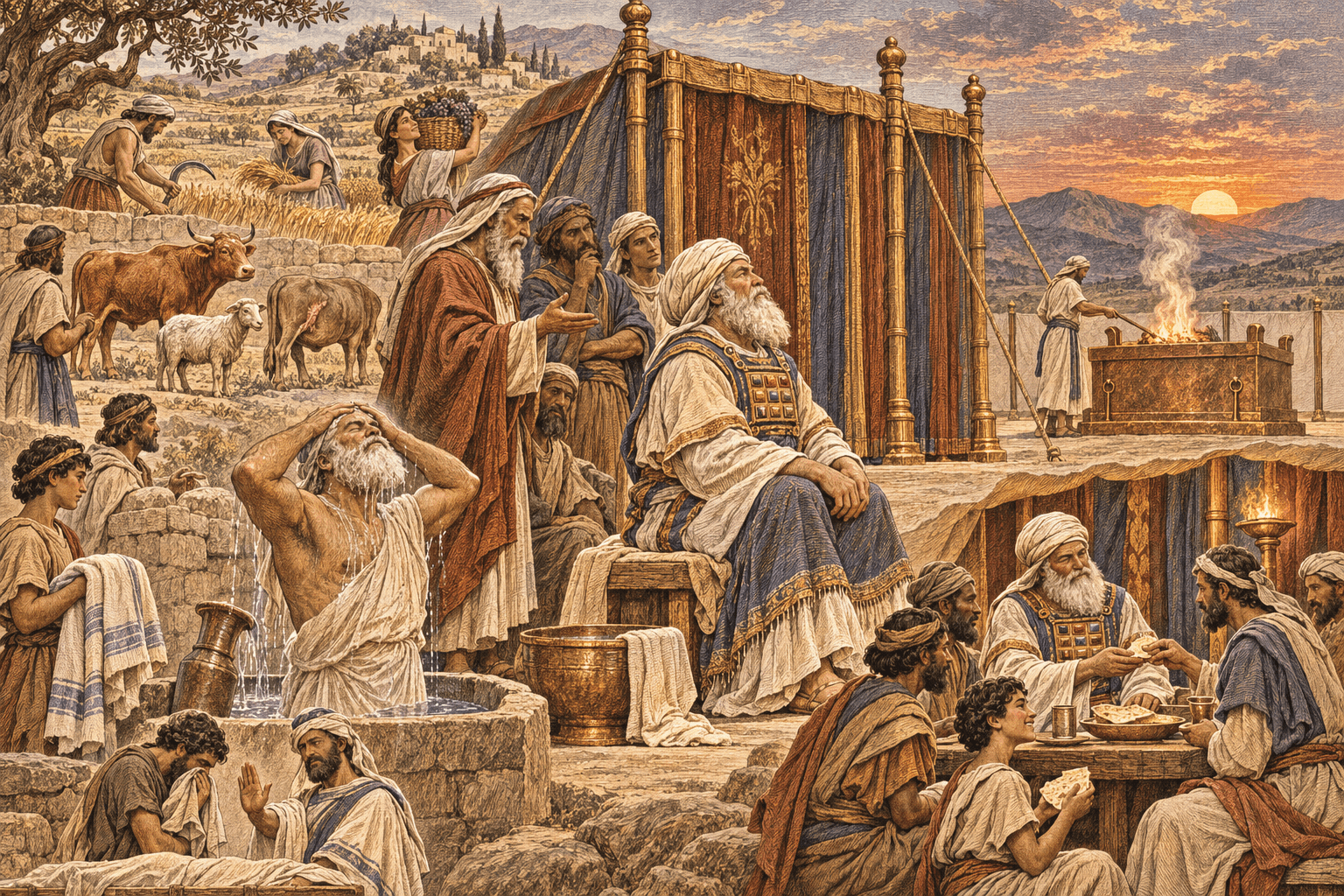
In these laws God declares the holiness of the sacrifice, so He warns the priests against eating their portion of it without preparation, for He says: “Speak unto Aaron and to his sons, that they separate themselves from the holy things of the children of Israel, and that they profane not my holy name in those things which they hallow unto me: I am the LORD” (2). It is as if He says to the high priest and the priests that the portions they enjoy of the sacrifices are not a gift to fill their bellies or their lusts, but a holy work that must be practiced with a spiritual mind and special preparation. They must not force their way into the holy things of God and profane His holy name by eating of the sacrifice without preparation. He says “I am the LORD”: I am jealous for My name and My holy things, which are profaned by careless priests.
If God, in His love for man, made of men priests who receive a portion of the sacrifice counted as the Lord’s portion, it befits them as God’s stewards to meet love with holiness and reverence, not with carelessness and contempt. The preparation to which the priests of the Old Testament were bound in order to enjoy their portion of the holy sacrifice was this: that the priest not be a leper or have an issue (Leviticus 15), nor have touched a dead person or things connected with the dead (Leviticus 21), nor touched an unclean animal, nor come near his wife… If the priest was defiled by touching an unclean thing or person, he remained unclean all that day, deprived of practicing his priestly work and of enjoying his portion as a priest by eating of the sacrifice, until the evening, when he washed his flesh (6); then he ate of the holy things, being clean.
When the sacrifice became God’s property and was offered on His altar, the priests’ eating of it was a sign of fellowship between God and man and the fulfillment of reconciliation. This fellowship or reconciliation is fulfilled between the Holy God and the person who is sanctified by Him and in Him. So the Church has bound her priests and people not to partake of the holy sacrifice carelessly, but to prepare for it spiritually and bodily. A person washes himself with tears of repentance and confesses his sins in contrition, drawing near the altar of God in reverence to receive the holy mystery. Saint John Chrysostom says:
Many of the faithful have gone far in ignorance and great negligence, coming to receive the holy mysteries at the feasts full of sins and careless of their souls, not knowing that the time of holy Communion is not bounded by a feast or a joy, but by a pure conscience and a blameless life. [270]
2. Setting Apart Those Who May Eat It
KJV · Verses 10–16
10 There shall no stranger eat of the holy thing: a sojourner of the priest, or an hired servant, shall not eat of the holy thing. 11 But if the priest buy any soul with his money, he shall eat of it, and he that is born in his house: they shall eat of his meat. 12 If the priest's daughter also be married unto a stranger, she may not eat of an offering of the holy things. 13 But if the priest's daughter be a widow, or divorced, and have no child, and is returned unto her father's house, as in her youth, she shall eat of her father's meat: but there shall be no stranger eat thereof. 14 And if a man eat of the holy thing unwittingly, then he shall put the fifth part thereof unto it, and shall give it unto the priest with the holy thing. 15 And they shall not profane the holy things of the children of Israel, which they offer unto the Lord; 16 Or suffer them to bear the iniquity of trespass, when they eat their holy things: for I the Lord do sanctify them.
The priest enjoys eating the sacrifice, with the one born in his house and the one the priest bought with money. No stranger eats with him of these holy things, that is, a Hebrew who is not of the seed of Aaron (Numbers 16:40), nor one of foreign race, nor a bondman whose ear was bored, who remains until the year of jubilee (Exodus 21:6), nor a sojourner (guest) or a hired servant. Nor does his daughter who married one not of the seed of Aaron share with him, unless she was widowed or divorced and returned to her father’s house (13).
This law, to which the men of the Old Testament were subject, is the word of God that does not pass away in its spirit, but remains a charter for the Church. For the Lord Christ gives His holy sacrifice for the priest to partake of, whether the priest who has enjoyed the sacrament of priesthood to practice the holy sacraments, or the one who received the general priesthood in the waters of baptism. He gives it also to the one born in the house, that is, the one who received the new birth in the waters of baptism by the Holy Spirit; and He gives it to the one bought with money, that is, the one whom God acquired by His word, purified like silver seven times (Psalm 12:6).
The Church warns us against giving the sacrifice to a stranger, that is, a person estranged from God who refused fellowship with Him as a son, or to a person who bored his ears to live as a slave, not seeking spiritual freedom. The sojourner and the hired servant do not enjoy it, for God asks that we live with Him on the level of continual fellowship and life with Him and in Him, not meet Him as sojourners for a while, nor as hirelings seeking wages, but as sons seeking our Father Himself. The daughter who marries a stranger is the soul that received the new birth and then went back to cleave to a foreign bridegroom, that is, another god for herself, which may be the lust of the belly, the pleasure of the body, the love of money, or the pursuit of temporal honor… Poor is the soul that deprives itself of enjoying the holy things through an evil union! Let sin be cast off and let her husband (evil) die, so that she returns to her father’s house anew, to find him preparing the holy banquet for her, that he may rejoice in her and she in him!
3. Setting Apart the Sacrifice Itself before It Is Offered
KJV · Verses 17–28
17 And the Lord spake unto Moses, saying, 18 Speak unto Aaron, and to his sons, and unto all the children of Israel, and say unto them, Whatsoever he be of the house of Israel, or of the strangers in Israel, that will offer his oblation for all his vows, and for all his freewill offerings, which they will offer unto the Lord for a burnt offering; 19 Ye shall offer at your own will a male without blemish, of the beeves, of the sheep, or of the goats. 20 But whatsoever hath a blemish, that shall ye not offer: for it shall not be acceptable for you. 21 And whosoever offereth a sacrifice of peace offerings unto the Lord to accomplish his vow, or a freewill offering in beeves or sheep, it shall be perfect to be accepted; there shall be no blemish therein. 22 Blind, or broken, or maimed, or having a wen, or scurvy, or scabbed, ye shall not offer these unto the Lord, nor make an offering by fire of them upon the altar unto the Lord. 23 Either a bullock or a lamb that hath any thing superfluous or lacking in his parts, that mayest thou offer for a freewill offering; but for a vow it shall not be accepted. 24 Ye shall not offer unto the Lord that which is bruised, or crushed, or broken, or cut; neither shall ye make any offering thereof in your land. 25 Neither from a stranger's hand shall ye offer the bread of your God of any of these; because their corruption is in them, and blemishes be in them: they shall not be accepted for you. 26 And the Lord spake unto Moses, saying, 27 When a bullock, or a sheep, or a goat, is brought forth, then it shall be seven days under the dam; and from the eighth day and thenceforth it shall be accepted for an offering made by fire unto the Lord. 28 And whether it be cow, or ewe, ye shall not kill it and her young both in one day.
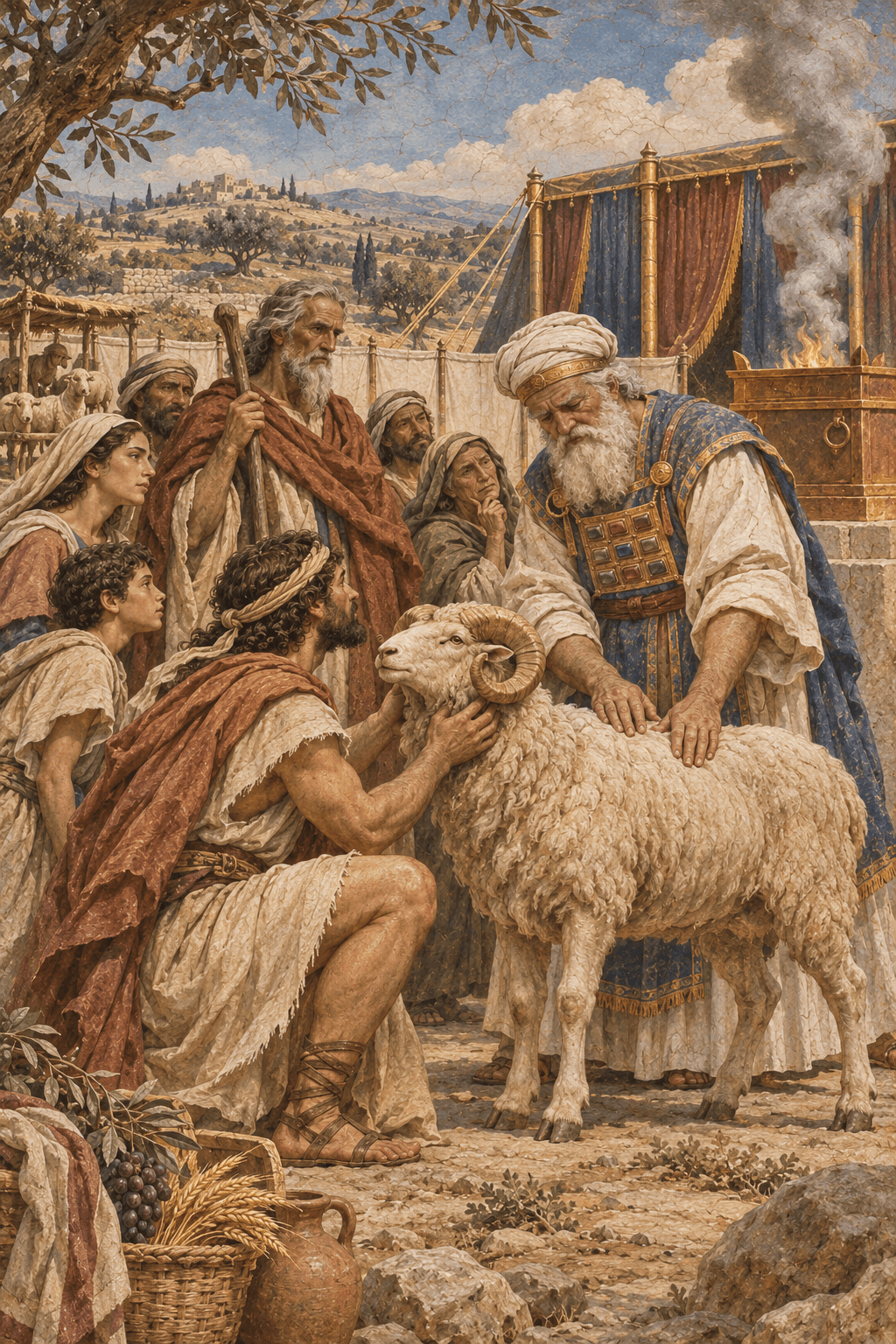
In our study of the sacrifices (Leviticus 1–7) we saw the believer’s duty to offer the sacrifice without blemish, sound… Here He warns us against offering the blind, the broken, the maimed, one with a wen (a body with sores), the scurvy, the scabbed (one with patches of disease on its body like freckles on the skin), one with anything superfluous (whose members are out of proportion or have growths), one lacking in its parts, and one whose stones are bruised, crushed, broken, or cut (22–24).
It goes without saying that God does not ask for many sacrifices but for their quality, for they represent the Lord Christ Himself, who is without blemish, who alone is able to bring us back to His Father, removing every blemish in us and giving us the holy life in Him.
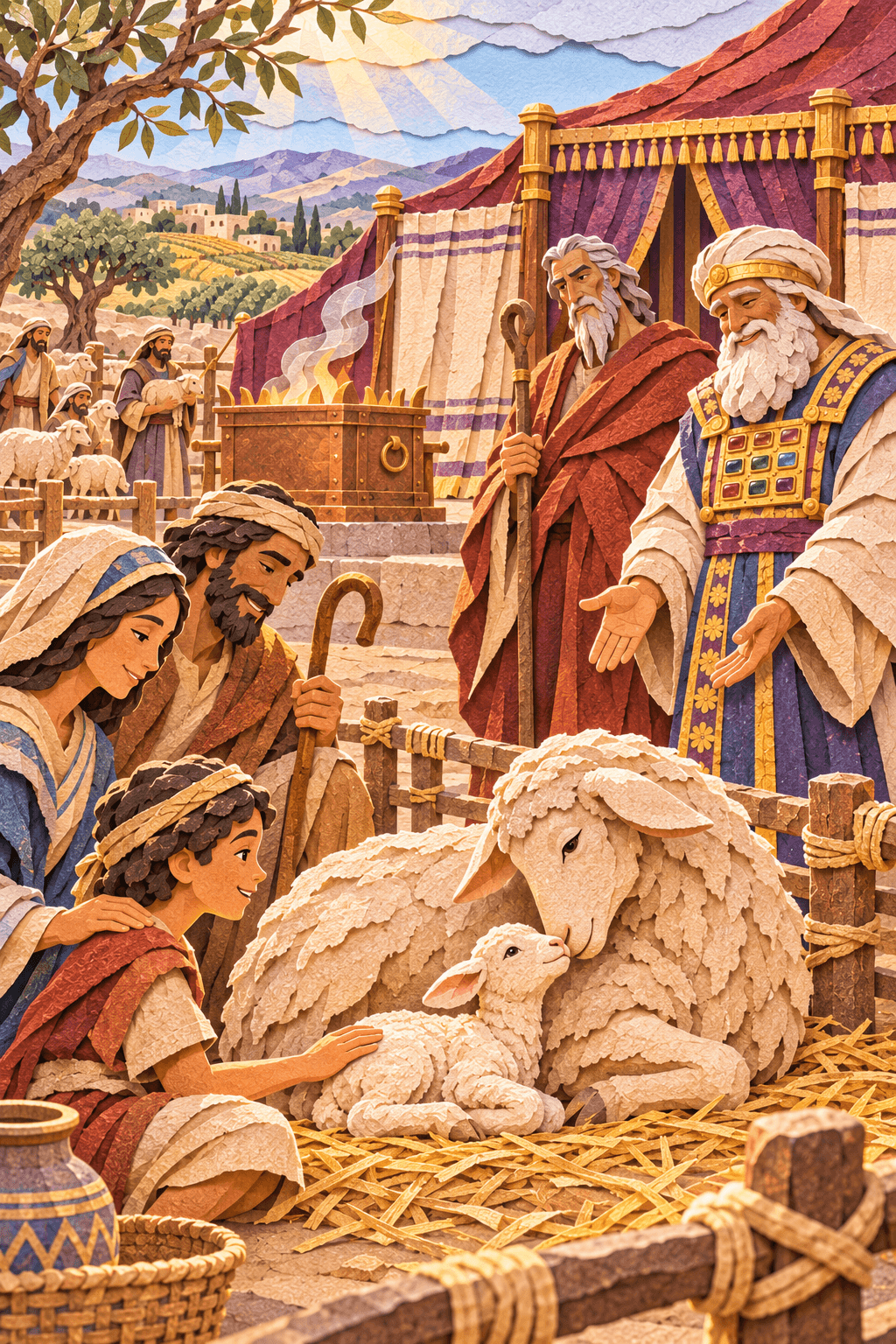
He also required that no animal be offered as a sacrifice unless it had spent seven days under its mother, suckling; from the eighth day onward it could be offered as an offering to the Lord (27). Perhaps the wisdom of this is that many animals grieve bitterly if their young are taken in the first days… It is as if God is gentle even with the mother animal, not grieving her through an offering made to Him. The Jews also believed that the flesh of suckling animals was not fit to eat in the first week after birth; what is not fit for man is not offered as a sacrifice to God! Finally, the suckling’s remaining seven days to be slain from the eighth day onward points to its sanctification, for a Sabbath has passed over it, and so it is sanctified!
He also asked them not to offer an animal and its young on one day (28)… Perhaps the wisdom of this is that He wanted them to be gentle with animals, for it is said in Proverbs: “A righteous man regardeth the life of his beast” (Proverbs 12:10). Perhaps He wanted to urge them to care for blood ties, even among animals in offering sacrifices.
4. Eating the Sacrifice of Thanksgiving the Same Day
KJV · Verses 29–33
29 And when ye will offer a sacrifice of thanksgiving unto the Lord, offer it at your own will. 30 On the same day it shall be eaten up; ye shall leave none of it until the morrow: I am the Lord. 31 Therefore shall ye keep my commandments, and do them: I am the Lord. 32 Neither shall ye profane my holy name; but I will be hallowed among the children of Israel: I am the Lord which hallow you, 33 That brought you out of the land of Egypt, to be your God: I am the Lord.
We have already studied this matter in the seventh chapter (Leviticus 7:15).
Notes and References
[270] Metropolitan Iftanios, Golden Sayings from the Discourses of Our Holy Father John Chrysostom, Beirut, 1972, p. 65.