
After Judah, the lot came to Ephraim:
1. The portion of Ephraim by their families (1–9).
2. The Canaanites remain among them (10).
1. The Portion of Ephraim by Their Families
KJV · Verses 1–9
1 And the lot of the children of Joseph fell from Jordan by Jericho, unto the water of Jericho on the east, to the wilderness that goeth up from Jericho throughout mount Bethel, 2 And goeth out from Bethel to Luz, and passeth along unto the borders of Archi to Ataroth, 3 And goeth down westward to the coast of Japhleti, unto the coast of Bethhoron the nether, and to Gezer; and the goings out thereof are at the sea. 4 So the children of Joseph, Manasseh and Ephraim, took their inheritance. 5 And the border of the children of Ephraim according to their families was thus: even the border of their inheritance on the east side was Atarothaddar, unto Bethhoron the upper; 6 And the border went out toward the sea to Michmethah on the north side; and the border went about eastward unto Taanathshiloh, and passed by it on the east to Janohah; 7 And it went down from Janohah to Ataroth, and to Naarath, and came to Jericho, and went out at Jordan. 8 The border went out from Tappuah westward unto the river Kanah; and the goings out thereof were at the sea. This is the inheritance of the tribe of the children of Ephraim by their families. 9 And the separate cities for the children of Ephraim were among the inheritance of the children of Manasseh, all the cities with their villages.
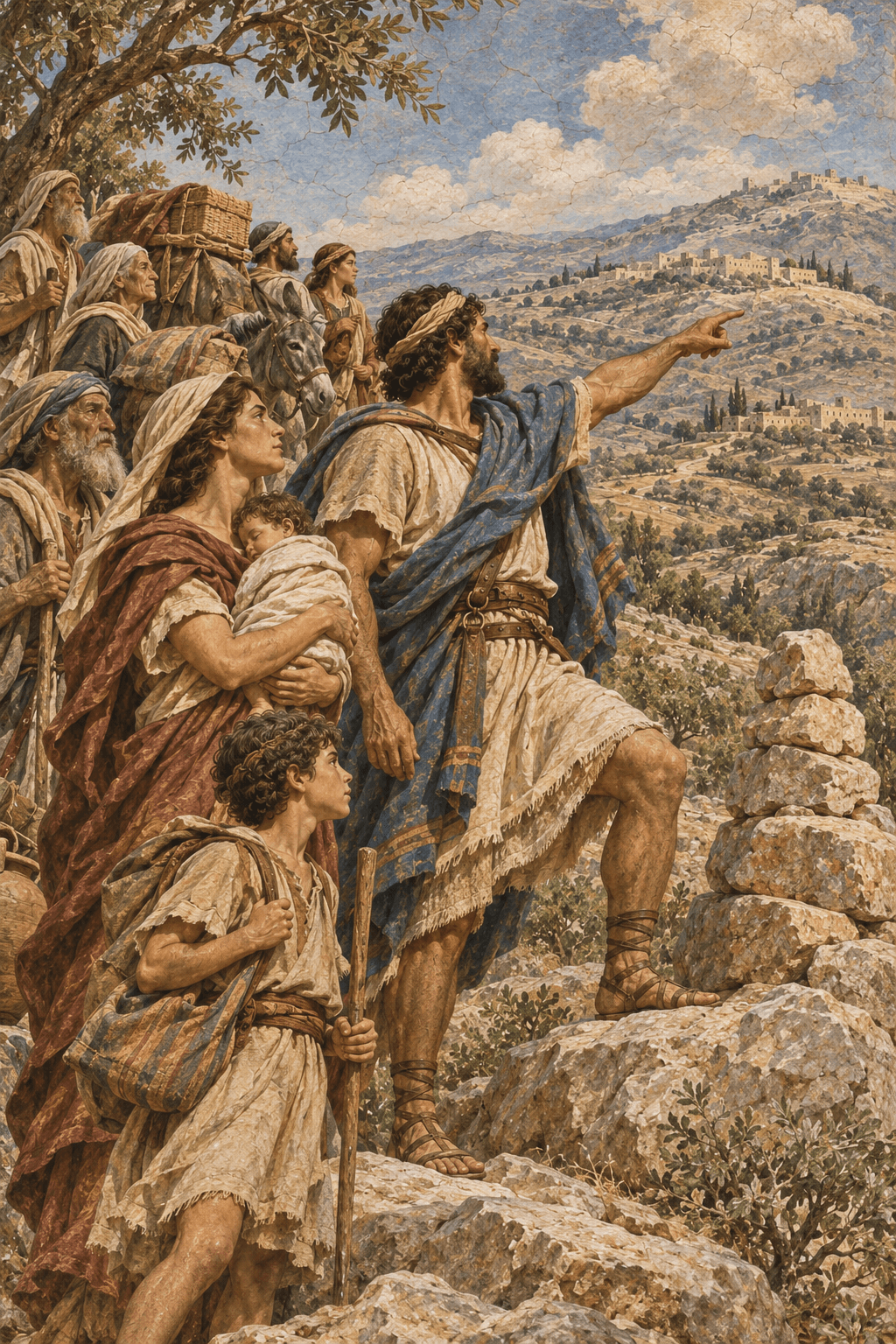
The word “Ephraim” means “multiplied fruit.” It is as if this tribe includes the community of believers who have received Christ’s gift to them — His Holy Spirit dwelling in them, granting them His ever-increasing fruit. These truly deserve to cleave to their brethren the children of Judah. For if Judah points to enjoying union with the Lord Christ, who came from this tribe, and belonging to Him, the children of Ephraim represent those who bear multiplied fruit in Christ Jesus through His Holy Spirit, who takes of what is His and shows it to us (John 16:15).
He grants us the attributes of the Lord Christ Himself, giving us the love of Christ, His joy, His peace, His goodness, His longsuffering, and so on (Galatians 5:22), by bringing us into abiding in Christ, or our union with Him and in Him. So the fruit of the Spirit is not separated from union with the Father in Christ Jesus; it is as if Ephraim must cleave to Judah and accompany him! In other words, may every believer who belongs to Ephraim and has the fruit of the Holy Spirit set out through this fruit into a deeper union with the Lord Christ.
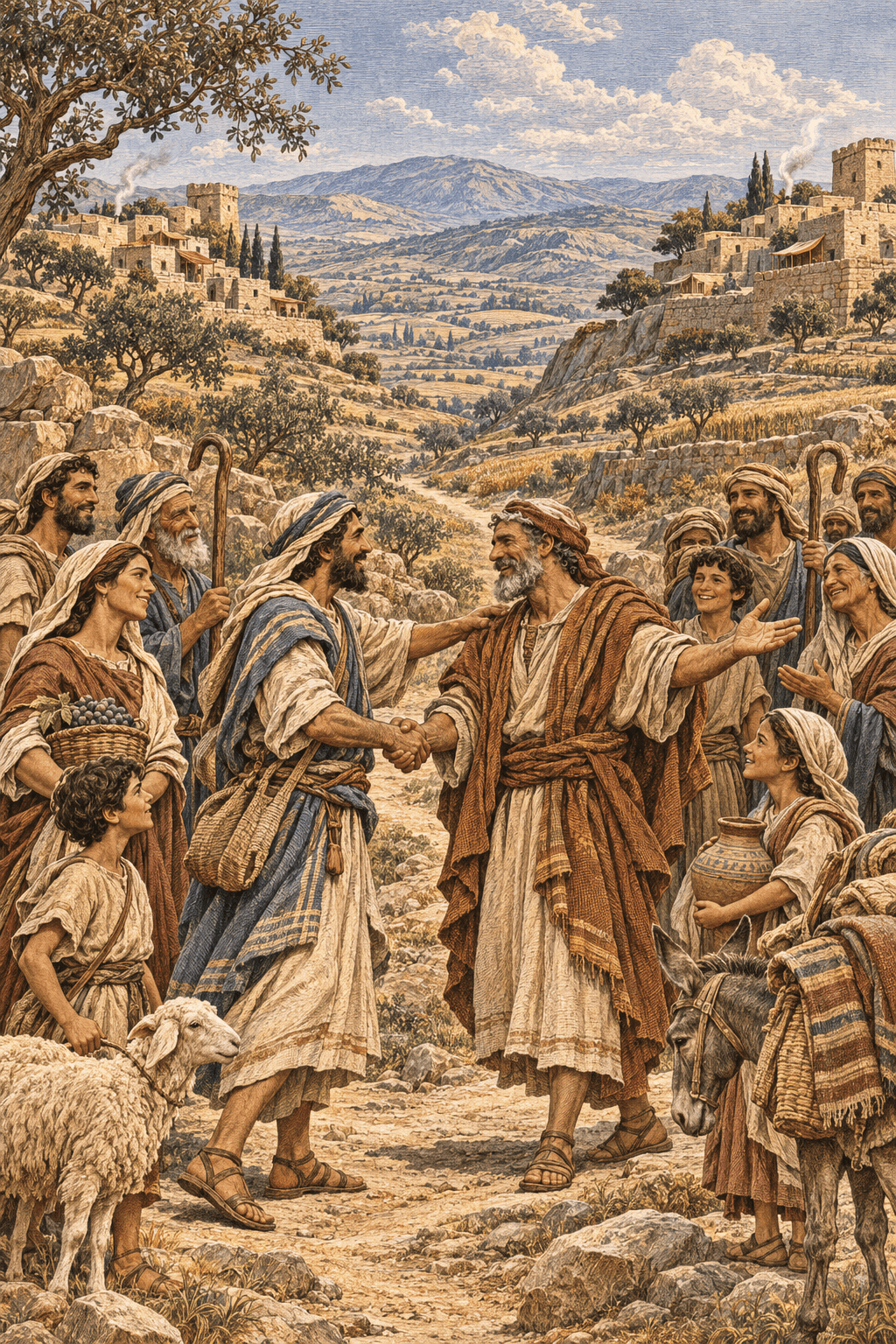
Saint Jerome encourages us to cleave to this tribe, for with it we have a share in the divine inheritance, or crown. He says: “Be Ephraim too; be fruitful; produce good works, and then you will have the crown of the Lord.” [233]
It should be noted in the division of the land of promise that Ephraim and half of Manasseh took the middle of Canaan (Samaria), because Jacob had assigned Shechem to Joseph (Genesis 48:21–22; Joshua 24:32); there the bones of Joseph were buried, and it fell to the portion of Manasseh, while Shiloh fell to the portion of Ephraim. Both towns had particular spiritual memories for the ancient people; here we will speak only of Shiloh as Ephraim’s portion. “Shiloh” most likely means “place of rest.” It lies about 9 miles northeast of Bethel and about 17 miles north of Jerusalem; it may be the present Seilun.
Ephraim enjoyed Shiloh as the city representing the divine presence among His people. Joshua chose it as the seat of the Ark and of the service, and there Joshua divided the land and distributed it among the tribes (Joshua 18:1, 8–10). The tabernacle remained about 300 years in Shiloh. In the time of the Judges the people gathered together yearly at Shiloh for the feast, and perhaps to offer sacrifice, as a sign of joy in God who dwelt among them; and the daughters of Shiloh danced in celebration of the feast.
At one of these feasts the Benjamites seized 200 of them and married them (Judges 21:19–23; 1 Samuel 1–3). Shiloh was the dwelling of Eli the priest and of Samuel. But God rejected Shiloh, and it became a warning before all the people: though God had loved Shiloh for ten centuries, when it persisted in evil He forsook it and allowed it to be destroyed. That is why God later threatened Jerusalem that it would become like its sister Shiloh!
It is like the person who enjoys the abundance of God’s love and His free gifts, whose judgment is all the harsher if he persists in disobedience and an impure life. God rejected the dwelling at Shiloh, and the Ark was no longer there; David brought it up to Jerusalem (2 Samuel 6), and the tabernacle was moved to Nob in the south (1 Samuel 21:1–9), and from there to Gibeon and then Jerusalem (2 Chronicles 1:3–4). Ahijah the prophet lived there (1 Kings 14:1–16).
It appears that Shiloh was in ruins in the days of Jeremiah the prophet (Jeremiah 7:12, 14; 26:6, 9) and in the days of Saint Jerome. Danish excavations (1930–1932) showed that Shiloh was destroyed around 1050 BC and remained so for several centuries; this was probably at the hands of the Philistines after their victory at Aphek. [234]
If we have the fruit of God’s Spirit and are counted members of the spiritual tribe of Ephraim, a Shiloh rises within us, which we must beware lest it be ruined and torn down through our slackness and the corruption of our life, so that the Lord withdraws His blessing and seeks a Jerusalem in its place! Let us fear for the place where the Lord settles in us, so that we are not deprived of His abiding presence in us forever!
2. The Canaanites Remain among Them
KJV · Verses 10
10 And they drave not out the Canaanites that dwelt in Gezer: but the Canaanites dwell among the Ephraimites unto this day, and serve under tribute.
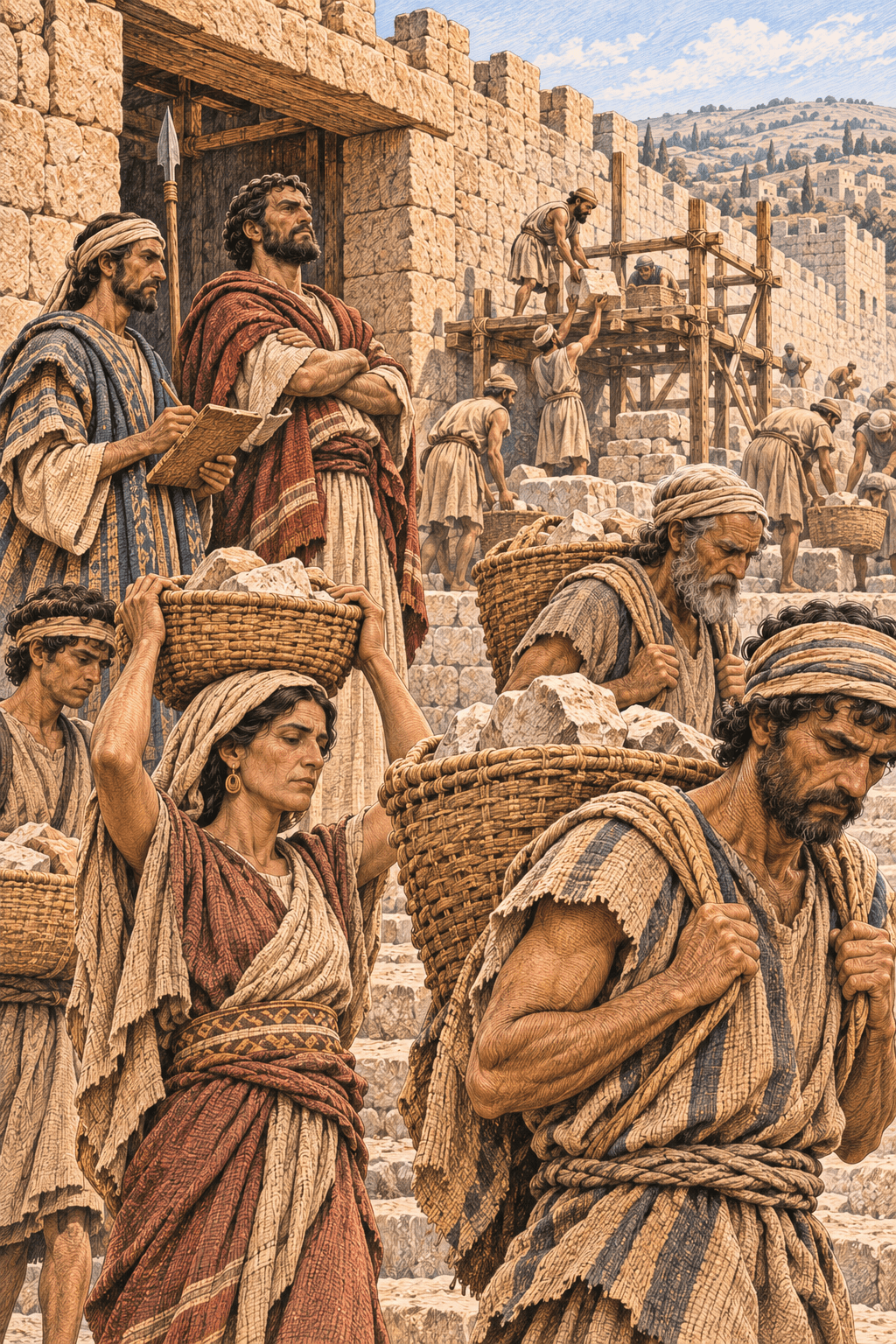
As Judah left the Jebusites in their midst, so Ephraim left the Canaanites dwelling among them in Gezer, for Scripture says: “And they drave not out the Canaanites that dwelt in Gezer: but the Canaanites dwell among the Ephraimites unto this day, and serve under tribute” [10].
Origen warns us about these Canaanites dwelling with Ephraim:
“If you truly bear the fruits of the Lord (like Ephraim), and see a person living in negligence and disorder, know that he is one of the Canaanites. If you cannot drive him out of the Church, as the children of Ephraim did not drive out the Canaanites, follow the Apostle’s principle: ‘Now we command you, brethren, in the name of our Lord Jesus Christ, that ye withdraw yourselves from every brother that walketh disorderly’ (2 Thessalonians 3:6). [235]”
Origen sees that Gezer means “a narrow union,” that the Canaanites represent the body, and that Ephraim represents the spirit. When the soul lets the body unleash its evil lusts, it has been united in Gezer, that is, through “a narrow union” that makes us like slaves under tribute. So may our souls, in their union with the body, not enter with it into Gezer, a narrow union, but receive it sanctified in the Lord, so that the whole person lives free in body and spirit, not embittered by bodily lusts or by the errors of the spirit.
In any case, though Ephraim’s portion is considered the richest and most beautiful of the regions in fertility, it carried a danger, for the Canaanites were found in it. So with the richness of the gift there is resistance!
Notes and References
[233] Jerome, Homilies on the Psalms 34.
[234] McKenzie, p. 807.
[235] Origen, Homilies on Joshua 21:2.