
Since the Levitical priests accepted the Lord as their portion, the people are bound to give them the Lord’s portion, namely the tithes, firstfruits, and vows. As for the Levitical priests scattered among the cities, the people are bound to meet their material needs. But the servants of Satan, such as observers of times, enchanters, and witches, are to have no place in their midst. The surrounding nations had false prophets and diviners relying on the power of Satan; therefore God forbade the practice of divination (9–14).
God raised up for His people prophets who speak the word of God and declare His will (15–19). Every prophet who prophesies other than what the Lord speaks shall die (20–22).
On the other hand, he gave a prophecy about the true Servant, “the awaited Prophet,” the incarnate Lord of the prophets, that is, about the coming of the Lord Christ, saying: “The Lord thy God will raise up unto thee a Prophet from the midst of thee, of thy brethren, like unto me; unto him ye shall hearken…” For He is unique in His prophecy, the Lord of the prophets, who gives life to whoever hears Him, and every soul that does not listen to Him shall be destroyed from among the people (Acts 3:22–23; 7:37; etc.).
1. The Portion of the Levitical Priests
KJV · Verses 1–8
1 The priests the Levites, and all the tribe of Levi, shall have no part nor inheritance with Israel: they shall eat the offerings of the Lord made by fire, and his inheritance. 2 Therefore shall they have no inheritance among their brethren: the Lord is their inheritance, as he hath said unto them. 3 And this shall be the priest’s due from the people, from them that offer a sacrifice, whether it be ox or sheep; and they shall give unto the priest the shoulder, and the two cheeks, and the maw. 4 The firstfruit also of thy corn, of thy wine, and of thine oil, and the first of the fleece of thy sheep, shalt thou give him. 5 For the Lord thy God hath chosen him out of all thy tribes, to stand to minister in the name of the Lord, him and his sons for ever. 6 And if a Levite come from any of thy gates out of all Israel, where he sojourned, and come with all the desire of his mind unto the place which the Lord shall choose; 7 Then he shall minister in the name of the Lord his God, as all his brethren the Levites do, which stand there before the Lord. 8 They shall have like portions to eat, beside that which cometh of the sale of his patrimony.
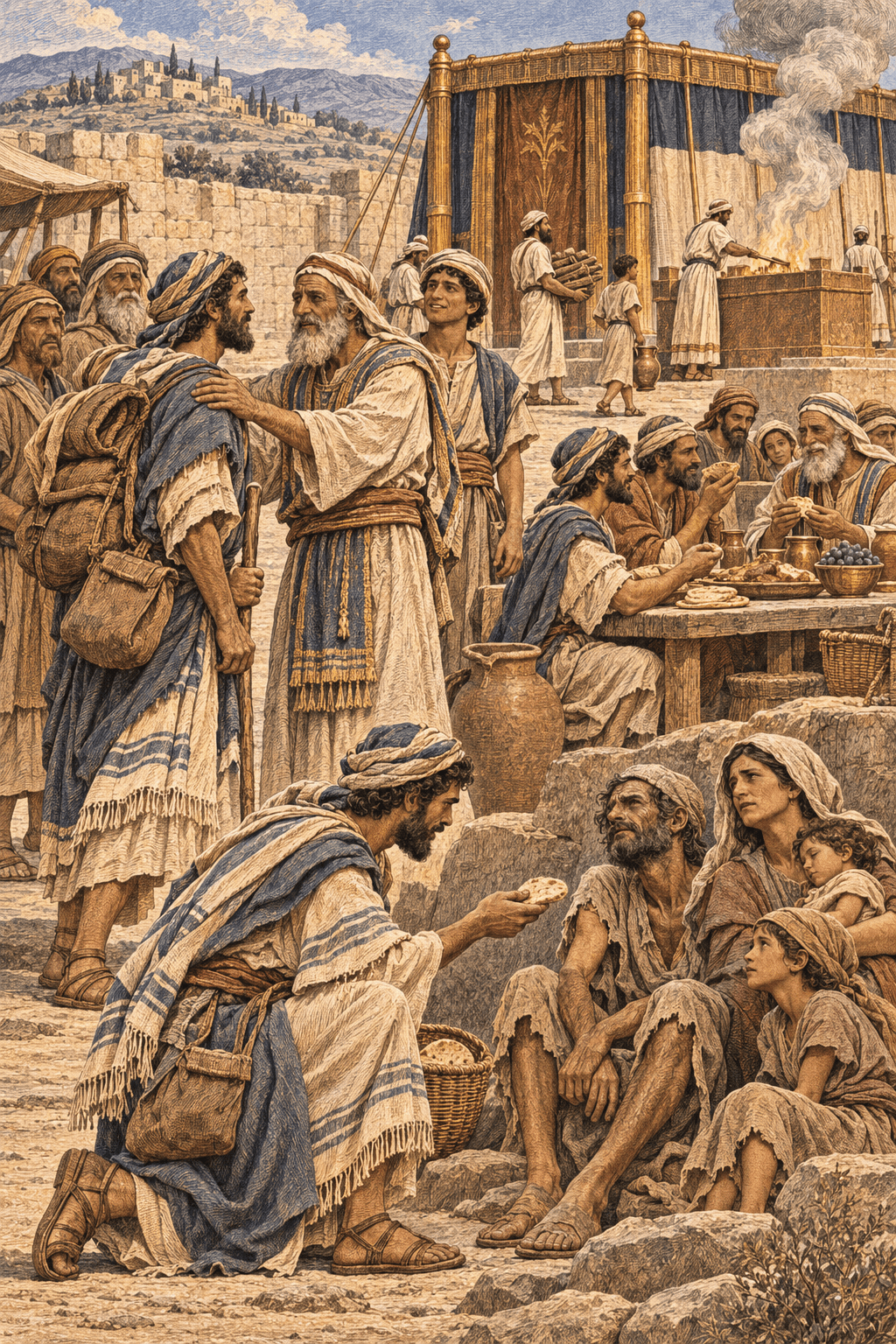
The people were about to enter the Promised Land, a fertile land which, as we saw, depends on the rains, as though God Himself sustains them by the land as by the waters. Now He set apart a whole tribe that had no farmland to live on, to affirm that the Lord’s inheritance is theirs. They are a living example of complete reliance on God without land!
God did not care to mention anything about the rights of the king; on the contrary, we find Samuel the prophet warning the people who asked to set up a king over them: “This will be the manner of the king that shall reign over you: He will take your sons… and will set them to ear his ground, and to reap his harvest… And he will take your daughters to be confectionaries, and to be cooks, and to be bakers. And he will take your fields, and your vineyards, and your oliveyards, even the best of them, and give them to his servants. And he will take the tenth of your seed” (1 Samuel 8:11–15).
While He cares for the needs of the priests and Levites and determines His portion so that they have the greater share of what is His, He warns the people of what kings do, who often abuse their authority and seize what is not theirs.
First: So that the priests would not be occupied with the affairs of this life or with its wealth, but with what builds up souls, they had no share in the spoils of war nor in the Promised Land, which was divided by lot among the tribes. God affirmed that He is their portion and inheritance.
The priests the Levites, and all the tribe of Levi, shall have no part nor inheritance with Israel: they shall eat the offerings of the Lord made by fire, and his inheritance. Therefore shall they have no inheritance among their brethren: the Lord is their inheritance, as he hath said unto them. [1–2]
In the Old Testament the Levitical priests, the whole tribe of Levi, had no part or inheritance with Israel in the land distributed among the tribes. In the New Testament the whole Church, priests and people, feel that their portion is the Lord Himself; their place is the new land, the heavenly Canaan.
The priests eat “the offerings of the Lord made by fire” (1). The literal translation is “the fires of Yahweh,” and it means here what is said in the Book of Numbers: “This shall be thine of the most holy things, reserved from the fire: every oblation of theirs, every meat offering of theirs, and every sin offering of theirs, and every trespass offering of theirs, which they shall render unto me” (Numbers 18:9). In the New Testament all believers have the right, not to eat offerings made by fire, but to have the fiery Spirit dwell in them, turning them into fiery offerings and sacrifices. They become like the servants of God aflame with fire; God, the consuming fire, dwells in them as in their midst.
The priests ate the Lord’s portion of tithes, firstfruits, and vows; in the New Testament the Lord offers Himself to them as their portion, and they partake of His Body and Blood given in love for all mankind. The Lord, who is Spirit, is their portion; but since they have bodies, a gift from God, He does not leave them hungry but undertakes to satisfy them, giving them His portion as their portion.
Every true believer repeats with the Psalmist: “The Lord is the portion of mine inheritance and of my cup: thou maintainest my lot” (Psalm 16:5); “God is the strength of my heart, and my portion for ever” (Psalm 73:26).
Second: God did not leave the people free to give to the priests according to their generosity, but set a law determining their portion.
And this shall be the priest’s due from the people, from them that offer a sacrifice, whether it be ox or sheep; and they shall give unto the priest the shoulder, and the two cheeks, and the maw. The firstfruit also of thy corn, of thy wine, and of thine oil, and the first of the fleece of thy sheep, shalt thou give him. For the Lord thy God hath chosen him out of all thy tribes, to stand to minister in the name of the Lord, him and his sons for ever. [3–5]
Josephus, [207] Philo, [208] and the Talmud hold that what is mentioned in verse 3 does not refer to sacrifices in the temple of the Lord, but to slaughtering animals in homes for private use.
A) In the Book of Leviticus (Leviticus 7:32–34) the priests were given the right to the breast and the right shoulder; here he adds the two cheeks and the maw. The best portion of the sacrifice was offered to God on the altar of fire, the lesser portion was given to the priests and Levites, and the offerer was content with what remained. This was apart from the burnt offering, which was offered entirely to God.
The feeling of the worshipers was that God dwells in the midst of His people, to whom He gave the Promised Land so that it became theirs, and they prefer Him, so they offer Him the best they have. His priests and the Levites represent Him; therefore the worshipers rejoiced as they offered of the best they had.
What Is the Portion of the True Christian as a Priest of the Lord?
The shoulder: it points to God, who supports the believer’s arm to work for the kingdom of God.
The two cheeks: they point to the sanctification of the words coming from the mouth. Saint Jerome sees that “Bethphage” means “house of the jaw,” and carries a symbol of the house of confession (with the mouth), for this house belongs to the priests.
“It was the custom to give the jaw to the priests. Someone may ask: why does the priest alone receive the jaw (siagona)…? It is part of the priestly work to be able to teach the people, for the prophet says: ‘Ask now the priests concerning the law’ (Haggai 2:11). It is the duty of the priests to answer questions about the Law, and so they receive the power of expression, symbolized by the jaw, and the knowledge of the Scriptures, symbolized by the breast. Words are of no use where there is no knowledge. When you receive the jaw and the breast, then you receive the muscles of the shoulder, which are a symbol of works. [209] For it will profit you nothing to have the ability of words and to speak easily, and not to have knowledge, unless you translate these into works. [210]”
The maw: the consecration of the hidden inner depths to the Lord.
The firstfruit of the corn: he has a share in the bread that came down from heaven.
B) The firstfruits of fruits that appear in their seasons and cannot be kept long seem to have been given to the priests living among them for pastoral work in the cities.
They provide all the needs of the Levitical priests working in the temple: the firstfruits of corn, wine, and oil for food, and the fleece of the sheep for clothing. And the Levitical priests provide from these firstfruits, vows, and offerings the needs of the poor and destitute.
Third: If God has undertaken to give His portion to His servants, His servants ought not to be occupied with their portion, but stand and minister in His name, they and their sons, all the days. All their thoughts are absorbed in bearing witness to the Lord before the people and training their sons for the ministry.
Fourth: Some think [211] that the word “sacrifice” (3) means not only the animal sacrifices offered to the Lord, but everything slaughtered for general use, as though the priests had a share in all that was slaughtered, even slaughtered in the cities for food and not as an offering to the Lord. So the priests shared the people’s daily food.
Fifth: Besides his portion, the Levite receives “that which cometh of the sale of his patrimony” (8). Though the Levites had no right of inheritance in the Promised Land, which was divided among the tribes by lot, they were allowed to buy houses, flocks, and fields, as in the case of Abiathar (1 Kings 2:26; Jeremiah 32:7–8).
And if a Levite come from any of thy gates out of all Israel, where he sojourned, and come with all the desire of his mind unto the place which the Lord shall choose; [6]
God chose the tribe of Levi for the service of His temple, but He did not force any of them to serve; rather He says: “and come with all the desire of his mind unto the place which the Lord shall choose” (6). God does not crush human will, but longs for it to be in harmony with His will; He sanctifies it and works through it.
Then he shall minister in the name of the Lord his God, as all his brethren the Levites do, which stand there before the Lord. They shall have like portions to eat, beside that which cometh of the sale of his patrimony. [7–8]
By saying “Then he shall minister” (7), God affirms that the priesthood is not a rank of honor but an opportunity for work and service, a sharing in the work of the Lord Christ, who washed the feet of others. He does the Lord’s work by the Holy Spirit of God, a work that seems impossible but is full of sweetness and holy honor.
The body longs to acquire and contain the whole world, while the soul is satisfied only by God its Creator. He alone fills every void in it and grants it all satisfaction, joy, and peace. By possessing the Lord its God it acquires everything, and repeats with the Apostle: “as poor, yet making many rich; as having nothing, and yet possessing all things” (2 Corinthians 6:10); “For all things are yours” (1 Corinthians 3:21).
The Levites had houses, yet they were considered travelers and strangers in this world, for they had no share in the lands inherited by their children.
Here God affirms that He loves those who love His holy altar. All care directed to them He counts as directed to Him personally.
2. No Observers of Times and No Sorcerers
KJV · Verses 9–14
9 When thou art come into the land which the Lord thy God giveth thee, thou shalt not learn to do after the abominations of those nations. 10 There shall not be found among you any one that maketh his son or his daughter to pass through the fire, or that useth divination, or an observer of times, or an enchanter, or a witch. 11 Or a charmer, or a consulter with familiar spirits, or a wizard, or a necromancer. 12 For all that do these things are an abomination unto the Lord: and because of these abominations the Lord thy God doth drive them out from before thee. 13 Thou shalt be perfect with the Lord thy God. 14 For these nations, which thou shalt possess, hearkened unto observers of times, and unto diviners: but as for thee, the Lord thy God hath not suffered thee so to do.
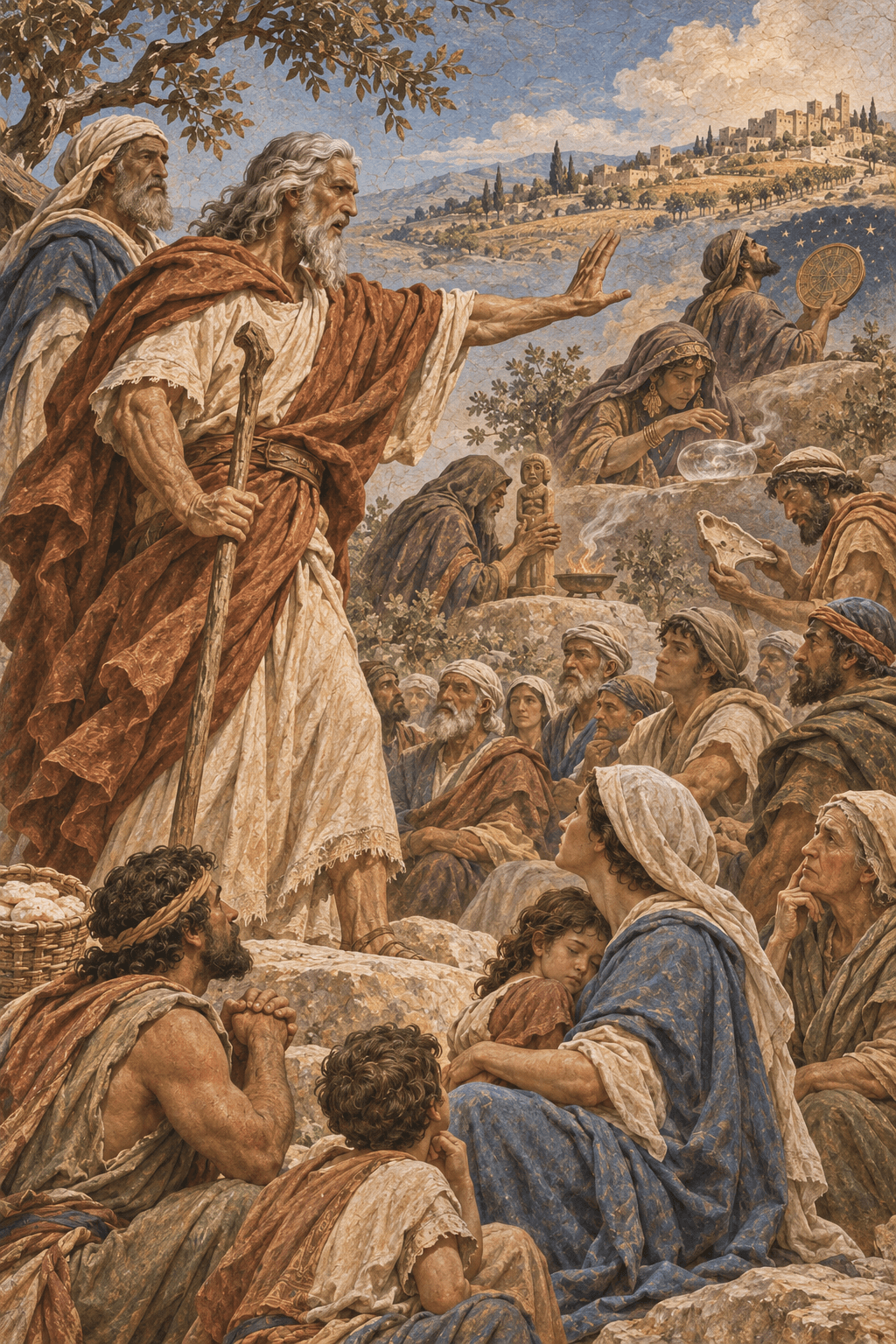
Speaking of the priests, the servants of the Lord who represent Him and represent the people before Him, he warns them against turning to the servants of idols or the like, who think they do their pastoral work through making a son or daughter pass through the fire, especially in times of crisis, to appease the gods (Leviticus 18:21; 20:2–5), or through divination, observing times, enchantment, witchcraft, charming (using God’s name in sorcery), consulting familiar spirits, wizardry, or consulting the dead.
When thou art come into the land which the Lord thy God giveth thee, thou shalt not learn to do after the abominations of those nations. There shall not be found among you any one that maketh his son or his daughter to pass through the fire, or that useth divination, or an observer of times, or an enchanter, or a witch. Or a charmer, or a consulter with familiar spirits, or a wizard, or a necromancer. [9–11]
Saint John Chrysostom says:
“For them, holiness lay in being free from pagan customs; but it is not so for us. The Apostle Paul says: ‘that she may be holy both in body and in spirit’ (1 Corinthians 7:34). [212]”
The ancient Egyptians and the Chaldeans were famous for the arts of sorcery, and the Canaanites practiced sorcery (1 Samuel 28:7–10). The peoples regarded it as of two kinds: good sorcery used to treat diseases, solve problems, and support leaders in making fateful decisions, etc.; and evil sorcery aimed at harming others, such as making demons dwell in them, afflicting them with diseases, or making them lose their peace, etc. The Law of Moses came to affirm that every kind of sorcery, whatever its means or aims, is evil, and considered it defilement and abomination.
God wanted to protect His people from idol worship with all its abominations, customs, and servants, for they were in danger of turning to every kind of sorcery and the like, and of turning to Satan to fulfill their lusts, to the point of offering their sons and daughters as human sacrifices to Molech, the god representing the sun (Leviticus 18:21). He feared lest they turn to Satan and his followers to know the future and seek counsel for their movements and conduct, instead of turning to God through His servants. God gave them the holy land so that they might have fellowship with Him, not with the enemy of good.
The prophet Moses gives here nine expressions for foretelling the future by sorcery. Perhaps these kinds no longer exist as they were, but sadly there is what resembles them, and worse, for the movement of “Satan worship” has spread, with its claims to foretell the future by many means.
It is difficult to distinguish between the kinds of sorcery and divination Moses mentioned in his days, for the expressions differ from those used today in the same field.
Divination usually means knowing the divine will by shooting arrows, as in Ezekiel 21:21: “For the king of Babylon stood at the parting of the way, at the head of the two ways, to use divination: he made his arrows bright, he consulted with images, he looked in the liver.”
Observing times means reading the future through the clouds and making strange sounds.
Enchantment is discovering hidden things by reading the cup, as in the days of Joseph. The same expression in Syriac points to divination by observing birds, fire, rain, and some natural phenomena.
As for witchcraft, drugs and herbs are used that some believe have magical effect. Some use magical words, or bind a person and tie magical knots.
In these kinds we see how the enemy of good misuses everything. He misused the nature God created good and holy for us; he misused even our eating and drinking, as in reading coffee cups; he misused the human body itself, as in palm reading; and even with regard to our departed brothers, a person claims to be able to summon a dead person to foretell the future.
God does not want to hide His divine will from us, nor to make the future unknown; therefore He has revealed His will in many ways, until the Word of God Himself, the Only-Begotten Son, came to speak with us face to face (Hebrews 1:1). But sadly man often prefers the wrong and misleading ways of every kind of sorcery and divination to listening to the voice of the Lord Himself.
God created man as a being who looks to the future. Animals can be satisfied today and not think of tomorrow, but man by nature inclines toward tomorrow. This longing kindles in the believer’s heart a fervent desire and burning flame toward knowing the life to come. He longs to depart to see God and cast himself into His embrace, to come to know the heavenly beings and share their praises, and to meet the men of God from Adam to the end of the ages. But when the heart is corrupted, this desire turns into anxiety and agitation about the future in this world. This is what sometimes pushes him to turn to sorcery and divination.
Why Does God Reject Foretelling Through Sorcery and the Like?
First: Satan misleads mankind by one of two means that seem contradictory. Either he urges man to deny the world of spirits, the existence of God Himself, His angels, Satan, and the immortality of the human soul, and so destroys man’s hope in eternity; or, by the other weapon, which seems to oppose the first, while not denying the existence of God, holy spirits, and demons, the enemy suggests to people that he has authority and gives abundantly what God does not give. I remember in my conversation with a young man who had begun to be attached to Satan worship that he said to me: “Why should I not worship Satan when he gives me all I ask?” It is the same temptation with which the enemy wanted to tempt the Lord Christ, for “the devil taketh him up into an exceeding high mountain, and sheweth him all the kingdoms of the world, and the glory of them; And saith unto him, All these things will I give thee, if thou wilt fall down and worship me” (Matthew 4:8–9).
Second: Clinging to the works of Satan makes man lose his holiness, for he practices abomination like the rest of the nations (9). God is light; whoever walks in Him enjoys light and truth, and whoever shares in the works of the devil walks in darkness and is bound to falsehood.
Third: The works of the devil make man lose his gentleness and tenderness, so that he bears a kind of harshness or violence even toward his children, sometimes offering his children as human sacrifices.
He gives them the reasons that forbid turning to Satan and his followers:
First: These practices are an abomination to the Lord, hateful to Him: “For all that do these things are an abomination unto the Lord” (12). Whoever loves God cannot bear the abominable works of Satan, hateful to the Lord.
Second: These works drove the nations out of Canaan, for he says: “and because of these abominations the Lord thy God doth drive them out from before thee” (12). If the people practiced what the nations practiced, their lot would be like that of the nations driven out before them.
Third: God longs to distinguish them from the nations, so that they may be perfect in His eyes in everything.
Thou shalt be perfect with the Lord thy God. For these nations, which thou shalt possess, hearkened unto observers of times, and unto diviners: but as for thee, the Lord thy God hath not suffered thee so to do. [13–14]
In the same spirit the Apostle Paul says: “This I say therefore, and testify in the Lord, that ye henceforth walk not as other Gentiles walk, in the vanity of their mind… But ye have not so learned Christ” (Ephesians 4:17, 20). He also says with Barnabas the Apostle: “Who in times past suffered all nations to walk in their own ways” (Acts 14:16). He left the nations in their evil ways and they destroyed themselves; but God’s people walk in the way of the Lord.
The aim of forbidding us these wrong ways is God’s longing for our perfection: “Thou shalt be perfect with the Lord thy God” (13). He does not seek to deprive us of anything, but seeks our satisfaction in Him and our perfection in Him.
The followers of Pelagius relied on verse 13 for the possibility that man can become perfect by himself, saying that either the hearers are able to carry this out, or the fault lies with the one who gave a commandment impossible to fulfill. [213] Saint Jerome answered that this is what God asks us to strive for, but even the apostles of Christ were not yet perfect.
God calls us to perfection, or to continual growth in the perfect life, but we ought to distinguish between the absolute divine perfection and perfection on the human level.
Saint Gregory of Nyssa says:
“As the end of life is the beginning of death, so stopping in the race of virtue is the sign of beginning the race in evil. [214]”
“What bears the marks of limits is not virtue. [215]”
“Whoever pursues true virtue shares in nothing but God, who is Himself absolute virtue. [216]”
“As I said, perfection has no limits; the limit of virtue is the absence of limits. How can a person reach the limit he seeks where no limit can exist? [217]”
“Let no one ignore the Lord’s command: ‘Be ye therefore perfect, even as your Father which is in heaven is perfect’ (Matthew 5:48). For in the case of things good by nature, even if people realize their inability to attain everything, by attaining a part of it they receive great honor. [218]”
“We ought to show great diligence not to fall from the perfection that can be attained, but to seek it as far as possible. Let us advance this far in what we pursue. For the perfection of human nature lies perhaps in this very growth in goodness. [219]”
3. The Awaited Prophet
KJV · Verses 15–22
15 The Lord thy God will raise up unto thee a Prophet from the midst of thee, of thy brethren, like unto me; unto him ye shall hearken; 16 According to all that thou desiredst of the Lord thy God in Horeb in the day of the assembly, saying, Let me not hear again the voice of the Lord my God, neither let me see this great fire any more, that I die not. 17 And the Lord said unto me, They have well spoken that which they have spoken. 18 I will raise them up a Prophet from among their brethren, like unto thee, and will put my words in his mouth; and he shall speak unto them all that I shall command him. 19 And it shall come to pass, that whosoever will not hearken unto my words which he shall speak in my name, I will require it of him. 20 But the prophet, which shall presume to speak a word in my name, which I have not commanded him to speak, or that shall speak in the name of other gods, even that prophet shall die. 21 And if thou say in thine heart, How shall we know the word which the Lord hath not spoken? 22 When a prophet speaketh in the name of the Lord, if the thing follow not, nor come to pass, that is the thing which the Lord hath not spoken, but the prophet hath spoken it presumptuously: thou shalt not be afraid of him.
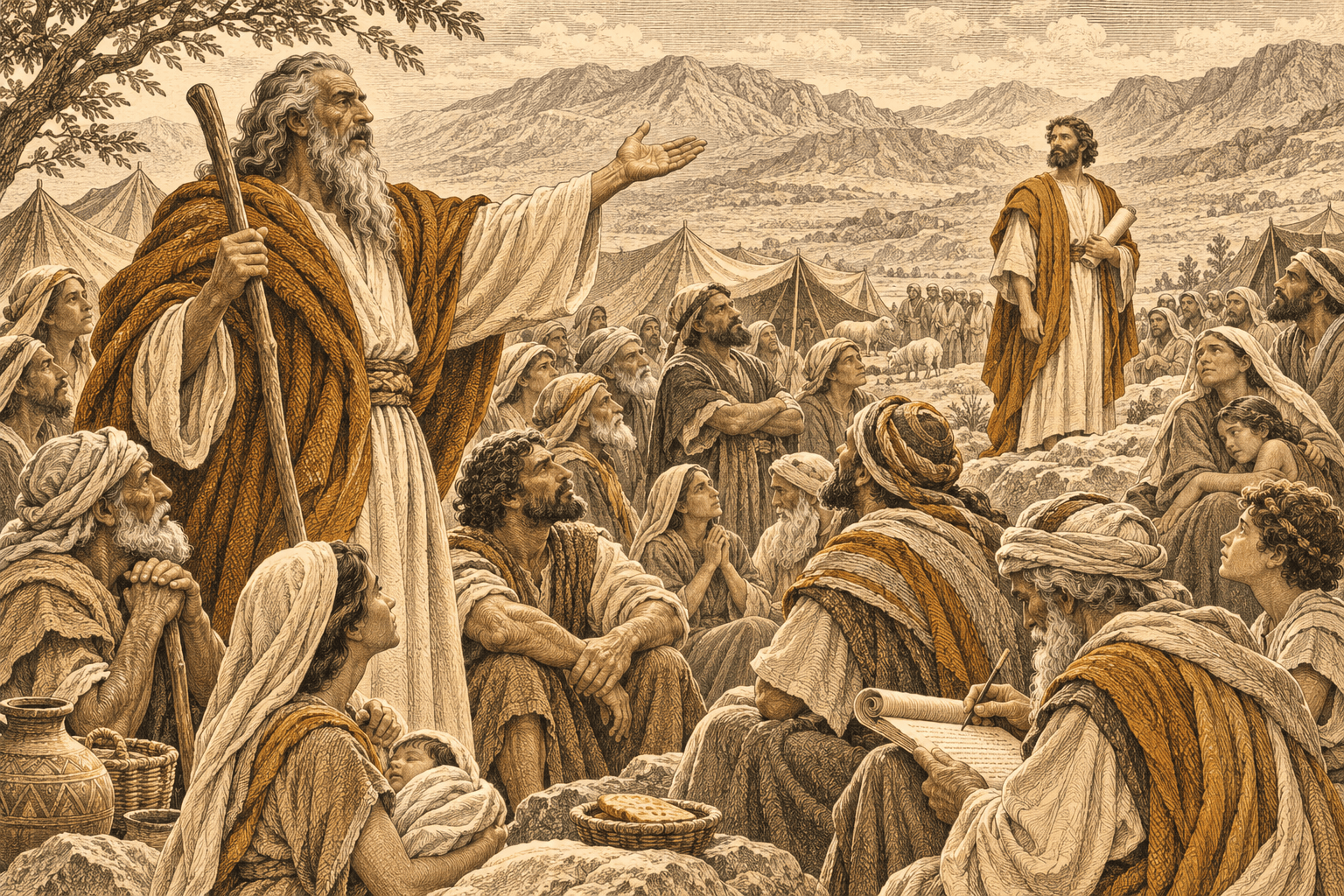
In every age the works of sorcery, divination, and every kind of fortune-telling have had their special attraction, to this day, even in the most advanced and knowledgeable countries. So it was necessary to offer a surpassing work that satisfies man’s needs and reveals the secrets of the future. Therefore the prophet Moses, in his farewell address, announced the coming of the Lord Christ, who alone carries the soul as it were to heaven, to see the gates open and find a place in the bosom of the Father. So the soul settles and rests, and waits in hope for the great day of the Lord, when man in his entirety will enjoy fellowship in eternal glory. It is as though the believers of the Old Testament ought to devote their energies to knowing the future by seeing the coming of the Messiah, the Savior of the world; and the believers of the New Testament by awaiting His coming to carry them into His glory.
The Word of God, who is the Wisdom of God, has come, that we may possess Him; and so we see the future clearly and taste its pledge in a spirit of joy and gladness.
The greatness of the personality of Moses the prophet, who bore with their hearts, who carried a great heart large enough for the whole people, and to whom the Lord gave the working of signs and wonders, was such that the people could not but expect a prophet like him to arise. The prophet Moses directed the people’s eyes to the coming of the Lord Christ from their midst. It was hard for him to grasp the fullness of His Person, and had he grasped it, it would have been hard to present it to the people.
The Lord thy God will raise up unto thee a Prophet from the midst of thee, of thy brethren, like unto me; unto him ye shall hearken; [15]
Here is a promise of the coming of “the Prophet.” The people nearly worshiped Moses the prophet after his death; therefore Michael the archangel hid his body, contending with the devil, who wanted to reveal it so that the people would turn from the worship of God to the worship of Moses. Had Moses said that the One to come was greater than he, they would have thought there were two gods, for they could not grasp the divine Persons; therefore he said: “like unto me.” By His incarnation He became man, and so became like him.
First: He says “from the midst of thee,” that is, from the midst of Israel and not from another nation, as some try to claim. The Lord Christ confirmed this by saying to the Samaritan woman: “for salvation is of the Jews” (John 4:22). And Saint John says: “He came unto his own, and his own received him not” (John 1:11).
The Apostle Peter spoke with the crowd of Jews after Pentecost about the Person of Christ, saying: “And he shall send Jesus Christ, which before was preached unto you: Whom the heaven must receive until the times of restitution of all things, which God hath spoken by the mouth of all his holy prophets since the world began. For Moses truly said unto the fathers, A prophet shall the Lord your God raise up unto you of your brethren, like unto me; him shall ye hear in all things whatsoever he shall say unto you. And it shall come to pass, that every soul, which will not hear that prophet, shall be destroyed from among the people. Yea, and all the prophets from Samuel and those that follow after, as many as have spoken, have likewise foretold of these days” (Acts 3:20–24).
And in the farewell speech of the archdeacon Stephen about the Person of Christ he said: “This is that Moses, which said unto the children of Israel, A prophet shall the Lord your God raise up unto you of your brethren, like unto me; him shall ye hear” (Acts 7:37). And John the Evangelist says: “Then those men, when they had seen the miracle that Jesus did (feeding the multitudes), said, This is of a truth that prophet that should come into the world” (John 6:14).
Second: By saying “a Prophet from the midst of thee,” he distinguished Him from the rest of the prophets, for in every age there were many prophets. Here he means “the Prophet” who alone can say: “I am the light of the world” (John 8:12), the Word through whom the Father has spoken to us (John 1:1; Hebrews 1:2).
Third: He says: “like unto me,” for though He is the Lord of the prophets, He became like Moses.
Moses spoke with God in a surpassing way, for it is said of him: “If there be a prophet among you, I the Lord will make myself known unto him in a vision, and will speak unto him in a dream. My servant Moses is not so, who is faithful in all mine house. With him will I speak mouth to mouth, even apparently, and not in dark speeches; and the similitude of the Lord shall he behold” (Numbers 12:6–8). “And there arose not a prophet since in Israel like unto Moses, whom the Lord knew face to face” (Deuteronomy 34:10). As for Jesus Christ, the Son of God and His Word, He is in the Father and the Father in Him (John 14:10), and He knows the Father’s will perfectly (John 5:20–21).
• Moses gave the Law to Israel and saved them from the bondage of Pharaoh; Christ is the Teacher of mankind and the Savior of the world from the bondage of the devil.
• Moses founded the new order of the people with surpassing signs and wonders; Christ came into the world to establish the New Covenant by His surpassing divine power.
• Moses was faithful, but as a servant (Numbers 12:7); Christ is the Only-Begotten Son. “And Moses verily was faithful in all his house, as a servant… But Christ as a son over his own house” (Hebrews 3:5–6).
• Moses stood as a mediator between God and His people, as we saw in Deuteronomy 5:5; but the Lord Christ is the Mediator who, being one with the Father in essence, carried us as members of His body and reconciled us with His Father: “For there is one God, and one mediator between God and men, the man Christ Jesus; Who gave himself a ransom for all” (1 Timothy 2:5–6). But how different the two mediations are: the first a mediator for receiving the divine covenant through the ministry of shadows and the likeness of heavenly things; the second has brought us into heaven itself. As the Apostle Paul says: “Who serve unto the example and shadow of heavenly things, as Moses was admonished of God when he was about to make the tabernacle: for, See, saith he, that thou make all things according to the pattern shewed to thee in the mount. But now hath he obtained a more excellent ministry, by how much also he is the mediator of a better covenant, which was established upon better promises” (Hebrews 8:5–6).
• Moses the prophet was distinguished from the other prophets in that he spoke with God mouth to mouth (Numbers 12:6–8); but Christ, who is in the bosom of the Father, came down from heaven to declare the Father to us (John 1:18; 3:13).
• Moses the prophet worked surpassing signs and wonders in the name of the Lord; but Christ worked many signs by His own command. Saint John bears witness to the impossibility of counting the works of Christ, closing his Gospel with the words: “And there are also many other things which Jesus did, the which, if they should be written every one, I suppose that even the world itself could not contain the books that should be written” (John 21:25).
• Moses the prophet played the role of king and leader, and Christ came as King of kings and Lord of lords (1 Timothy 6:15; Revelation 19:16).
• In all human history no one gave the divine Law but Moses the prophet and the Lord Christ. Moses received the Law when the people were troubled and afraid because of the fire and the smoking mountain; but the Lord Christ came giving grace for grace, presenting truth and grace together (John 1:14, 16–17).
“And will put my words in his mouth; and he shall speak unto them all that I shall command him” (18). Though the Lord Christ is the very Word of God, having become incarnate He submitted in obedience to fulfill His Father’s will concerning us, which is one with His own will. So we do not wonder that when they said, “How knoweth this man letters, having never learned? Jesus answered them, and said, My doctrine is not mine, but his that sent me. If any man will do his will, he shall know of the doctrine, whether it be of God, or whether I speak of myself. He that speaketh of himself seeketh his own glory: but he that seeketh his glory that sent him, the same is true, and no unrighteousness is in him” (John 7:15–18). So this great promise was fulfilled and “the Prophet” came, Jesus Christ, the great Savior of the world!
The words spoken by the greatest of the prophets cannot apply except to the Person of the Lord Christ, for it is said that He is like him, and it is said of Moses: “And there arose not a prophet since in Israel like unto Moses, whom the Lord knew face to face, In all the signs and the wonders, which the Lord sent him to do in the land of Egypt to Pharaoh, and to all his servants, and to all his land, And in all that mighty hand, and in all the great terror which Moses shewed in the sight of all Israel” (Deuteronomy 34:10–12). If no prophet arose like Moses and none will arise, how will God raise up a prophet like him, except by the coming of the One who is his Lord and became like him?!
He gives a warning against false prophets, for after the coming of Christ false prophets will also come, and he asks us not to fear the lying prophet (20–22).
Saint John Chrysostom says:
“The prophet Moses speaks of Christ, saying: ‘The Lord thy God will raise up unto thee a Prophet from the midst of thee, of thy brethren, like unto me; unto him ye shall hearken’ (15). Therefore whoever does not obey Him disobeys the Law. [220]”
“They expected a particular prophet to come, for Moses says this; this is the Christ. Therefore they did not say (to John), ‘Art thou a prophet?’ meaning one of the ordinary prophets, but the expression came: ‘Art thou that prophet?’ (John 1:21), with the definite article, meaning: ‘Are you the Prophet of whom Moses told us?’ So he did not deny that he was a prophet, but refused to be called ‘that Prophet!’ [221]”
Saint Augustine says:
“He is like him, that is, according to the flesh, not according to the height of majesty. Therefore the Lord Jesus was called ‘the Prophet.’ [222]”
According to all that thou desiredst of the Lord thy God in Horeb in the day of the assembly, saying, Let me not hear again the voice of the Lord my God, neither let me see this great fire any more, that I die not. And the Lord said unto me, They have well spoken that which they have spoken. I will raise them up a Prophet from among their brethren, like unto thee, and will put my words in his mouth; and he shall speak unto them all that I shall command him. And it shall come to pass, that whosoever will not hearken unto my words which he shall speak in my name, I will require it of him. But the prophet, which shall presume to speak a word in my name, which I have not commanded him to speak, or that shall speak in the name of other gods, even that prophet shall die. And if thou say in thine heart, How shall we know the word which the Lord hath not spoken? When a prophet speaketh in the name of the Lord, if the thing follow not, nor come to pass, that is the thing which the Lord hath not spoken, but the prophet hath spoken it presumptuously: thou shalt not be afraid of him. [16–22]
God wants to meet every person personally and speak with him face to face, but man is unable to have this meeting, for no one can look upon the splendor of God’s glory and live. He cried out: “Let me not hear again the voice of the Lord my God, neither let me see this great fire any more, that I die not.” Therefore the divine revelation to people had to be accomplished through a man. So God spoke with Moses the prophet on Mount Sinai in the midst of the fire on behalf of the whole people.
So from generation to generation God sent one or more prophets to whom He spoke on behalf of His people, until the Word of God Himself became incarnate, appearing as a Prophet after the pattern of Moses, though He is the Lord of the prophets. Then man is able to meet God and speak with Him.
The world needed divine revelation not only through Christ but in Him. He spoke with the crowds as one of them, and revealed His glory only to a few, “Peter, James, and John,” on Mount Tabor in His Transfiguration, and brought Moses and Elijah to bear witness to Him as representatives of the Law and the Prophets.
4. A Meditation on Deuteronomy 18
The Servants of God and the Servants of Satan
The servants of God and the servants of Satan
In Your hands are the keys of my heart.
Open, enter, and dwell in my depths.
Let Your true servants enter with You,
declaring Your word and hidden in Your commandment.
Let them find their rest in Your kingdom established in me!
Shut the doors of my heart with the keys of truth,
so that no false prophet enters and no abomination creeps in!
I will ask no other but You.
Satan and his angels have no place within me!
Long have the faithful waited for Your coming.
Adam waited for You, and Eve with him,
and the fathers and prophets watched for Your coming!
At last You came into our world.
You turned our earth into heaven.
You offered Your blood as an atonement for the whole world!
Yes, enter the inner world of my heart,
and declare Your dwelling in my depths!
Long have I waited for You, O Savior of my soul!
Notes and References
[207] Josephus, Antiquities, 4:4:4.
[208] Philo, De Praemiis Sacerdotum.
[209] Cf. St. Jerome, Letter 6:1–2 (PL 22:608–9); Commentary on Malachi 2:3–4 (PL 25:1554–5).
[210] Cf. St. Jerome, on Mark 11:1–10, Homily 81 (VII).
[211] Adam Clarke, Commentary.
[212] St. John Chrysostom, Homilies on John, 14:2.
[213] St. Jerome, Against the Pelagians, Book 1, 14.
[214] St. Gregory of Nyssa, The Life of Moses, 6.
[215] Ibid., 6.
[216] Ibid., 7.
[217] Ibid., 8.
[218] Ibid., 9.
[219] Ibid., 10.
[220] St. John Chrysostom, Commentary on Galatians, 2.
[221] St. John Chrysostom, Homilies on John, 16.
[222] St. Augustine, On the Gospel of St. John, Tractate 15:23.