
In the previous chapter, Moses spoke with firmness and candor against idolatry and against the idolaters who persisted in worshiping idols. Now he turns his words to those who entice their brethren toward idolatry. God shows no partiality; therefore the Law was extremely strict against the Israelites who entice their brethren.
Here the prophet Moses deals with the negative side of the first commandment, which concerns the destruction of every trace of idolatry. If this seems harsh, let us remember that the land had to be purified of idol worship through the destruction of the Canaanite idolaters, and every Israelite had to meet the same fate if he fell into the same error.
The Canaanite cults relied on divination, sorcery, and the like, which God utterly forbade. Therefore, after speaking of destroying every trace of idol worship and preparing the way for the worship of the living God alone, he deals with those who falsely claim to be prophets or who entice others toward idol worship, whether they claim prophecy and work miracles, are among one’s closest relatives, or represent an entire city.
Having focused on the holy sacrifice in the temple of the one Lord, he now warns us of the sources of deviation, for we ought to have a spirit of discernment so that we are not deceived by them. These sources are:
1. False prophecy (1–6): In every age there are false prophets who deceive the simple with signs and wonders, as the magicians did in the days of Moses (see Matthew 24:23–25; 2 Thessalonians 2:9; Revelation 13:13–14).
2. Ties of kinship and blood (7–11): This is what happened to Solomon, who went after strange gods because of his foreign wives. We must cut off without hesitation every relationship that destroys our eternity.
3. Collective deviation (12–18): Many go astray under the pressure of the crowd, so as not to appear odd. Saint Athanasius the Apostolic believed that he was doing the Lord’s work, so he said boldly, “And I am against the world.” Let us love the people of the world and be gentle with everyone, but let us not be swept along by this current; rather, let us hold to the conduct that our mission requires of us!
Some hold that in this chapter the prophet Moses presents three means of enticement that work in every age to destroy faith:
First: atheistic philosophies. Atheist philosophers are like false prophets who present their philosophies in a sweet and attractive style, which resembles the signs and wonders that deceive the simple.
Second: a corrupt social and family environment, which draws a person away from living fellowship with God.
Third: public opinion. A person bows to the prevailing opinion so as not to be counted backward by society, even if that opinion destroys his eternity.
1. The False Prophet
KJV · Verses 1–5
1 If there arise among you a prophet, or a dreamer of dreams, and giveth thee a sign or a wonder, 2 And the sign or the wonder come to pass, whereof he spake unto thee, saying, Let us go after other gods, which thou hast not known, and let us serve them; 3 Thou shalt not hearken unto the words of that prophet, or that dreamer of dreams: for the Lord your God proveth you, to know whether ye love the Lord your God with all your heart and with all your soul. 4 Ye shall walk after the Lord your God, and fear him, and keep his commandments, and obey his voice, and ye shall serve him, and cleave unto him. 5 And that prophet, or that dreamer of dreams, shall be put to death; because he hath spoken to turn you away from the Lord your God, which brought you out of the land of Egypt, and redeemed you out of the house of bondage, to thrust thee out of the way which the Lord thy God commanded thee to walk in. So shalt thou put the evil away from the midst of thee.
The false prophet is a familiar figure in the Old Testament who reappears in the New Testament as a servant of the devil, enticing people to evil (Matthew 24:24; Revelation 19:20). The false prophet claims to receive divine revelations in one way or another, such as through dreams, and tries to support his claim by performing deceptive signs or wonders.
The people had received the Law, so it was not difficult for them to detect false prophets. It is the word of God that distinguishes the true prophet from the false one. Performing signs and wonders is no measure of whether they are true or false, for such things can deceive.
We should not be surprised that people may rise up from among the community, claiming to be prophets and performing signs and wonders in order to turn believers away from the truth. For this reason the Apostle Paul warns us: “But though we, or an angel from heaven, preach any other gospel unto you than that which we have preached unto you, let him be accursed” (Galatians 1:8). The Antichrist, too, will perform wonders and signs in the last days, to deceive, if it were possible, even the believers (Matthew 24:24). And Satan himself sometimes appears as an angel of light in order to lead the believers astray (2 Corinthians 11:14).
The Lord Christ warns us: “Then if any man shall say unto you, Lo, here is Christ, or there; believe it not. For there shall arise false Christs, and false prophets, and shall shew great signs and wonders; insomuch that, if it were possible, they shall deceive the very elect. Behold, I have told you before” (Matthew 24:23–25).
Saint John Chrysostom says:
“Here He speaks of the Antichrist and of those who call themselves false christs and false prophets. There were many of them even in the days of the apostles, but before the second coming of Christ they will appear with even greater fervor.”
The Antichrist and his followers use every means of deception, offering signs and wonders that are the work of the enemy of good. Therefore it is the virtuous life in the Lord, and not signs, that distinguishes those who belong to Christ from those who belong to the Antichrist. As Saint Augustine says:
“The Lord warns us that even the wicked can perform certain miracles that even the saints cannot perform; yet they are not, because of these, counted greater than the saints before God.”
Why does God allow false prophets to exist? So that the believers may be proven, and crowned for loving Him with all their heart and with all their soul.
He warns us against false prophets and those who have vain dreams, so that we do not run after them or do what they ask; indeed, so that we do not even lend them our ears: “Thou shalt not hearken unto the words of that prophet, or that dreamer of dreams.” In this way we escape the fall that befell our mother Eve, because she lent her ears to the serpent. In some temptations it is fitting for us to say with the Lord Christ, “Get thee behind me, Satan.”
Here God appears as a wonderful Physician who knows that the false prophet is like a cancer cell: if it is left in the body, it destroys it completely. Therefore he must be removed from the midst of His people. King Ahab and Jezebel were left among the people, and they drew the people into idol worship, so that many fell under divine judgment. Thousands were killed, and many became slaves in humiliation, treated like animals by the Assyrians. Would it not have been better to stone those prophets than to suffer all this destruction?!
Father Caesarius of Arles says:
“Someone may say, ‘What are we to do, since sorcerers and seers often reveal true signs to us concerning the future?’ Holy Scripture warns us about this and counsels us: even if they tell the truth, do not believe them, ‘for the Lord your God proveth you, to know whether ye fear Him or not’ (Deuteronomy 13:3). [129]”
Father Theophylact says:
“Many claim the name of Christ for themselves in order to deceive, if possible, even the believers.”
Saint Augustine says:
“Then Satan will be loosed, and he will work with all his power through the Antichrist in a lying yet astonishing way… He deceives the mortal senses with illusions, so that he appears to do works that are in reality an illusion; or perhaps he performs real wonders, but they lead people away from the truth, because they take them to be divine power.”
Origen says:
“Christ is the Truth, and the Antichrist counterfeits the truth. Christ is Wisdom, and the Antichrist quickly and cunningly puts on the appearance of wisdom. All excellent things belong to Christ, and all the (deceptive) appearances of virtue belong to the Antichrist. For every kind of goodness that Christ expresses in Himself for the edification of the believers, Satan finds a way to imitate in a foolish and outward manner in order to deceive the believers. [130]”
Origen holds that the Antichrist (and the false prophets) corrupts the meaning of the Holy Scriptures, so that the abomination of desolation stands in the temple of the Lord (Matthew 24:15). He says:
“By the holy place is meant every word recorded in the divine Scripture, spoken by the prophets from Moses onward and uttered by the evangelists and apostles. In this holy place of the Holy Scriptures the Antichrist, the false word, often stands; this is the abomination of desolation. [131]”
It is said that God “tempteth no man” (James 1:13). This does not mean that God does not test anyone in any way at all, but that He does not test in certain ways; otherwise what is written would be void: “The Lord your God proveth you” (Deuteronomy 13:3). God does not test us with the temptation that leads us into sin, but He allows us to be tried with the trial by which our faith is proven.
What does He mean by saying, “to know”? He does not need to test us in order to know what is within us; rather, He means that we ourselves discover what is within us and come to know it. As Saint Augustine says:
“In any case, the saying… cannot be understood in any sense other than this: that by it you are made known, and it becomes a testimony to you of your progress in His love. [132]”
“This means that He makes us know. [133]”
“It means that He makes us ‘know.’ Likewise, in the saying, ‘Arise, O Lord’ (Psalm 3:7), it means ‘make us arise.’ So also, when it is said that the Son does not know that day, it is not because He is ignorant of it, but because He does not make those who do not yet know it to know it, and does not reveal it to them. [134]”
Thus, on the negative side, we refuse even to listen to this strange voice. On the positive side, he says:
Ye shall walk after the Lord your God, and fear him, and keep his commandments, and obey his voice, and ye shall serve him, and cleave unto him. [4]
So we consecrate our whole being to fellowship with God: walking with Him, living in His fear, keeping His commandments, and sanctifying our ears to listen to Him.
The gravity of the crime is evident, for He commands that the offender himself be put to death, so that he may not destroy the faith of others:
And that prophet, or that dreamer of dreams, shall be put to death; because he hath spoken to turn you away from the Lord your God, which brought you out of the land of Egypt, and redeemed you out of the house of bondage, to thrust thee out of the way which the Lord thy God commanded thee to walk in. So shalt thou put the evil away from the midst of thee. [5]
It was difficult for the people to distinguish between the disease and the one who was sick. So when a disease was grave and its contagion spread quickly, the sick person was put to death so that the people might be saved from the epidemic. The false prophet was regarded as a public enemy of the people and a traitor to the nation and to God, the King of kings; therefore he was condemned to death by stoning.
God warned His people in the Old Testament against the rise of false prophets. In the New Testament He linked the rise of false prophets and false christs with the end of days (Matthew 24:11; 1 Timothy 4:1; 2 Peter 2:1), and said that their signs and wonders would mislead (Matthew 24:24; 2 Thessalonians 2:9–10). False teachers are counted among the false prophets (Matthew 7:15; 2 Peter 2:1). Because of humanity’s longing for knowledge, people fall unwisely into this deception (Ephesians 4:14), desiring to hear what is new (2 Timothy 4:3).
Prophets are tested by the Law and the word of God (Isaiah 8:20). Saint John the Beloved commands us: “try the spirits” (1 John 4:1). If their teachings contradict the word of God, they must be rejected: “If there come any unto you, and bring not this doctrine, receive him not into your house, neither bid him God speed: For he that biddeth him God speed is partaker of his evil deeds” (2 John 1:10–11).
2. The Enticing Relative
KJV · Verses 6–11
6 If thy brother, the son of thy mother, or thy son, or thy daughter, or the wife of thy bosom, or thy friend, which is as thine own soul, entice thee secretly, saying, Let us go and serve other gods, which thou hast not known, thou, nor thy fathers; 7 Namely, of the gods of the people which are round about you, nigh unto thee, or far off from thee, from the one end of the earth even unto the other end of the earth; 8 Thou shalt not consent unto him, nor hearken unto him; neither shall thine eye pity him, neither shalt thou spare, neither shalt thou conceal him: 9 But thou shalt surely kill him; thine hand shall be first upon him to put him to death, and afterwards the hand of all the people. 10 And thou shalt stone him with stones, that he die; because he hath sought to thrust thee away from the Lord thy God, which brought thee out of the land of Egypt, from the house of bondage. 11 And all Israel shall hear, and fear, and shall do no more any such wickedness as this is among you.
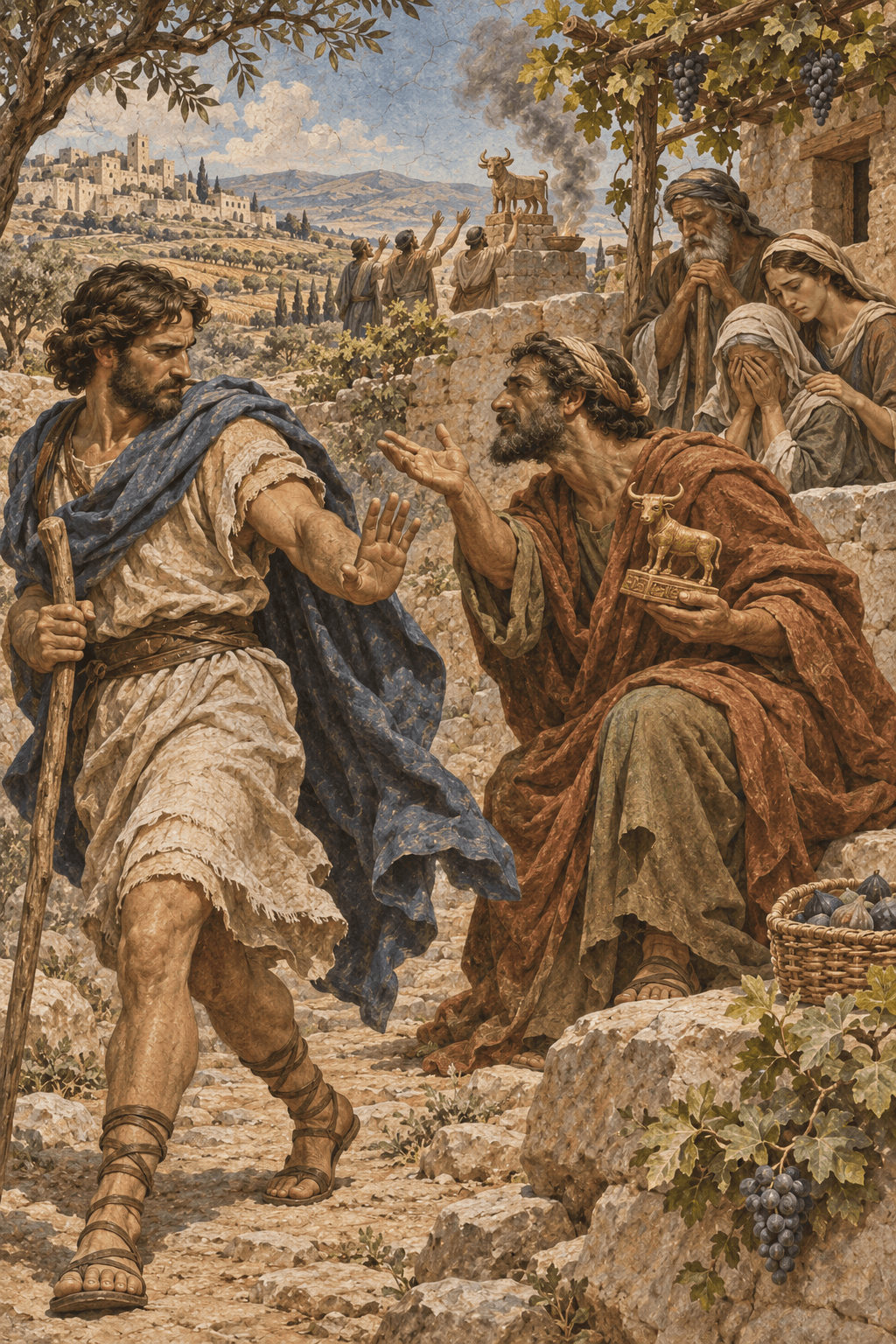
Because the plague of idolatry was so dangerous, the Law demanded the death of anyone who enticed others to idol worship, however close the kinship of the one who tried to entice in secret, and however deep his friendship. The believer must decide where he stands: with God or with his relative? God counts every love we offer our neighbor as offered to Him; but if this love makes us lose our fellowship with God, we must choose one of the two. It is in the same spirit that the Lord says: “He that loveth father or mother more than me is not worthy of me: and he that loveth son or daughter more than me is not worthy of me” (Matthew 10:37). “If any man come to me, and hate not his father, and mother, and wife, and children, and brethren, and sisters, yea, and his own life also, he cannot be my disciple” (Luke 14:26).
If thy brother, the son of thy mother, or thy son, or thy daughter, or the wife of thy bosom, or thy friend, which is as thine own soul, entice thee secretly, saying, Let us go and serve other gods, which thou hast not known, thou, nor thy fathers; Namely, of the gods of the people which are round about you, nigh unto thee, or far off from thee, from the one end of the earth even unto the other end of the earth; Thou shalt not consent unto him, nor hearken unto him; neither shall thine eye pity him, neither shalt thou spare, neither shalt thou conceal him: But thou shalt surely kill him; thine hand shall be first upon him to put him to death, and afterwards the hand of all the people. And thou shalt stone him with stones, that he die. [6–10]
“If thy brother… entice thee secretly”: in Hebrew, “brother” means a relative. In our own days we see how family ties draw many into apostasy, so that temptation attacks us even through our own homes.
“Thy brother, the son of thy mother”: not only someone who is like a brother, but even a brother according to the flesh, born of the same mother.
“The wife of thy bosom”: that is, a wife whom you love and embrace, and whom you are committed to protect as within your own arms.
“Thy friend, which is as thine own soul”: that is, a friend as dear to a person as his own self. In Hebrew, the word “friend” means one in whom you find delight and with whom you enter into true friendship.
It is not strange that he speaks of a brother or sister, a son or daughter, or a friend who secretly tries to draw a person into sin. Satan used Eve to entice her husband Adam, and he also thought he could deceive Jesus Christ through His disciple Peter.
Enticement to evil turns a relative into an enemy, for he becomes a murderer of souls. If those we love and cherish abuse this love and betray us by destroying our souls, they take the place of enemies who draw us into deadly sin.
The one who brings the accusation begins the stoning: first, so that he bears responsibility before God that his accusation is true, namely that his relative or friend secretly enticed him to idol worship; and second, to declare that God comes before every relative or friend and is above all.
Because he hath sought to thrust thee away from the Lord thy God, which brought thee out of the land of Egypt, from the house of bondage. And all Israel shall hear, and fear, and shall do no more any such wickedness as this is among you. [10–11]
Although the enticement takes place in secret (6), the punishment is carried out in public (10), as a lesson to anyone who thinks he can deceive others in secret. The punishment had to be public so that the rest would fear and not sin. This also shows the need for strictness in the new order in which they would dwell in the land (Acts 5:11).
3. The Enticing City
KJV · Verses 12–18
12 If thou shalt hear say in one of thy cities, which the Lord thy God hath given thee to dwell there, saying, 13 Certain men, the children of Belial, are gone out from among you, and have withdrawn the inhabitants of their city, saying, Let us go and serve other gods, which ye have not known; 14 Then shalt thou enquire, and make search, and ask diligently; and, behold, if it be truth, and the thing certain, that such abomination is wrought among you; 15 Thou shalt surely smite the inhabitants of that city with the edge of the sword, destroying it utterly, and all that is therein, and the cattle thereof, with the edge of the sword. 16 And thou shalt gather all the spoil of it into the midst of the street thereof, and shalt burn with fire the city, and all the spoil thereof every whit, for the Lord thy God: and it shall be an heap for ever; it shall not be built again. 17 And there shall cleave nought of the cursed thing to thine hand: that the Lord may turn from the fierceness of his anger, and shew thee mercy, and have compassion upon thee, and multiply thee, as he hath sworn unto thy fathers; 18 When thou shalt hearken to the voice of the Lord thy God, to keep all his commandments which I command thee this day, to do that which is right in the eyes of the Lord thy God.
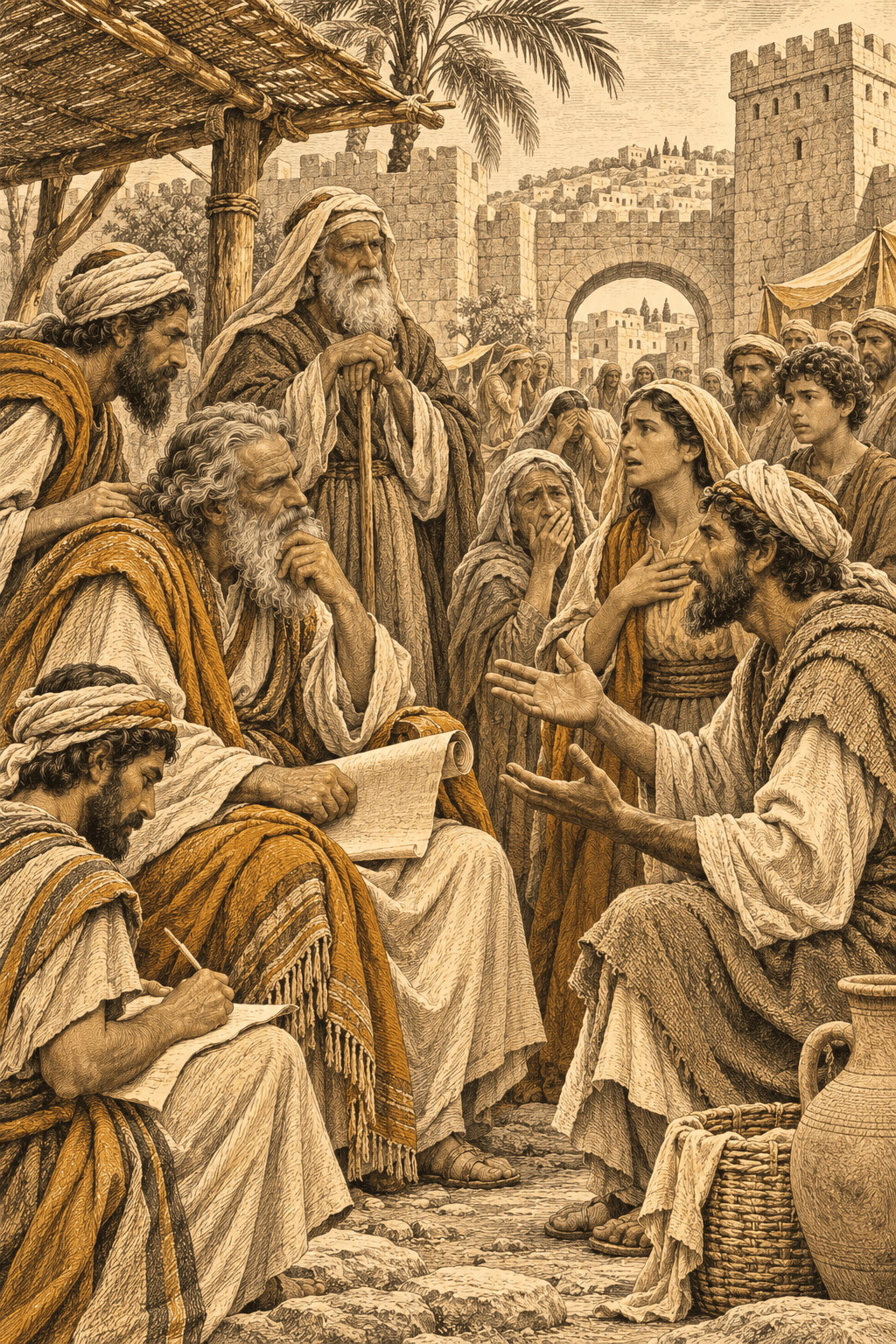
What if an entire city rose up, as in a revolt against the covenant with God, and served strange gods?
If thou shalt hear say in one of thy cities, which the Lord thy God hath given thee to dwell there, saying, Certain men, the children of Belial, are gone out from among you, and have withdrawn the inhabitants of their city, saying, Let us go and serve other gods, which ye have not known; Then shalt thou enquire, and make search, and ask diligently; and, behold, if it be truth, and the thing certain, that such abomination is wrought among you; Thou shalt surely smite the inhabitants of that city with the edge of the sword, destroying it utterly, and all that is therein, and the cattle thereof, with the edge of the sword. And thou shalt gather all the spoil of it into the midst of the street thereof, and shalt burn with fire the city, and all the spoil thereof every whit, for the Lord thy God: and it shall be an heap for ever; it shall not be built again. And there shall cleave nought of the cursed thing to thine hand. [12–17]
We notice the following:
First: He says “one of thy cities,” that is, one of the cities of Israel, for it is not for us to judge those who are outside. As the Apostle Paul says: “For what have I to do to judge them also that are without? do not ye judge them that are within? But them that are without God judgeth” (1 Corinthians 5:12–13).
This is a city that worshiped the living God and then turned wholly to idol worship, becoming a stumbling block to the rest of the cities of Judah. As the Apostle Peter says: “For it had been better for them not to have known the way of righteousness, than, after they have known it, to turn from the holy commandment delivered unto them” (2 Peter 2:21).
Second: If some men lead the people astray, he calls them “the children of Belial.” The phrase means “worthless men,” and it is rendered “sons of Belial” in the story of Gibeah (Judges 19:22; 20:13). Such men have no fear of the Lord and do not even fear people; they resist their own consciences and break the laws.
The Apostle says: “And what concord hath Christ with Belial?” (2 Corinthians 6:15), as though he puts Belial in the place of Satan; so the sons of Belial are “children of the devil.” Thus these men became a corrupt leaven that turned the whole lump to corruption, so that it bore the corrupt nature of the devil.
Holy Scripture warns us against the wicked: “but one sinner destroyeth much good” (Ecclesiastes 9:18). “Be not deceived: evil communications corrupt good manners” (1 Corinthians 15:33).
Third: Since the matter involved the destruction of a city, it required careful examination, diligent inquiry, and certainty about the facts. When God was about to destroy the city of Sodom, He said: “I will go down now, and see” (Genesis 18:21).
Some Jewish writers hold that if a person was accused of enticing others to idol worship, he was tried before a lesser court; but if a city was accused of this, it was brought before the Sanhedrin. If the council was certain that the charge was true, it sent two learned men to counsel and guide the city. If the city accepted the counsel and repented, its repentance was accepted and the city remained in peace. But if it refused and persisted in idol worship, war was waged against it to destroy it, so that its idolatrous ideas would not seep into the other cities of Israel.

Fourth: If a small faithful minority was found, it would leave the city, as one flees a place of danger. After that, the men, women, and children were struck with the sword (15); then all the spoil was brought into a public square and burned with fire, and the city was turned to ashes and never rebuilt.
Fifth: No one was allowed to take anything from the goods of this city, because they were accursed (17). Otherwise his lot would be like that of Achan the son of Carmi, who committed a trespass and took of the accursed thing, so that the anger of the Lord was kindled against the children of Israel because of him (Joshua 7:1).
Sixth: Every trace of sin was to be removed, “that the Lord may turn from the fierceness of his anger” (17). God is jealous, and He counts the worship of strange gods a great crime. In the New Testament, God counts mixing the table of the Lord with the table of devils a grave sin, so to speak:
“But I say, that the things which the Gentiles sacrifice, they sacrifice to devils, and not to God: and I would not that ye should have fellowship with devils. Ye cannot drink the cup of the Lord, and the cup of devils: ye cannot be partakers of the Lord’s table, and of the table of devils. Do we provoke the Lord to jealousy? are we stronger than he?” (1 Corinthians 10:20–22).
Seventh: God rewards those who turn back from this sin, counting them as doers of what is right in His eyes:
That the Lord may turn from the fierceness of his anger, and shew thee mercy, and have compassion upon thee, and multiply thee, as he hath sworn unto thy fathers; When thou shalt hearken to the voice of the Lord thy God, to keep all his commandments which I command thee this day, to do that which is right in the eyes of the Lord thy God. [17–18]
4. A Meditation on Deuteronomy 13
Let Every Hand That Entices Me Be Broken!
Your hand carries me, as into Your eternal bosom.
Let every hand that draws me away from You be broken.
If the hand of a false prophet or a deceiver stretches out to work signs,
Your hand alone is able to keep me,
so that no one may snatch me from You.
Let the hand of my brother, my sister, or any relative of mine be cut off,
if it dares to exploit our kinship
and deprive me of the joy of kinship with You!
For You are my Father, my brother, my sister, and my all!
If the whole city turns aside after vanity,
and if the whole world is deceived and follows corruption,
my soul will remain faithful to You!
You are above all!
Let me gain You, O Holy One,
even if I lose the whole world!
Notes and References
[129] Father Caesarius of Arles, Sermon 54:3.
[130] Origen, Commentary on Matthew, 32.
[131] Origen, Commentary on Matthew, 42.
[132] Saint Augustine, On Psalm 5.
[133] Saint Augustine, On Psalm 6.
[134] Saint Augustine, On Psalm 6:1.