
Sadly, as much as the three tribes “Judah, Ephraim and Manasseh” raced to enjoy the inheritance and receive the largest possible portion, the rest of the tribes were slack.
1. The slackness of the seven tribes (1–10).
2. The portion of Benjamin (11–28).
1. The Slackness of the Seven Tribes
KJV · Verses 1–10
1 And the whole congregation of the children of Israel assembled together at Shiloh, and set up the tabernacle of the congregation there. And the land was subdued before them. 2 And there remained among the children of Israel seven tribes, which had not yet received their inheritance. 3 And Joshua said unto the children of Israel, How long are ye slack to go to possess the land, which the Lord God of your fathers hath given you? 4 Give out from among you three men for each tribe: and I will send them, and they shall rise, and go through the land, and describe it according to the inheritance of them; and they shall come again to me. 5 And they shall divide it into seven parts: Judah shall abide in their coast on the south, and the house of Joseph shall abide in their coasts on the north. 6 Ye shall therefore describe the land into seven parts, and bring the description hither to me, that I may cast lots for you here before the Lord our God. 7 But the Levites have no part among you; for the priesthood of the Lord is their inheritance: and Gad, and Reuben, and half the tribe of Manasseh, have received their inheritance beyond Jordan on the east, which Moses the servant of the Lord gave them. 8 And the men arose, and went away: and Joshua charged them that went to describe the land, saying, Go and walk through the land, and describe it, and come again to me, that I may here cast lots for you before the Lord in Shiloh. 9 And the men went and passed through the land, and described it by cities into seven parts in a book, and came again to Joshua to the host at Shiloh. 10 And Joshua cast lots for them in Shiloh before the Lord: and there Joshua divided the land unto the children of Israel according to their divisions.
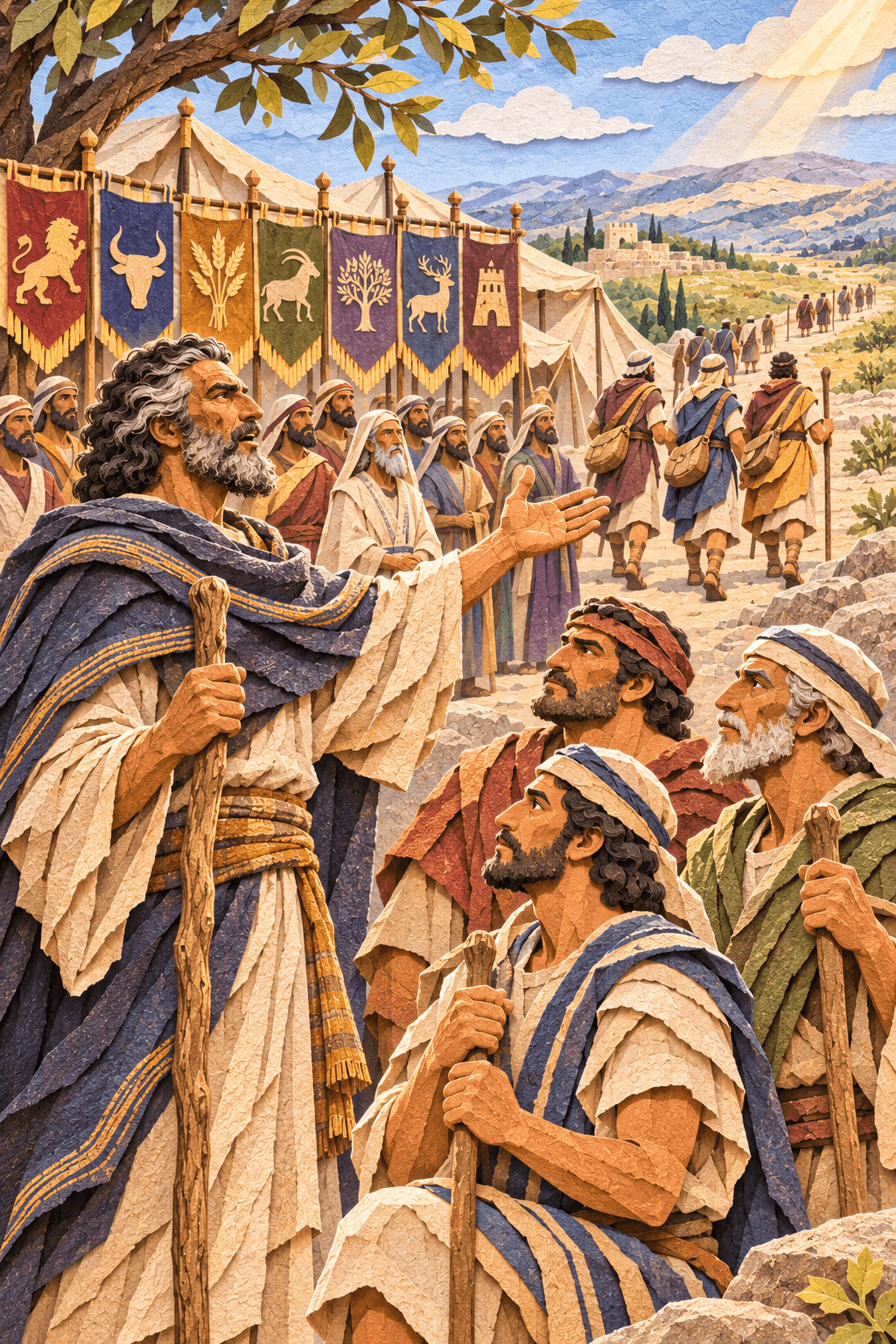
Since Shiloh had come to represent the divine presence among the people — there the tabernacle of the congregation was set up, and there the sacrifices and offerings of the Lord were presented — all gathered with Joshua in the presence of God, to see that the land was subdued before them and the inheritance prepared. It is a living picture of our meeting together as the Church of God and His people: we gather with the Head, the true Joshua, and in Him, as members of His body (Ephesians 5:23), to realize our new possibilities.
The land has been subdued; our body has become holy to God, and our whole life has become His; He inherits it as His possession, and we inherit His glories. In the true Shiloh — the Church of the New Testament — no tabernacle of the congregation is pitched; rather, the Holy Spirit of God dwells in us and makes us His holy temple. We do not inherit a land taken from human kings; rather, everything becomes subject to us, and we inherit heavenly things and enjoy the eternal kingdom.
It was hard on the heart of Joshua the son of Nun to see some of his people who had crossed the Jordan — before whom the fortifications of Jericho had collapsed, Ai had been defeated with its king and its men, and the resisting cities had fallen — with everything prepared and nothing left but for the tribes to receive the inheritance! Did not the Lord prepare the supper and send to those who were bidden, asking of them nothing but to come and enjoy it, while they made light of it and excused themselves (Matthew 22:3)?
So the heart of our true Bridegroom Joshua grieves, who has prepared everything for us and left us in need of nothing … He fought for us and conquered; He died and rose to raise us with Him; He opened the gates of Paradise and gave us His Holy Spirit as support and helper, and we have no more excuse … The kingdom has come near to us, yet with all this we are slack to enter His inheritance which He has given us.
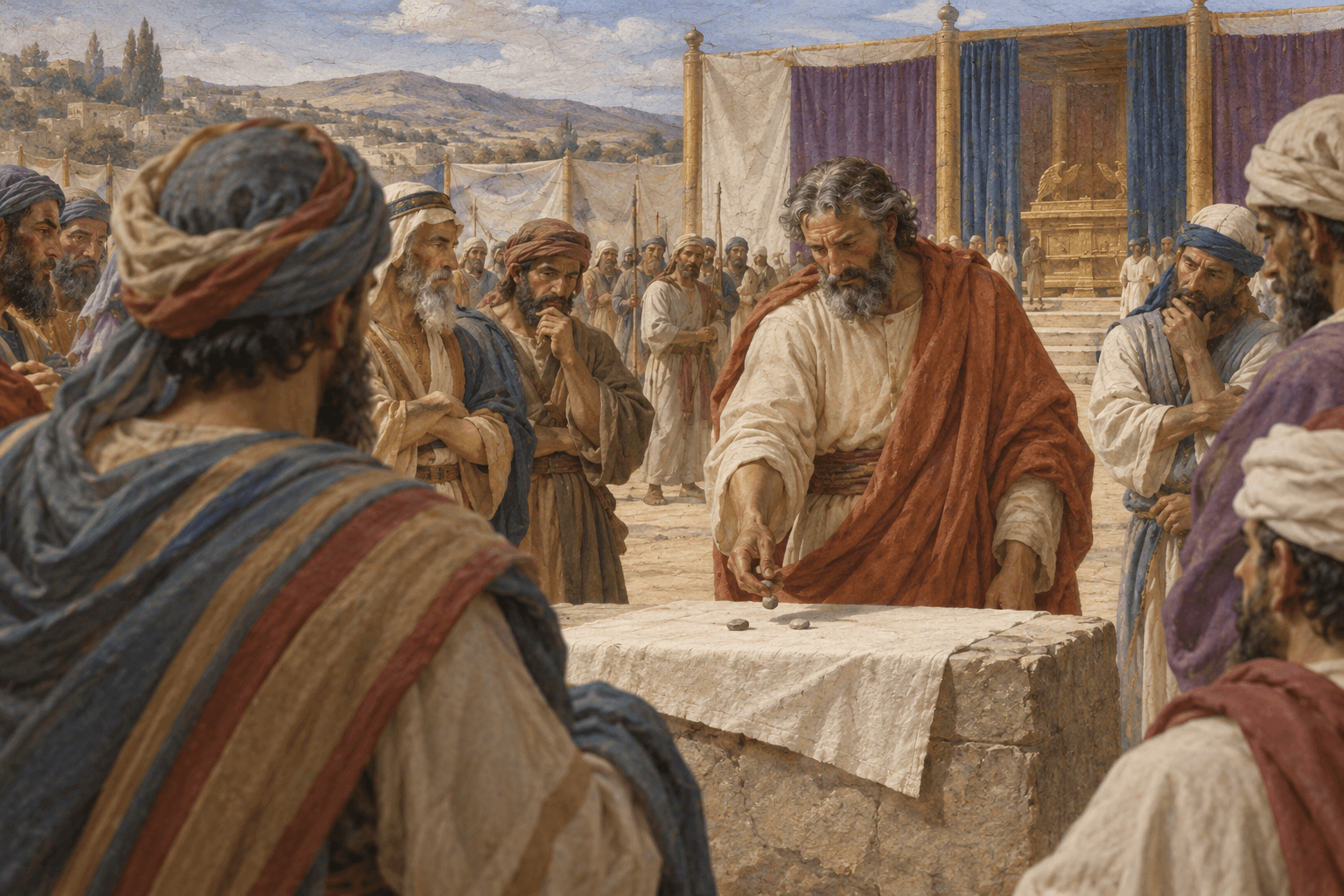
Joshua asked that three men be appointed from each tribe to represent it, who would arise, go through the land, describe it according to their inheritance, and come back to him [4]. Joshua specified their work: they rise, go through the land, describe it, and come to him that he may divide it. Who are these men? And what are these works? Without doubt these men appointed from the tribes represent three things in a person’s life: thought, word and deed.
So the whole Church stands — as if in the seven tribes — and each member offers his thoughts, his words and his conduct into the hands of our living Jesus, who is able to sanctify us; and these three men become a sign of our sanctification in Christ Jesus by His Holy Spirit. If we are to give account for every hidden thought, every secret lust or hidden look (Matthew 5:28), every idle word (Matthew 12:36) and every evil act, so that these become the cause of a person’s losing his eternal inheritance, then on the contrary, when these energies are sanctified, they become holy instruments through which we are crowned and inherit forever!
As for their works, first they “arise” … When we come to our Joshua with our inner thought, our tongue and the other members of our body, He raises them up in Himself as holy instruments that practice His risen life as their own life. Let us send everything we have to the true Joshua, who is able to grant us resurrection as a continual daily work, so that we live by His life, bear His attributes in us, and have the right to share in His glories! As I have repeated more than once, the Book of Joshua, as the book of the inheritance, is the book of the resurrection: there is no inheritance without the inner life risen in Him and through Him!
After the resurrection he says, “they go through the land,” that is, they set out into the land of the inheritance. Having enjoyed in baptism the mystery of burial and resurrection, and enjoying resurrection with every new day through continual daily renewal, we are called to walk in the holy land, that is, to taste the pledge of heaven while still on earth. Then “they describe it,” that is, they perceive its dimensions as far as they can and come to know its incomprehensible mysteries.
And finally they return to Joshua … Every time we discover the mysteries of eternal life, we return all the more to our Jesus, entering His depths and living in Him at new depths, until we finally meet Him face to face. Perhaps by returning to Joshua to divide the land he meant returning to Him on the great day, to meet Him as the Giver of the inheritance, when each of us will enjoy his eternal portion!
2. The Portion of Benjamin
KJV · Verses 11–28
11 And the lot of the tribe of the children of Benjamin came up according to their families: and the coast of their lot came forth between the children of Judah and the children of Joseph. 12 And their border on the north side was from Jordan; and the border went up to the side of Jericho on the north side, and went up through the mountains westward; and the goings out thereof were at the wilderness of Bethaven. 13 And the border went over from thence toward Luz, to the side of Luz, which is Bethel, southward; and the border descended to Atarothadar, near the hill that lieth on the south side of the nether Bethhoron. 14 And the border was drawn thence, and compassed the corner of the sea southward, from the hill that lieth before Bethhoron southward; and the goings out thereof were at Kirjathbaal, which is Kirjathjearim, a city of the children of Judah: this was the west quarter. 15 And the south quarter was from the end of Kirjathjearim, and the border went out on the west, and went out to the well of waters of Nephtoah: 16 And the border came down to the end of the mountain that lieth before the valley of the son of Hinnom, and which is in the valley of the giants on the north, and descended to the valley of Hinnom, to the side of Jebusi on the south, and descended to Enrogel, 17 And was drawn from the north, and went forth to Enshemesh, and went forth toward Geliloth, which is over against the going up of Adummim, and descended to the stone of Bohan the son of Reuben, 18 And passed along toward the side over against Arabah northward, and went down unto Arabah: 19 And the border passed along to the side of Bethhoglah northward: and the outgoings of the border were at the north bay of the salt sea at the south end of Jordan: this was the south coast. 20 And Jordan was the border of it on the east side. This was the inheritance of the children of Benjamin, by the coasts thereof round about, according to their families. 21 Now the cities of the tribe of the children of Benjamin according to their families were Jericho, and Bethhoglah, and the valley of Keziz, 22 And Betharabah, and Zemaraim, and Bethel, 23 And Avim, and Pharah, and Ophrah, 24 And Chepharhaammonai, and Ophni, and Gaba; twelve cities with their villages: 25 Gibeon, and Ramah, and Beeroth, 26 And Mizpeh, and Chephirah, and Mozah, 27 And Rekem, and Irpeel, and Taralah, 28 And Zelah, Eleph, and Jebusi, which is Jerusalem, Gibeath, and Kirjath; fourteen cities with their villages. This is the inheritance of the children of Benjamin according to their families.
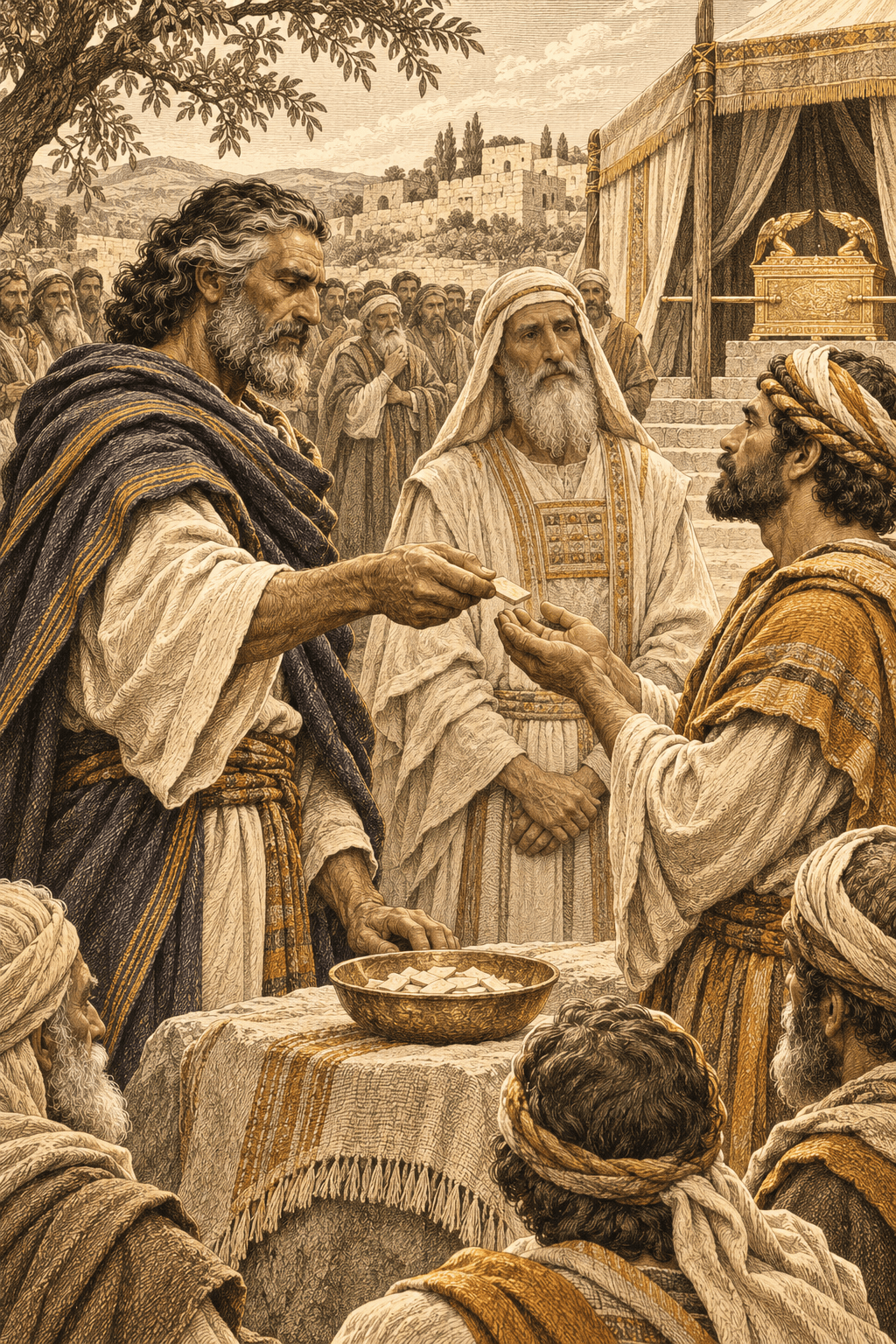
The tribe of Benjamin is counted the youngest of the tribes and the fewest in number; but the last shall be first, and its lot came first among the seven tribes. Its lot “came forth between the children of Judah and the children of Joseph” [11].
Benjamin, the youngest of Jacob’s sons, had a special affection from his brother Joseph, who gave him a double portion when he came with his brothers to Egypt, to Pharaoh’s palace, and who could not bear to see him but withdrew to weep bitterly! He was his only full brother, of the same father and mother, and he carried special feelings of love for him; and these feelings passed on to their descendants as well. But later the tribe of Benjamin was joined more closely with the tribe of Judah, so that together they formed the kingdom of Judah, whose capital was Jerusalem, which was in Benjamin’s portion.
The union of Benjamin with Judah is not strange, for Benjamin means “son of the right hand,” and so points to the Lord Christ, seated at the right hand of His Father, who came from the tribe of Judah.