
If God’s people ought to translate their religious life into fitting conduct in all social relations and civil and criminal dealings, then as a people at the beginning of the spiritual life they needed a detailed law governing their conduct and dealings.
In the previous chapter he pointed to the coming of the awaited “Prophet,” to whom we listen and so enjoy salvation. Now he gives us a symbolic picture of this messianic salvation: the setting up of the cities of refuge, to which every slayer who killed by mistake, against his will, may flee.
This primitive retributive justice is far removed from deliberate murder, and its purpose is to prevent it; it does not break the sixth commandment but rather keeps it.
He also spoke of respecting the rights of others, both their possessions and their lives. A person may not move his landmark to seize land that is not his right, nor ought he to bear false witness against an innocent person.
1. The Cities of Refuge
KJV · Verses 1–13
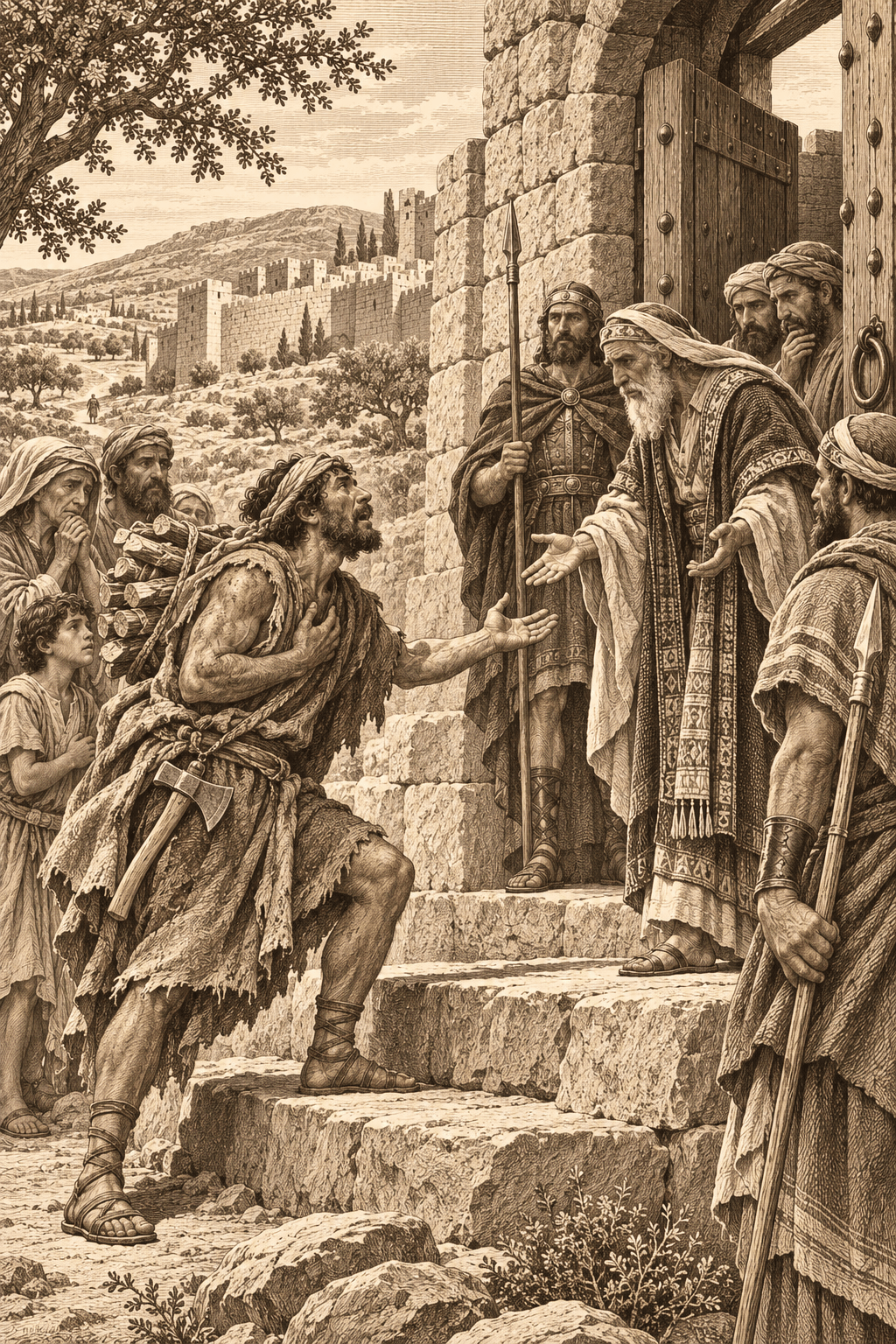
1 When the Lord thy God hath cut off the nations, whose land the Lord thy God giveth thee, and thou succeedest them, and dwellest in their cities, and in their houses; 2 Thou shalt separate three cities for thee in the midst of thy land, which the Lord thy God giveth thee to possess it. 3 Thou shalt prepare thee a way, and divide the coasts of thy land, which the Lord thy God giveth thee to inherit, into three parts, that every slayer may flee thither. 4 And this is the case of the slayer, which shall flee thither, that he may live: Whoso killeth his neighbour ignorantly, whom he hated not in time past; 5 As when a man goeth into the wood with his neighbour to hew wood, and his hand fetcheth a stroke with the axe to cut down the tree, and the head slippeth from the helve, and lighteth upon his neighbour, that he die; he shall flee unto one of those cities, and live: 6 Lest the avenger of the blood pursue the slayer, while his heart is hot, and overtake him, because the way is long, and slay him; whereas he was not worthy of death, inasmuch as he hated him not in time past. 7 Wherefore I command thee, saying, Thou shalt separate three cities for thee. 8 And if the Lord thy God enlarge thy coast, as he hath sworn unto thy fathers, and give thee all the land which he promised to give unto thy fathers; 9 If thou shalt keep all these commandments to do them, which I command thee this day, to love the Lord thy God, and to walk ever in his ways; then shalt thou add three cities more for thee, beside these three: 10 That innocent blood be not shed in thy land, which the Lord thy God giveth thee for an inheritance, and so blood be upon thee. 11 But if any man hate his neighbour, and lie in wait for him, and rise up against him, and smite him mortally that he die, and fleeth into one of these cities: 12 Then the elders of his city shall send and fetch him thence, and deliver him into the hand of the avenger of blood, that he may die. 13 Thine eye shall not pity him, but thou shalt put away the guilt of innocent blood from Israel, that it may go well with thee.
Not every killing is a crime; each case must be studied on its own. The Law distinguished between two kinds of killing:
A) Killing by mistake (4–6): the slayer can escape revenge by fleeing to one of the cities of refuge (Numbers 35:9–34).
B) Deliberate killing: the avenger may take revenge on the killer (11–13).
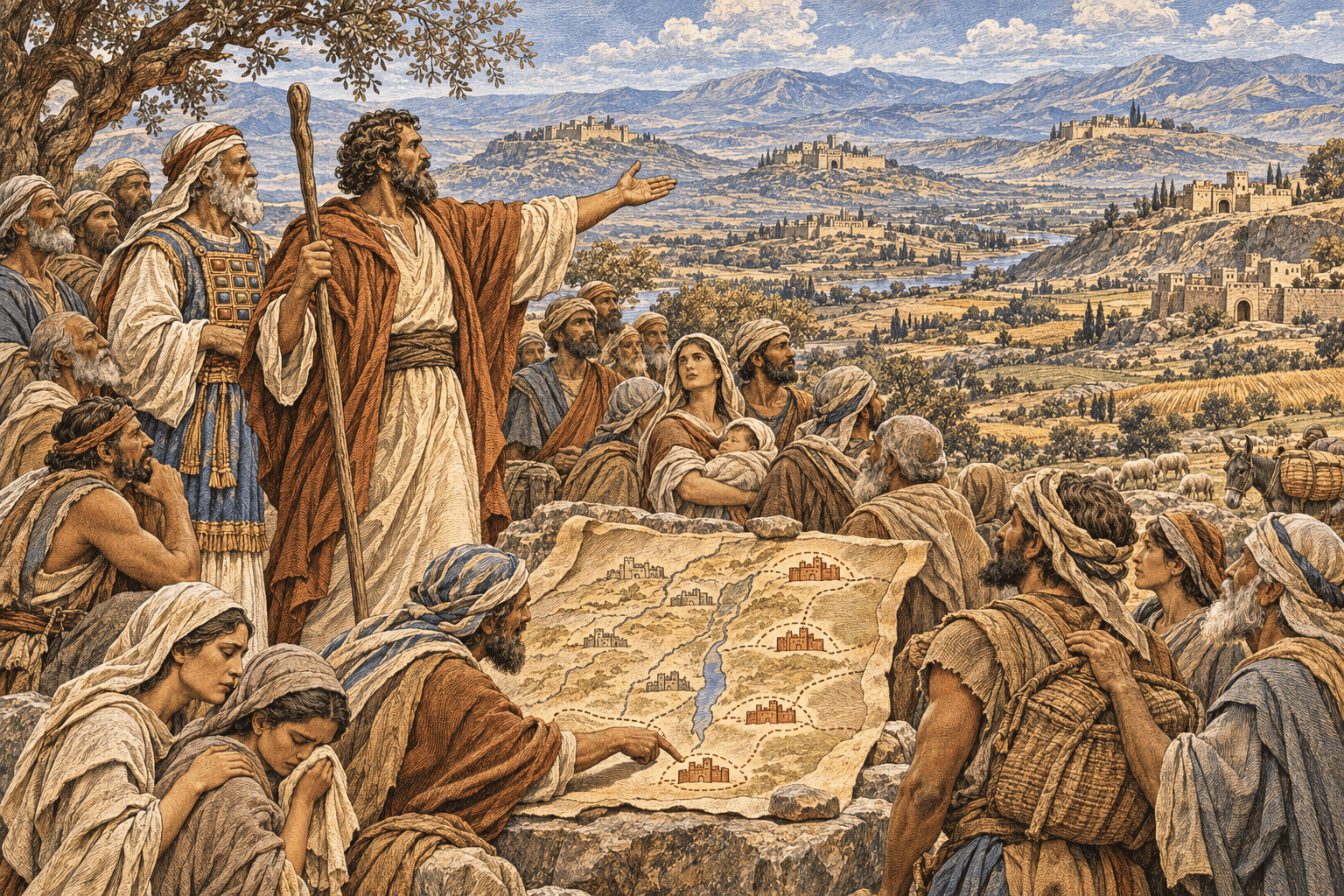
One of the commands given to the sons of Noah was that whoever sheds man’s blood, by man shall his blood be shed, in revenge for the blood (Genesis 9:6). Now this law was established. But what if blood was shed by mistake and not on purpose? Therefore God commanded the setting up of cities of refuge, as we saw before (in our study of Exodus 21:13 and Numbers 35:11, etc.). The Book of Numbers dealt with this matter in detail, but since the people were about to enter the Promised Land, he gave them practical directions for setting up the three cities west of the Jordan.
First: Designating three cities of refuge in the land of Canaan, west of the Jordan, since Moses had already designated three cities east of the Jordan (1–3, 7). The whole region is divided into three parts, as equal as possible, and the city of refuge is the center of each part, so that every person, wherever he is, can find a city of refuge near him. The city of refuge is like a place of safekeeping to which the slayer flees until a just trial takes place and his case is decided, whether he killed by mistake or on purpose. So the city of refuge is a safeguard and protection for the innocent, not for the criminal.
We find no record of adding the cities Moses asked for, and this is unintentional evidence of the authenticity of the book; for any later writer could not have invented this.
The city of refuge points to the Lord Christ, the Savior of the world, who came down to our earth and is no longer far from us, but very near to us. We do not look for someone to ascend into heaven to bring Him down, nor one to descend into the deep to bring Him up to us; He is established in our hearts (Romans 10:8). Our gospel has brought salvation and put it in our hands. He knocks at our inner doors, that we may receive Him, open to Him, and let the Bridegroom of our souls come in to sup with us.
Our Christ came to our earth to become our fortress; in Him we are freed from condemnation (Romans 8:1) and saved from every crime under surpassing divine protection (Romans 5:1, 9–10; 8:31–39). Isaiah the prophet looked to this unique city and said: “We have a strong city; salvation will God appoint for walls and bulwarks” (Isaiah 26:1). This is what the Apostle affirms: “Believe on the Lord Jesus Christ, and thou shalt be saved” (Acts 16:31).
Of old the slayer fled from the avenger to a city of refuge to shelter there until his trial; and if he was found innocent he remained until the death of the priest. But in the New Testament the avenger and the judge at the same time is the Lord Jesus; instead of revenge He opens His divine bowels as a refuge for us, so that we rest in Him and remain in Him forever, enjoying not only acquittal but fellowship in His glories.
He is not only the city of refuge but also the way open to us; so we ought to hasten by His Holy Spirit and enter into Him, without delay, lest the sword overtake us and our souls perish.
Second: This chapter answered the question: how does the fugitive find the city of refuge? We know that many roads of old were paved by the passage of beasts of burden, especially caravans. The Jews at that time did not know the roads, for they had lived in the wilderness for forty years. Those in charge were obliged to prepare the roads leading to the cities of refuge, removing every obstacle that hindered setting out to them; they were also obliged to build bridges and maintain them for crossing toward these cities. At crossroads signs were placed on which was written: “Refuge! Refuge!” Those in charge were obliged to repair these roads every year in the month of Adar. So the ministers of the word ought to prepare the way for every soul to meet the Savior as its refuge. They are obliged to remove every obstacle, to open the door of hope before them, so that they enjoy the righteousness and holiness of Christ instead of their sins, and incorruption instead of their corruption.
As those in charge were obliged to prepare the roads everywhere toward the cities of refuge, so God in His love prepared for mankind the way toward Jesus Christ. He announced Him to our first parents at the first meeting with them after their fall, and paved the way to knowing Him through the patriarchs, the prophets, the events, and the Law, so that there is no excuse for whoever refuses to take refuge in Him. He sent us clear prophecies, like signs pointing to the Person of the Savior, our city of refuge.
The fugitive was obliged to remain in the city until the death of the high priest, and then he went out of it (Numbers 35:25–29). Our Christ, the Great High Priest, died once to bring us into Himself, and will not die, but remains alive after His resurrection, so that no one goes out from Him; we dwell in Him and He in us forever (John 15:4; Colossians 1:23; Hebrews 3:14; 10:38–39). In short, He has set before us the refuge of our salvation (Hebrews 6:18).
Third: The sin of murder was most grave (Proverbs 28:17), and in the New Testament mere anger pushes a person into hell fire. Though inadvertence is counted a sin for which a sacrifice is offered, killing by inadvertence is not counted a punishable sin; its doer is allowed to flee to the city of refuge so that the avenger has no right to avenge the blood.
Saul of Tarsus killed many, but he did this in ignorance; therefore the Lord Christ Himself appeared to him and revealed the truth to him, and he longed to be killed for His name. The Lord also forgave those who crucified Him, for they did this without knowledge.
Fourth: The idea of the cities of refuge reveals the intention of God, who is gentle with His people, bringing the believing souls fleeing from judgment into His side through faith in the blood of Christ. Whoever flees from sin to the Lord Christ finds Him opening the doors of His love as a city of refuge for him.
Fifth: There is no refuge for deliberate murderers, that is, those determined to kill souls and walking in the spirit of the devil, the murderer. The deliberate killer has no right to find mercy with the judge, who does not bear the sword in vain, but to take revenge on those who shed blood. Whoever is determined on sin does not enjoy forgiveness (Hebrews 10:26).
The Jews tell us that the roads leading to the cities of refuge were very wide, about 32 cubits, and were always kept in good condition. [223]
Sixth: Note that the Law did not count all the cities of the Levites as cities of refuge, but chose three cities on each side, to affirm that the Levites were on an equal footing with the people. If a Levite sinned and killed unintentionally, his city would not protect him; he had to flee to a city of refuge until his trial took place. This is what the Law constantly affirms: the priest, though he has received the honor of serving God, stands with the people before God, and his judgment is heavier and harsher because of his knowledge.
Seventh: Some may ask whether the Law of Moses permitted the avenger to avenge the blood of his relative. We answer that the Law wanted to limit revenge in every way. In the old days, and until recently in some parts of Upper Egypt as in many desert lands, if one person killed another, the family of the slain would not be content to kill the killer, but would attack the whole family, taking revenge by killing the killer and sometimes his children and relatives, and the matter would turn into an internal war between families that might last for decades, each lying in wait to avenge his family without restraint. So the Law came to set a limit, allowing only the avenger to kill the killer, and not his household or relatives.
So the Law here achieves the following:
A) It raises the believers so that they do not live without restraint in revenge and retaliation.
B) It affirms the sanctity of human life, both of the slain and of the killer.
C) No one is above the law; the priest, like the people, is subject to the Law.
D) It obliges the holy community to hold just trials, with deliberation and without haste.
Eighth: God, the Owner of heaven and earth, gave His people the Promised Land with all its cities; but He asked that three cities on each side be His, attributed to Him, like cities of God to which those seeking His mercy take refuge. All the cities are His, given to people, but He asks back a very little to be consecrated to His divine work in the life of mankind.
May our God find in our depths a city of refuge which He accepts and attributes to Himself, so that His love and grace shine in it.
Ninth: Signs were placed at crossroads with “Refuge” (miklat) written clearly, so that when the fugitive saw them he would not stop to read, search, or argue, but hasten toward the city, for his time was short. He was in danger! These signs are nothing but Holy Scripture, which directs us toward our Savior Jesus Christ. It is not a time for foolish arguments, but for setting out quickly toward the Savior, to cast ourselves into His arms and hide in Him, so that the enemy cannot overtake us and kill us.
Our gospel is the signs that lead us to the unique city of refuge, “Jesus Christ”; and since we ourselves have become an epistle of Christ, known and read of all men, we ought, as an open gospel, to let all read in us the word miklat, and find in our depths a way that leads to the Savior. This is the state of the living Church. She is a sign bearing the same word, leading every soul in the way of truth and bringing it into the divine refuge, to enjoy the glorious liberty of the children of God, the peace of God that passes all understanding, and the unceasing joy of heaven. The Church is the lighthouse bearing the splendor of Christ, which shines on souls. She calls to all: “Flee to the refuge, to the hope the gospel offers you.”
Believers ought to strive in the spirit of truth, but as members of the Church of Christ they realize that their life is nothing but being hidden in Christ Jesus their refuge.
The Right of Sanctuary at the Altar
In the days of Emperor Constantine a church practice similar to the cities of refuge appeared: the accused could take refuge at the altar and hold its horns, and would not be killed until a just trial took place. In the days of Saint John Chrysostom, Eutropius opposed this practice and took a hostile position toward the Church. When he was accused of betraying the emperor and plotting to kill him, he took refuge at the altar, and the police and the people expected Saint John Chrysostom to take revenge on him by handing him over outside the church to be killed. But Chrysostom declared his love for his opponents. He delivered two discourses on the meaning of the Church and her mission even toward her opponents before the people, declaring that the beauty of God’s altar is to love enemies. [224]
This custom developed in Europe, where some allowed the protection of the accused if they took refuge at the altar, the church, or any holy place, for a month and sometimes for three days, until their trial took place. This did not mean protecting criminals and murderers, but giving sufficient opportunity for a just trial, and also an opportunity for sinners to repent and return to God. It also gave bishops the opportunity to intercede on behalf of some of the penitent among them.
But if any man hate his neighbour, and lie in wait for him, and rise up against him, and smite him mortally that he die, and fleeth into one of these cities: Then the elders of his city shall send and fetch him thence, and deliver him into the hand of the avenger of blood, that he may die. Thine eye shall not pity him, but thou shalt put away the guilt of innocent blood from Israel, that it may go well with thee. [11–13]
The Law took care to protect those with pure hearts and pure intentions who unintentionally caused the death of others, and so built cities of refuge for them. At the same time the divine Law refused to protect those with evil hearts, who bear enmity and hatred for their brothers and kill them; the cities of refuge were not built for such as these. If they fled to them, they were taken out of them and killed.
It is a bitter picture of some wicked people who hide their hateful, wolfish hearts under a cloak of religiosity; the garment must be torn completely, the wicked exposed, and he must reap the fruit of his evil as long as he does not repent.
There is no city of refuge for hateful hearts, for our Christ, who is all love, opens the doors of His heart to whoever wants to live in love; but whoever bears hatred has no place in Him. Our Christ is a city of refuge for whoever washes his crimes in His blood; by divine mercy joined with justice the believer settles in Christ and is glorified with Him forever. He embraces repentant sinners who confess their sins and are justified by faith.
2. Removing the Landmark
KJV · Verses 14
14 Thou shalt not remove thy neighbour’s landmark, which they of old time have set in thine inheritance, which thou shalt inherit in the land that the Lord thy God giveth thee to possess it.
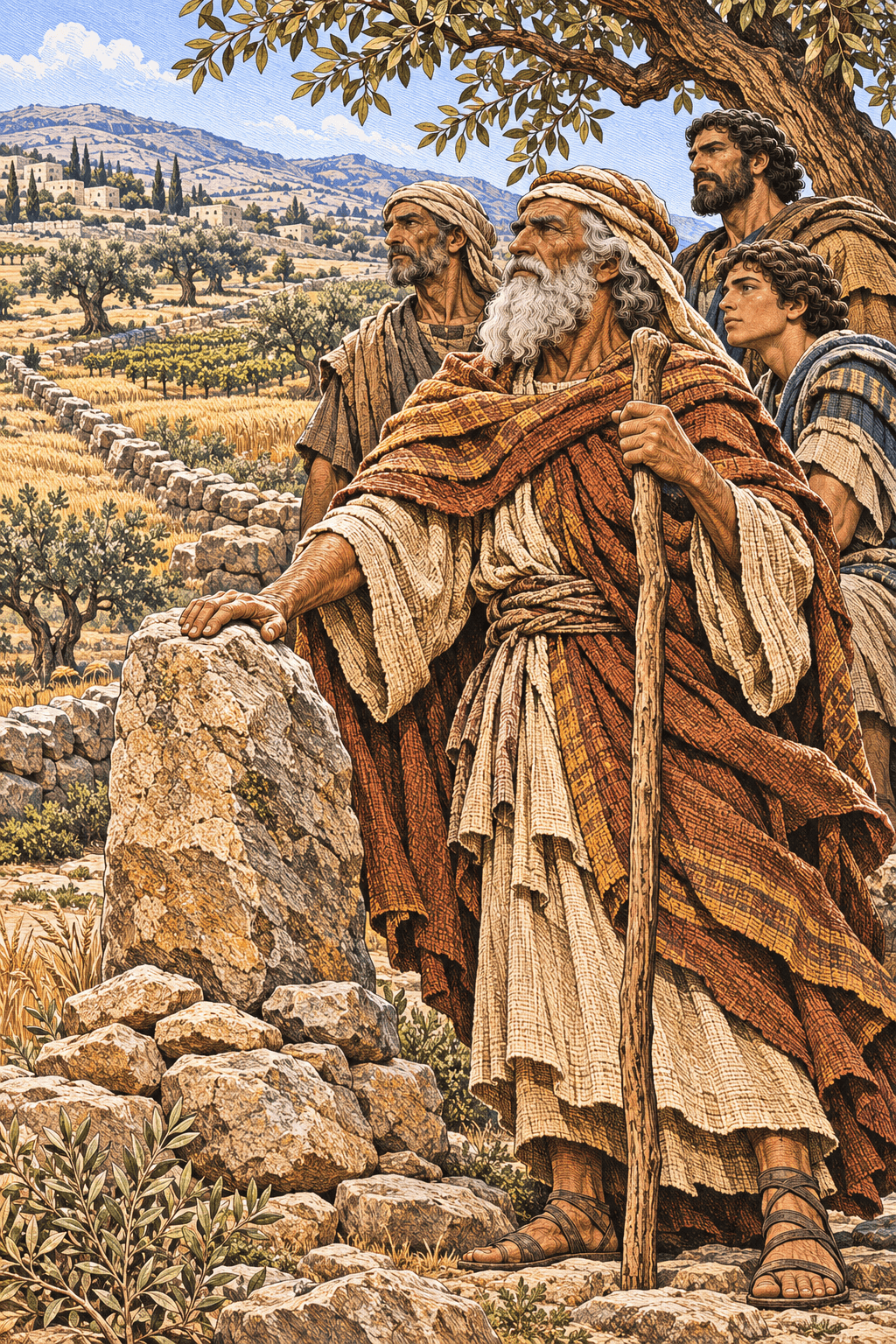
The Book of Deuteronomy cared for the land inherited by God’s people. So after affirming, “thou shalt put away the guilt of innocent blood from Israel, that it may go well with thee” (13), he continues: “Thou shalt not remove thy neighbour’s landmark, which they of old time have set in thine inheritance, which thou shalt inherit in the land that the Lord thy God giveth thee to possess it” (14). It is as though moving the boundary marks of land to seize part of another’s portion is no less serious than shedding innocent blood. The secret of this is what the Promised Land carried as a symbol of the promised heavenly life; as though causing another to lose his eternal portion or the salvation of his soul through a stumbling block is no less than shedding innocent blood.
The land each tribe received as a perpetual inheritance represented for it life or death. Whoever moves the marks that define his land to seize part of his brother’s land is like one who has seized from him the Lord’s blessing, which is his life, or one who has seized the inheritance of the covenant (14).
By lot each tribe received its portion of the land, and also each clan. It is God’s will that every person realize the riches of God’s grace upon him, without coveting what is not his; no one has the right to encroach on what belongs to others.
God gives us an important lesson: that every person realize his limits and his possessions, respecting the rights and possessions of others. Moving the landmark is an act of unfaithfulness, deceit, greed, and harm to others. This is what even little children ought to be trained in, in their dealings even with their parents and the other members of the family. Along with generous giving to a child, he is trained to realize the limits of his possessions and to be content with what has been given him.
3. False Witness
KJV · Verses 15–21
15 One witness shall not rise up against a man for any iniquity, or for any sin, in any sin that he sinneth: at the mouth of two witnesses, or at the mouth of three witnesses, shall the matter be established. 16 If a false witness rise up against any man to testify against him that which is wrong; 17 Then both the men, between whom the controversy is, shall stand before the Lord, before the priests and the judges, which shall be in those days; 18 And the judges shall make diligent inquisition: and, behold, if the witness be a false witness, and hath testified falsely against his brother; 19 Then shall ye do unto him, as he had thought to have done unto his brother: so shalt thou put the evil away from among you. 20 And those which remain shall hear, and fear, and shall henceforth commit no more any such evil among you. 21 And thine eye shall not pity; but life shall go for life, eye for eye, tooth for tooth, hand for hand, foot for foot.
There may be disagreement about a killing, whether it was deliberate or inadvertent, and whether there was previous enmity between the killer and the slain. There may also be disagreement about the boundaries of the tribes or clans. How is judgment to be given in these and other matters? There is sometimes an urgent need for the testimony of some; therefore the Law deals with the subject of “false witness.” The Law refuses that testimony rest on one person (Numbers 35:30; Deuteronomy 17:6), but requires at least two persons (15–19). False witness is counted a betrayal of the covenant with God Himself, who hates injustice and lying (19–21).
Saint John Chrysostom says:
“Even if transgressions are committed in secret, we must be content with the testimony of two witnesses as proof of the inquiry and investigation. [225]”
Saint Augustine says:
“When a certain title was written over the Lord’s passion when He was crucified, it was written in Hebrew, Greek, and Latin, ‘The King of the Jews’ (John 19:19), in three languages, for the title was established by three witnesses, since in the mouth of two or three witnesses shall every word be established. [226]”
The Law of Moses required: “life shall go for life, eye for eye, tooth for tooth, hand for hand, foot for foot” (21). By this it lifted man, at the beginning of his spiritual life, above the spirit of taking revenge greater than the harm done to him, for man naturally tends to resist evil with greater evil. So the Law lifted him to prepare him gradually for love, until by divine grace he practices love of the enemy and resists evil with good. It brings man into love and forgiveness by training him gradually in self-control.
The Law is firm and just; who can be justified before it?! Thanks be to God, who in the riches of His love has moved us from under the Law to the covenant of grace, so that we stand before the mercy seat, and our Christ covers us with His precious blood, and we are justified before God. Our Christ paid the price and fulfilled the demands of the Law, giving us perfect freedom for the new life, blameless before God.
Whoever bears false witness is brought to trial in a higher court, before the priests and judges who are before the Lord. As the judges sit at the gates of the city and judge, so the priests and judges sit before the gate of the temple to judge according to God’s will (Deuteronomy 17:12).
If the witness is proven false, what would have been passed on the accused falls on the false witness. Someone may think this harsh! Because of lying words a person may fall under a death sentence. Whoever digs a pit for his brother falls into it himself. By this God gives a practical lesson to instill the spirit of fear in them.
Saint Augustine sees in this expression a hint of the mystery of the Trinity. [227] In the story of Susanna there were two witnesses, elders, and yet their testimony was false (Daniel 13:36–62, in the Additions); and at the trial of the Lord Christ the whole people bore witness against Christ, and yet their testimony was false (Luke 23:1). What then does the establishing of true testimony by two or three witnesses mean but the true testimony of the Father, the Son, and the Holy Spirit (John 8:18)?
4. A Meditation on Deuteronomy 19
You Are My Refuge and My Support
You are my refuge and my support.
Sin has made my life bitter and robbed me of my peace;
who will protect me from its destruction but You?
You are the city of refuge large enough for all sinners.
You are the way to the city of refuge;
You bring me into the fullness of peace.
You are the sign that points to safety!
You are within me, deeper than my very self;
You are very near to me, nearer to me than myself.
Why then should I seek a refuge other than You?
My God, You are the refuge of my soul!
Grant me to fly and enter into Your arms.
Let me carry You within me,
and bring many to You.
By Your fiery Spirit engrave on my heart the word “To the refuge.”
Let me become a living sign that leads them to You.
How often I have overstepped my landmark,
and seized the rights of my brothers!
Restore Your righteousness to me, that I may respect the right of every little one,
and respect the feelings of everyone weak and needy!
Teach me and lead me, that I may not overstep the landmark that Your hands have given me!
Who does not need a witness to support him and confirm the truth of his words?!
Your Law asks for two or three witnesses, so that judgment does not err.
And the whole world turns to the testimony of witnesses.
Who will bear witness for me?!
Who knows my hidden thoughts?
You, my good Savior, Your heavenly Father, and Your Holy Spirit are true witnesses!
You bear witness to the riches of Your grace working in me.
Let me say with Simon Peter:
Lord, You know that I love You!
You are a true witness to what overflows in my depths!
Notes and References
[223] Adam Clarke, Commentary.
[224] See The Church Loves You, translated by the author.
[225] St. John Chrysostom, Homilies on 1 Timothy, 15.
[226] St. Augustine, On the Psalms, 56.
[227] St. Augustine, On the Gospel of St. John, Tractate 36:10.