
Having declared the obligation of purification on the general, personal and family levels, He gave a special law for those who offer their lives consecrated to the Lord, that is, the Nazirite.
1. The Nazirite of the Lord
KJV · Verses 1–2
1 And the Lord spake unto Moses, saying, 2 Speak unto the children of Israel, and say unto them, When either man or woman shall separate themselves to vow a vow of a Nazarite, to separate themselves unto the Lord:
A simple idea of the Nazirite of the Lord among the Jews of old.
The word “Nazirite” is taken from the Hebrew verb nazar, that is, “to be consecrated” or “to be set apart.” In the Book of Genesis, when Jacob blessed his sons, he asked that the blessings of heaven above and the blessings of the deep that lieth under come upon his son Joseph… and he called him “him that was separate from his brethren” (Genesis 49:26), as though his heart had been set apart for the Lord. In the Lamentations of Jeremiah the nobles of Jerusalem are given this title in rebuke, for it is said: “Her Nazarites were purer than snow, they were whiter than milk… Their visage is blacker than a coal” (Lamentations 4:7–8). It is as though the Nazirite ought to be pure and clean, but alas he was found blacker than a coal: instead of consecrating his heart to the divine light, he surrendered his heart to the darkness of sin.
But this title was reserved for those who consecrated their time to God on the basis of a pledge which people made in the presence of the Lord. Some of these were vowed while in their mothers’ wombs and remained Nazirites to the Lord all the days of their life, and some were vowed for a fixed period. Among these Nazirites were Samson (Judges 13:5), Samuel (1 Samuel 1:11) and John the Baptist (Luke 1:15). The vowing of children for a fixed period is still common in the East, especially among our Catholic brethren. Perhaps the idea of the houses of virgins and the communities of celibates that appeared in the early Church, and developed until the monastic movement appeared in all its forms, came from the idea of a man vowing his life to God, longing to offer all his energies to worship, giving up of his own free will the lawful pleasures of temporal life and every bond of blood, so as to be occupied with nothing but God, the object of his love.
What is set down in this chapter concerns not those vowed all the days of their life, but those vowed for a period of time.
2. His Characteristics and Obligations
KJV · Verses 3–8
3 He shall separate himself from wine and strong drink, and shall drink no vinegar of wine, or vinegar of strong drink, neither shall he drink any liquor of grapes, nor eat moist grapes, or dried. 4 All the days of his separation shall he eat nothing that is made of the vine tree, from the kernels even to the husk. 5 All the days of the vow of his separation there shall no razor come upon his head: until the days be fulfilled, in the which he separateth himself unto the Lord, he shall be holy, and shall let the locks of the hair of his head grow. 6 All the days that he separateth himself unto the Lord he shall come at no dead body. 7 He shall not make himself unclean for his father, or for his mother, for his brother, or for his sister, when they die: because the consecration of his God is upon his head. 8 All the days of his separation he is holy unto the Lord.
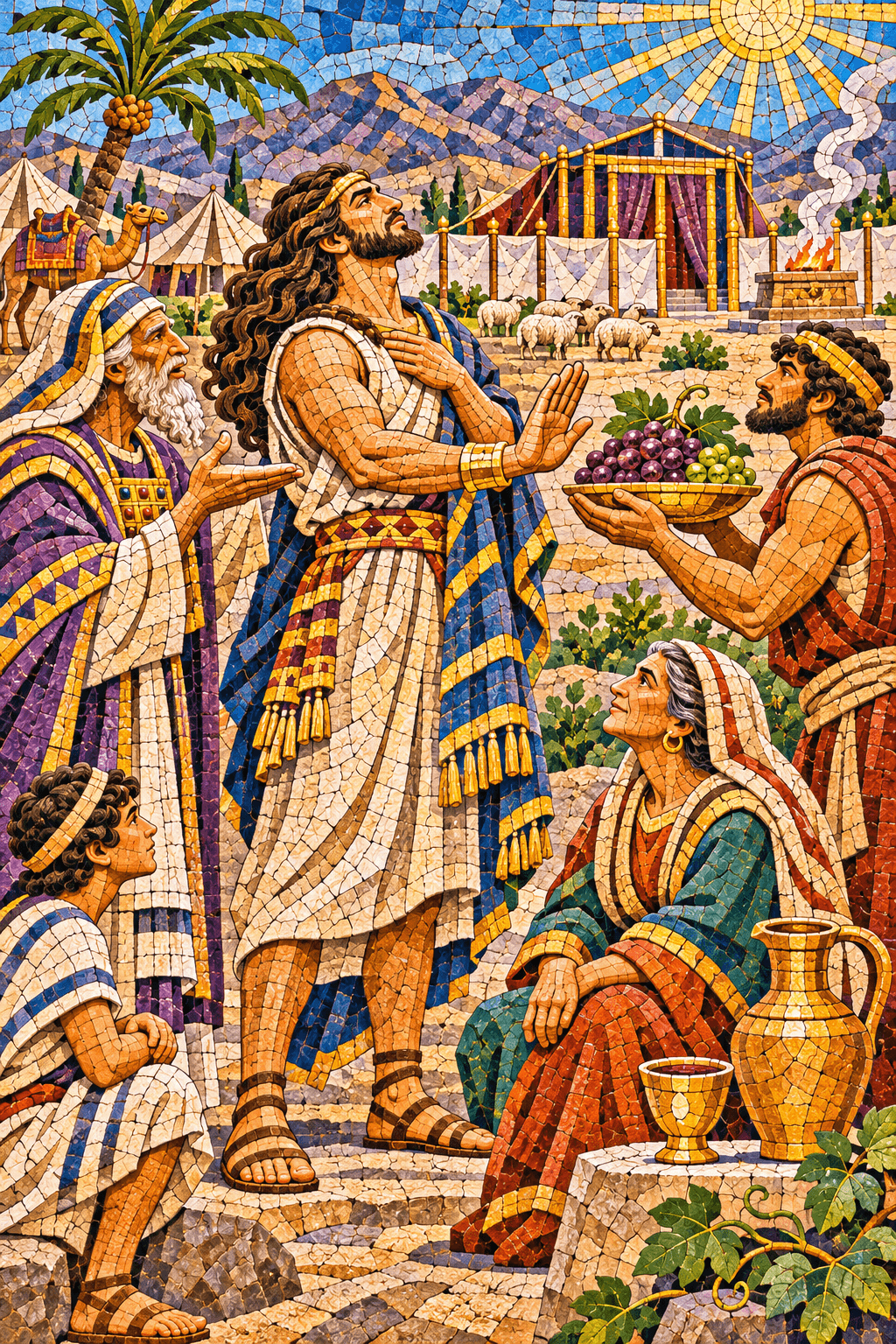
A) Perhaps the most important mark of the Nazirite is that he is “the Nazirite of the Lord,” that is, he offers his life with all its energies to the service and worship of God. In the Old Testament the Nazirite usually spent his time studying the Law, practising worship and doing works of love for others. It is as though the foundation of the vow is a man’s being occupied with God, His commandment and His service in His least brethren.
B) Leaving the pleasures of the world. The Nazirite was forbidden not only to drink wine and strong drink, but also: “and shall drink no vinegar of wine, or vinegar of strong drink, neither shall he drink any liquor of grapes, nor eat moist grapes, or dried. All the days of his separation shall he eat nothing that is made of the vine tree, from the kernels even to the husk” (3–4). Saint Methodius holds that there are two kinds of vine, holy and evil; as though the Nazirite, drinking the juice of God’s vine, is bound to refrain from the juice of the evil vine. He says:
This means that whoever consecrates his life to the Lord and offers it to Him does not take of the fruit of the planting of evil… for it causes drunkenness and distraction of mind. For we know from the Holy Scriptures two kinds of vine, separated from one another and unlike each other: the one produces immortality and righteousness, the other produces madness and folly. [32]
If strong drink corrupts a man’s mind and makes him lose his balance, the Nazirite not only abstains from strong drink and wine, but from everything connected with it: he does not drink even fresh or dried grape juice, nor anything made from the grape, not even its seeds or its skin! For the Lord’s sake he gives up of his own free will even what is lawful, not as something defiled or unclean from which he flees, but so as to care for the other food, saying with Christ the Lord: “My meat is to do the will of him that sent me, and to finish his work” (John 4:34).
The Lord considered whoever gives wine to the Nazirite as one who causes him to stumble and tempts him (Amos 2:12). Perhaps God commanded them to abstain from wine lest they become drunk and forget the divine commandment (Proverbs 31:5; Isaiah 28:7)…
The Jews looked to Christ the Lord as a Nazirite, but they were surprised to see Him begin His ministry by turning water into wine at the wedding in Cana of Galilee, and share the feasts of sinners, so that they accused Him of being a glutton and a winebibber. But He wanted to turn their eyes to the spiritual meaning of consecration, rather than stopping at the killing letter and legal formalities.
C) Giving up temporal glory. The Apostle Paul says: “Doth not even nature itself teach you, that, if a man have long hair, it is a shame unto him?” (1 Corinthians 11:14). Yet God asks of the Nazirite that “there shall no razor come upon his head: until the days be fulfilled, in the which he separateth himself unto the LORD, he shall be holy, and shall let the locks of the hair of his head grow” (5). In letting his hair grow he gives up his temporal dignity and is not occupied with bodily things, giving himself the opportunity to be occupied with heavenly things and their glories. The Jews tried to make Christ the Lord an earthly king, and He hid Himself from their eyes!
D) Not being occupied with bodily ties of blood. God asks the Nazirite not to mourn at the departure of his relatives according to the flesh, for He says: “He shall not make himself unclean for… them, when they die: because the consecration of his God is upon his head” (7). He wants to raise the Nazirite above bodily relationships, so that he sees all as his brethren and his family, caring for the salvation of their souls and their eternity. Therefore the Lord said to the one who asked leave to bury his father: “Let the dead bury their dead: but go thou and preach the kingdom of God” (Luke 9:60). And when it was said to Him, “Behold, thy mother and thy brethren stand without, desiring to speak with thee” (Matthew 12:47), He stretched forth His hand toward His disciples and said: “Behold my mother and my brethren! For whosoever shall do the will of my Father which is in heaven, the same is my brother, and sister, and mother” (Matthew 12:49–50). He did not reject ties of blood, but He raised us to see in all believers members with us in the heavenly family, so that spiritual fellowship swallows up every bodily relationship and lifts it up.
3. His Cleansing If He Touches the Dead
KJV · Verses 9–12
9 And if any man die very suddenly by him, and he hath defiled the head of his consecration; then he shall shave his head in the day of his cleansing, on the seventh day shall he shave it. 10 And on the eighth day he shall bring two turtles, or two young pigeons, to the priest, to the door of the tabernacle of the congregation: 11 And the priest shall offer the one for a sin offering, and the other for a burnt offering, and make an atonement for him, for that he sinned by the dead, and shall hallow his head that same day. 12 And he shall consecrate unto the Lord the days of his separation, and shall bring a lamb of the first year for a trespass offering: but the days that were before shall be lost, because his separation was defiled.
Death is bound up with sin as one of its fruits; therefore touching the dead was counted uncleanness under the Jewish Law, even if the dead man was a prophet or a saint. For this reason the Nazirite was forbidden to touch the dead. If a sudden death took place and the Nazirite’s head was defiled, he remained seven days, then shaved his head on the day of his cleansing; and on the eighth day he brought two turtles or two young pigeons to the priest, to the door of the tabernacle of the congregation. The priest offered a sin offering and a burnt offering to make atonement for him, and the Nazirite began the days of his separation anew; the former days were lost, because his separation was defiled.
Although what happened was sudden and the Nazirite bore no guilt in it, God wanted in this way to make clear to us how much He hates defilement and loves holiness and purity. For defilement, even if it comes suddenly and unwillingly, brings a man back to where he began, and makes him lose his earlier days of struggle. Our father Abraham erred by going down into Egypt (Genesis 12), and so he began his journey again (Genesis 12:18): he went to the place where his tent had been at the beginning, between Bethel and Hai, unto the place of the altar which he had made there at the first (Genesis 13:3–4). Abraham lost this period of his life because he turned aside from the way the Lord had marked out for him, and after hardship he began from the starting point. Truly, giving in to weakness even once makes a man lose many of the divine blessings he enjoyed and makes his life lukewarm, and only with effort does he begin again!
4. The Completion of the Nazirite’s Days
KJV · Verses 13–21
13 And this is the law of the Nazarite, when the days of his separation are fulfilled: he shall be brought unto the door of the tabernacle of the congregation: 14 And he shall offer his offering unto the Lord, one he lamb of the first year without blemish for a burnt offering, and one ewe lamb of the first year without blemish for a sin offering, and one ram without blemish for peace offerings, 15 And a basket of unleavened bread, cakes of fine flour mingled with oil, and wafers of unleavened bread anointed with oil, and their meat offering, and their drink offerings. 16 And the priest shall bring them before the Lord, and shall offer his sin offering, and his burnt offering: 17 And he shall offer the ram for a sacrifice of peace offerings unto the Lord, with the basket of unleavened bread: the priest shall offer also his meat offering, and his drink offering. 18 And the Nazarite shall shave the head of his separation at the door of the tabernacle of the congregation, and shall take the hair of the head of his separation, and put it in the fire which is under the sacrifice of the peace offerings. 19 And the priest shall take the sodden shoulder of the ram, and one unleavened cake out of the basket, and one unleavened wafer, and shall put them upon the hands of the Nazarite, after the hair of his separation is shaven: 20 And the priest shall wave them for a wave offering before the Lord: this is holy for the priest, with the wave breast and heave shoulder: and after that the Nazarite may drink wine. 21 This is the law of the Nazarite who hath vowed, and of his offering unto the Lord for his separation, beside that that his hand shall get: according to the vow which he vowed, so he must do after the law of his separation.
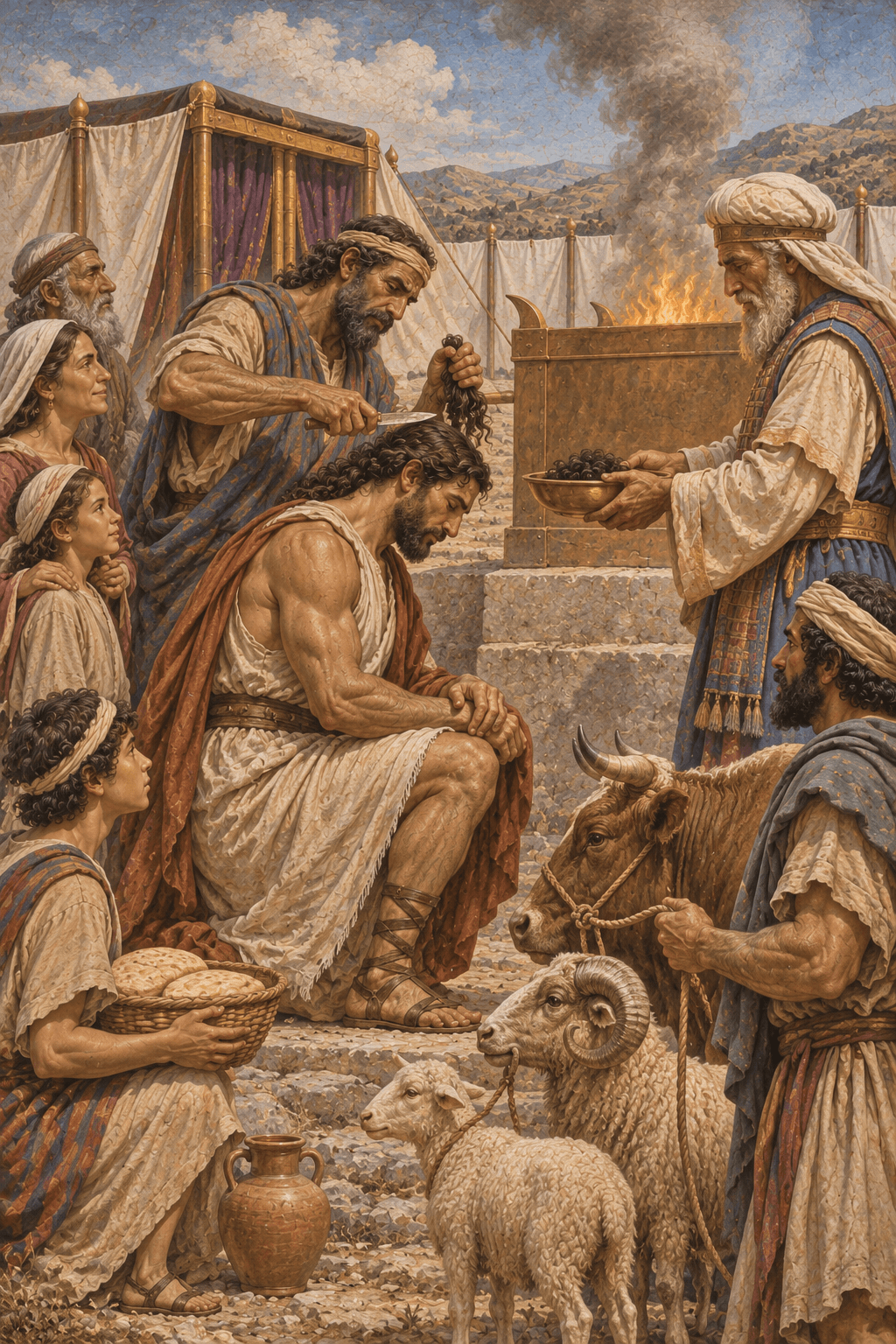
We said that the discussion here concerns the Nazirite for a limited period. It is stated in the Talmud that the minimum period of a vow is thirty days, even if a man vowed a shorter period. Yet we read in the Acts of the Apostles (Acts 21:23–27) of Paul the Apostle that he took a vow for a week.
When the Nazirite completed the days of his separation, he was bound to a particular rite, which reveals the spiritual foundation on which our life in Christ Jesus our Lord is built, since it has become consecrated to Him. Its true completion comes when we put off our earthly tent and enter into rest in the bosom of the Father. The rite was as follows:
A) The Nazirite offered a burnt offering, a peace offering and a meat offering, which represent distinct and complementary aspects of the mystery of the cross. [33] It is as though our vow and our struggle in this world will not be accepted or made perfect except through the atoning sacrifice of the cross.
B) The Nazirite offered another offering according to his ability (21), which had no fixed limit. It is as though Christ’s atoning sacrifice is joined with our offering as far as we are able, so that God’s love is bound to our love, and God’s free work to our struggle. He left the door of giving open, so that our heart may grow wider from day to day with self-giving love without limits.
C) He shaved his hair and cast it into the fire of the peace offering, so that his dignity would return to him, not on a temporal, worldly basis, but as the dignity of fellowship in the eternal glories. The casting of the hair into the fire of the peace offering points to the tears of those who struggle, which Christ the Lord wipes away with His hands on the last day, so that their labours and their struggle become the secret of surpassing eternal peace in the glorified Christ Jesus.
D) He drank wine, as a symbol of enjoying joy and gladness in place of the labours and sorrows we accepted in this world for the sake of faith in Christ our Lord.
So the rite of completing the days of our vow is fulfilled when we depart from this world, hidden in the free sacrifice of the cross, offering the struggle we practised by His divine grace; and God wipes away our tears and fills our life with eternal joy.
This rite in truth is fulfilled in us only because Christ our Head fulfilled it on a surpassing divine level. For our sake He became as a Nazirite, offering His life in perfect obedience to His Father. He did not offer outward sacrifices and offerings; He gave His life, offering His Body and Blood, given for us, as a sacrifice of love to the Father, in which we find the fire of divine love burning through the sacrifice of true peace. If every Nazirite was bound to offer an offering according to his ability, the Lord offered His life, which alone is acceptable to the Father; He offered His unlimited divine ability, so that through Him we have all become acceptable to His Father. The shaving of the Nazirite’s hair points to the perfect freedom which this divine Nazirite has granted us through the fire of His cross. And the drinking of wine points to His Holy Spirit, the Comforter, whom He grants us in His holy Church, filling our life with peace and joy, even in the most bitter moments of repentance.
5. The Priests’ Blessing of the People
KJV · Verses 22–27
22 And the Lord spake unto Moses, saying, 23 Speak unto Aaron and unto his sons, saying, On this wise ye shall bless the children of Israel, saying unto them, 24 The Lord bless thee, and keep thee: 25 The Lord make his face shine upon thee, and be gracious unto thee: 26 The Lord lift up his countenance upon thee, and give thee peace. 27 And they shall put my name upon the children of Israel, and I will bless them.
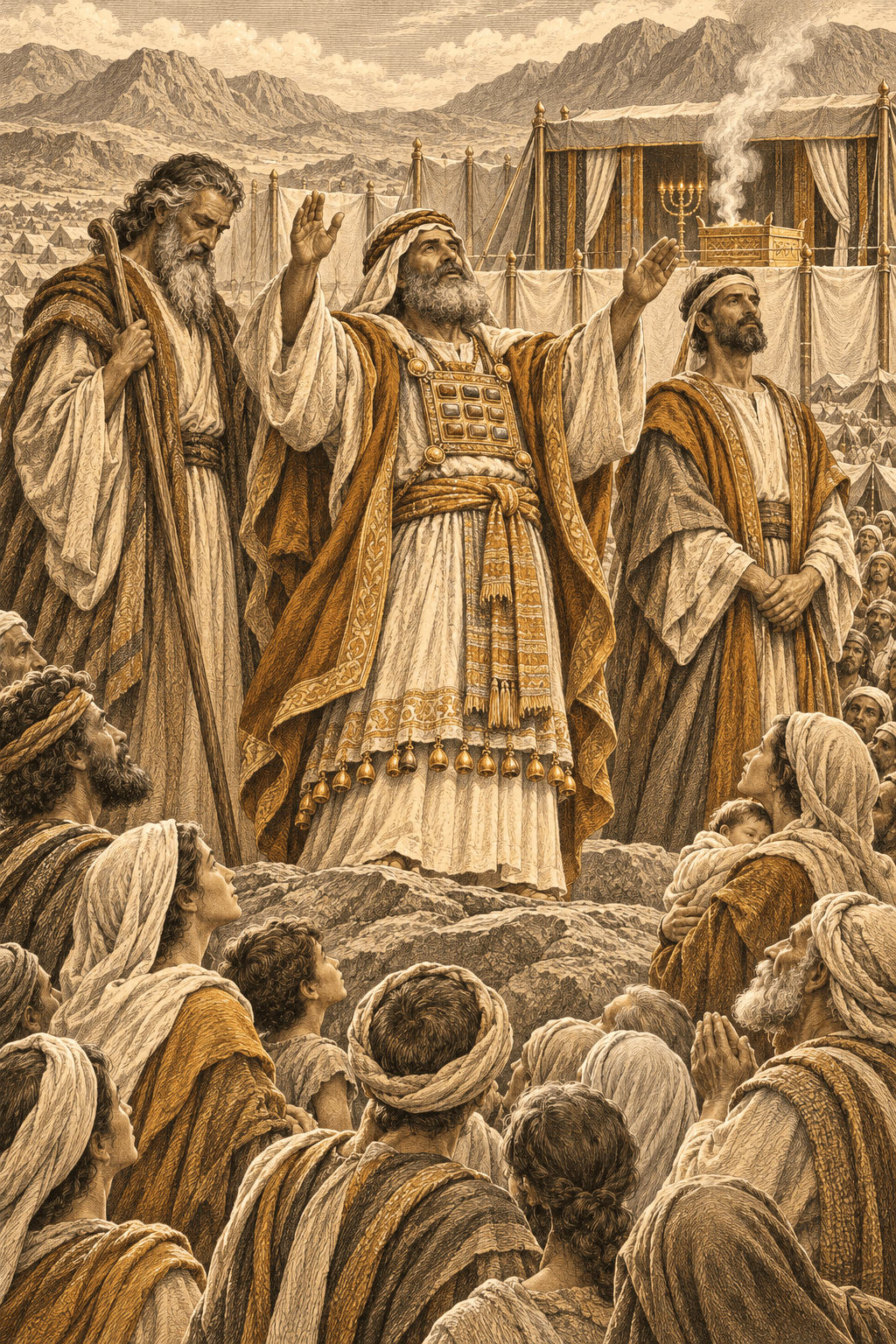
The Lord concluded His words about the Nazirite by revealing the secret of the blessing which the people enjoy through their priests. Perhaps the Lord feared that the Nazirite might fall into pride and think himself better than his brethren; therefore He made clear that even the blessing that comes upon the people through the priests is the gift of God Himself, given by the Holy Trinity. The priests are only a means: they ask God three times that the Holy Trinity may bless the people. The Lord spoke to Moses, saying:
“Speak unto Aaron and unto his sons, saying, On this wise ye shall bless the children of Israel, saying unto them, The LORD bless thee, and keep thee: The LORD make his face shine upon thee, and be gracious unto thee: The LORD lift up his countenance upon thee, and give thee peace… and I will bless them” (22–27).
So the Lord affirms that it is He who blesses, not the priests, however high their rank: it is He who keeps, He who is gracious, and He who gives peace.
Notes and References
[32] St. Methodius, Banquet of the Ten Virgins 5.4.
[33] St. George’s Church, Sporting (Alexandria), Studies in the Holy Bible 3: The Book of Leviticus, commentary on chapters 1–7 (“I hope in the Lord to explain them again at length”).