
Now that the tabernacle of the congregation had been set up in the midst of the camp, and the position of each tribe and the work of the Levites had been fixed, God declares that the whole camp must be purified: on the general level, on the personal level, that is, each member of it, and on the family level.
1. The Cleansing of the Camp as a Whole
KJV · Verses 1–4
1 And the Lord spake unto Moses, saying, 2 Command the children of Israel, that they put out of the camp every leper, and every one that hath an issue, and whosoever is defiled by the dead: 3 Both male and female shall ye put out, without the camp shall ye put them; that they defile not their camps, in the midst whereof I dwell. 4 And the children of Israel did so, and put them out without the camp: as the Lord spake unto Moses, so did the children of Israel.
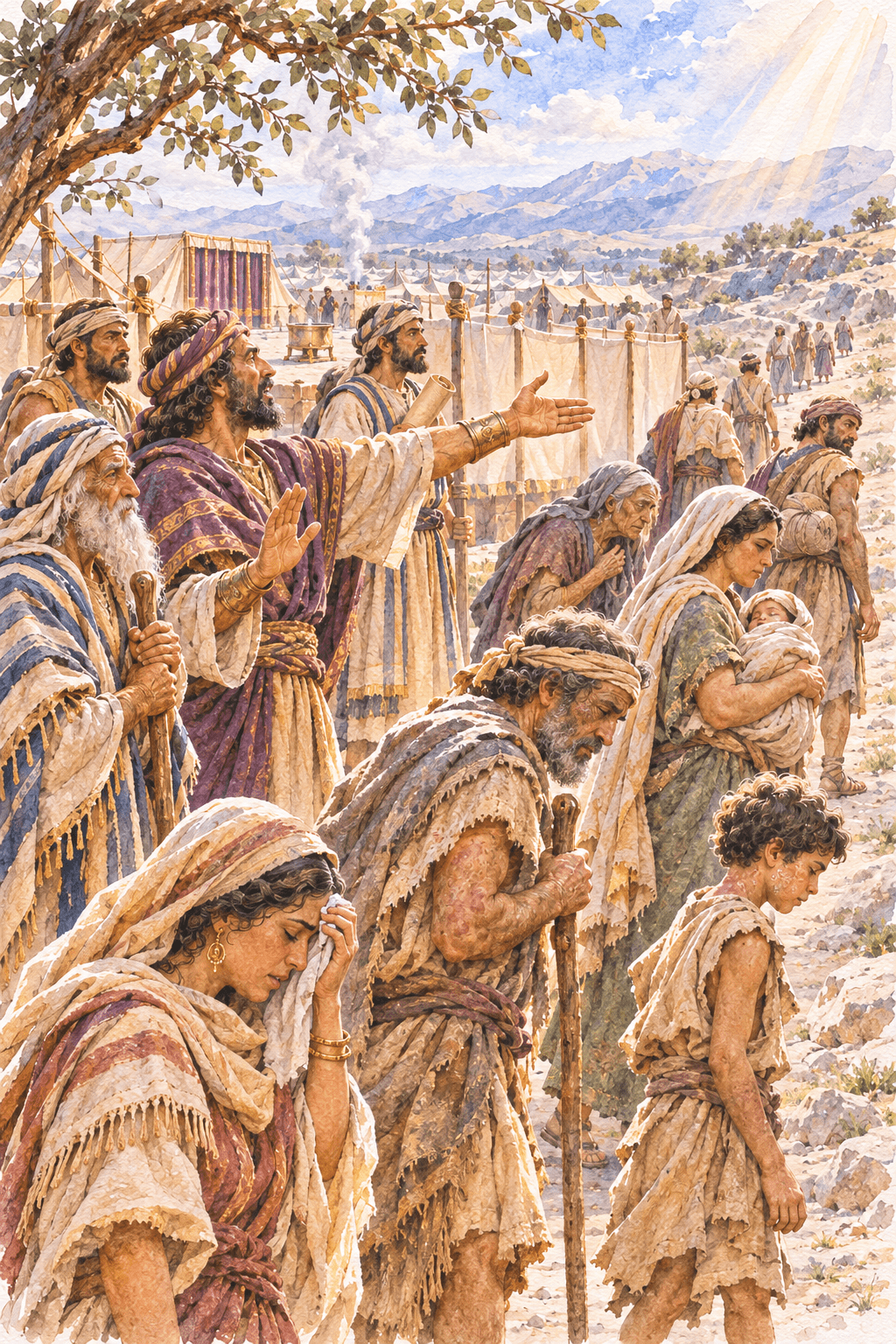
God commanded Moses thus: “Command the children of Israel, that they put out of the camp every leper, and every one that hath an issue, and whosoever is defiled by the dead: Both male and female shall ye put out, without the camp shall ye put them; that they defile not their camps, in the midst whereof I dwell” (2–3).
By setting up the tabernacle in their midst, God dwells among His people; but as the Holy One He does not dwell where there is defilement and sin. God’s presence means separation from all corruption and uncleanness, “for what fellowship hath righteousness with unrighteousness? and what communion hath light with darkness?” (2 Corinthians 6:14).
Though the Church is very gentle with sinners, she makes no truce with sin. She cannot bear the presence of evil in the life of her children, for the Apostle says: “Know ye not that a little leaven leaveneth the whole lump? Purge out therefore the old leaven, that ye may be a new lump, as ye are unleavened… I wrote unto you in an epistle not to company with fornicators: Yet not altogether with the fornicators of this world, or with the covetous, or extortioners, or with idolaters; for then must ye needs go out of the world… For what have I to do to judge them also that are without? do not ye judge them that are within? But them that are without God judgeth. Therefore put away from among yourselves that wicked person” (1 Corinthians 5:6–13).
We do not judge those who are without, but with all our strength the Church must be cleansed from within, so that none of her members carries a leaven of corruption. Saint Shenouda the Archimandrite says:
There are works that we think good, and they are evil before God: that we overlook one another’s faults, and so sin in the holy places. For the Lord did not plant in paradise good trees and trees that were not good; He planted it with good trees only, and did not plant in it barren trees or trees with evil fruit… From this know, beloved brethren, that we must not fill God’s holy dwellings with wicked and good people alike, as in the world, which is full of sinners and oppressors, saints and the unclean; rather, He does not leave those who sin in them, but puts them out. I know that the whole earth is the Lord’s; but if His house is like the rest of the earth, what then is its distinction above the rest? If I, the priest, do evil as the wicked do on the earth, I have no right to be called a priest; for many times we sin and do not know how to judge ourselves by what we say. [31]
The Lord asked that the camp be cleansed of every leper, everyone who had an issue, and everyone defiled by the dead. Leprosy, an issue and touching a dead body were considered uncleanness in the Law of Moses, as things pointing to the fruit of sin in a man’s life. But when Christ, the Holy One, came and dwelt in our midst, He cleansed the lepers, touched the woman with the issue of blood and healed her, and touched the bier to raise the dead.
The Holy One came, who pours His holiness into us: He scatters the leprosy of sin, stops the flow of blood that destroys the soul, and raises us from eternal death.
2. The Cleansing of Every Believer
KJV · Verses 5–10
5 And the Lord spake unto Moses, saying, 6 Speak unto the children of Israel, When a man or woman shall commit any sin that men commit, to do a trespass against the Lord, and that person be guilty; 7 Then they shall confess their sin which they have done: and he shall recompense his trespass with the principal thereof, and add unto it the fifth part thereof, and give it unto him against whom he hath trespassed. 8 But if the man have no kinsman to recompense the trespass unto, let the trespass be recompensed unto the Lord, even to the priest; beside the ram of the atonement, whereby an atonement shall be made for him. 9 And every offering of all the holy things of the children of Israel, which they bring unto the priest, shall be his. 10 And every man's hallowed things shall be his: whatsoever any man giveth the priest, it shall be his.
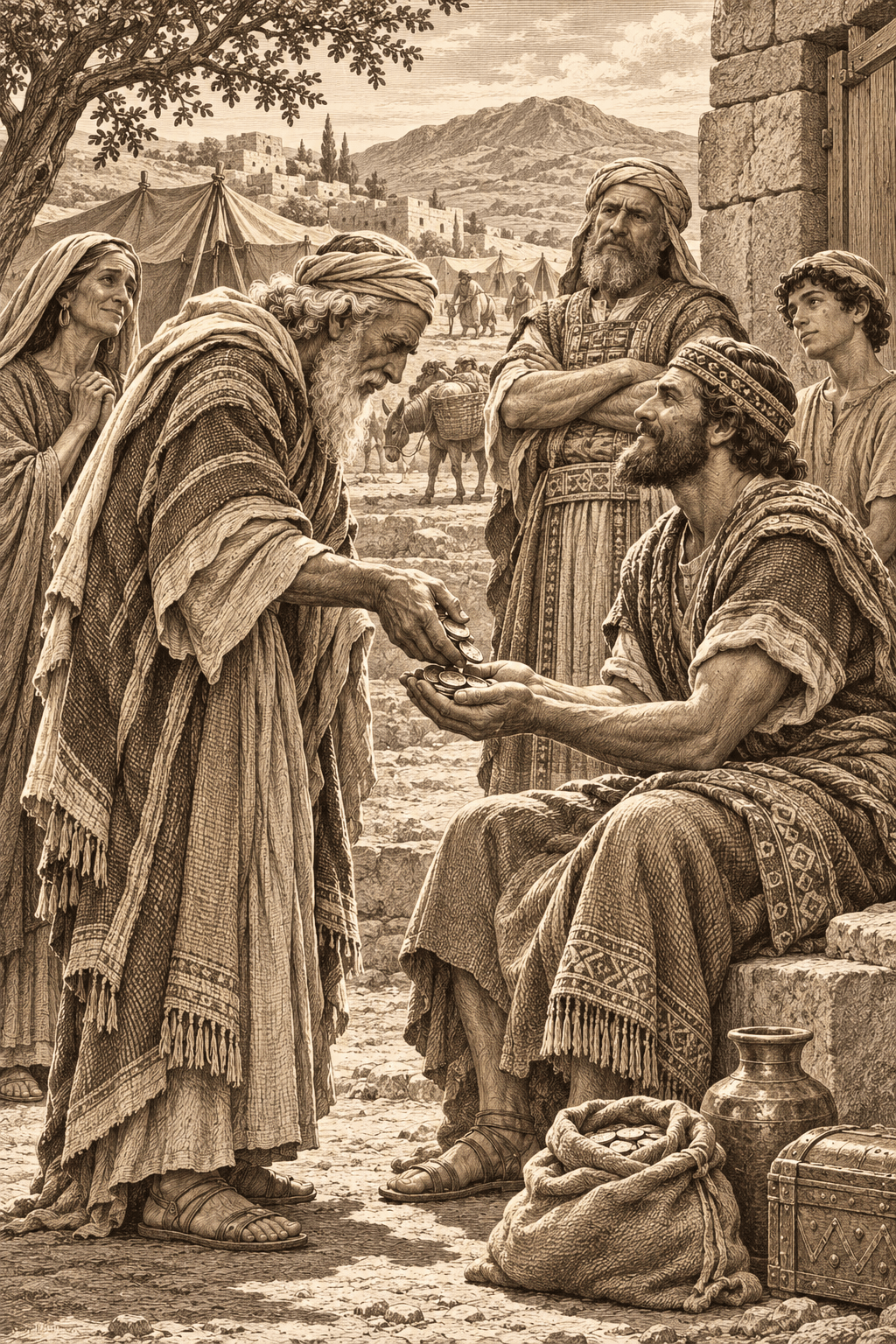
The purity of the whole camp rests on the purity of each of its members, through sincere and practical repentance. He commanded everyone who sins:
A) To confess the sin that he has committed (7).
B) To restore what he has trespassed or taken by force; so repentance is not merely confessing the wrong, but restoring what he has taken of other people’s rights, with a fifth added.
C) To offer a sacrifice for atonement. If we restore to our brethren what we took from them, with a fifth added, in order to be reconciled with them, how can we restore to God His right except through the atoning sacrifice of the cross?
3. The Cleansing of Every Family
KJV · Verses 11–31
11 And the Lord spake unto Moses, saying, 12 Speak unto the children of Israel, and say unto them, If any man's wife go aside, and commit a trespass against him, 13 And a man lie with her carnally, and it be hid from the eyes of her husband, and be kept close, and she be defiled, and there be no witness against her, neither she be taken with the manner; 14 And the spirit of jealousy come upon him, and he be jealous of his wife, and she be defiled: or if the spirit of jealousy come upon him, and he be jealous of his wife, and she be not defiled: 15 Then shall the man bring his wife unto the priest, and he shall bring her offering for her, the tenth part of an ephah of barley meal; he shall pour no oil upon it, nor put frankincense thereon; for it is an offering of jealousy, an offering of memorial, bringing iniquity to remembrance. 16 And the priest shall bring her near, and set her before the Lord: 17 And the priest shall take holy water in an earthen vessel; and of the dust that is in the floor of the tabernacle the priest shall take, and put it into the water: 18 And the priest shall set the woman before the Lord, and uncover the woman's head, and put the offering of memorial in her hands, which is the jealousy offering: and the priest shall have in his hand the bitter water that causeth the curse: 19 And the priest shall charge her by an oath, and say unto the woman, If no man have lain with thee, and if thou hast not gone aside to uncleanness with another instead of thy husband, be thou free from this bitter water that causeth the curse: 20 But if thou hast gone aside to another instead of thy husband, and if thou be defiled, and some man have lain with thee beside thine husband: 21 Then the priest shall charge the woman with an oath of cursing, and the priest shall say unto the woman, The Lord make thee a curse and an oath among thy people, when the Lord doth make thy thigh to rot, and thy belly to swell; 22 And this water that causeth the curse shall go into thy bowels, to make thy belly to swell, and thy thigh to rot: And the woman shall say, Amen, amen. 23 And the priest shall write these curses in a book, and he shall blot them out with the bitter water: 24 And he shall cause the woman to drink the bitter water that causeth the curse: and the water that causeth the curse shall enter into her, and become bitter. 25 Then the priest shall take the jealousy offering out of the woman's hand, and shall wave the offering before the Lord, and offer it upon the altar: 26 And the priest shall take an handful of the offering, even the memorial thereof, and burn it upon the altar, and afterward shall cause the woman to drink the water. 27 And when he hath made her to drink the water, then it shall come to pass, that, if she be defiled, and have done trespass against her husband, that the water that causeth the curse shall enter into her, and become bitter, and her belly shall swell, and her thigh shall rot: and the woman shall be a curse among her people. 28 And if the woman be not defiled, but be clean; then she shall be free, and shall conceive seed. 29 This is the law of jealousies, when a wife goeth aside to another instead of her husband, and is defiled; 30 Or when the spirit of jealousy cometh upon him, and he be jealous over his wife, and shall set the woman before the Lord, and the priest shall execute upon her all this law. 31 Then shall the man be guiltless from iniquity, and this woman shall bear her iniquity.
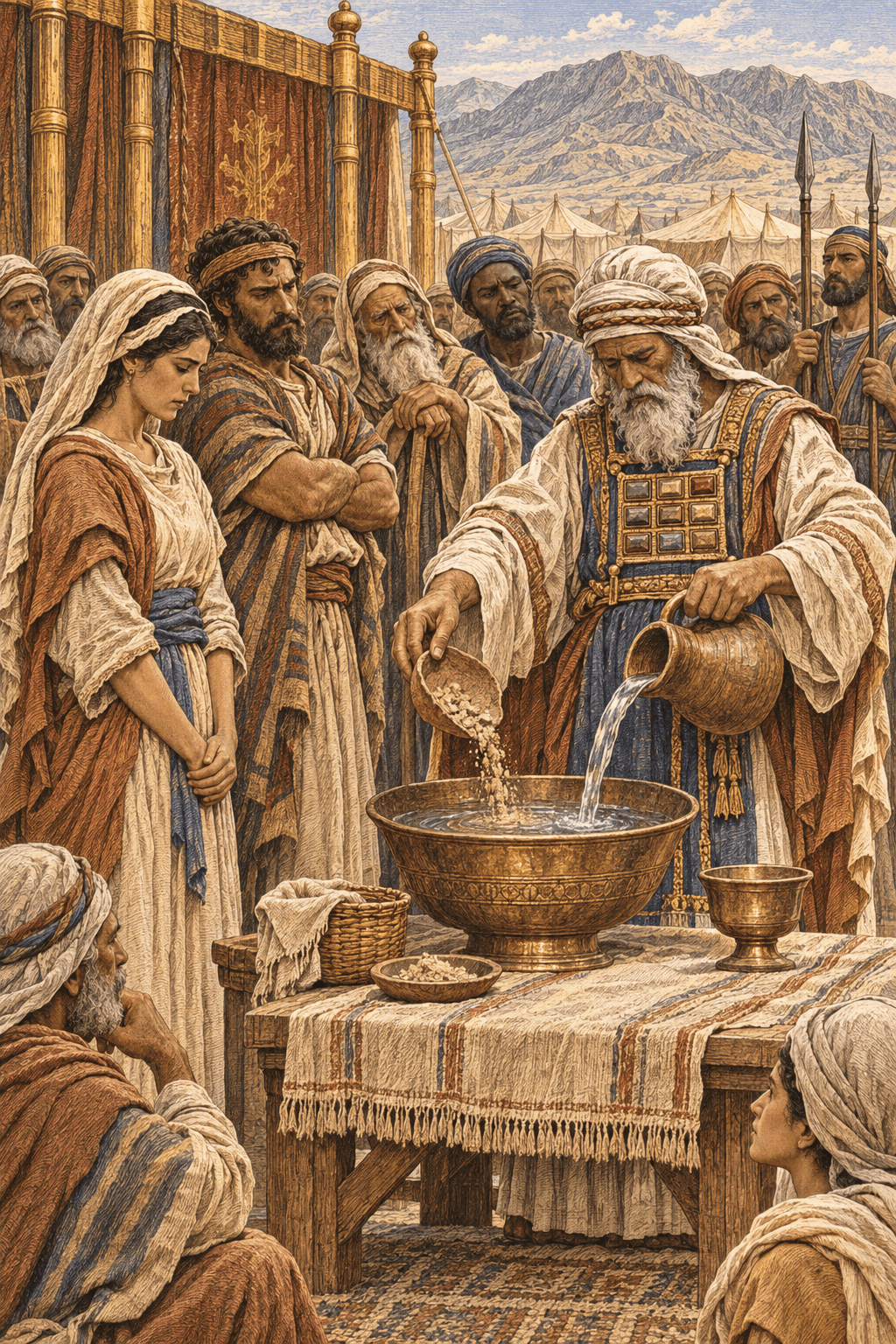
Sanctification extends to each member, and also to the family as the holy church of the home. He cared for the sanctification and cleansing of the home, especially from marital unfaithfulness, for God regards adultery as the most hideous sin, through which the home falls apart and the husband and wife lose their unity in the Lord.
If the adulterous woman confessed, she was divorced and did not receive her dowry. If she did not confess, she drank of the holy water, which the priest put in an earthen vessel and on which he sprinkled dust from the floor of the tabernacle, so that it became bitter water. She drank it with her head uncovered. If she was guilty, her belly swelled and her thigh rotted, that is, she was struck with a kind of paralysis and became a reproach before all. But if she was pure, she conceived and received glory. This is the law of jealousy concerning the wife.
The Lord wanted the home to be holy, as a small picture of the whole congregation, resting not on sin but on true holiness. Either a man confesses his adultery, and the home is dissolved and the guilty one offers repentance to God; or he conceals it, and God exposes him, and he falls into bodily and psychological pain and is ruined socially, besides his eternal destruction. Wonderfully, God took this matter into His own hands, to give assurance to the injured or innocent party. But the husband must come before God in His Church, offering with his wife her offering, “the tenth part of an ephah of barley meal; he shall pour no oil upon it, nor put frankincense thereon; for it is an offering of jealousy, an offering of memorial, bringing iniquity to remembrance” (15). No oil is poured on it, because it is an offering of bitterness, since her husband’s soul has been embittered; and because she did not confess, if she is guilty, she is exposed, and there is no oil to soothe her wound and no frankincense (prayer) to intercede for her! This is the portion of the man who conceals his sins, for “He that covereth his sins shall not prosper” (Proverbs 28:13).
Truly, how much we need, in our family problems, to come with the bitterness of our heart to God in His Church, and each one confess his fault and offer our bitter souls as an offering to Him… And when we cast our burdens on God, we no longer doubt one another!
In this law the dust points to death, turning the water into bitterness, while the water points to the Word; as though the word of God becomes a savour of life unto life and of death unto death. It exposes the soul: if it is arrogant and defiled, it comes under death, the curse and bitterness; but if it is pure, as a bride of Christ sanctified in Him, it bears glory and gives birth to the fruits of the Spirit, and has many virtues. Therefore the Psalmist says: “Search me, O God, and know my heart: try me, and know my thoughts: And see if there be any wicked way in me, and lead me in the way everlasting” (Psalm 139:23–24).
Notes and References
[31] A homily read at the eleventh hour of Monday of Holy Pascha (Holy Week).