
When God brought the people out of the land of bondage, He set Himself up as King over them (1 Samuel 12:12), not to dominate them but to shepherd them and to care for all their affairs, spiritually, psychologically and socially. For this reason He gave them His divine constitution, found in the Book of Leviticus, in the first month of the second year of the Exodus, that is, the second year of the beginning of His reign over them. Immediately after this came His divine command to take a census of the men of war.
1. The Divine Command to Number the People
KJV · Verses 1–4
1 And the Lord spake unto Moses in the wilderness of Sinai, in the tabernacle of the congregation, on the first day of the second month, in the second year after they were come out of the land of Egypt, saying, 2 Take ye the sum of all the congregation of the children of Israel, after their families, by the house of their fathers, with the number of their names, every male by their polls; 3 From twenty years old and upward, all that are able to go forth to war in Israel: thou and Aaron shall number them by their armies. 4 And with you there shall be a man of every tribe; every one head of the house of his fathers.
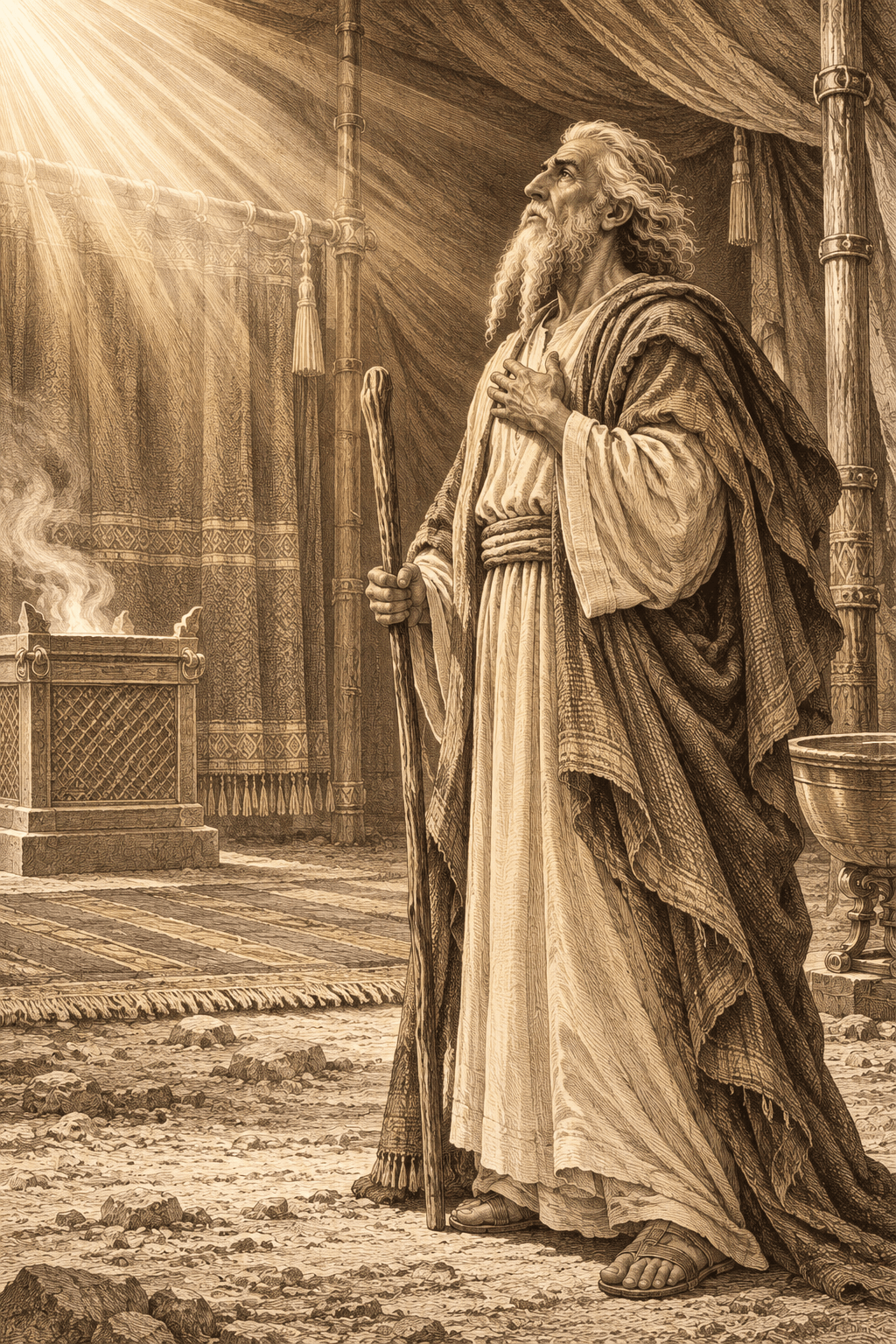
“And the LORD spake unto Moses in the wilderness of Sinai, in the tabernacle of the congregation… saying, Take ye the sum of all the congregation of the children of Israel, after their families, by the house of their fathers, with the number of their names, every male by their polls” (1–2).
The Lord Himself took over the leadership of the people as a King who arranges all their affairs… He issued His royal command to His servant Moses the prophet in the tabernacle of the congregation, as in a royal palace. This came after the first census, which was taken to collect everyone’s contribution toward the cost of the tabernacle (Exodus 38:25–26); but that first census was not recorded after their fathers’ houses and their families as this census was.
Was the Census Necessary?
Moses and Aaron were bound by a divine command to carry out this census, even though God rebuked David the prophet and punished him severely for taking a census (2 Samuel 24; 1 Chronicles 21). That was because David wanted by this act to satisfy the pride of his heart with the human resources under his authority, or to display these resources before himself and others, something that grieves the heart of God and holds back the grace of God from working in a man’s life, especially in spiritual leaders. The census here carried nothing of this in the heart of Moses or Aaron; it came by divine command to fulfil divine purposes, among them:
A) Perhaps God wanted to declare to the children of Abraham that they were reaping the fruits of their father’s faith and obedience, so that God’s promises to him were fulfilled in them: “And thy seed shall be as the dust of the earth, and thou shalt spread abroad to the west, and to the east, and to the north, and to the south” (Genesis 28:14). He wanted to bind them to walk in the spirit of their father, so that they might enjoy the divine promises abundantly.
B) If God is called the “Shepherd of Israel” (Psalm 80:1), then numbering them confirms His care for each one of them, so that none of them may perish. He wants to write their names in the book of life, to bring them all into the heavenly Jerusalem and let them enjoy the new land. He numbers His holy children in order to grant them glory. As Origen says:
Do you want proof that the number of the saints is counted before God? Hear what David the prophet says: “He telleth the number of the stars; he calleth them all by their names” (Psalm 147:4). And the Saviour was not content to fix the number of the disciples He chose; He also said that the hairs of their heads are numbered: “But the very hairs of your head are all numbered” (Matthew 10:30). He does not mean the hair that we cut and throw away, or the hair that falls out with old age and dies, but the hair that was shaved (from Samson), through which he bore the power of the Holy Spirit (Judges 16)… I mean the strength of the spirit and the thought that springs from the power of perception and understanding, which is symbolized by the heads of the disciples. [1]
It is as though God not only numbers His children and knows them by their names, but also counts their spiritual resources, to support them with spiritual understanding and help them by His Holy Spirit.
C) God commanded that this census be prepared in order to distinguish between the native-born and the stranger, not because God shows partiality to anyone, but to move us from a state of estrangement from God to nearness to Him, so that every believer may be sure that he belongs to God’s people and is a member of the heavenly family. As the Apostle Paul says: “Now therefore ye are no more strangers and foreigners, but fellowcitizens with the saints, and of the household of God” (Ephesians 2:19). For the dangerous blow with which the enemy crushes many is to make them doubt that the promise is theirs, and that they are children of God whom He cares for and accompanies. Therefore the wicked often repeat: “The LORD hath forsaken the earth, and the LORD seeth not” (Ezekiel 9:9). When the wicked man has become earth, having nothing in heavenly things, he feels that the Lord has left him and does not see him, and so he increases in wickedness and falls into despair.
D) This census revealed the manner of God’s work, for He is a God of order and not of confusion (1 Corinthians 14:33). The divine command attended to every small and great matter, so that this people might walk in the wilderness in complete order, not only in the rite of worship, with its sacrifices and continual prayers, but even in their manner of travelling through the wilderness and in fixing the position of each tribe in relation to the tabernacle wherever it rested, something beyond description, as we shall see. It is as though God wants His believers to live in a spirit of wisdom and good management in their study of Scripture, their prayers, their fasts, their struggle in the virtues and their conduct. Faith affirms order and arrangement with wisdom and spirituality, without enslaving man to order in dryness and rigidity. It affirms the general order of the Church with understanding and vitality, so that the believers work by the Holy Spirit dwelling in them, without their lives turning into a dry routine without spirit! Therefore the Apostle says: “Now we exhort you, brethren, warn them that are unruly” (1 Thessalonians 5:14); and he also says: “Let all things be done decently and in order” (1 Corinthians 14:40).
E) Perhaps this census moved the people to care for their genealogies until Christ, to Him be the glory, the Word of God Incarnate, should come, so that they might be sure of His Person, that He is the promised Son of David. The Messiah came into the world as Saviour of mankind, and the genealogical records came to an end; no one any longer knows from which tribe he comes.
When Was This Census Taken?
Holy Scripture fixes the date of this census as the second year of the Exodus, on the first day of the second month (1). This date was not without purpose: God wanted to register His children after they had passed through six spiritual stages, through which they were made fit for this honour as children of God, worthy to have their names written in the book of life. These stages are:
A) Their breaking away from Satan (Pharaoh), their liberation from his bondage and their separation from him who rules over the soul and corrupts it.
B) Their enjoyment of holy Baptism (their crossing of the Red Sea).
C) Their struggle against the devil (the war with Amalek).
D) Their enjoyment of the heavenly Word of God as food for their souls (the manna), and their drinking from the Rock (Christ the Lord).
E) Their acquiring the virtuous life through God’s dwelling within them (the tabernacle of the congregation in the midst of the camp).
F) Their enjoyment of continual union with God through the holy sacrifice (the sacrifices and offerings) and the divine commandment (the Law).
On this Origen says:
Why was the people not numbered when they came out of Egypt? Because Pharaoh was still pursuing them. And why was it not numbered after crossing the Red Sea, when it reached the wilderness? Because the Israelites had not yet been tested, the enemies had not yet attacked them, they had not fought Amalek, and they had not won the victory. But one victory is not enough for them to attain perfection… The tabernacle of the congregation was set up, and still the time for the numbering had not come. But when the Law was given to Moses, the way of offering sacrifices was laid down, the rites of purification were made clear, and the laws and mysteries of sanctification were set in place, then came God’s command to number the people. [2]
The Census List
God defined the group to be entered in the census list by conditions that carry spiritual meanings, namely:
A) Males, not females (2).
B) Those twenty years old and upward (3).
C) Those able to go to war (3).
D) Those belonging to the people, not strangers (4).
E) The exemption of the Levites from the census (47).
First, males are numbered and not females. This is not a preference of one sex over the other. On the literal side, this census was prepared as lists of men of war, which is properly the work of men rather than women. On the spiritual side, the commandment is addressed to all believers thus: “quit you like men, be strong” (1 Corinthians 16:13). This commandment is addressed to men and women, the elderly, children and youth. It does not carry the literal sense, but the obligation of every believer to grow to maturity and to struggle spiritually against sin and evil like a man of war, bearing responsibility and knowing no pampering. Therefore Origen says:
As long as any of us keeps the qualities of feminine weakness and lukewarmness… we are not worthy to be numbered before God in the pure and holy Book of Numbers. [3]
Second, those twenty years old and upward are numbered; that is, the believer has passed beyond spiritual childhood and gone forward into the life of spiritual maturity. As Origen says:
The present text teaches me that if I pass beyond the naivety of childhood, that is, if I cease to have childish thoughts, for “when I became a man, I put away childish things” (1 Corinthians 13:11), I say that I have become a young man able to overcome the wicked one (1 John 2:13), and I appear worthy to be among those of whom it is said that they go forth in strength… and I am counted worthy of the divine numbering. But if any of us has wavering carnal thoughts… he is not worthy to be numbered before God in the pure and holy Book of Numbers. [4]
In his commentary on the Gospel of our teacher Matthew the Evangelist, on the feeding of the multitudes, Origen [5] noted the words of Scripture: “And they that had eaten were about five thousand men, beside women and children” (Matthew 14:21). He observed that the women and children, spiritually, were excluded because they were not worthy to be numbered. For those who enjoy the divine blessing should be men, and should sit down on the grass (Matthew 14:19), which is a symbol of the flesh (Isaiah 40:6); that is, they bring the flesh into subjection under their mature souls, strong in the spirit!
Third, those able to go to war. The matter does not stop at age; those who are numbered must be spiritually strong, able to confront Satan and his wiles for the sake of the kingdom of God.
Fourth, those belonging to God’s people. The matter does not stop at age and ability (strength); one must be holy, having received by the Spirit of God sonship to God and belonging to the holy family, taking the Father as his Father and the Church as his mother, and struggling lawfully by the Spirit of God working in him as a member of the holy body of Christ. Origen [6] says that many have strength but are not worthy to enjoy being registered in the divine census, because they have not accepted spiritual belonging to God in His holy Church. The Greeks, for example, had strength in philosophical thought for the sake of human glory; the Chaldeans had strength in astronomical studies without caring for the spiritual life, so that they had the knowledge that puffs up, being without spirit; and the Egyptians had human wisdom, but far from God… We need not only to enjoy these abilities, but to have them through our belonging to the holy body of Christ.
Fifth, the exemption of the Levites, a matter we shall return to at the end of this chapter.
2. The Appointment of the Heads of the Tribes
KJV · Verses 5–46
5 And these are the names of the men that shall stand with you: of the tribe of Reuben; Elizur the son of Shedeur. 6 Of Simeon; Shelumiel the son of Zurishaddai. 7 Of Judah; Nahshon the son of Amminadab. 8 Of Issachar; Nethaneel the son of Zuar. 9 Of Zebulun; Eliab the son of Helon. 10 Of the children of Joseph: of Ephraim; Elishama the son of Ammihud: of Manasseh; Gamaliel the son of Pedahzur. 11 Of Benjamin; Abidan the son of Gideoni. 12 Of Dan; Ahiezer the son of Ammishaddai. 13 Of Asher; Pagiel the son of Ocran. 14 Of Gad; Eliasaph the son of Deuel. 15 Of Naphtali; Ahira the son of Enan. 16 These were the renowned of the congregation, princes of the tribes of their fathers, heads of thousands in Israel. 17 And Moses and Aaron took these men which are expressed by their names: 18 And they assembled all the congregation together on the first day of the second month, and they declared their pedigrees after their families, by the house of their fathers, according to the number of the names, from twenty years old and upward, by their polls. 19 As the Lord commanded Moses, so he numbered them in the wilderness of Sinai. 20 And the children of Reuben, Israel's eldest son, by their generations, after their families, by the house of their fathers, according to the number of the names, by their polls, every male from twenty years old and upward, all that were able to go forth to war; 21 Those that were numbered of them, even of the tribe of Reuben, were forty and six thousand and five hundred. 22 Of the children of Simeon, by their generations, after their families, by the house of their fathers, those that were numbered of them, according to the number of the names, by their polls, every male from twenty years old and upward, all that were able to go forth to war; 23 Those that were numbered of them, even of the tribe of Simeon, were fifty and nine thousand and three hundred. 24 Of the children of Gad, by their generations, after their families, by the house of their fathers, according to the number of the names, from twenty years old and upward, all that were able to go forth to war; 25 Those that were numbered of them, even of the tribe of Gad, were forty and five thousand six hundred and fifty. 26 Of the children of Judah, by their generations, after their families, by the house of their fathers, according to the number of the names, from twenty years old and upward, all that were able to go forth to war; 27 Those that were numbered of them, even of the tribe of Judah, were threescore and fourteen thousand and six hundred. 28 Of the children of Issachar, by their generations, after their families, by the house of their fathers, according to the number of the names, from twenty years old and upward, all that were able to go forth to war; 29 Those that were numbered of them, even of the tribe of Issachar, were fifty and four thousand and four hundred. 30 Of the children of Zebulun, by their generations, after their families, by the house of their fathers, according to the number of the names, from twenty years old and upward, all that were able to go forth to war; 31 Those that were numbered of them, even of the tribe of Zebulun, were fifty and seven thousand and four hundred. 32 Of the children of Joseph, namely, of the children of Ephraim, by their generations, after their families, by the house of their fathers, according to the number of the names, from twenty years old and upward, all that were able to go forth to war; 33 Those that were numbered of them, even of the tribe of Ephraim, were forty thousand and five hundred. 34 Of the children of Manasseh, by their generations, after their families, by the house of their fathers, according to the number of the names, from twenty years old and upward, all that were able to go forth to war; 35 Those that were numbered of them, even of the tribe of Manasseh, were thirty and two thousand and two hundred. 36 Of the children of Benjamin, by their generations, after their families, by the house of their fathers, according to the number of the names, from twenty years old and upward, all that were able to go forth to war; 37 Those that were numbered of them, even of the tribe of Benjamin, were thirty and five thousand and four hundred. 38 Of the children of Dan, by their generations, after their families, by the house of their fathers, according to the number of the names, from twenty years old and upward, all that were able to go forth to war; 39 Those that were numbered of them, even of the tribe of Dan, were threescore and two thousand and seven hundred. 40 Of the children of Asher, by their generations, after their families, by the house of their fathers, according to the number of the names, from twenty years old and upward, all that were able to go forth to war; 41 Those that were numbered of them, even of the tribe of Asher, were forty and one thousand and five hundred. 42 Of the children of Naphtali, throughout their generations, after their families, by the house of their fathers, according to the number of the names, from twenty years old and upward, all that were able to go forth to war; 43 Those that were numbered of them, even of the tribe of Naphtali, were fifty and three thousand and four hundred. 44 These are those that were numbered, which Moses and Aaron numbered, and the princes of Israel, being twelve men: each one was for the house of his fathers. 45 So were all those that were numbered of the children of Israel, by the house of their fathers, from twenty years old and upward, all that were able to go forth to war in Israel; 46 Even all they that were numbered were six hundred thousand and three thousand and five hundred and fifty.
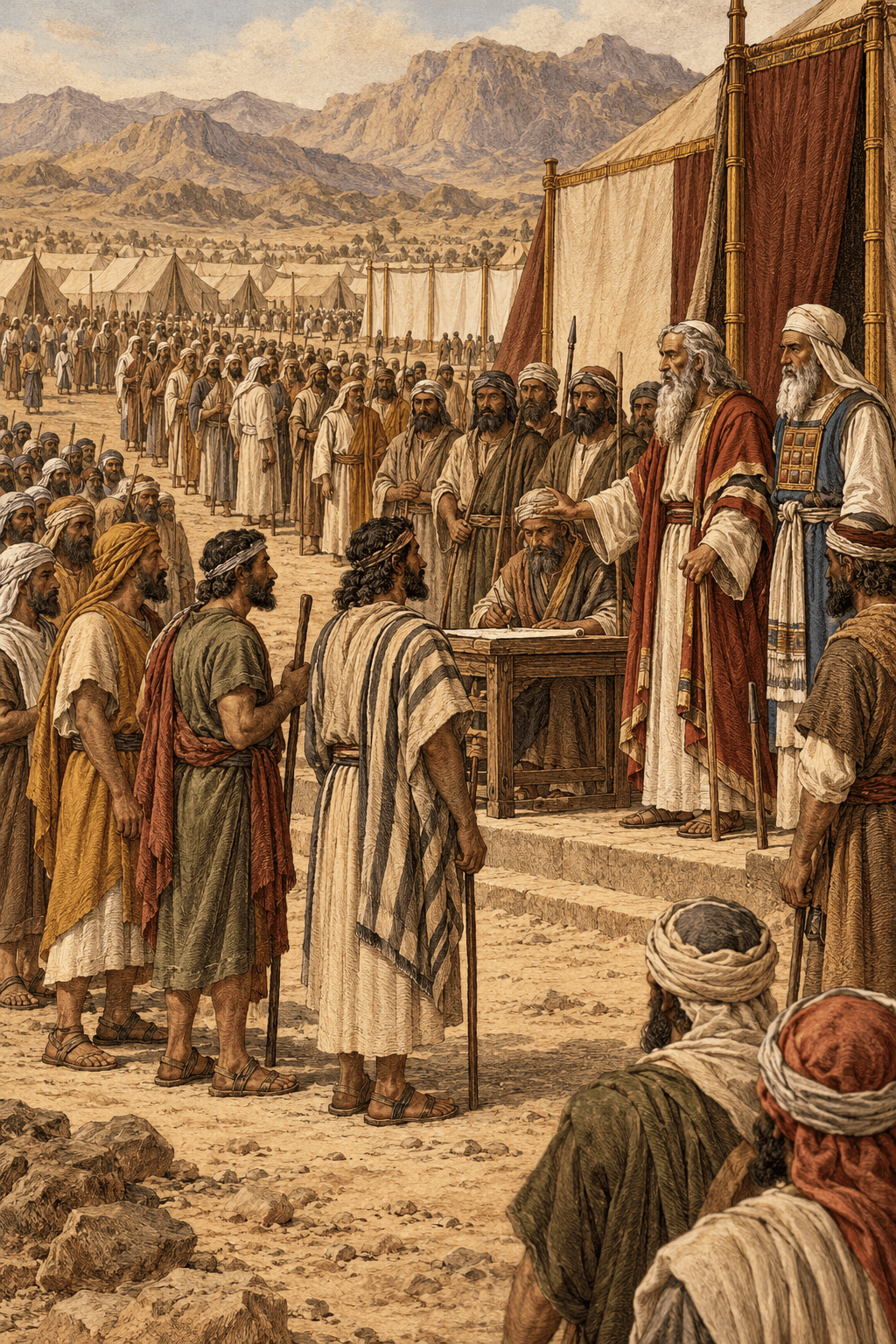
For the census to be carried out by Moses and Aaron, heads of the tribes had to be chosen to support them in this work. This was done by divine appointment, as by a heavenly decree: first, to spare Moses the prophet the burden of thinking about who was fit; and second, to leave no room for struggles among the people over positions of leadership.
The setting up of these heads revealed God’s concern to affirm the role of “the people,” or “the laity,” if the expression is permitted, in the life of the Church. Neither the prophet, nor the high priest, nor the priests and Levites are to manage things alone; the people are bound to work with them, each supporting the other, and all working under the leadership of the divine commandment by the Spirit of God.
In appointing the heads of the tribes, God chose men bearing names with spiritual meanings. He chose those who see in God their Father (Eliab), their Rock (Elizur) and their reward (Nethaneel), who hold fast to Him and put all their hope in Him. Some names also declare human relationships: some see in the wicked brethren but do not lean on them (Ahira), while in the righteous they see brethren who help them (Ahiezer); and there are those who are wary of Satan as a deceiving serpent… The following are the meanings of the names of the tribes:
- Reuben (son of vision): Elizur (my God is a rock, a wall).
- Simeon (one who hears): Shelumiel (God is peace).
- Judah (confession): Nahshon (serpent).
- Issachar (reward): Nethaneel (gift of God).
- Zebulun (dwelling): Eliab (my God is Father).
- Ephraim (fruitfulness): Elishama (my God has heard).
- Manasseh (forgetting): Gamaliel (God is my reward).
- Benjamin (son of the right hand): Abidan (my Father is judge).
- Dan (judging): Ahiezer (my brother is a helper).
- Asher (happy): Pagiel (God has met me).
- Gad (strong): Eliasaph (God adds).
- Naphtali (wide): Ahira (my brother is evil).
It is wonderful that the names concerning our relationship with God make up the great majority (nine names), as though God wants us to fix our eyes on Him as our Father, who meets us, helps us, hears us and rewards us… As for our relationship with the brethren, it is limited to two names: the brother who helps, that is, the righteous man who supports us through the fellowship of love that binds us together; and the wicked brother, whom we must bear with a wide heart. As for our relationship with Satan, He was content with one name, so that he may not occupy our mind and we may not be troubled by him, since he has become powerless over us.
Note that the names of the heads of the tribes are in harmony with the names of the tribes themselves.
Elizur was chosen for Reuben, so that whoever finds a place in this tribe, that is, has a clear vision of faith and spiritual knowledge, for Reuben means “son of vision,” finds his head Elizur, that is, finds his God to be his rock or his wall, in whom he takes refuge and is protected from all the attacks of Satan the enemy.
Whoever takes refuge in the tribe of Simeon, that is, is one who “hears” God and obeys, meets his head Shelumiel, “God is peace”; for whoever listens to God enjoys the divine peace which no one can take from him, as though obedience to the divine commandment is the secret of our true peace.
Nahshon, “serpent,” was chosen as head for Judah, “confession”; for whoever believes in Christ the Lord and confesses Him treads the old serpent under his feet.
Whoever finds his portion in the tribe of Issachar, “reward,” submits to Nethaneel, “gift of God,” realizing that every reward or recompense he enjoys is not the fruit of his own righteousness but is the free gift of God, offered to us through the merits of the Blood.
Let us flee to the tribe of Zebulun, “dwelling,” so that God dwells in us and we dwell with Him and abide in Him; in this way we meet the head Eliab, “my God is Father,” that is, we discover the fatherhood of God.
So too Elishama, “my God has heard,” was chosen for Ephraim, “increasing fruit,” as though the abundant fruit of the Spirit in the life of believers is the fruit of God’s hearing their petition.
Gamaliel, “God is my reward,” was chosen for Manasseh, “forgetting,” as though when a man forgets the glory and pleasures of this world, he finds God Himself his reward.
For Benjamin, “son of the right hand,” Abidan, “my Father is judge,” as though we have no entry into God’s eternal kingdom and no enjoyment of sitting at His right hand unless we accept the Judge as our Father, that is, through our enjoyment of our sonship to Him.
For Dan, “judging,” Ahiezer, “my brother is a helper,” as though when a man judges himself, he finds his brother a help to him.
For Asher, “happy,” Pagiel, “God has met me,” for there is no true happiness for the human soul except in its meeting with Him.
For Gad, Eliasaph, “God adds”; for when a man is earnest in his life and strict with himself, God adds His graces to him more and more, that is, he grows more and more in the spirit.
And finally, for Naphtali, “wide,” Ahira, “my brother is evil”; for the wide heart carries the wicked as brethren and swallows them up in its love.
The numbering began with the sons of Leah, then Rachel, then the two handmaids, without following the order of their births. It is as though God wanted to affirm that divine glories are given not according to age but according to spiritual growth and practical union with God.
The number of Judah, from whom Christ the Lord came according to the flesh, exceeded all the tribes; and it is Judah that leads the procession toward the east, as we shall see, as though Christ the Lord is the leader of our procession toward the heavenly Jerusalem.
3. The Exemption of the Levites
KJV · Verses 47–54
47 But the Levites after the tribe of their fathers were not numbered among them. 48 For the Lord had spoken unto Moses, saying, 49 Only thou shalt not number the tribe of Levi, neither take the sum of them among the children of Israel: 50 But thou shalt appoint the Levites over the tabernacle of testimony, and over all the vessels thereof, and over all things that belong to it: they shall bear the tabernacle, and all the vessels thereof; and they shall minister unto it, and shall encamp round about the tabernacle. 51 And when the tabernacle setteth forward, the Levites shall take it down: and when the tabernacle is to be pitched, the Levites shall set it up: and the stranger that cometh nigh shall be put to death. 52 And the children of Israel shall pitch their tents, every man by his own camp, and every man by his own standard, throughout their hosts. 53 But the Levites shall pitch round about the tabernacle of testimony, that there be no wrath upon the congregation of the children of Israel: and the Levites shall keep the charge of the tabernacle of testimony. 54 And the children of Israel did according to all that the Lord commanded Moses, so did they.
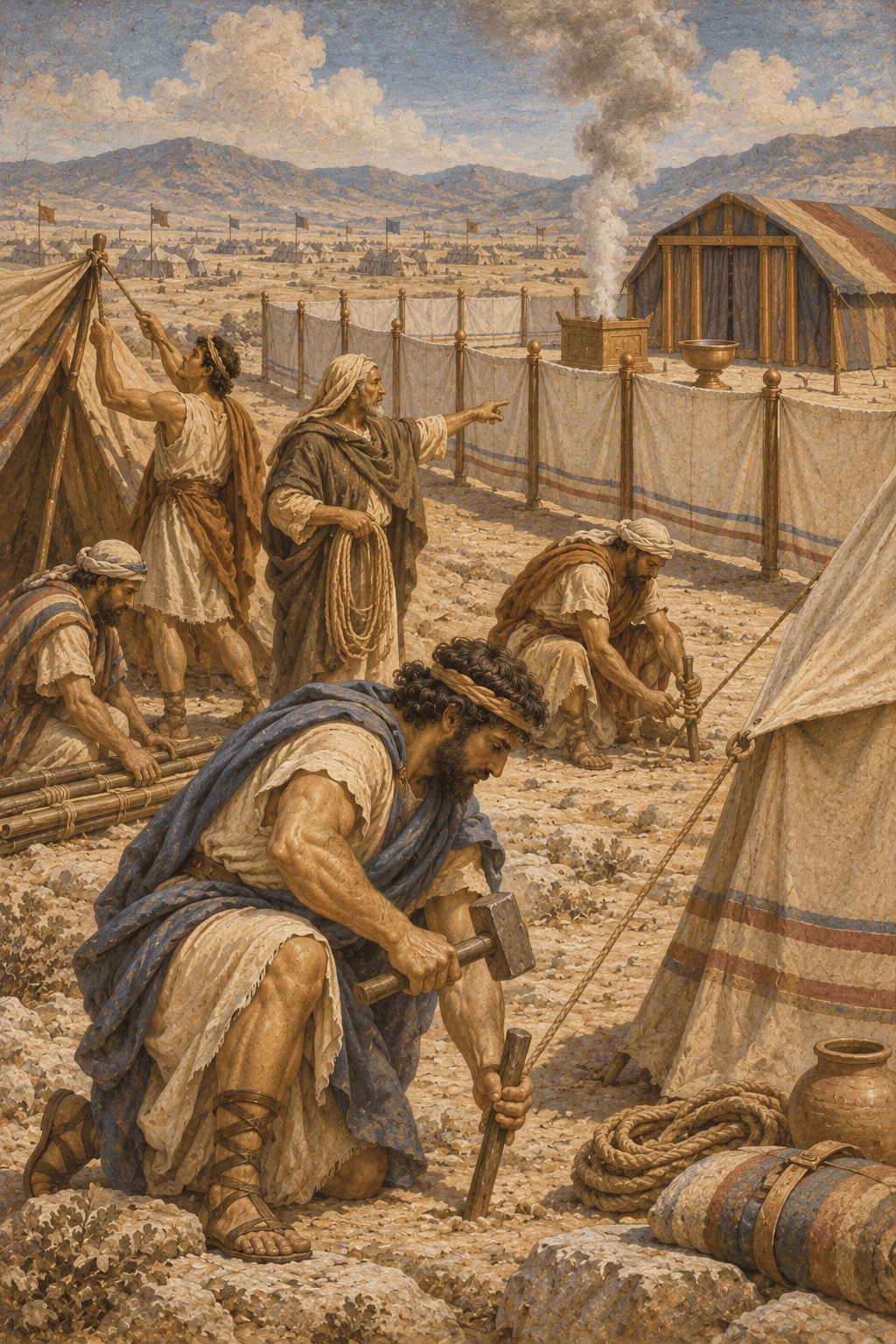
The census did not include the tribe of Levi, which was set apart for the service of the tabernacle and for carrying it (47–51). They represent the spiritual side of the congregation. They are exempted from this work, not to live without work, but to devote themselves to spiritual work: they serve the congregation for its sanctification and guard the camp spiritually. In this way what is Caesar’s is rendered to Caesar, and what is God’s to God.
Notes and References
[1] Origen, Homilies on Numbers 1.
[2] Ibid.
[3] Ibid.
[4] Ibid.
[5] Origen, Commentary on Matthew 11.3.
[6] Origen, Homilies on Numbers 1.