
In the previous two chapters (Leviticus 18–19) revelation gave us the law of holiness, declaring that its purpose is cleaving to the Holy God, repeating the phrase “I am the LORD your God” at the end of almost every commandment, and asking us to be sanctified to Him, so that His marks work in us and set us apart from the pagans. Now He gives severe punishments against the doers of evil, especially sorcery and adultery. The reason for this severity is, on the one hand, to reveal the working of evil within the soul, and on the other, to purify the holy congregation from the corrupt leaven, lest the whole be corrupted.
Though the punishments suited the men of the Old Testament, at the same time they frighten us as men of the New Testament, for they make clear to us the ugliness of sin and our duty to flee from it.
Introduction to Church Punishments
The punishments in the Old Testament were harsh, perhaps because God was dealing with a people primitive in its knowledge of God and stiffnecked. Out of His love for them He used severity, not for revenge, but to deter all by the fall of some under the hard rod of discipline. What God allowed of discipline or punishment was a sign of His care for His people and His desire for their salvation and sanctification. Besides this, these disciplines revealed the working of sin in the heart and the inner life… The stoning of the adulterer reveals the true destruction and eternal death that has struck his heart within; if we groan at the stoning of a man, all the more should we burn over the perdition of his soul. In the New Testament the Church does not use harsh criminal punishments, for she deals with her children on the level of maturity; but she has the right to impose disciplinary punishment to draw the fallen toward repentance, as Paul the Apostle did with the young man who committed evil with his father’s wife (1 Corinthians 5:1–5). He separated him from the Church until he offered true repentance; then the Apostle hastened to write to the Church to receive him, lest he perish from excessive sorrow (2 Corinthians 2:6–7). On the other hand, the punishments in the Old Testament represent the criminal law with its penalties; but in the New Testament Christianity left civil and criminal legislation, and so on, to the men of law to set as suits the age and the country, for Christianity came to give thought and maturity and left organization and legislation to the community.
1. The Punishment of Pagan Conduct
KJV · Verses 1–8
1 And the Lord spake unto Moses, saying, 2 Again, thou shalt say to the children of Israel, Whosoever he be of the children of Israel, or of the strangers that sojourn in Israel, that giveth any of his seed unto Molech; he shall surely be put to death: the people of the land shall stone him with stones. 3 And I will set my face against that man, and will cut him off from among his people; because he hath given of his seed unto Molech, to defile my sanctuary, and to profane my holy name. 4 And if the people of the land do any ways hide their eyes from the man, when he giveth of his seed unto Molech, and kill him not: 5 Then I will set my face against that man, and against his family, and will cut him off, and all that go a whoring after him, to commit whoredom with Molech, from among their people. 6 And the soul that turneth after such as have familiar spirits, and after wizards, to go a whoring after them, I will even set my face against that soul, and will cut him off from among his people. 7 Sanctify yourselves therefore, and be ye holy: for I am the Lord your God. 8 And ye shall keep my statutes, and do them: I am the Lord which sanctify you.
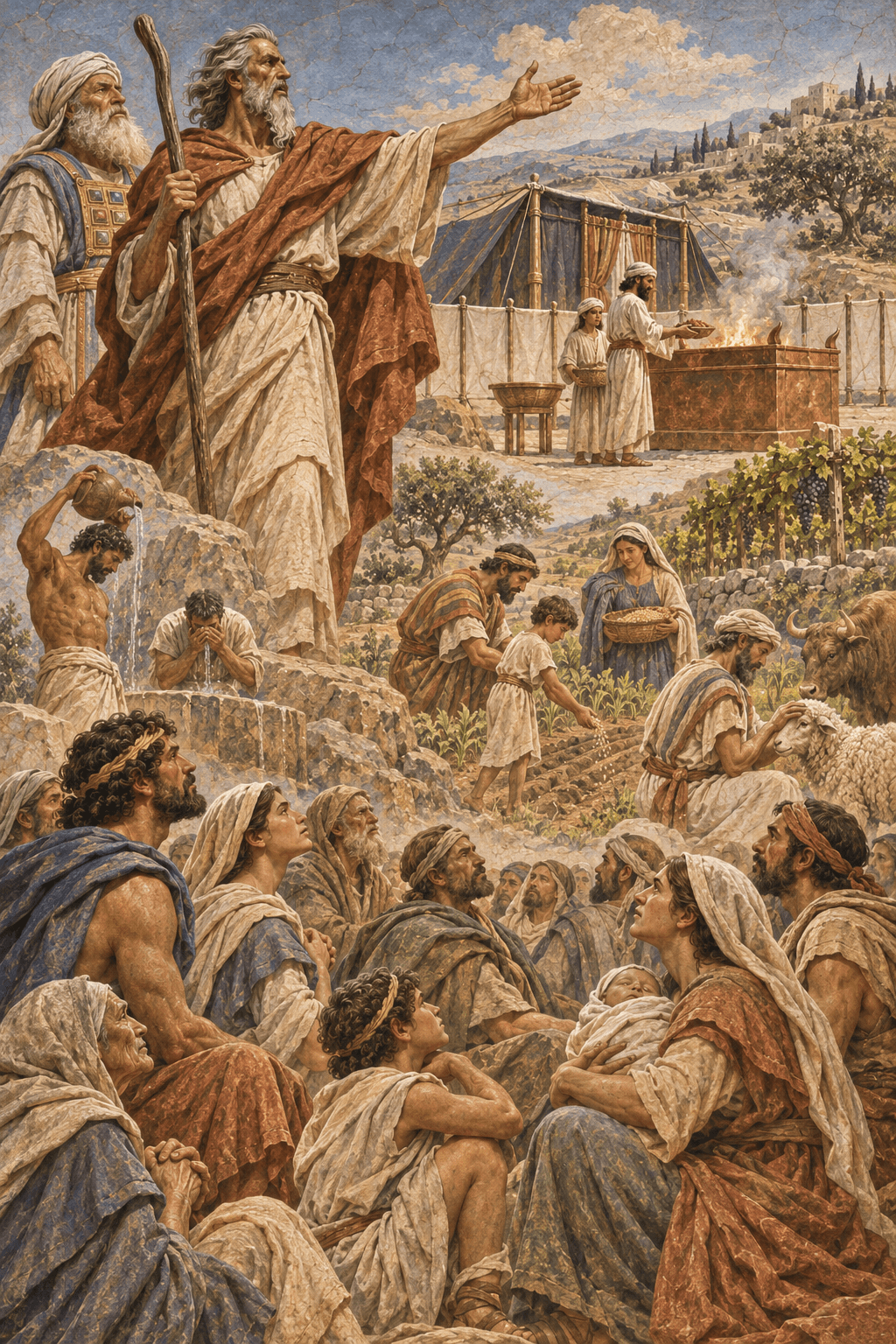
The sentence came that whoever gives of his seed, that is, of his offspring, to the god Molech as a human sacrifice shall be stoned (2), whether he is a Jew or a proselyte (the strangers sojourning in Israel). If the congregation is negligent about him and does not stone him, the Lord Himself sets His face against that man (3) and counts him cut off from the people, and sets His face against his whole family (5).
This sentence also applies to whoever resorts to familiar spirits, consulting them or seeking their help (6), and whoever goes after evil spirits (wizards); he is counted an adulterer, for he has left God, the Bridegroom of his soul, and sought another bridegroom for himself (6).
The sentence of stoning came in the following cases: offering one’s offspring as human sacrifices to the god Molech (Leviticus 20:2); lying with his father’s wife (Leviticus 20:11) or his daughter-in-law (Leviticus 20:12), or with a betrothed virgin (Deuteronomy 22:23–24); lying with a male (Leviticus 20:13) or a beast (Leviticus 20:15); resorting to sorcerers (Leviticus 20:27); cursing one of the parents (Leviticus 20:9); falsely claiming prophecy (Deuteronomy 13:5); blaspheming (Leviticus 24:10–16); breaking the Sabbath (Numbers 15:32–36); urging people to worship idols (Deuteronomy 13:6–11), or practicing it (Deuteronomy 17:2–5), and so on. [258]
Stoning was done in one of two ways. In the first, the condemned was led around the city, so that if anyone had an objection he could come forward, and on the other hand to be a lesson for all. Before the stoning he had first to confess his sins, to show that the sentence on him was just and so that his spirit might be justified and find mercy with God. His hands were bound and he stood on a high place, below which was a great stone. The first witness pushed him from the high place so that he fell striking the stone below; then the second witness threw a great stone on his chest; and if he did not die, the congregation stoned him to death. The second way was stoning with stones directly; the condemned was often given wine mixed with gall to ease his pains.
2. The Punishment of Cursing the Parents
KJV · Verses 9
9 For every one that curseth his father or his mother shall be surely put to death: he hath cursed his father or his mother; his blood shall be upon him.
“For every one that curseth his father or his mother shall be surely put to death… his blood shall be upon him” (9).
Whoever curses God his Father and the holy congregation his mother, through offering his son or daughter as a human sacrifice to Molech, the god of the Ammonites, is stoned; and whoever curses his father or mother according to the flesh is also stoned.
Origen comments on this law:
Among the sins whose punishment is death in the divine Law is: “every one that curseth his father or his mother shall be surely put to death.” The title “father” signifies a great mystery, and the title “mother” too carries honor. According to the spirit, God is your Father and the heavenly Jerusalem is your mother (Galatians 4:26; Hebrews 12:22). This is what we learn from the prophetic and apostolic declarations, for Moses writes in his song: “Is not he thy father that hath bought thee?” (Deuteronomy 32:6); and the Apostle says of the heavenly Jerusalem: “But Jerusalem which is above is free, which is the mother of us all” (Galatians 4:26). The first father for you is God, who begot your spirit, for He says: “I have nourished and brought up children” (Isaiah 1:2); and the Apostle Paul says: “Shall we not much rather be in subjection unto the Father of spirits, and live?” (Hebrews 12:9). The second father is your bodily father, who begot you so that you came into this world… Because the title “father” is holy and majestic, whoever curses his father or his mother shall be put to death… For if you do not honor your bodily father, your insult to him is directed to the Father of spirits (Hebrews 12:9); if you curse your bodily mother, this cursing is attributed to the mother, the heavenly Jerusalem. Whoever insults the servant (father or mother) offends the God of glory. [259]
Again he says:
If this is the sentence for whoever curses his bodily family, how much more for those who insult God with words of cursing and deny that He is the Creator of the world?! Or who offend the heavenly Jerusalem, which is the mother of us all (Galatians 4:26)?! [260]
Some may ask: if the law of the Old Testament sentenced to stoning whoever cursed his father or mother, does the New Testament’s silence about such a sentence mean leniency? Origen answers:
Paul the Apostle says: “Of how much sorer punishment, suppose ye, shall he be thought worthy, who hath trodden under foot the Son of God?” (Hebrews 10:29)… Do not think the Gospel is easy in an absolute way because it has opened the door of forgiveness. [261]
It is as if the Old Testament sentenced whoever cursed one of his parents to stoning, while the New Testament counts it an insult to the blood of the Son of God Himself.
The fathers affirm the believer’s duty to obey the parents, but in the Lord. Saint Cyril of Jerusalem says:
When our feelings toward our earthly fathers are contrary to our relationship with the heavenly Father, we must act on the Lord’s saying: “He that loveth father or mother more than me is not worthy of me” (Matthew 10:37). But as long as they do not oppose our godliness, we are counted ungrateful if we despise their benefits to us, and we deserve the sentence: “He that curseth father or mother, let him die the death” (Exodus 21:17; Matthew 15:4). [262]
3. The Punishment of Adultery
KJV · Verses 10–21
10 And the man that committeth adultery with another man's wife, even he that committeth adultery with his neighbour's wife, the adulterer and the adulteress shall surely be put to death. 11 And the man that lieth with his father's wife hath uncovered his father's nakedness: both of them shall surely be put to death; their blood shall be upon them. 12 And if a man lie with his daughter in law, both of them shall surely be put to death: they have wrought confusion; their blood shall be upon them. 13 If a man also lie with mankind, as he lieth with a woman, both of them have committed an abomination: they shall surely be put to death; their blood shall be upon them. 14 And if a man take a wife and her mother, it is wickedness: they shall be burnt with fire, both he and they; that there be no wickedness among you. 15 And if a man lie with a beast, he shall surely be put to death: and ye shall slay the beast. 16 And if a woman approach unto any beast, and lie down thereto, thou shalt kill the woman, and the beast: they shall surely be put to death; their blood shall be upon them. 17 And if a man shall take his sister, his father's daughter, or his mother's daughter, and see her nakedness, and she see his nakedness; it is a wicked thing; and they shall be cut off in the sight of their people: he hath uncovered his sister's nakedness; he shall bear his iniquity. 18 And if a man shall lie with a woman having her sickness, and shall uncover her nakedness; he hath discovered her fountain, and she hath uncovered the fountain of her blood: and both of them shall be cut off from among their people. 19 And thou shalt not uncover the nakedness of thy mother's sister, nor of thy father's sister: for he uncovereth his near kin: they shall bear their iniquity. 20 And if a man shall lie with his uncle's wife, he hath uncovered his uncle's nakedness: they shall bear their sin; they shall die childless. 21 And if a man shall take his brother's wife, it is an unclean thing: he hath uncovered his brother's nakedness; they shall be childless.
After declaring the punishment of pagan worship and of cursing one of the parents, He spoke of the punishment of adultery in general, then named some shameful cases. In His discussion of this matter we notice the following:
A) The sentence came that the adulterer and the adulteress be put to death if the adulteress was married (10), and this by stoning. The same sentence applies to a woman betrothed to a man who sinned willingly (Deuteronomy 22:23–24). If she was not betrothed, the adulterer was bound to pay a fine and marry the girl.
If a man took a wife and her mother, whether both were alive or one died and he married the other, the sentence came thus: “they shall be burnt with fire, both he and they; that there be no wickedness among you” (14). The same sentence falls if a priest’s daughter falls into whoredom (Leviticus 21:9), or a man sins with his daughter or granddaughter, or with his wife’s daughter or granddaughter, or with his mother-in-law’s mother or father-in-law’s mother… The burning was usually done after the stoning. If stoning with stones reveals what sin did to a person, making him like a stone without feeling, as though the adulterer stones himself by his own heart of stone, burning him with fire points to the ugliness of his evil, for it inflamed his feelings with fires that destroy his soul.
The other punishment is when a man commits evil with his uncle’s wife; He says: “they shall die childless” (20); and a man falls under the same sentence if he does evil with his brother’s wife (21). Here perhaps it means that God strikes them with barrenness (Hosea 4:10), or with the death of their offspring and deprivation of it, or that these children are counted bastards, not sons, that is, illegitimate children without the rights of sons.
B) The Law brings out how much God hates uncleanness by His sentence even on the beast, which has no guilt, with which the evil was committed: it is killed (16), so that no trace of the sin is left… or to declare that sin corrupts even irrational creation.
C) When a person commits evil with a woman, he insults her husband. If someone commits it, for example, with his father’s wife, He says: “he hath uncovered his father’s nakedness” (11). If the woman is wicked and accepted the sin willingly, she is defiled and at the same time offends her husband, for she is one flesh with him.
4. Affirming the Duty to Keep the Commandment
KJV · Verses 22–27
22 Ye shall therefore keep all my statutes, and all my judgments, and do them: that the land, whither I bring you to dwell therein, spue you not out. 23 And ye shall not walk in the manners of the nation, which I cast out before you: for they committed all these things, and therefore I abhorred them. 24 But I have said unto you, Ye shall inherit their land, and I will give it unto you to possess it, a land that floweth with milk and honey: I am the Lord your God, which have separated you from other people. 25 Ye shall therefore put difference between clean beasts and unclean, and between unclean fowls and clean: and ye shall not make your souls abominable by beast, or by fowl, or by any manner of living thing that creepeth on the ground, which I have separated from you as unclean. 26 And ye shall be holy unto me: for I the Lord am holy, and have severed you from other people, that ye should be mine. 27 A man also or woman that hath a familiar spirit, or that is a wizard, shall surely be put to death: they shall stone them with stones: their blood shall be upon them.
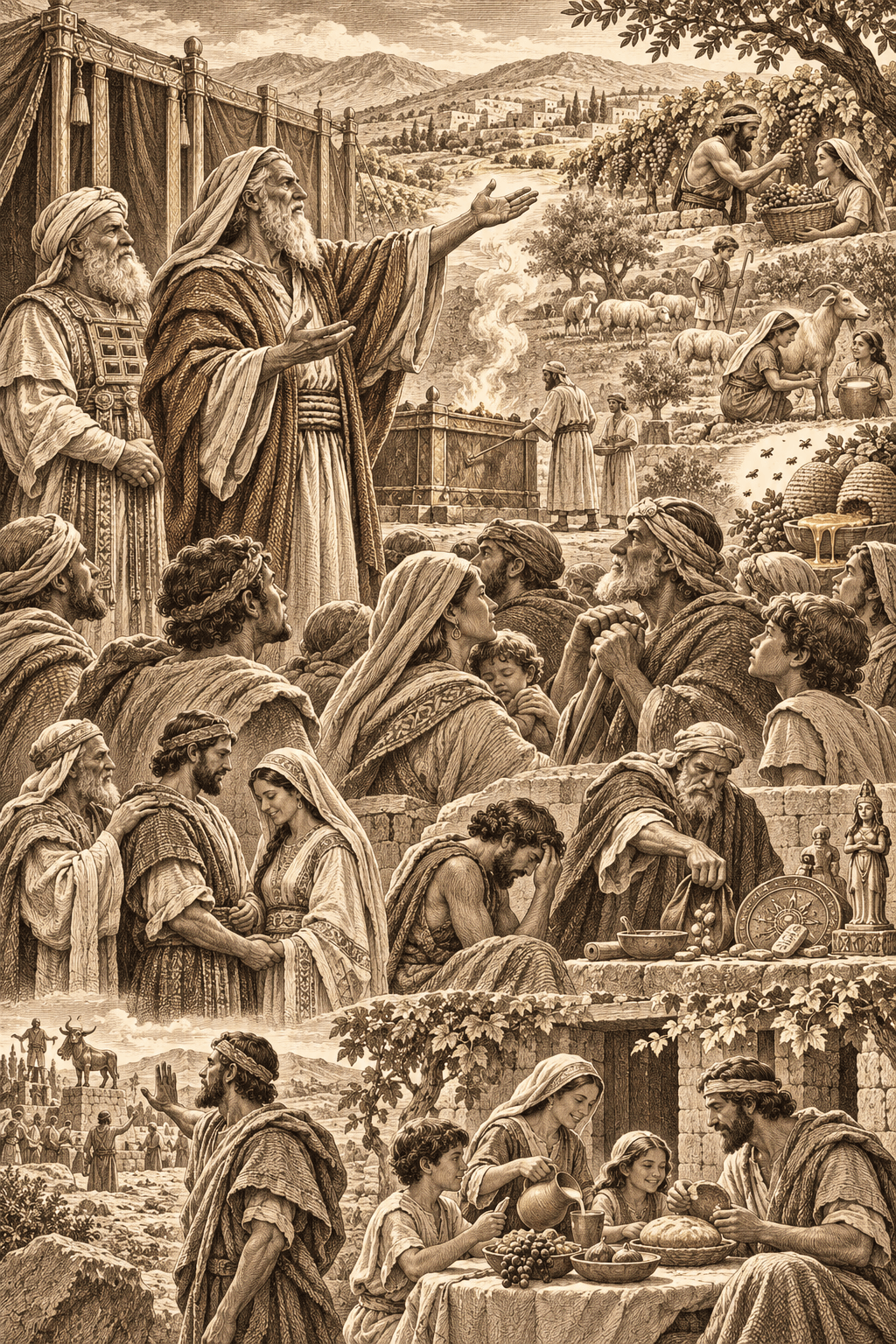
He closes His discussion here by affirming the duty to keep the divine commandment, so that the land itself does not spue us out as it spued out the Canaanites because of their wickedness, and so that we have a special mark and a true witness to the Holy God working in us. But what is more important than all this is, as the Lord says: “And ye shall be holy unto me: for I the LORD am holy” (26). He wants us for Himself, bearing His marks, to share His glories as holy children in Him… He affirms: “Ye shall be… unto me”!
Notes and References
[258] Archdeacon Naguib Guirguis, p. 312.
[259] Origen, In Lev. hom. 11:3.
[260] Ibid.
[261] Ibid. 11:2.
[262] St. Cyril of Jerusalem, Catechetical Lectures 7:15.