
This chapter continues the commentary on chapters 5 and 6, which form one unit in the Arabic original.
1. The Lord’s Assurances to Moses
KJV · Verses 1–13
1 Then the Lord said unto Moses, Now shalt thou see what I will do to Pharaoh: for with a strong hand shall he let them go, and with a strong hand shall he drive them out of his land. 2 And God spake unto Moses, and said unto him, I am the Lord: 3 And I appeared unto Abraham, unto Isaac, and unto Jacob, by the name of God Almighty, but by my name Jehovah was I not known to them. 4 And I have also established my covenant with them, to give them the land of Canaan, the land of their pilgrimage, wherein they were strangers. 5 And I have also heard the groaning of the children of Israel, whom the Egyptians keep in bondage; and I have remembered my covenant. 6 Wherefore say unto the children of Israel, I am the Lord, and I will bring you out from under the burdens of the Egyptians, and I will rid you out of their bondage, and I will redeem you with a stretched out arm, and with great judgments: 7 And I will take you to me for a people, and I will be to you a God: and ye shall know that I am the Lord your God, which bringeth you out from under the burdens of the Egyptians. 8 And I will bring you in unto the land, concerning the which I did swear to give it to Abraham, to Isaac, and to Jacob; and I will give it you for an heritage: I am the Lord. 9 And Moses spake so unto the children of Israel: but they hearkened not unto Moses for anguish of spirit, and for cruel bondage. 10 And the Lord spake unto Moses, saying, 11 Go in, speak unto Pharaoh king of Egypt, that he let the children of Israel go out of his land. 12 And Moses spake before the Lord, saying, Behold, the children of Israel have not hearkened unto me; how then shall Pharaoh hear me, who am of uncircumcised lips? 13 And the Lord spake unto Moses and unto Aaron, and gave them a charge unto the children of Israel, and unto Pharaoh king of Egypt, to bring the children of Israel out of the land of Egypt.
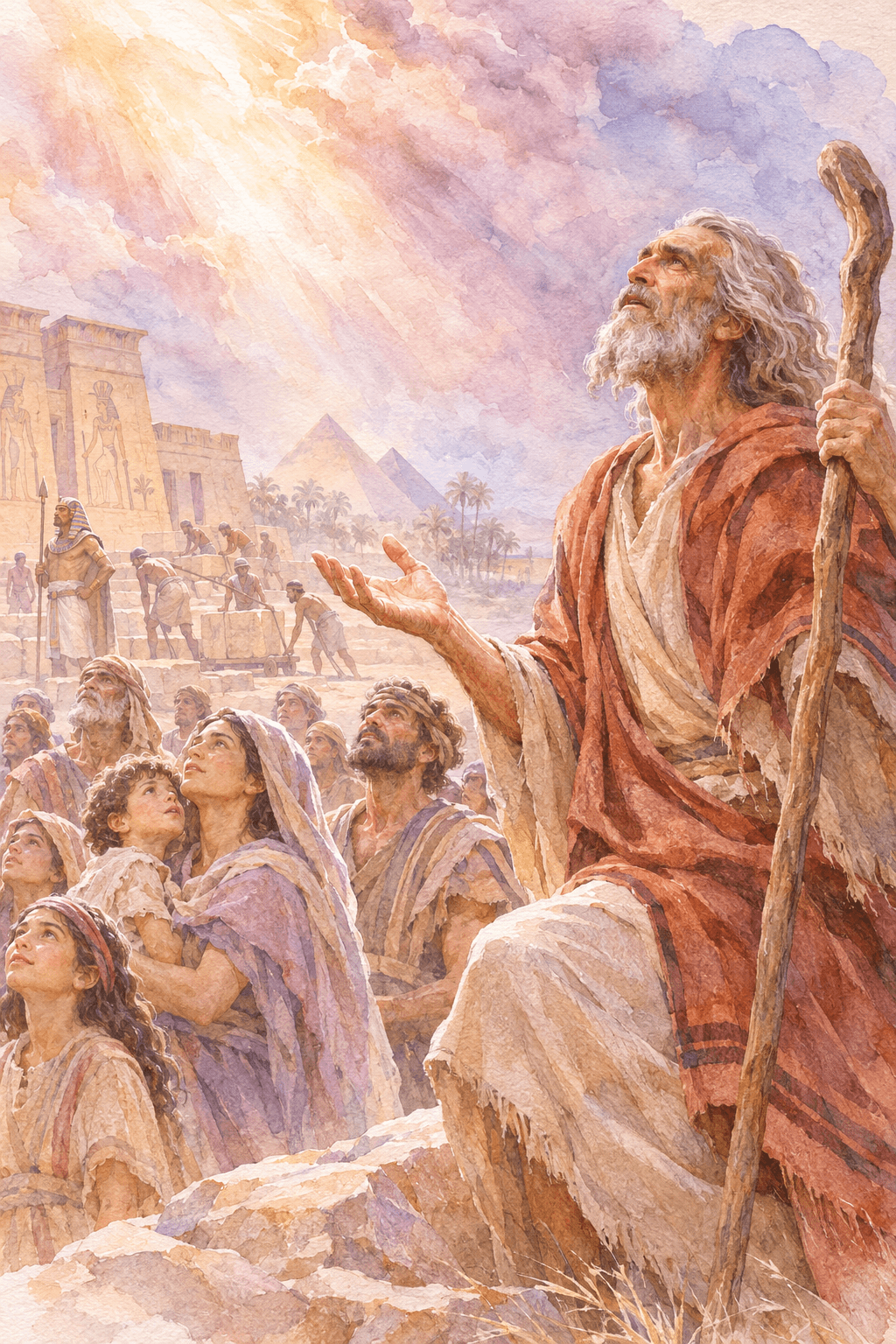
When the people murmured, Moses cried to the Lord and said: “Lord, wherefore hast thou so evil entreated this people? why is it that thou hast sent me? For since I came to Pharaoh to speak in thy name, he hath done evil to this people; neither hast thou delivered thy people at all” (Exodus 5:22–23).
How beautiful it is when the servant enters into reproach with God, when he feels as though his service has failed, presenting to God the accounts of his work!
God accepted this reproach and answered the bitterness of His servant’s heart. If Pharaoh had declared his ignorance of God, saying, “I know not the LORD” (Exodus 5:2), God’s repeated assurances to Moses are: “I am the LORD” (2, 6, 8, 29). He is the Lord who worked in the fathers of old, for He appeared to Abraham, Isaac, and Jacob (3); He works in the present, for He hears the groaning of His people, brings them out from under the burdens, and frees them from bondage (5–6); and He arranges their future, for He will bring them into the land He promised (8).
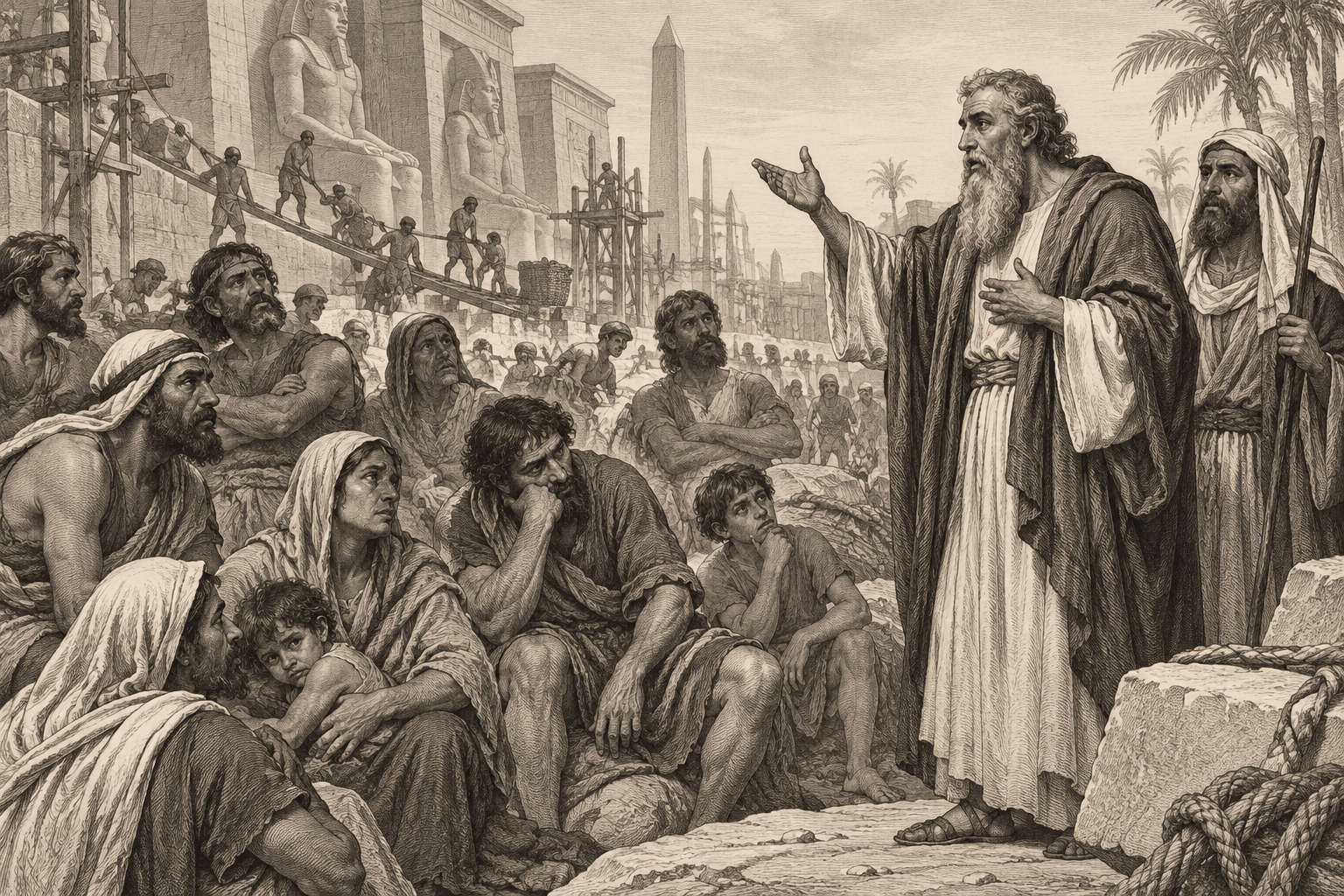
He is the Lord who works for the sake of His holy name, which the devil resists, and for the sake of His promises to His children, for He remains faithful. He also works to raise up for Himself a holy people who enter into communion with Him: “And I will take you to me for a people, and I will be to you a God” (7).
2. The Heads of Their Fathers’ Houses
KJV · Verses 14–28
14 These be the heads of their fathers' houses: The sons of Reuben the firstborn of Israel; Hanoch, and Pallu, Hezron, and Carmi: these be the families of Reuben. 15 And the sons of Simeon; Jemuel, and Jamin, and Ohad, and Jachin, and Zohar, and Shaul the son of a Canaanitish woman: these are the families of Simeon. 16 And these are the names of the sons of Levi according to their generations; Gershon, and Kohath, and Merari: and the years of the life of Levi were an hundred thirty and seven years. 17 The sons of Gershon; Libni, and Shimi, according to their families. 18 And the sons of Kohath; Amram, and Izhar, and Hebron, and Uzziel: and the years of the life of Kohath were an hundred thirty and three years. 19 And the sons of Merari; Mahali and Mushi: these are the families of Levi according to their generations. 20 And Amram took him Jochebed his father's sister to wife; and she bare him Aaron and Moses: and the years of the life of Amram were an hundred and thirty and seven years. 21 And the sons of Izhar; Korah, and Nepheg, and Zichri. 22 And the sons of Uzziel; Mishael, and Elzaphan, and Zithri. 23 And Aaron took him Elisheba, daughter of Amminadab, sister of Naashon, to wife; and she bare him Nadab, and Abihu, Eleazar, and Ithamar. 24 And the sons of Korah; Assir, and Elkanah, and Abiasaph: these are the families of the Korhites. 25 And Eleazar Aaron's son took him one of the daughters of Putiel to wife; and she bare him Phinehas: these are the heads of the fathers of the Levites according to their families. 26 These are that Aaron and Moses, to whom the Lord said, Bring out the children of Israel from the land of Egypt according to their armies. 27 These are they which spake to Pharaoh king of Egypt, to bring out the children of Israel from Egypt: these are that Moses and Aaron. 28 And it came to pass on the day when the Lord spake unto Moses in the land of Egypt,
After the Lord assured Moses that He would free the people from bondage, Scripture records the names of the heads of their fathers’ houses… It is as if the Lord wants to affirm that He cares not only for the people as a community, but for each one of them by name. God’s relationship with His people is always communal and personal at the same time; in His care for them as the one holy Body of the Lord Christ, not a single hair falls from the head of the community without His permission!
Some of the fathers found many meanings in these names. We mention, for example, what Origen [117] saw in the names of the sons of Korah, Assir, Elkanah, and Abiasaph (24). These composed a beautiful prayer of praise in one harmonious spirit, whose opening is: “As the hart panteth after the water brooks, so panteth my soul after thee, O God” (Psalm 42:1). The secret of their harmony in prayer and praise is that Assir means “teaching,” Elkanah means “God’s possession,” and Abiasaph, in his view, goes back to the Greek and means “the father’s gathering.” It is as if, when the soul is like Korah and has these sons together, the love of continual learning, the sense of consecration to God (being His possession), and attachment to the spirit of the one community, there overflows in the heart a song of love and an acceptable prayer in which God rejoices.
3. I Am of Uncircumcised Lips
KJV · Verses 29–30
29 That the Lord spake unto Moses, saying, I am the Lord: speak thou unto Pharaoh king of Egypt all that I say unto thee. 30 And Moses said before the Lord, Behold, I am of uncircumcised lips, and how shall Pharaoh hearken unto me?
Moses tried to excuse himself to the Lord, saying: “How then shall Pharaoh hear me, who am of uncircumcised lips?” (12, 30). But the Lord’s assurance to him was: “I am the LORD”… I save…
How beautiful it is for a person to feel his spiritual weakness and his sins as the secret of the failure of his service, and to say: “I am of uncircumcised lips”… there is no holiness in them for my words to work with authority against the devil. Or, as Nehemiah said when he heard the sad news of the service: “Both I and my father’s house have sinned” (Nehemiah 1:6). He did not blame circumstances or others, nor did he accuse God of having forgotten His children; he laid the blame on himself and his father’s house, because they had sinned.
Moses understood circumcision and uncircumcision on an inner, spiritual level, so he counted his lips in need of an inner circumcision… After him came Jeremiah, speaking of the hidden circumcision of the heart (Jeremiah 4:4) and of the ear (Jeremiah 6:10). And our teacher Paul the Apostle spoke even more clearly of the need for spiritual circumcision in baptism, where the believer puts off the works of the old man to bear newness of life and be in the image of his Creator.
Notes and References
[117] Origen, In Matt. hom. 3:1.