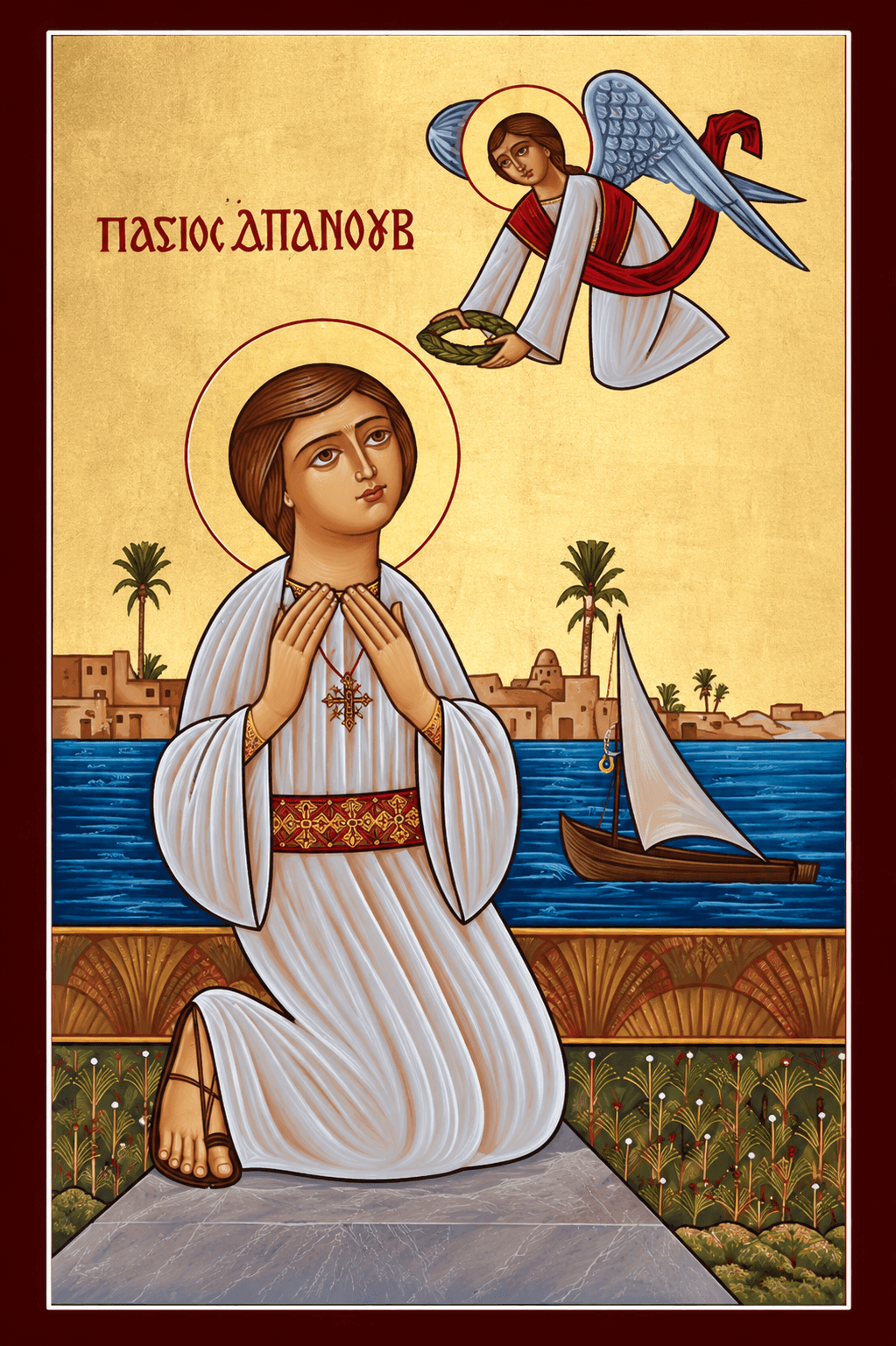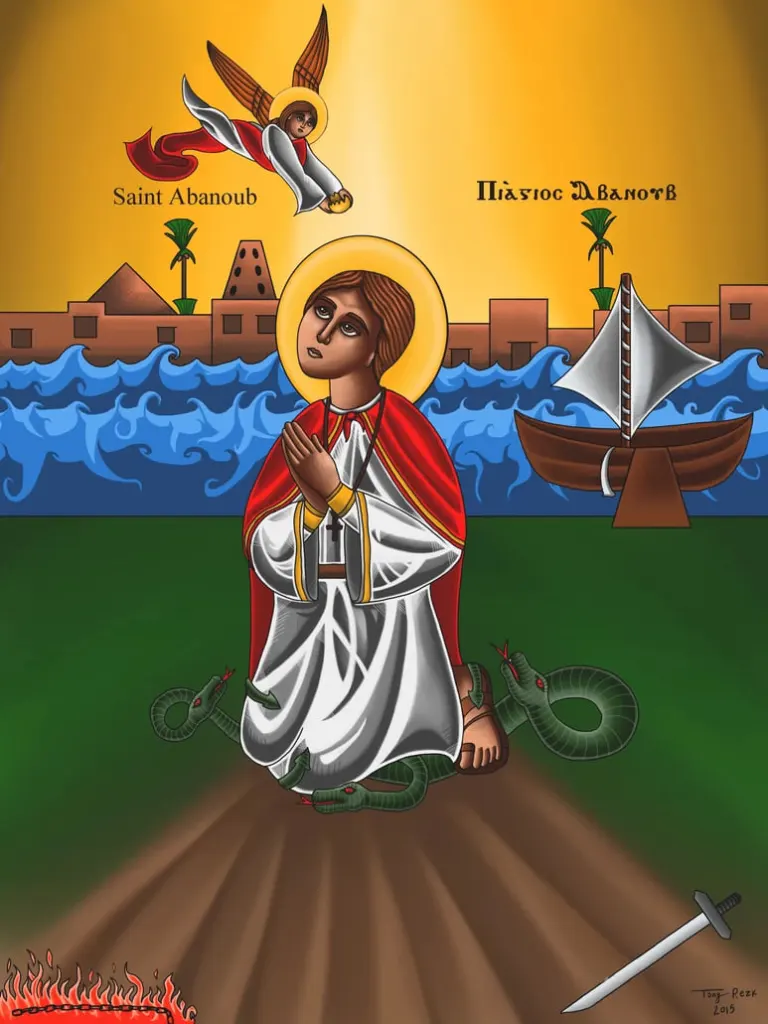
Saint Abanoub Al-Nehissy:
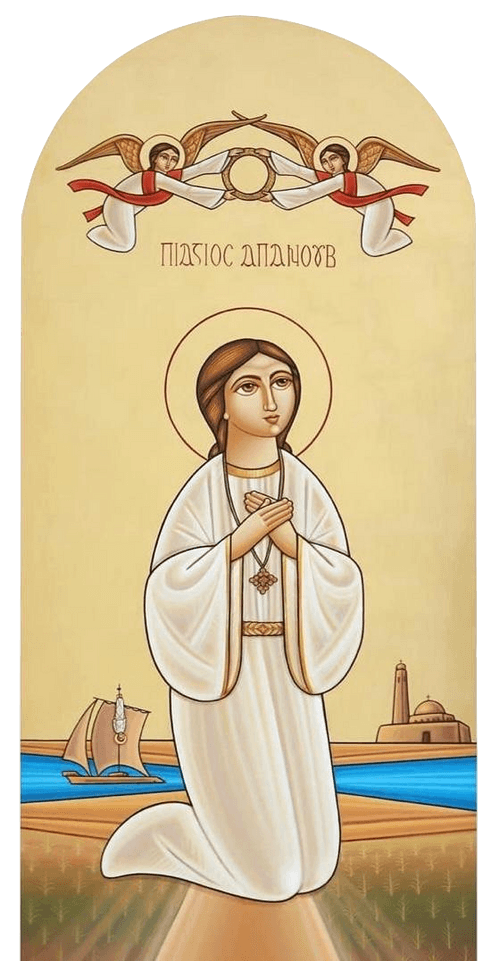
The name “Abanoub” (Apanoub) is derived from the Coptic word “Pi-Noub,” meaning “gold.” He was born in the village of Nehisa (Talka District) in the fourth century to pious, God-lovingparents named Makara and Mary. He lost both of them when he was twelve years old and became very sad for many days. One day, the boy entered the
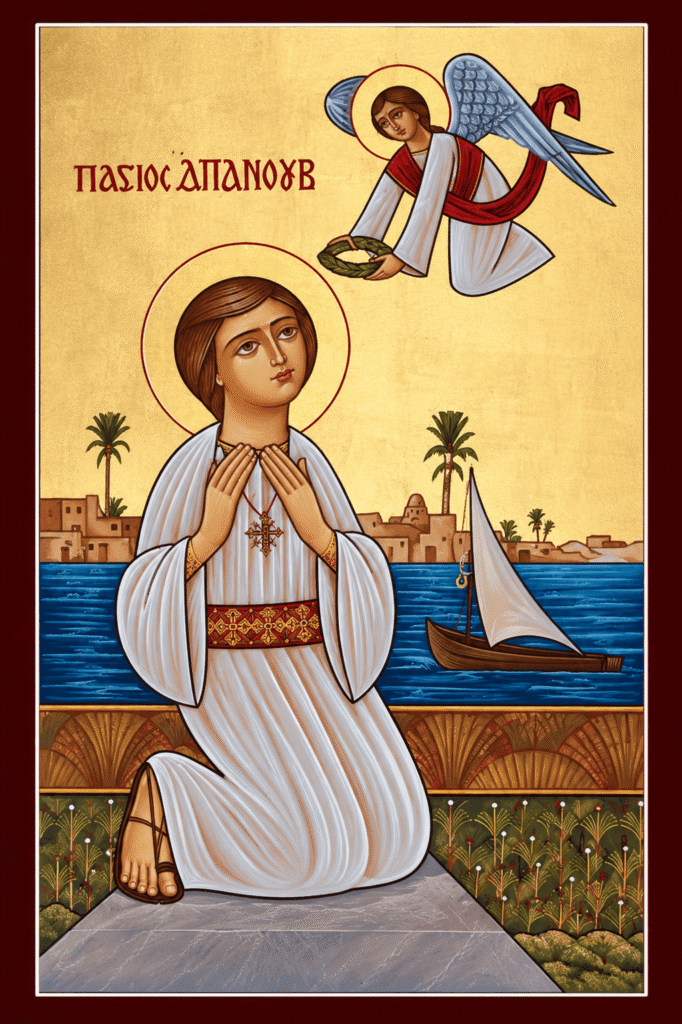
church during one of the feasts and found the priest encouraging the people to endure hardship and persecution with joy, because Diocletian had begun a persecution against the Christians. After receiving Holy Communion, the young boy returned home, while the words of the priest continued to echo in his ears. The boy then knelt before God and asked Him for help. He arose and set out for Samanoud, rejoicing in spirit and awaiting the heavenly crown.
In Samanoud:
The young boy began walking throughout the city. He found the churches destroyed and the people insulting Christianity. He asked God to support him. At that moment, the Archangel Michael appeared to him, comforted him, and instructed him to go in the morning to the governor and bear witness to Christ. The archangel assured him that God would strengthen him and heal him in the midst of the sufferings he would endure.
Before the Governor:
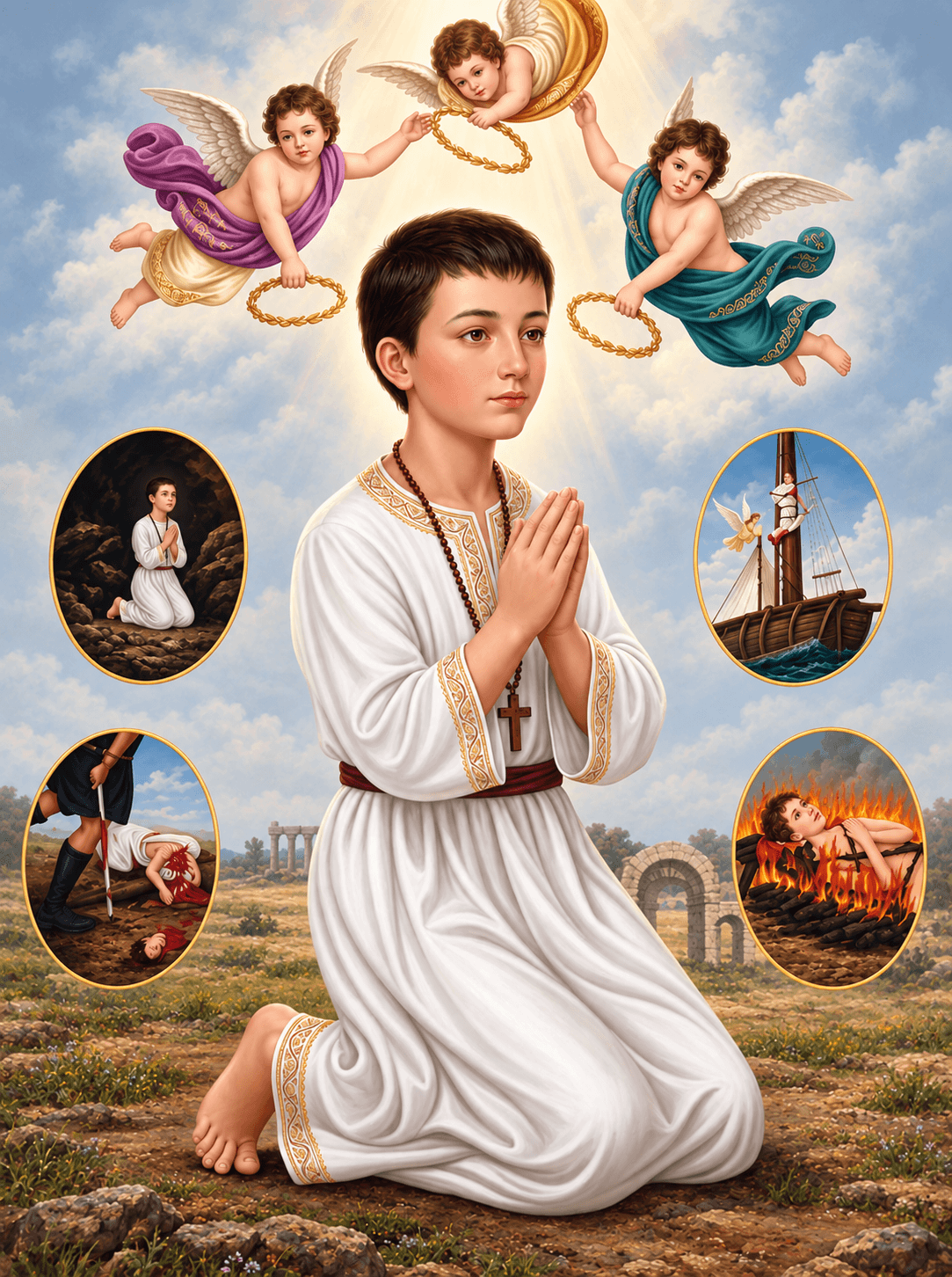
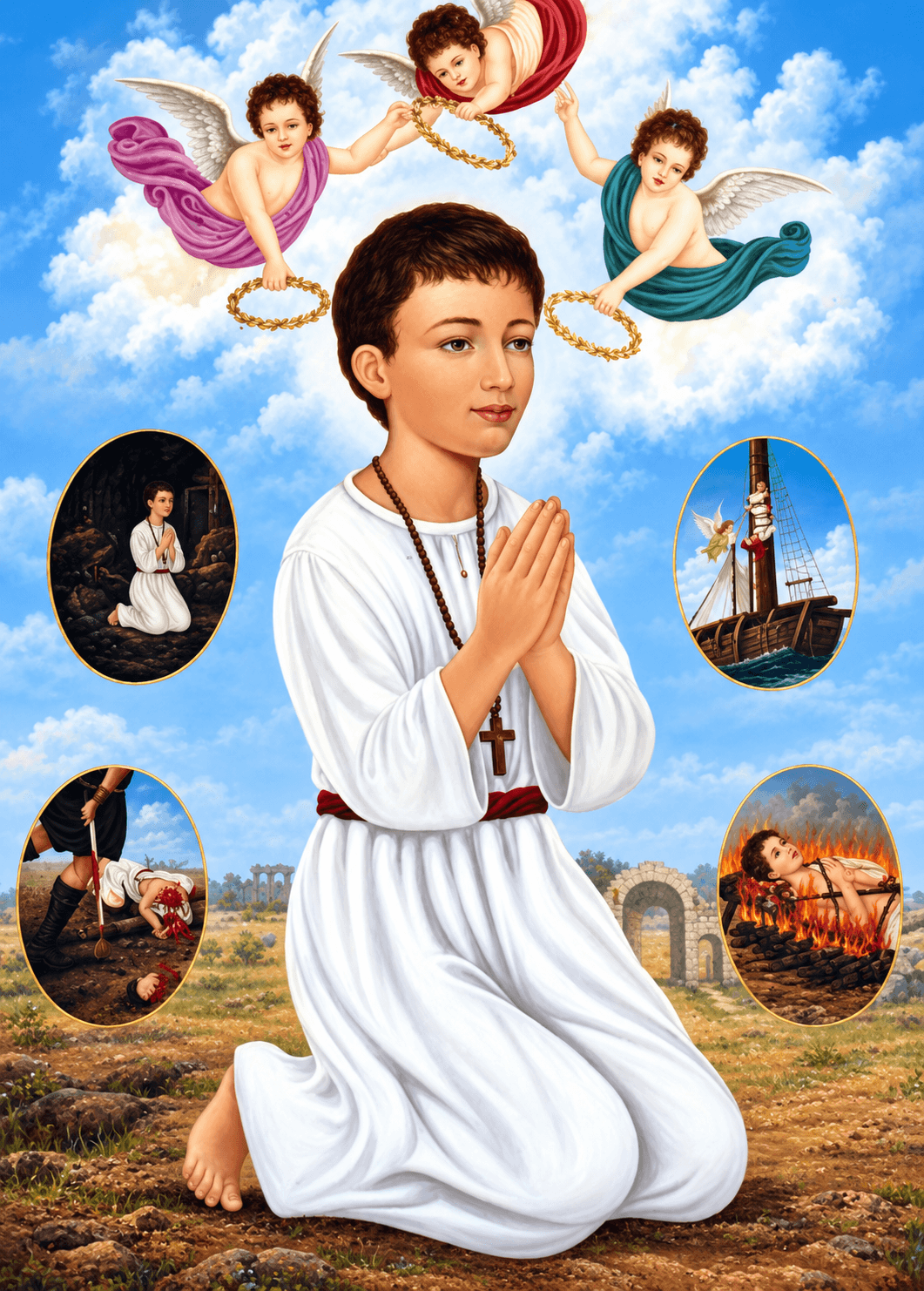
Abanoub was very courageous. He went to the governor and spoke to him boldly and fearlessly. The governor was astonished by the behavior of this young boy and began trying to persuade him with many promises. However, the boy continued to confess the true faith. The governor became angry and ordered that Abanoub be beaten on his stomach until his intestines became visible. Then the Archangel Michael came and healed him. The boy was placed in prison, where the imprisoned Christians rejoiced when they saw him. They recognized him and were encouraged because of him.
The Journey to Atrib:
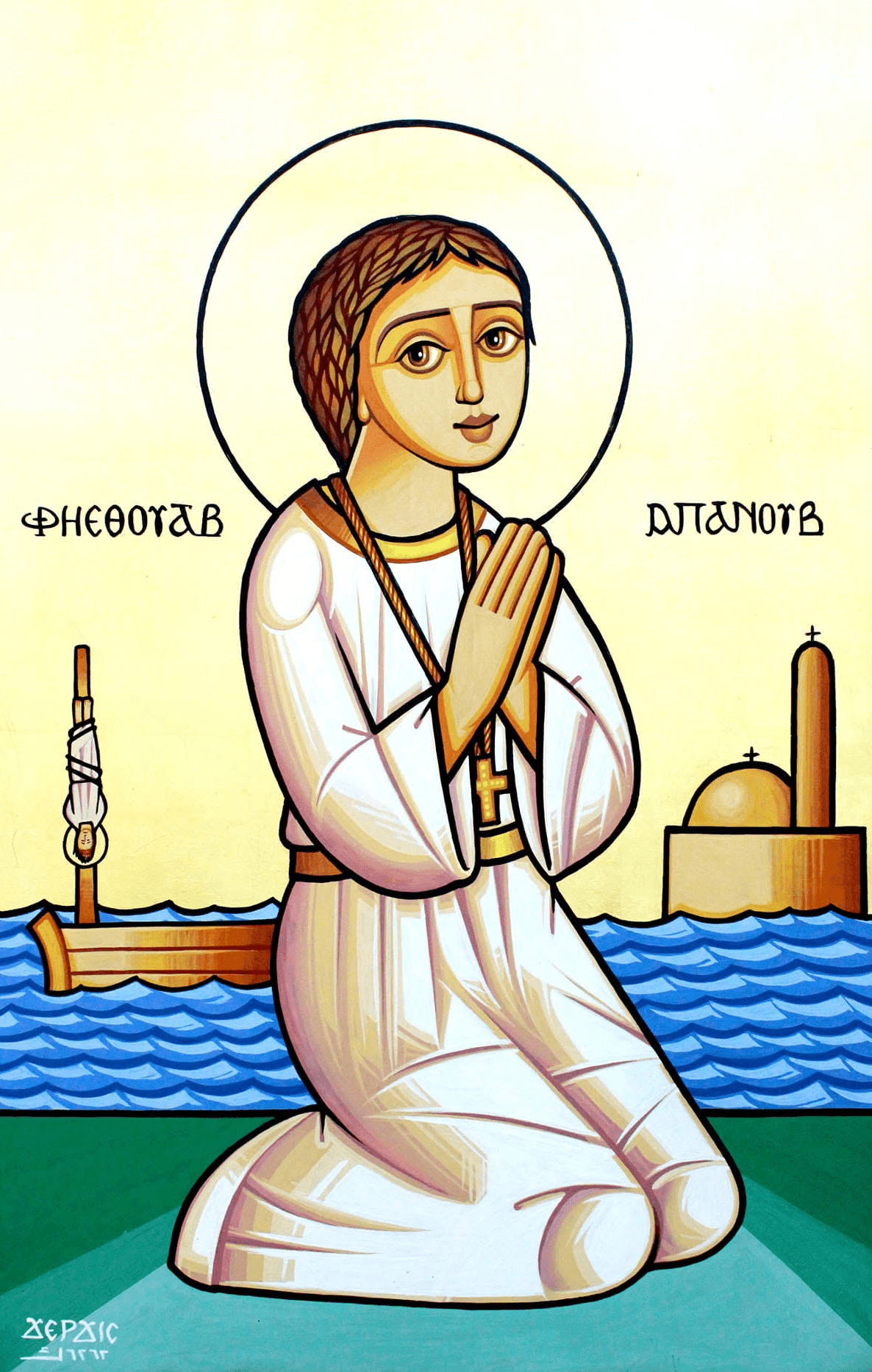
The following day, the governor killed approximately one thousand of the prisoners, who received the crown of martyrdom on the ninth day of Baramhat. The governor summoned the young Abanoub and ordered that he be tied by his feet to the mast of the ship on which the governor was traveling to Atrib. Mockingly, he said: “Let us see whether Jesus will come to save him!” They sailed until evening. Then they lowered the sails so that the governor could sit down to eat and drink. Suddenly, the cup became hardened in the governor’s hand, and he was struck with a form of paralysis. The soldiers became as though they were blind. The governor looked toward the child who was hanging from the ship and saw the Archangel Michael approaching him. The archangel wiped the blood flowing from Abanoub’s nose and mouth, then lowered him and left him at the front of the ship before disappearing. The governor asked the boy to pray to his God to heal him, promising that he and his soldiers would then believe. Abanoub replied that God would heal him in Atrib. Indeed, Abanoub prayed for him and healed him in the name of the Lord before the governor of Atrib. As a result, many pagans in Atrib believed, and some of them were martyred.
In Atrib (Banha):
The governor of Atrib tortured the boy by beating him with whips, throwing him into boiling oil, and burning him with fire and sulfur. Then the Lord Christ appeared to him accompanied by the Archangels Michael and Gabriel, and He healed him. The governor returned and placed two heated rods of fire in Abanoub’s eyes, but the Lord healed him. The governor then ordered that his hands and feet be cut off, but the Lord did not abandon him. Throughout all his sufferings, Abanoub became a source of blessing to many souls who accepted faith in the Lord Christ. Many people came forward joyfully to receive martyrdom. The Lord continued sending His angels to comfort the young boy.
To Alexandria:
When the governor saw the crowds accepting the faith because of the boy, he sent Abanoub to Alexandria, bound in chains. On the way, Abanoub encountered a woman who had an evil spirit. Although his hands were bound, he cast the spirit out of her. She believed in the Lord Christ. One of the soldiers became angry and killed her. Before Armanius, the governor of Alexandria, the boy confessed his faith in the Lord Christ while enduring further tortures. Among these tortures, he was thrown into a pit containing snakes and hungry serpents, but the Lord protected him through His angel Michael. The boy came out of the pit, and some of the snakes followed him. One of them wrapped itself around Armanius’s neck. Abanoub rescued him. This greatly astonished many people, and they accepted the faith and were martyred. Finally, after enduring further tortures, his head was cut off outside the city on a high rock. He had stood joyfully praying and asking God to forgive his sins and receive his spirit.
Burial of His Body:
Saint Julius El-Aqfahsi came forward, took Abanoub’s body, wrapped it in burial cloths, and sent it to Nehisa, his birthplace, where he was buried. Saint Julius also wrote his life story.
Transfer of His Body:
His body was later transferred from Nehisa to Samanoud. His martyrdom feast is celebrated on 24 Epip in the Coptic calendar.