
Through sin, spiritual death and bodily death entered human life. However long a person lives on earth, he cannot escape death: “Wherefore, as by one man sin entered into the world, and death by sin; and so death passed upon all men, for that all have sinned” (Romans 5:12). Yet amid this dark picture there was Enoch, who was taken to God because he was righteous.
1. The Generations of Adam and Their Deaths
Genesis 5:1-20
1 This is the book of the generations of Adam. In the day that God created man, in the likeness of God made he him; 2 Male and female created he them; and blessed them, and called their name Adam, in the day when they were created. 3 And Adam lived an hundred and thirty years, and begat a son in his own likeness, after his image; and called his name Seth: 4 And the days of Adam after he had begotten Seth were eight hundred years: and he begat sons and daughters: 5 And all the days that Adam lived were nine hundred and thirty years: and he died. 6 And Seth lived an hundred and five years, and begat Enos: 7 And Seth lived after he begat Enos eight hundred and seven years, and begat sons and daughters: 8 And all the days of Seth were nine hundred and twelve years: and he died. 9 And Enos lived ninety years, and begat Cainan: 10 And Enos lived after he begat Cainan eight hundred and fifteen years, and begat sons and daughters: 11 And all the days of Enos were nine hundred and five years: and he died. 12 And Cainan lived seventy years, and begat Mahalaleel: 13 And Cainan lived after he begat Mahalaleel eight hundred and forty years, and begat sons and daughters: 14 And all the days of Cainan were nine hundred and ten years: and he died. 15 And Mahalaleel lived sixty and five years, and begat Jared: 16 And Mahalaleel lived after he begat Jared eight hundred and thirty years, and begat sons and daughters: 17 And all the days of Mahalaleel were eight hundred ninety and five years: and he died. 18 And Jared lived an hundred sixty and two years, and he begat Enoch: 19 And Jared lived after he begat Enoch eight hundred years, and begat sons and daughters: 20 And all the days of Jared were nine hundred sixty and two years: and he died.
Before beginning the account of the renewal of the world through the Flood and the ark, divine inspiration presents the line of Adam’s descendants. It begins with Adam and ends with Noah, through whom the world begins anew through the baptism of the Flood.
Edersheim presents the following table, from Adam to the renewal of the world in Noah’s time. [157]
| Name | Age at son’s birth | Lifespan | Year of birth | Year of death or translation |
|---|---|---|---|---|
| Adam | 130 | 930 | 1 | 930 |
| Seth | 105 | 912 | 130 | 1042 |
| Enos | 90 | 905 | 235 | 1140 |
| Cainan | 70 | 910 | 325 | 1235 |
| Mahalaleel | 65 | 895 | 395 | 1290 |
| Jared | 162 | 962 | 460 | 1422 |
| Enoch | 65 | 365 | 622 | 987 |
| Methuselah | 187 | 969 | 687 | 1656 |
| Lamech | 182 | 777 | 874 | 1651 |
| Noah | 500 | 950 | 1056 | 2006 |
Observations on the Genealogy
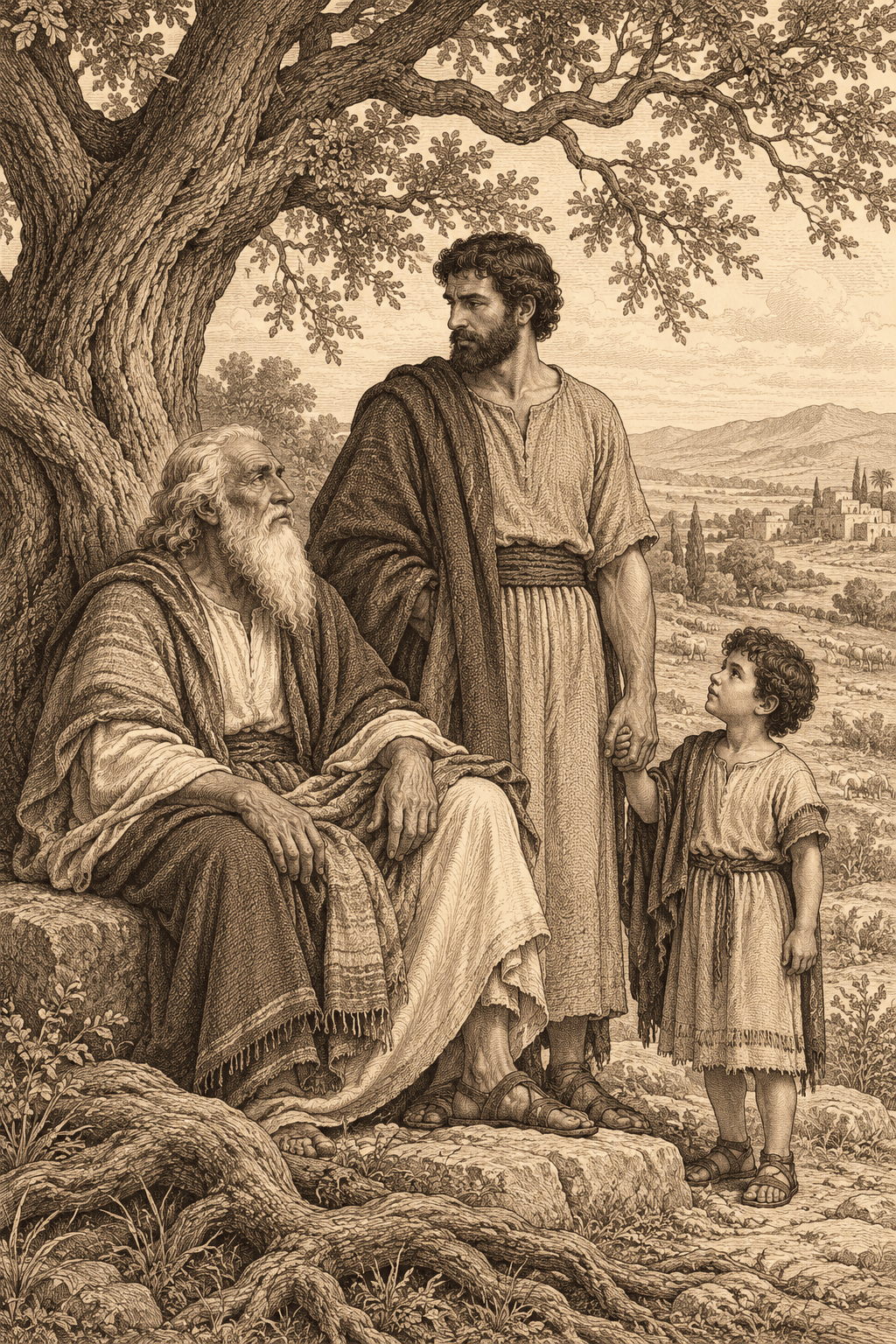
(a) Abel is not mentioned, for he was martyred before he had descendants. Though his remembrance on earth might seem to have ended because he had no children, his voice has not ceased, as the Apostle says: “he being dead yet speaketh” (Hebrews 11:4). Cain and his descendants are likewise passed over: while still alive, Cain had pronounced a sentence of death upon himself.
(b) Although, through his wickedness, man lost his likeness to God, the beginning of this line of fathers nevertheless says: “In the day that God created man, in the likeness of God made he him” [1]. Though man had been defiled by iniquity, God desired to restore him to the original image in which He created him. Perhaps the purpose of this genealogy is ultimately to present the person of the Savior who accomplishes this work, so that believers may enjoy this gift: bearing God’s likeness within them.
(c) In recording Seth’s birth, Scripture says that Adam “begat a son in his own likeness, after his image; and called his name Seth” [3], that is, a human being. Perhaps his bearing his father’s likeness and image means that he carried the same hope as his father Adam: to enjoy the promised salvation, unlike Cain, who lived without hope, wandering upon the earth.
(d) We also observe that Enoch came from Seth’s descendants: he “walked with God: and he was not; for God took him” [24]. He may be set in contrast with Enoch, or Hanoch, of Cain’s line, after whom the first earthly city was named. It is as though God raised up a people bearing a heavenly character in place of a people bound to earthly things. In the same way, here we find Lamech, the seventh in Seth’s line, fathering Noah as a sign of spiritual repose and rest in the Lord. He stands in contrast to Lamech, the seventh in Cain’s line, who married two women whose names signify darkness and the shadow of night, and who, as we have seen, was marked by violence. In other words, while the enemy of goodness expends all his powers to corrupt humanity for his kingdom, God raises up witnesses in every generation, beloved of Him, who enjoy fellowship in His glories.
(e) Concerning these fathers’ ages, many scholars have attempted various explanations. Some say that numbers in ancient Hebrew were obscure and difficult to interpret; others say that the ages recorded refer to their clans rather than to the fathers themselves. In any event, the Holy Bible is not a history book, nor do its divine words aim to record human history in our literal sense, although we do not deny its accuracy or the possibility of long lives at the beginning of creation.
(f) Perhaps the purpose of this genealogy is to affirm that, however long a person lives, he will die, handing on to his son the promise of salvation, so that he may await the new life which death cannot overcome.
2. Enoch the Righteous
Genesis 5:21-24
21 And Enoch lived sixty and five years, and begat Methuselah: 22 And Enoch walked with God after he begat Methuselah three hundred years, and begat sons and daughters: 23 And all the days of Enoch were three hundred sixty and five years: 24 And Enoch walked with God: and he was not; for God took him.
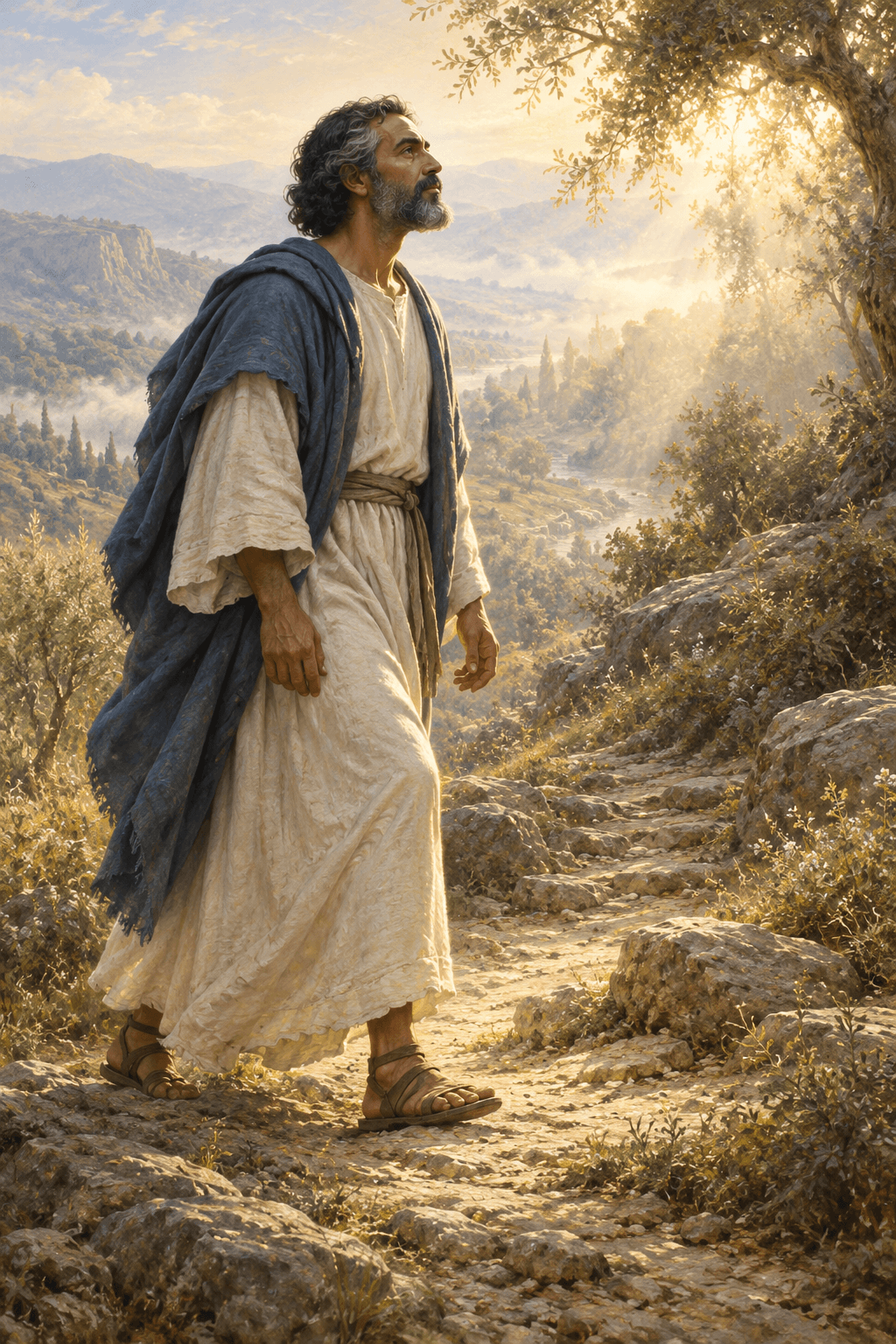
Among those in this genealogy, one man’s life did not end with the words “and he died.” Instead, it is said of him: “he was not; for God took him” [24]. Before he was taken, “he had this testimony, that he pleased God” (Hebrews 11:5). If the other generations represent believing humanity, which enjoyed hope in the coming of the promised Savior who would bring it from death to life, Enoch represents those members of the Church who will not see death at the coming of our Lord Jesus. They will be caught up with Him in the clouds, to enjoy glorious eternal life with the other members (1 Thessalonians 4:14-17).
Perhaps what is said here about Enoch, amid this line of fathers, affirms that the secret of human happiness is not a long stay on earth, but departure into the Lord’s presence to live with Him face to face.
Enoch seems to represent humanity’s restoration to its first paradisal state, departing from the earth that had become corrupt into God’s sanctuary. As Jude the Apostle says: “And Enoch also, the seventh from Adam, prophesied of these, saying, Behold, the Lord cometh with ten thousands of his saints, To execute judgment upon all, and to convince all that are ungodly among them of all their ungodly deeds which they have ungodly committed, and of all their hard speeches which ungodly sinners have spoken against him” (Jude 1:14-15). Enoch’s being taken to God is a prophecy in action of eternal life and a testimony against the wicked and their coming judgment. It accompanies his spoken prophecy, which the Jewish Church received through oral tradition and which Jude the Apostle recorded.
Enoch represents the heart united with God, becoming the object of His delight and pleasure in Christ Jesus, the beloved Son. Spiritual death can find no place within it; rather, it journeys continually toward eternity, where the enemy cannot seize or ensnare it.
We know nothing of Enoch’s life apart from this statement: “And Enoch walked with God: and he was not; for God took him” [24]. Scripture records none of his actions or examples of his dealings. Yet, through his hidden life, he has drawn many hearts throughout the generations toward repentance and life with God. The son of Sirach says: “Enoch pleased the Lord, and was translated, being an example of repentance to all generations” (Sirach 44:16). Saint Ambrose saw in him an image of the apostolic life which death cannot defeat. He says:
“Truly, the apostles did not know death, as it was said to them: “There be some standing here, which shall not taste of death, till they see the Son of man coming in his kingdom” (see Matthew 16:28). He who has nothing within him that dies lives forever: he has nothing shameful of Egypt within him, neither shoe nor thong, having put all this off before laying aside the service of the body. Enoch is not the only one who lives, nor was he alone taken up on high; Paul also was caught up to meet Christ. [158]”
In the same spirit, Saint Cyprian sees Enoch as a living example of those who depart quickly to the Lord because they have forsaken the love of temporal things:
“You will have pleased God, as Enoch did, if you are found worthy to be taken from the contagion of the world. Through Solomon, the Holy Spirit taught that those who please God are taken early and quickly set free, lest, by remaining in this world, they become defiled by its pestilence. As it is said: “He pleased God, and was beloved of him: so that living among sinners he was translated. Yea speedily was he taken away, lest that wickedness should alter his understanding” (Wisdom 4:10-11). In the Psalms, the soul devoted to its God hastens toward Him, saying: “How amiable are thy tabernacles, O LORD of hosts! My soul longeth, yea, even fainteth for the courts of the LORD” (Psalm 84:1-2). [159]”
Saint John Chrysostom considers that Enoch surpassed Abel in faith. He says:
“This man surpassed Abel in his faith. How, you may ask? Although he came after him, what happened to Abel was enough to turn him away from his course. Yet Enoch did not become indifferent or say within himself: “What need, then, is there for toil?” [160]”
Enoch was great in faith. Although he saw no living examples to imitate, and although he had heard what happened to Abel, he lived with God and walked in righteousness, and so was found worthy to be taken by God.
3. Methuselah
Genesis 5:25-27
25 And Methuselah lived an hundred eighty and seven years, and begat Lamech: 26 And Methuselah lived after he begat Lamech seven hundred eighty and two years, and begat sons and daughters: 27 And all the days of Methuselah were nine hundred sixty and nine years: and he died.
“Methuselah” is a Semitic name meaning “man of the weapon.” He was Enoch’s son and died in the year of the Flood, aged 969, the longest lifespan mentioned in the Holy Bible. Yet, however long his life, it ended in death. As Saint Jerome says:
“Even if we lived nine hundred years or more, as people did before the Flood, and even if Methuselah’s days were granted to us, this long span of time, when it has passed and ended, is reckoned as nothing. Whether a person lives ten years or a thousand, when life ends and inevitable death arrives, the past, long or short, is counted alike. Yet the one who lived longer is burdened with more sins to carry with him. [161]”
4. Noah
Genesis 5:28-32
28 And Lamech lived an hundred eighty and two years, and begat a son: 29 And he called his name Noah, saying, This same shall comfort us concerning our work and toil of our hands, because of the ground which the LORD hath cursed. 30 And Lamech lived after he begat Noah five hundred ninety and five years, and begat sons and daughters: 31 And all the days of Lamech were seven hundred seventy and seven years: and he died. 32 And Noah was five hundred years old: and Noah begat Shem, Ham, and Japheth.
Through this genealogy of the fathers, divine inspiration announces the birth of Noah as a sign of the repose or rest that the world would enjoy through its renewal by the waters of the Flood. Scripture presents this in some detail in the following chapters. Noah’s descendants, “Shem, Ham, and Japheth” [32], became the heads of all the peoples of the nations after the Flood.
Notes and References
[157] Ibid., 34. The preceding work is not identified within the supplied chapter PDF.
[158] On Belief of Resur. 2:94.
[159] On Mortality 23.
[160] In Heb. Hom. 22.
[161] Ep. 60:14.