
In the previous chapter the Law declared the role of the holy sacrifice in sanctifying Aaron, or the high priest, so that he might pass through the veil and enjoy drawing near to the ark of the covenant to intercede for himself and for all the people. Now He wanted to declare the importance of the sacrifice, its bond with the holy altar, and the holiness of the blood, so that no confusion would arise among the people.
1. The Altar and the Sacrifices
KJV · Verses 1–9
1 And the Lord spake unto Moses, saying, 2 Speak unto Aaron, and unto his sons, and unto all the children of Israel, and say unto them; This is the thing which the Lord hath commanded, saying, 3 What man soever there be of the house of Israel, that killeth an ox, or lamb, or goat, in the camp, or that killeth it out of the camp, 4 And bringeth it not unto the door of the tabernacle of the congregation, to offer an offering unto the Lord before the tabernacle of the Lord; blood shall be imputed unto that man; he hath shed blood; and that man shall be cut off from among his people: 5 To the end that the children of Israel may bring their sacrifices, which they offer in the open field, even that they may bring them unto the Lord, unto the door of the tabernacle of the congregation, unto the priest, and offer them for peace offerings unto the Lord. 6 And the priest shall sprinkle the blood upon the altar of the Lord at the door of the tabernacle of the congregation, and burn the fat for a sweet savour unto the Lord. 7 And they shall no more offer their sacrifices unto devils, after whom they have gone a whoring. This shall be a statute for ever unto them throughout their generations. 8 And thou shalt say unto them, Whatsoever man there be of the house of Israel, or of the strangers which sojourn among you, that offereth a burnt offering or sacrifice, 9 And bringeth it not unto the door of the tabernacle of the congregation, to offer it unto the Lord; even that man shall be cut off from among his people.
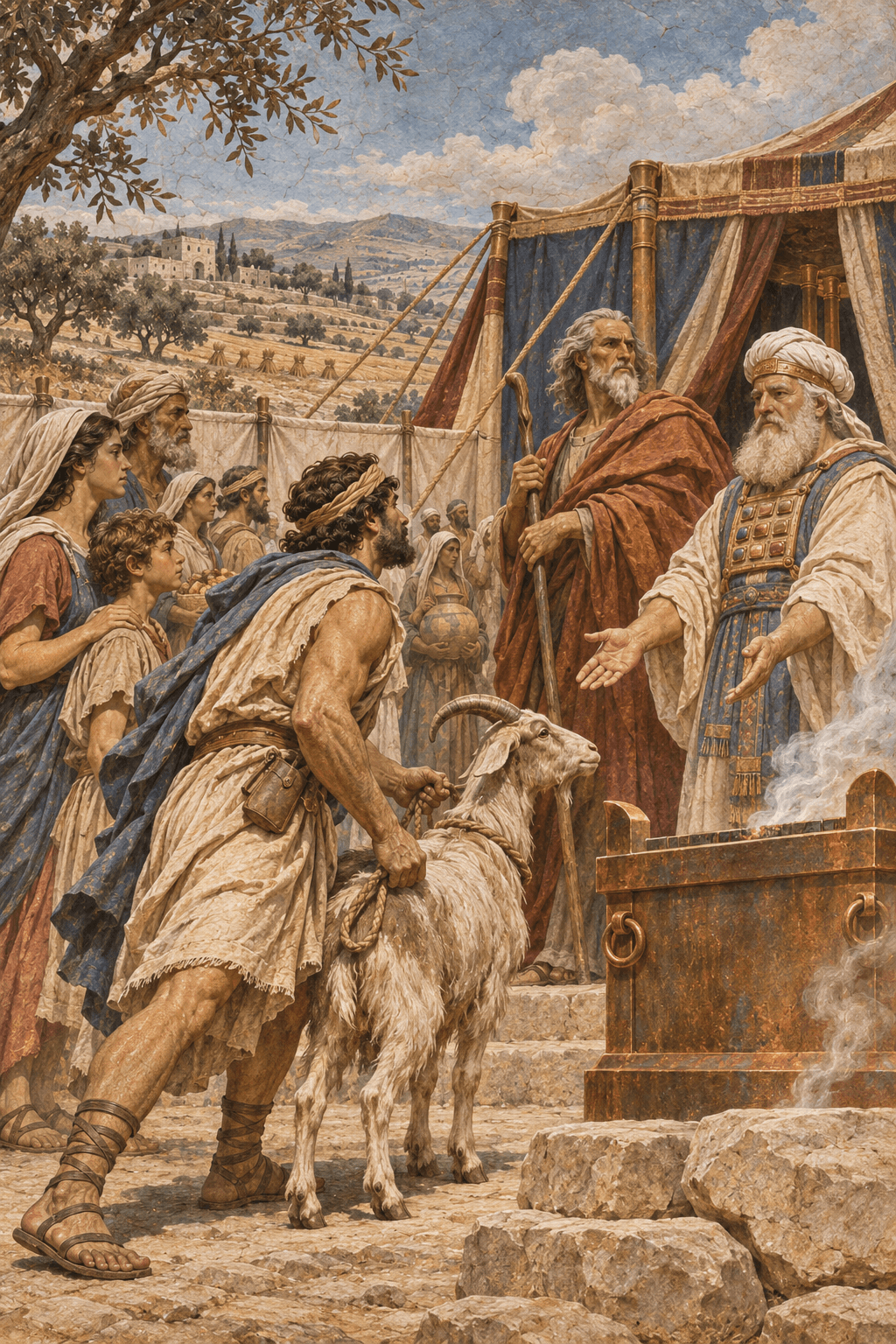
The divine command was: “What man soever there be of the house of Israel, that killeth an ox, or lamb, or goat, in the camp, or that killeth it out of the camp, And bringeth it not unto the door of the tabernacle of the congregation, to offer an offering unto the LORD before the tabernacle of the LORD; blood shall be imputed unto that man; he hath shed blood; and that man shall be cut off from among his people: To the end that the children of Israel may bring their sacrifices, which they offer in the open field, even that they may bring them unto the LORD, unto the door of the tabernacle of the congregation, unto the priest, and offer them for peace offerings unto the LORD” (3–5).
What does this law mean? Does it forbid the children of Israel to slaughter animals allowed for food outside the door of the tabernacle of the congregation, and bind them to offer all their slaughter as peace offerings to the Lord (6)? There are two views:
A) The first view: this text is interpreted literally for the children of Israel in the wilderness. God cared for their eating and drinking and all their needs; He sent them manna from heaven, so He did not allow them to slaughter even the clean animals except through the sacrifices offered to the Lord. Perhaps the purpose of this was to affirm that God provided for them even in their eating in a surpassing way during their wanderings in the wilderness. It was also feared that they would sacrifice to idols, so He required that every clean animal slaughtered be offered in the name of the Lord at the door of the tabernacle of the congregation, so that the Lord would have a share in it. Perhaps some Jews had practiced sacrificing to the calf Apis in Egypt, or the picture of the Egyptian sacrifices was before their eyes, so the Lord wanted to wipe this picture even from their minds during the forty years. When they reached the land of Canaan and the land was divided among the tribes, and they came to eat of the fruits of the promised land and to slaughter, He allowed them to slaughter clean animals and eat their flesh (Deuteronomy 12:20–22), provided they brought their sacrifices for the Lord (other than the slaughter for food), their offerings, and their firstfruits to the house of the Lord (Deuteronomy 12:11–19, 26–27).
B) The second view: what is said in this chapter means slaughter not for food but as sacrifices to the Lord; He did not want sacrifices of worship offered outside the circle of the tabernacle or the temple, that is, far from the holy altar of the Lord. The believers are bound by this law so as not to turn aside to sacrificing to idols or sharing in pagan worship. God allowed some men of God to set up an altar to God and offer sacrifices for exceptional divine purposes, as Joshua did on Mount Ebal (Joshua 8:30), and Gideon, who pulled down the altar of Baal and its grove and built the altar of the Lord by divine command (Judges 6:25–27), Samuel the prophet when he offered a sacrifice at Mizpeh (1 Samuel 7:5–11), David the prophet at the threshingfloor of Araunah the Jebusite (2 Samuel 24:18–25), and Elijah the prophet when he resisted the priests of Baal (1 Kings 18:19–40). These and similar cases were not ordinary daily practices; under certain circumstances God asked His men to set up an altar to Him to glorify Him, to resist pagan worship, or to turn away His wrath from His people in an emergency!
In the New Testament we enjoy a divine altar on which no animal sacrifices are offered and no blood of goats and calves is sprinkled; we see it as a heavenly altar on which God the Father, by His Holy Spirit, gives us the body and blood of the Lord given for our sanctification. Saint Augustine says:
There is an invisible altar on high, to which the wicked does not draw near… Through the sanctuary of God, His tabernacle, and His Church, go to the altar of God which is on high. [229]
Saint John Chrysostom speaks of the awe of the altar of the Church of the New Testament:
Awesome indeed are the mysteries of the Church! Awesome indeed is the altar! A fountain went out of paradise sending forth material rivers; but this table has brought forth a fountain that sends forth spiritual rivers. On its banks are planted not unfruitful willows, but trees reaching to heaven, bearing continual fruit that does not decay. If anyone is scorched by the heat, let him draw near to the fountain, and his burns will be cooled, his thirst quenched, and he will find rest instead of the burns caused by fiery darts, not by the sun. For its beginning is on high and its source is there, and from heaven its waters flow. Many are the streams of this fountain, which the Comforter sends forth. The Son is the Mediator; He does not hold an axe to prepare the way for us, but opens our minds. This fountain is a light sending forth rays of truth; beside it stand the heavenly powers on high, gazing at the beauty of its streams, for they are better able to perceive the power of the things set upon it and the unapproachable splendor. Whoever shares in this blood stands with the angels, the archangels, and the powers above, clothed in Christ’s royal robe, having the weapons of the Spirit; no, rather he is clothed with the King Himself. [230]
Again he says:
I beseech you, look: it is a royal table prepared for us! The angels serve it, and the King Himself is seated; will you stand yawning?! [231]
2. Eating Blood Is Forbidden
KJV · Verses 10–12
10 And whatsoever man there be of the house of Israel, or of the strangers that sojourn among you, that eateth any manner of blood; I will even set my face against that soul that eateth blood, and will cut him off from among his people. 11 For the life of the flesh is in the blood: and I have given it to you upon the altar to make an atonement for your souls: for it is the blood that maketh an atonement for the soul. 12 Therefore I said unto the children of Israel, No soul of you shall eat blood, neither shall any stranger that sojourneth among you eat blood.
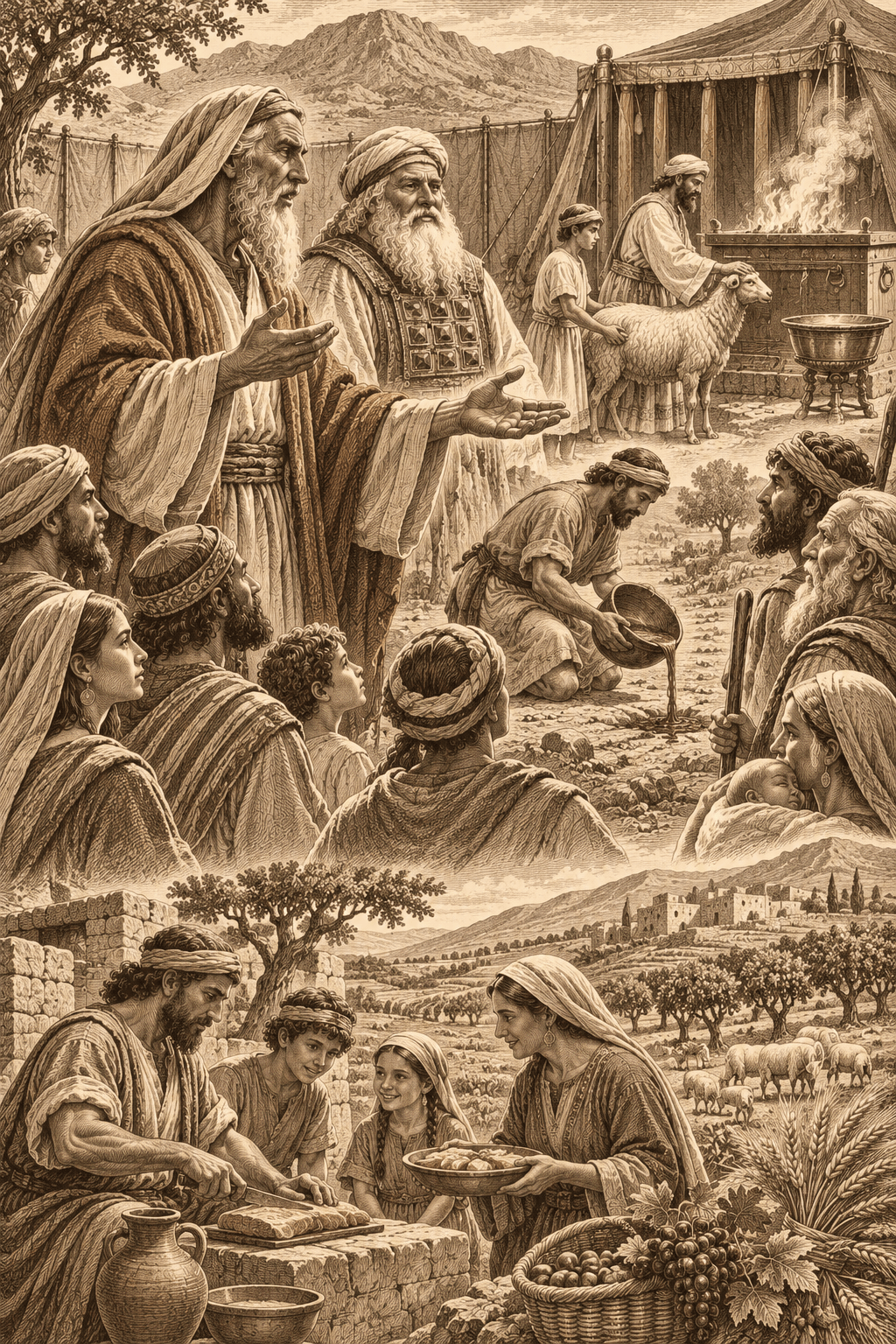
Having forbidden the offering of any sacrifice of worship outside the circle of the divine rite, so that the Jews would not turn aside to pagan worship, binding His whole people, priests and people, to the altar, so that all gather together in the Lord through the sacrifice, He went on to affirm His prohibition of eating blood, not only for the Israelites but even for the strangers who sojourn among them. We have already spoken of the wisdom of forbidding the eating of blood in our study of the third chapter.
3. The Blood of That Which Is Hunted
KJV · Verses 13–14
13 And whatsoever man there be of the children of Israel, or of the strangers that sojourn among you, which hunteth and catcheth any beast or fowl that may be eaten; he shall even pour out the blood thereof, and cover it with dust. 14 For it is the life of all flesh; the blood of it is for the life thereof: therefore I said unto the children of Israel, Ye shall eat the blood of no manner of flesh: for the life of all flesh is the blood thereof: whosoever eateth it shall be cut off.
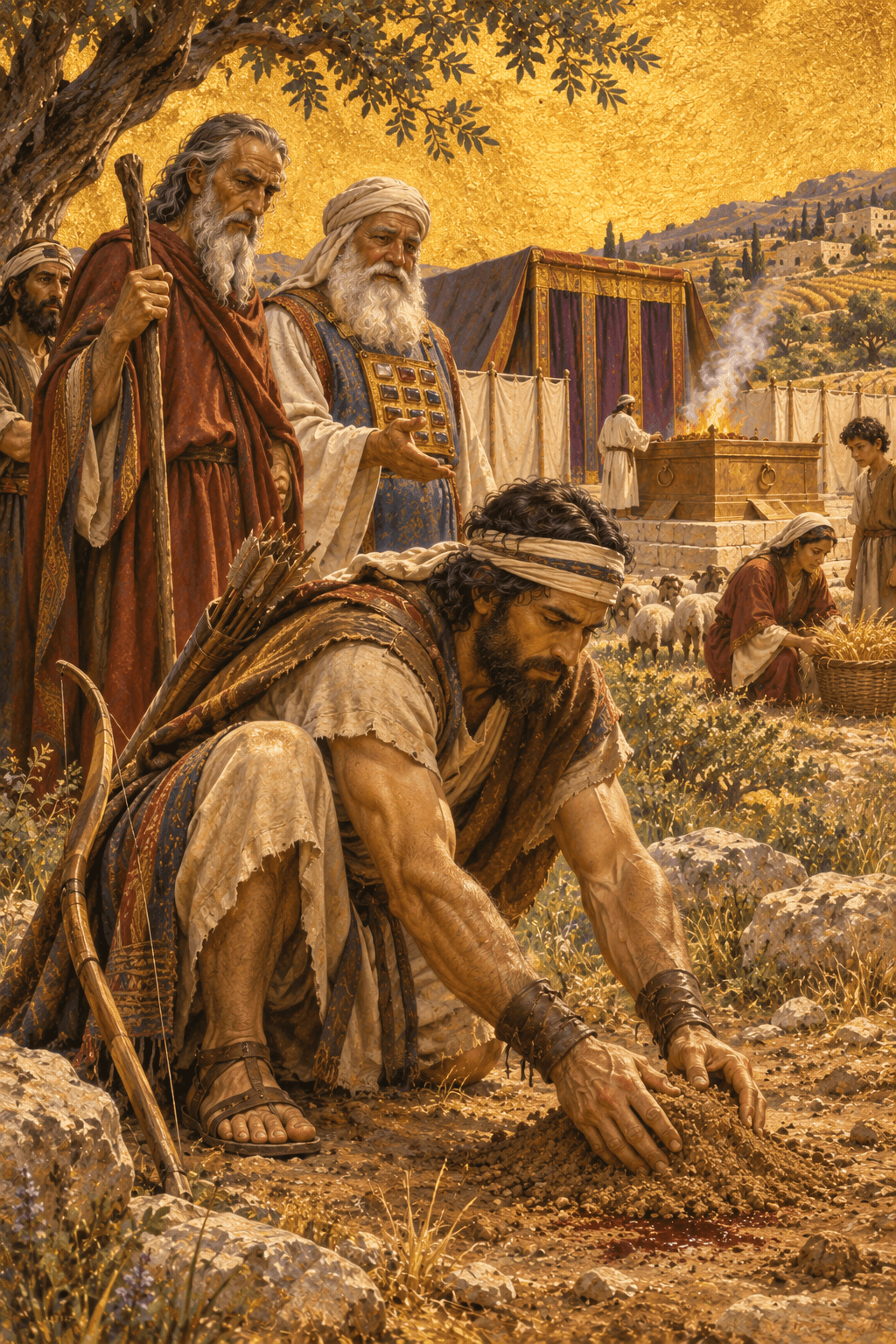
The Israelites and those sojourning among them were allowed, if they hunted any beast or fowl, to eat of it if it was of the clean foods; but as for its shed blood, He says: “he shall even pour out the blood thereof, and cover it with dust” (13). Perhaps the wisdom of covering the blood with dust here is to remind man that these animals, which came out of the earth (Genesis 1:24), return to it… But man, having received the breath of life through the divine breathing, should not cleave any longer to the dust, lest he return to dust, but cleave to the heavenly God, to go forth to heaven forever.
Perhaps covering the blood of the game with dust carries man’s reverence for every creature, even an animal or bird whose flesh he eats: it is not fitting for him to tread its blood under his feet, but he covers the blood with dust as one who buries it. This thought gives man an attitude of gentleness and kindness even toward the blood of game, so that he does not live arrogant and violent.
Perhaps God also wanted to give a law even about covering the blood of game so that this blood would not be used for unclean pagan purposes, such as pouring it out to idols.
4. Not Eating That Which Died or Was Torn
KJV · Verses 15–16
15 And every soul that eateth that which died of itself, or that which was torn with beasts, whether it be one of your own country, or a stranger, he shall both wash his clothes, and bathe himself in water, and be unclean until the even: then shall he be clean. 16 But if he wash them not, nor bathe his flesh; then he shall bear his iniquity.
The Law forbade eating animals that died naturally or by strangling, that is, those not slaughtered, and forbade eating animals or birds torn by a beast… Whoever did this deliberately was liable to be beaten and sometimes cut off from God’s people. But here the law is for one who ate by oversight, that is, without knowing; when he knew, he was bound to wash his clothes and bathe and remain unclean, not entering or touching the holy things, until the evening.
The reason for forbidding the eating of what died and what was torn is, first, for health reasons, lest it have died of a disease whose infection passes to man, or a beast have torn it and put poison into it, like snakes, or its teeth carried a germ. The second reason is that eating what was not slaughtered carries a kind of gluttony and greed, especially when he realizes that the flesh belongs to a dead animal or is the leftover of beasts. Perhaps the prohibition was also because in both cases the blood may have been held in the flesh. Finally, what was torn has been touched by an unclean beast and so defiled; so man does not eat it, lest he be defiled.
In the age of the apostles the Church decided that the Gentiles should abstain from eating blood, things strangled, and what was sacrificed to idols (Acts 15).
Notes and References
[229] St. Augustine, On Ps. 43.
[230] St. John Chrysostom, In Ioan. hom. 46:4 (printed 64:4).
[231] Fr. Tadros Yacoub Malaty, Saint John Chrysostom, 1980, p. 244.