
This law deals with the person who has an issue, whether male or female. The Hebrew word zob means “a flowing.” The man with an issue is one who emits seed, whether naturally or because of a disease of the reproductive organs; and the woman is one who issues blood, whether in her monthly period or because of a disease. The Law distinguished between natural cases and cases of disease.
Introduction to the Issue
Since the Law cared to give a bodily purification for the issue that flows from a man, or for a woman’s issue of blood in her monthly period or as a disease, we should make clear the following points:
A) If the Law called the issue (the seed) uncleanness (1), and also a woman’s blood in the days of her separation or when she has an issue… what the Law meant is that a person should care for the cleanness of his body for the sake of his health and the health of those around him. As we have seen, God cared for everything that touched His children in the Old Testament, even the kinds of food and the soundness of clothes and dwellings; how much more the health of the body.
B) The Law distinguished clearly and decisively between what happens to a man and a woman by nature and what happens as a disease. The first case does not require offering sacrifices or atonement for sin; it is enough to wash the body and clothes, or anything the person lay upon. The second case is a condition of disease that needs careful attention to health, so the Law required sacrifices to be offered to make atonement for the person.
C) The issue that strikes a man or a woman carries a symbol of the soul without restraint, fallen under unclean lusts… So the matter needs a meeting with the Holy One, whom the woman with the issue of blood touched. He did not shrink from her, for no defilement or uncleanness can reach Him; rather, the blood stopped and the woman was healed through faith in Him.
1. The Man with a Diseased Issue
KJV · Verses 1–15
1 And the Lord spake unto Moses and to Aaron, saying, 2 Speak unto the children of Israel, and say unto them, When any man hath a running issue out of his flesh, because of his issue he is unclean. 3 And this shall be his uncleanness in his issue: whether his flesh run with his issue, or his flesh be stopped from his issue, it is his uncleanness. 4 Every bed, whereon he lieth that hath the issue, is unclean: and every thing, whereon he sitteth, shall be unclean. 5 And whosoever toucheth his bed shall wash his clothes, and bathe himself in water, and be unclean until the even. 6 And he that sitteth on any thing whereon he sat that hath the issue shall wash his clothes, and bathe himself in water, and be unclean until the even. 7 And he that toucheth the flesh of him that hath the issue shall wash his clothes, and bathe himself in water, and be unclean until the even. 8 And if he that hath the issue spit upon him that is clean; then he shall wash his clothes, and bathe himself in water, and be unclean until the even. 9 And what saddle soever he rideth upon that hath the issue shall be unclean. 10 And whosoever toucheth any thing that was under him shall be unclean until the even: and he that beareth any of those things shall wash his clothes, and bathe himself in water, and be unclean until the even. 11 And whomsoever he toucheth that hath the issue, and hath not rinsed his hands in water, he shall wash his clothes, and bathe himself in water, and be unclean until the even. 12 And the vessel of earth, that he toucheth which hath the issue, shall be broken: and every vessel of wood shall be rinsed in water. 13 And when he that hath an issue is cleansed of his issue; then he shall number to himself seven days for his cleansing, and wash his clothes, and bathe his flesh in running water, and shall be clean. 14 And on the eighth day he shall take to him two turtledoves, or two young pigeons, and come before the Lord unto the door of the tabernacle of the congregation, and give them unto the priest: 15 And the priest shall offer them, the one for a sin offering, and the other for a burnt offering; and the priest shall make an atonement for him before the Lordfor his issue.
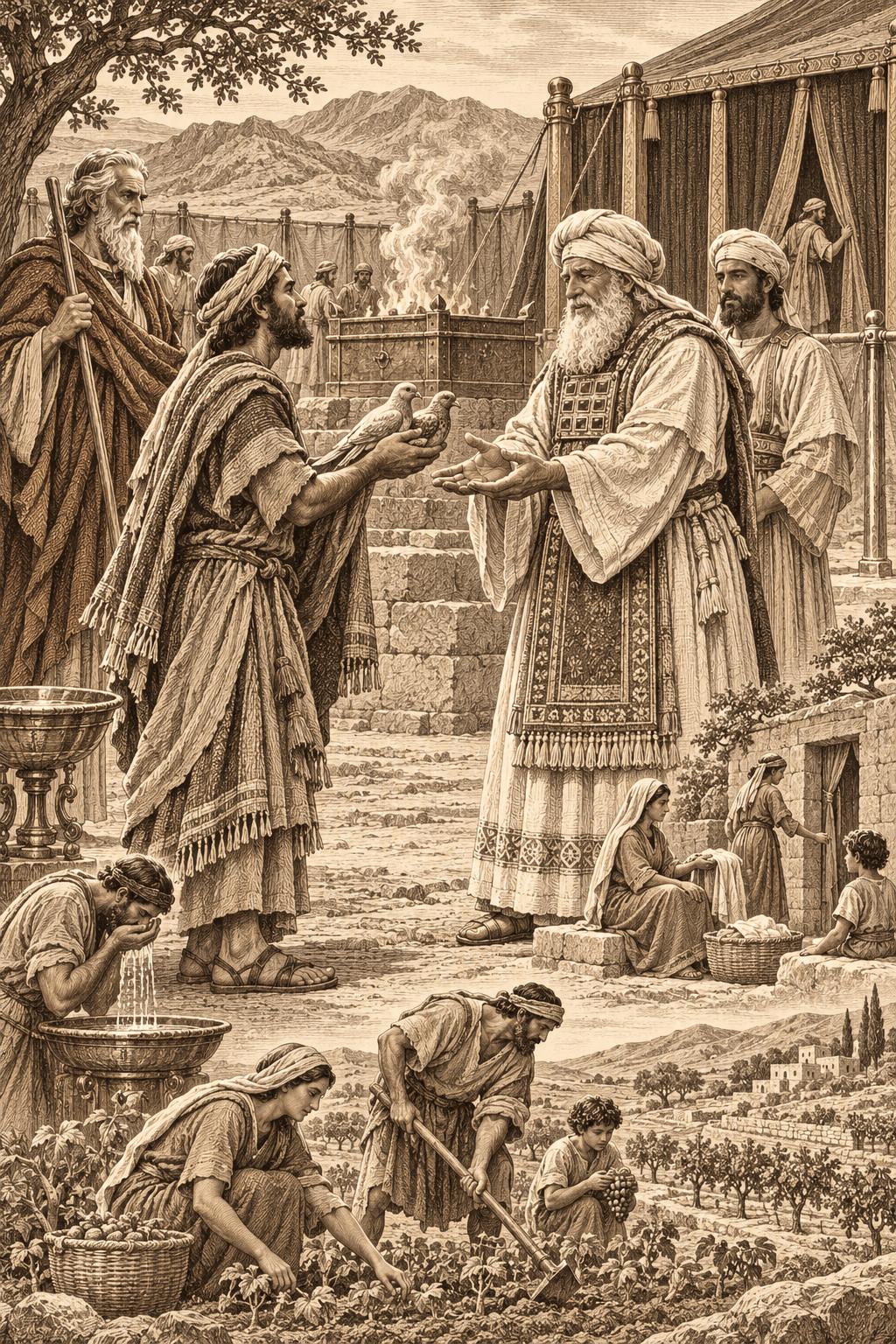
A) This law begins with the man who has a disease of the reproductive organs, so that there is a continual emission of seed or a congestion… The Law warned that no one should touch his bed, no one sit on anything he sat on, no one touch the person himself during his illness, not even his spittle, nor ride in his place on a beast… otherwise the person was counted unclean until the evening, and had to wash his clothes and bathe himself.
This measure is a protection against infection by venereal diseases, for, as we know, some of these diseases are highly infectious and can pass through touching the sick person, his clothes, or the things he uses. A person’s remaining unclean all day until the evening, that is, until a new day begins, means that whoever comes into contact with sin and is defiled by evil will not be sanctified all his life as long as he is bound to the uncleanness, until he begins a new day with the Lord, in which he leaves the past and goes forth toward a better life. Washing his clothes and bathing his body means his need for outward purity (the clothes) and inward purity (the body hidden in the garment).
As long as we are in the world, living in the body, we are exposed to contact with sin; so we should enjoy washing our clothes and our bodies with tears of repentance, that we may live in purity outwardly together with the inner depths.
B) That is for whoever touches the sick person. As for what the sick person uses: his bed is counted unclean, and no one may sleep on it; the thing he sits on is unclean, and no clean person may sit on it; his spittle is unclean; what is put on the animals he rides is counted unclean; the earthen vessel he uses must be broken, while a wooden one is rinsed in water! So sin does to us: it defiles our inner life and our conduct, so that our sleeping, sitting, walking, and eating vessels become unclean!
The pure person says even in his sleep: “I sleep, but my heart waketh” (Song of Solomon 5:2). Though he sleeps in body, he is awake in heart and mind, and the wicked one cannot touch him with defilement. But the sinner, even if awake in body, is unclean in his inner bed through his union with evil and his bond with uncleanness.
What we say of the bed of the wicked or his sleep, we say of his seat or his sitting, and all his possessions and conduct. If the bed points to the spiritual sluggishness of the wicked and his hidden union with the evil one, as a man is united to his wife through the marriage bed, the seat he sits on points to the love of authority and the enjoyment of the chief seats. If the wicked person gains a position, even a religious one, the position does not intercede for him but condemns him. His sitting in the seats of responsibility and teaching exposes him to a greater condemnation. Saint John Chrysostom says:
I cannot hold the priesthood responsible for the evils of priests; that would be madness on my part. Sensible people do not blame the sword in the hand of the criminal, nor wine in the case of the drunkard, nor strength in the case of the violent, nor courage in the case of the reckless; they blame the misuse of the gifts granted them by God. [206]
His spittle, counted unclean, points to the unclean teaching of the heretics. We should flee from it as from unclean spittle and wash ourselves of their thoughts, which destroy the faith. Saint John Chrysostom says:
We must anathematize the heretical doctrines we find among them; but the persons we must have complete mercy on, and pray for their salvation. [207]
What is put on the animals he rides, such as the saddle and the pack, points to what belongs to his body of energies and senses, counted unclean because of his inner evil.
The earthen or wooden vessel he eats from is counted unclean: if earthen it is broken, and if wooden it is rinsed with water and becomes clean. Breaking the earthen vessel points to the need to put to death the bodily lusts; washing the wooden one points to the sanctification of the body with its energies, feelings, and senses. If we must die to our clay, that is, our earthly thinking, it is not so that the body may perish but so that it may be sanctified for the Lord’s kingdom. As the Apostle Paul says: “Let not sin therefore reign in your mortal body, that ye should obey it in the lusts thereof. Neither yield ye your members as instruments of unrighteousness unto sin” (Romans 6:12–13). So let what is earthen (earthly) in us be broken, and let what is wooden be washed, to become a helper to the soul in its spiritual struggle.
In short, we can say that the man struck by this disease points to the sinner who loses his life and defiles his body with all its senses, feelings, and energies, and becomes a cause of trouble to those around him. They see uncleanness in his lying down and his sitting, as in his eating and drinking, and they flee from him. He is, with the difference, like Jonah fleeing from the service and from the presence of the Lord: he harmed everyone around him; because of him the sea was troubled, the waves rose, the winds raged, and the sailors lost their goods and their peace… Everything around him was in loss because he turned from the face of the Lord! On the contrary, because Joseph was with God he was a blessing even to his master’s house, in the prison, and in Pharaoh’s house; he saved his father and his brothers, and was glorified in this world as he is glorified in eternal life.
C) If the person was healed of this disease, he remained under examination seven days until the priest was sure of his healing, then he “shall wash his clothes, and bathe his flesh in running water, and shall be clean. And on the eighth day he shall take to him two turtledoves, or two young pigeons, and come before the LORD unto the door of the tabernacle of the congregation, and give them unto the priest: And the priest shall offer them, the one for a sin offering, and the other for a burnt offering; and the priest shall make an atonement for him before the LORD for his issue” (13–15). We have often spoken of this rite of purification in the previous chapters, so here I will only bring out its main lines:
- The need to wash the clothes as well as the body in running water, that is, flowing water from a river, a spring, or a used, not stagnant, well… pointing to our need for inward (the body) and outward sanctification, and our washing in the waters of baptism to receive the renewal of our nature by the Holy Spirit.
- As long as we are in the first seven days, we cannot offer the sacrifice, but wait for the eighth day. That is, as long as we live subject to time (seven days), we cannot enjoy the sacrifice of our Lord Jesus; but when the Holy Spirit lifts us to the eighth day, that is, to the risen life in the Lord, we enjoy the heavenly sacrifice and the entrance into the Lord’s presence and dwelling in His heavenly house.
- Though a person enjoys the cleansing as a personal gift given him by our Lord, he receives it through his membership in the Church, for it is said: “come before the LORD unto the door of the tabernacle of the congregation.” What he receives of cleansing or sanctification gladdens the whole congregation, since he is a member of it; his sufferings are its sufferings and his joys its joys!
- The priest offers for him a sin offering and a burnt offering together… It is not enough, for his cleansing from the uncleanness of the issue, to enjoy the sin offering, by which he receives forgiveness for his sins; he must also enjoy the burnt offering, by which he offers his life as a sacrifice of obedience and a burnt offering of love to the Father in Christ Jesus. In other words, if the sin offering means the negative side, the removal of evil, the burnt offering represents the positive side, the practice of righteousness.
As Saint John Chrysostom says:
Virtue is divided into two things: leaving evil and doing good. Withdrawing from evil is not enough to reach virtue; it is only the beginning of the way that leads to it. There still remains need of great activity. [208]
2. The Natural Condition of the Man
KJV · Verses 16–18
16 And if any man's seed of copulation go out from him, then he shall wash all his flesh in water, and be unclean until the even. 17 And every garment, and every skin, whereon is the seed of copulation, shall be washed with water, and be unclean until the even. 18 The woman also with whom man shall lie with seed of copulation, they shall both bathe themselves in water, and be unclean until the even.
After dealing with the purification of the man’s diseased condition, He spoke of two natural conditions of the man:
A) A nocturnal emission, “uncleanness that chanceth him by night” (Deuteronomy 23:10). The matter does not need sacrifices of atonement, only that he wash himself and his clothes and anything he lay on (16–17). The Church counts a nocturnal emission as breaking the fast, so the person may not partake of the sacrament of Communion on that day.
B) Marital relations: both need to bathe, and are counted unclean all that day like one with a nocturnal emission, so they do not enter the house of the Lord or touch the holy things.
3. The Natural Condition of the Woman
KJV · Verses 19–24
19 And if a woman have an issue, and her issue in her flesh be blood, she shall be put apart seven days: and whosoever toucheth her shall be unclean until the even. 20 And every thing that she lieth upon in her separation shall be unclean: every thing also that she sitteth upon shall be unclean. 21 And whosoever toucheth her bed shall wash his clothes, and bathe himself in water, and be unclean until the even. 22 And whosoever toucheth any thing that she sat upon shall wash his clothes, and bathe himself in water, and be unclean until the even. 23 And if it be on her bed, or on any thing whereon she sitteth, when he toucheth it, he shall be unclean until the even. 24 And if any man lie with her at all, and her flowers be upon him, he shall be unclean seven days; and all the bed whereon he lieth shall be unclean.
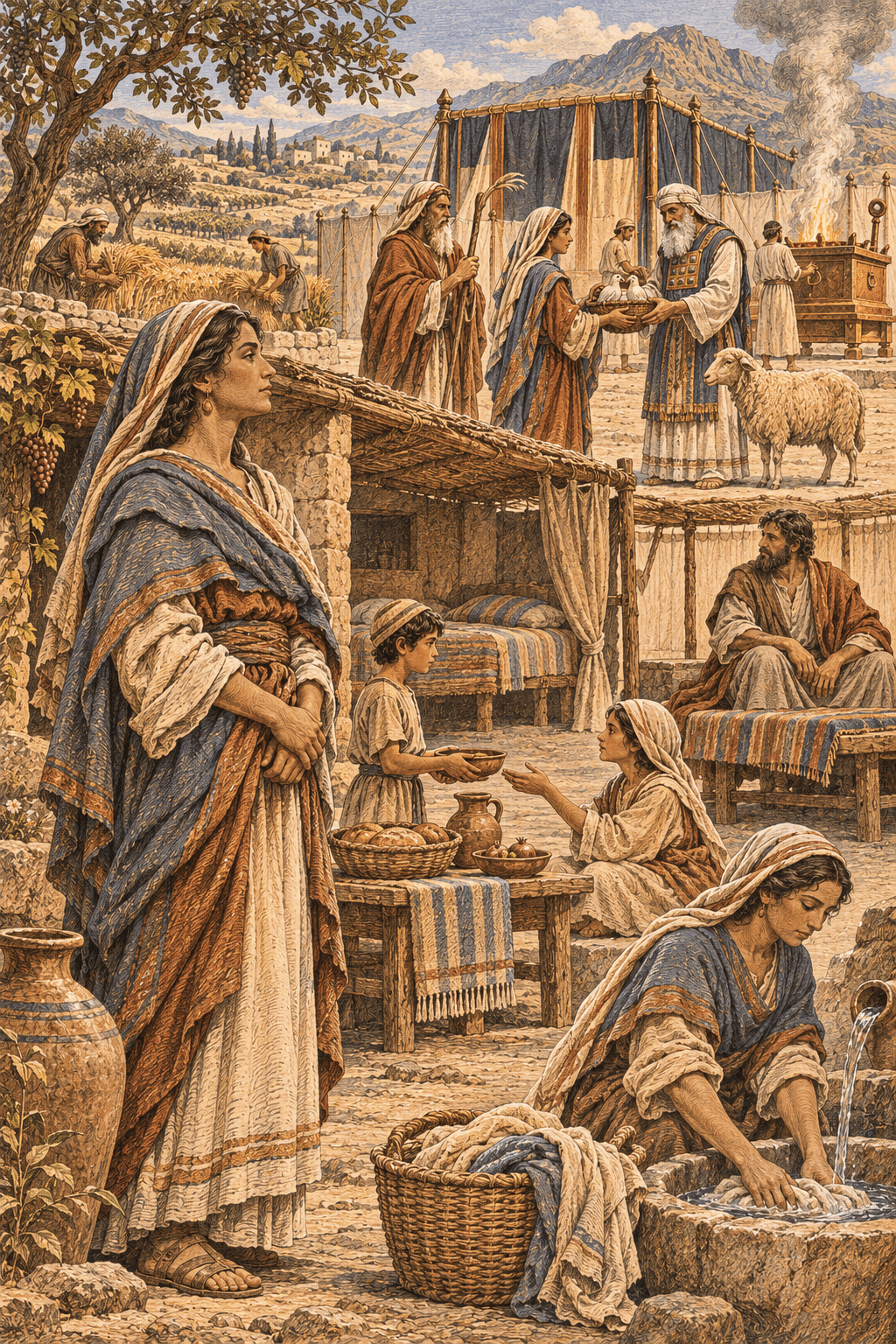
By the issue here is meant the monthly sickness, “the period of separation”… He counted her unclean for seven days so that she might enjoy a time of bodily rest. He forbade marital relations in that period, perhaps for two reasons: first, for the rest of the wife in her time of weariness; and second, to sanctify marital relations, so that they would not be from uncontrolled lust, especially since a woman does not conceive in this period, so the relation would be outside the purpose of bearing children.
4. The Woman’s Diseased Issue
KJV · Verses 25–33
25 And if a woman have an issue of her blood many days out of the time of her separation, or if it run beyond the time of her separation; all the days of the issue of her uncleanness shall be as the days of her separation: she shall be unclean. 26 Every bed whereon she lieth all the days of her issue shall be unto her as the bed of her separation: and whatsoever she sitteth upon shall be unclean, as the uncleanness of her separation. 27 And whosoever toucheth those things shall be unclean, and shall wash his clothes, and bathe himself in water, and be unclean until the even. 28 But if she be cleansed of her issue, then she shall number to herself seven days, and after that she shall be clean. 29 And on the eighth day she shall take unto her two turtles, or two young pigeons, and bring them unto the priest, to the door of the tabernacle of the congregation. 30 And the priest shall offer the one for a sin offering, and the other for a burnt offering; and the priest shall make an atonement for her before the Lord for the issue of her uncleanness. 31 Thus shall ye separate the children of Israel from their uncleanness; that they die not in their uncleanness, when they defile my tabernacle that is among them. 32 This is the law of him that hath an issue, and of him whose seed goeth from him, and is defiled therewith; 33 And of her that is sick of her flowers, and of him that hath an issue, of the man, and of the woman, and of him that lieth with her that is unclean.
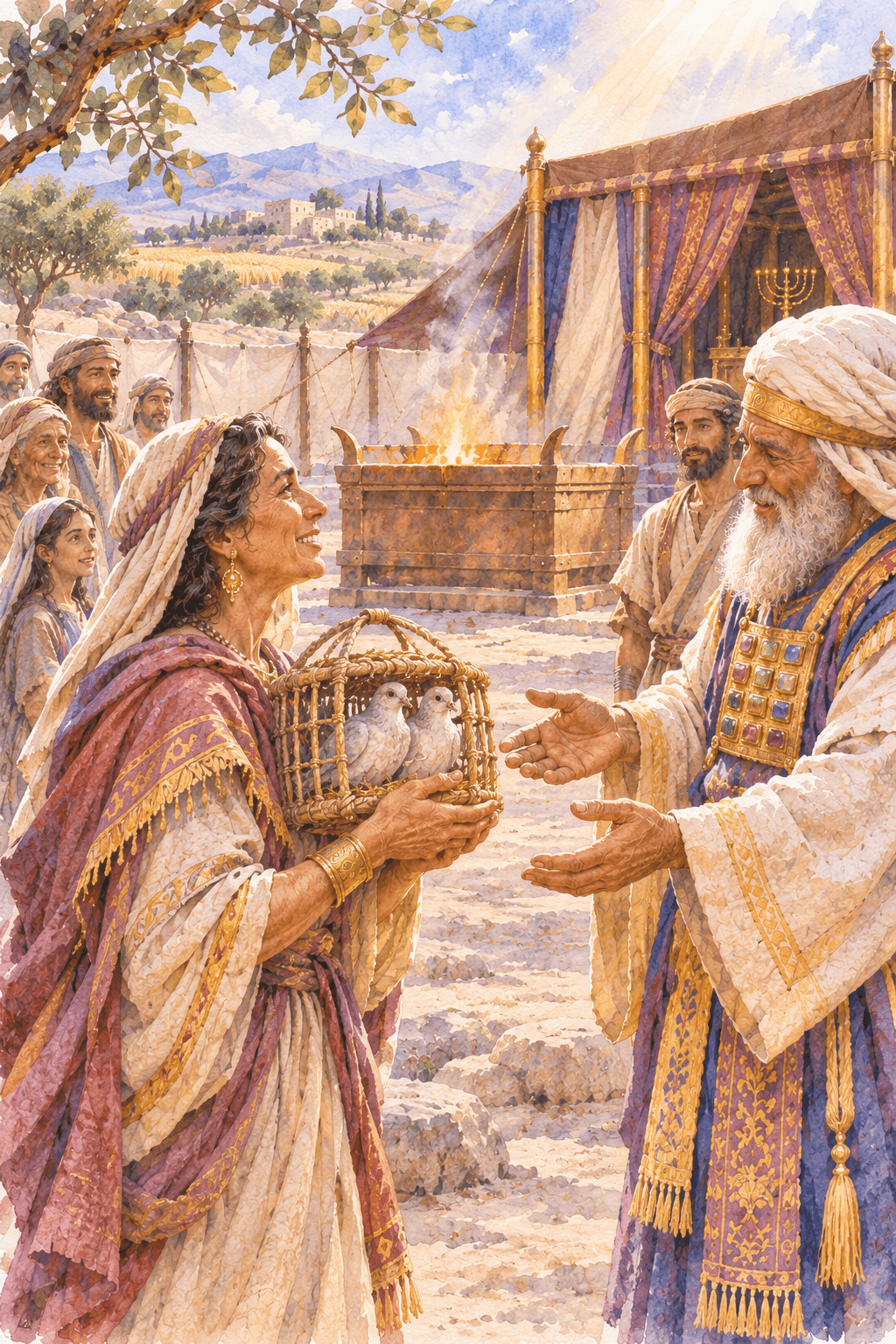
By this is meant a continual issue of blood… He counted her unclean as long as she had an issue, so that she would realize the seriousness of the situation and care for treatment.
If she was healed, she remained under examination seven days and offered on the eighth day what the man offers at his cleansing from his issue (see the first case).
Notes and References
[206] Fr. Tadros Yacoub Malaty, Pastoral Love, p. 193.
[207] St. John Chrysostom, Œuvres, 1949, p. 138.
[208] St. John Chrysostom, In Thess. hom. 5.