
This chapter speaks of:
- The sanctification of the firstborn (1–16).
- The people’s roundabout way (17–18).
- The bones of Joseph (19).
- The encampment in Etham (20–22).
1. The Sanctification of the Firstborn
KJV · Verses 1–16
1 And the Lord spake unto Moses, saying, 2 Sanctify unto me all the firstborn, whatsoever openeth the womb among the children of Israel, both of man and of beast: it is mine. 3 And Moses said unto the people, Remember this day, in which ye came out from Egypt, out of the house of bondage; for by strength of hand the Lordbrought you out from this place: there shall no leavened bread be eaten. 4 This day came ye out in the month Abib. 5 And it shall be when the Lord shall bring thee into the land of the Canaanites, and the Hittites, and the Amorites, and the Hivites, and the Jebusites, which he sware unto thy fathers to give thee, a land flowing with milk and honey, that thou shalt keep this service in this month. 6 Seven days thou shalt eat unleavened bread, and in the seventh day shall be a feast to the Lord. 7 Unleavened bread shall be eaten seven days; and there shall no leavened bread be seen with thee, neither shall there be leaven seen with thee in all thy quarters. 8 And thou shalt shew thy son in that day, saying, This is done because of that which the Lord did unto me when I came forth out of Egypt. 9 And it shall be for a sign unto thee upon thine hand, and for a memorial between thine eyes, that the Lord's law may be in thy mouth: for with a strong hand hath the Lord brought thee out of Egypt. 10 Thou shalt therefore keep this ordinance in his season from year to year. 11 And it shall be when the Lord shall bring thee into the land of the Canaanites, as he sware unto thee and to thy fathers, and shall give it thee, 12 That thou shalt set apart unto the Lord all that openeth the matrix, and every firstling that cometh of a beast which thou hast; the males shall be the Lord's. 13 And every firstling of an ass thou shalt redeem with a lamb; and if thou wilt not redeem it, then thou shalt break his neck: and all the firstborn of man among thy children shalt thou redeem. 14 And it shall be when thy son asketh thee in time to come, saying, What is this? that thou shalt say unto him, By strength of hand the Lord brought us out from Egypt, from the house of bondage: 15 And it came to pass, when Pharaoh would hardly let us go, that the Lord slew all the firstborn in the land of Egypt, both the firstborn of man, and the firstborn of beast: therefore I sacrifice to the Lord all that openeth the matrix, being males; but all the firstborn of my children I redeem. 16 And it shall be for a token upon thine hand, and for frontlets between thine eyes: for by strength of hand the Lord brought us forth out of Egypt.
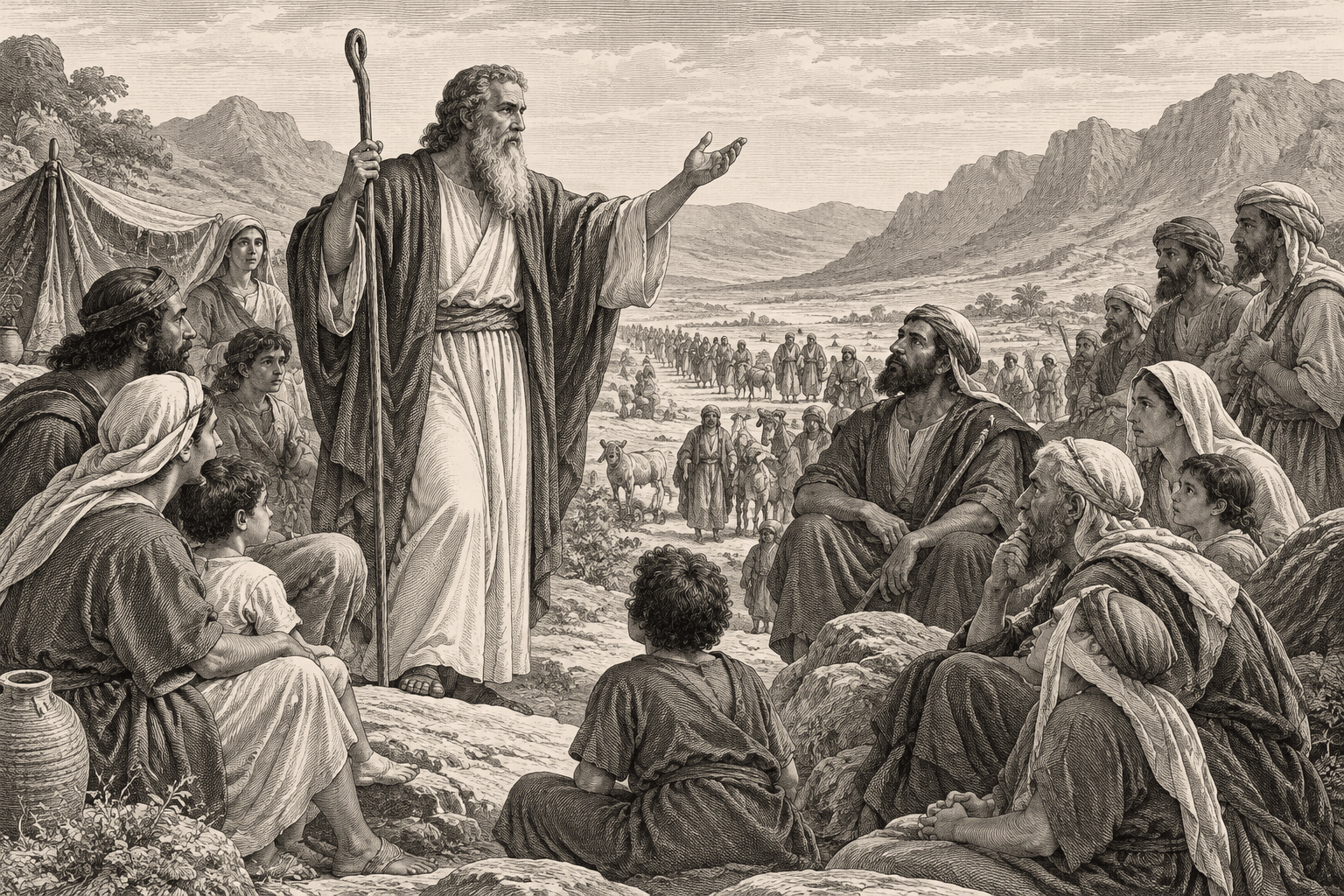
The first commandment God gave Moses immediately after the going out was: “Sanctify unto me all the firstborn, whatsoever openeth the womb among the children of Israel, both of man and of beast: it is mine” (2).
It is not so much a command or a commandment as a gift and a promise. By the people’s going out from the circle of bondage and setting out toward the Jerusalem above, the believer enters the circle of God’s possession and becomes a living member of this divine kingdom, for He says: “It is mine.”
A) Christ our Firstborn: God asked for the firstborn of man and beast, and later He also asked for the firstfruits of the harvest, the vineyards, and the oil. The Lord gave attention to this matter in the books of Exodus (13), Leviticus (Leviticus 23:10–14; 27:26–29), and Numbers (Numbers 15:19–21; 18:13–20). By offering the firstborn to the Lord, the whole is sanctified, and so the whole is counted as offered to the Lord. This was a symbol of the Lord Christ, our Firstborn, the Firstborn and Head of all creation (Romans 8:29; Colossians 1:15, 18). He came forward on behalf of us, His younger brethren, offering His life to the Father as a sacrifice of obedience and love without blemish; and His good Father smelled it as a savour of pleasure and delight, so that humanity united in Him became the object of the Father’s delight and good pleasure.
To explain this, we say that God the Word became one of us. Though according to the flesh He came after many, He was called “the second Adam” and counted the Firstborn, for the first Adam lost his birthright over humanity because of his sin. So Esau lost his birthright and Jacob received it; Reuben also lost his birthright because he defiled his father’s bed (Genesis 49:3–4; 1 Chronicles 5:1). And Isaac was counted the firstborn of his father Abraham and inherited everything (Genesis 21:10), though he was born after his brother Ishmael. No one can receive the birthright over humanity in the presence of the Lord Christ, the Holy One alone, who is without blemish. He came forward as the firstfruits of humanity to the Father, and all who believe in Him were accepted in Him and sanctified in Him, and every believer heard from the divine mouth: “It is mine” (2).
This appears clearly in the firstfruits of the tree (Leviticus 19:23): for three years they remain uncircumcised, that is, spiritually unsanctified; and in the fourth year all its fruit is offered to the Lord (Leviticus 19:24); then the Lord says: “I am the LORD your God” (Leviticus 19:25). What is this tree but humanity, which remained uncircumcised three years: in Paradise, when our parents Adam and Eve fell; in the age of the patriarchs under the natural law; and the third year under the Mosaic Law. The fourth year, in which all its fruit is accepted, is in the covenant of grace, when the Lord Christ offered holy fruit on our behalf…
It should be noted that man knew the idea of the birthright before the Mosaic Law: a man rejoices in his firstborn son, and the farmer rejoices in the firstfruits of his harvest… So, as God gave us His only firstborn Son as a ransom for us, He asks us to return love for love: we offer Him the firstborn of our children for His service, and even the firstlings of our animals and the firstfruits of our harvest. He wants the most precious of what we have, not our leftovers.
Offering the firstborn is the sign upon the hand, that is, the practical sign, and between the eyes, that is, the sign that is not forgotten. Through it they remember God’s works of salvation: that He slew the firstborn because of Pharaoh’s wickedness, to make them “the firstborn son of God” (Exodus 4:22; Jeremiah 31:9). God set up His people as a firstborn son to Himself; and when the true Firstborn came into the world and the Church was united in Him, she became in truth “the church of the firstborn” (Hebrews 12:23), as Holy Scripture says.
B) The order of the birthright: If the birthright was known before the Mosaic Law, the Law came to order it precisely and in detail, carrying symbols of the heavenly Church of the firstborn. Leaving the study of the birthright for another occasion, if the Lord wills and we live, I would like to set down some important points in the Law’s ordering of the birthright:
First: the firstborn has a double portion in the inheritance (Deuteronomy 21:17), a sign of the abundance of God’s graces upon us in the eternal inheritance.
Second: the male born first is counted the firstborn, even if his mother is not loved by her husband (Deuteronomy 21:15–17). Perhaps the two wives (the loved and the unloved) point to the Jews and the community of the pagan Gentiles; the believer is counted a firstborn in the Church of the firstborn without distinction, whether he is of Jewish or Gentile origin.
Third: the firstborn of kings usually takes the throne (2 Chronicles 21:3); and we too, as children of the King of kings, are counted kings in Him.
Fourth: the firstborn is offered for the service of the Lord (Exodus 13:12; 34:19), as a sign of offering and consecrating the whole family to the Lord. But the Levites were taken in place of the firstborn, a matter we will return to study in the Book of Leviticus, if the Lord wills.
Fifth: even the firstlings of animals are consecrated to the service of the Lord, and they are not redeemed or exchanged unless they are of the unclean animals (13; Leviticus 27:27). So God rejects the firstlings of unclean animals, and they are exchanged for a clean animal, or else their neck is broken. This is the state of the sinner, who is not redeemed except through the holy Lord Christ, or else he dies.
2. The People’s Roundabout Way
KJV · Verses 17–18
17 And it came to pass, when Pharaoh had let the people go, that God led them not through the way of the land of the Philistines, although that was near; for God said, Lest peradventure the people repent when they see war, and they return to Egypt: 18 But God led the people about, through the way of the wilderness of the Red sea: and the children of Israel went up harnessed out of the land of Egypt.
The people were amazed to see themselves walking on a road other than the way of the Philistines. Since they had not yet been trained in freedom, God wanted to lead them step by step through the wilderness until He brought them to the land of freedom: “Lest peradventure the people repent when they see war, and they return to Egypt” (17).
3. The Bones of Joseph
KJV · Verses 19
19 And Moses took the bones of Joseph with him: for he had straitly sworn the children of Israel, saying, God will surely visit you; and ye shall carry up my bones away hence with you.
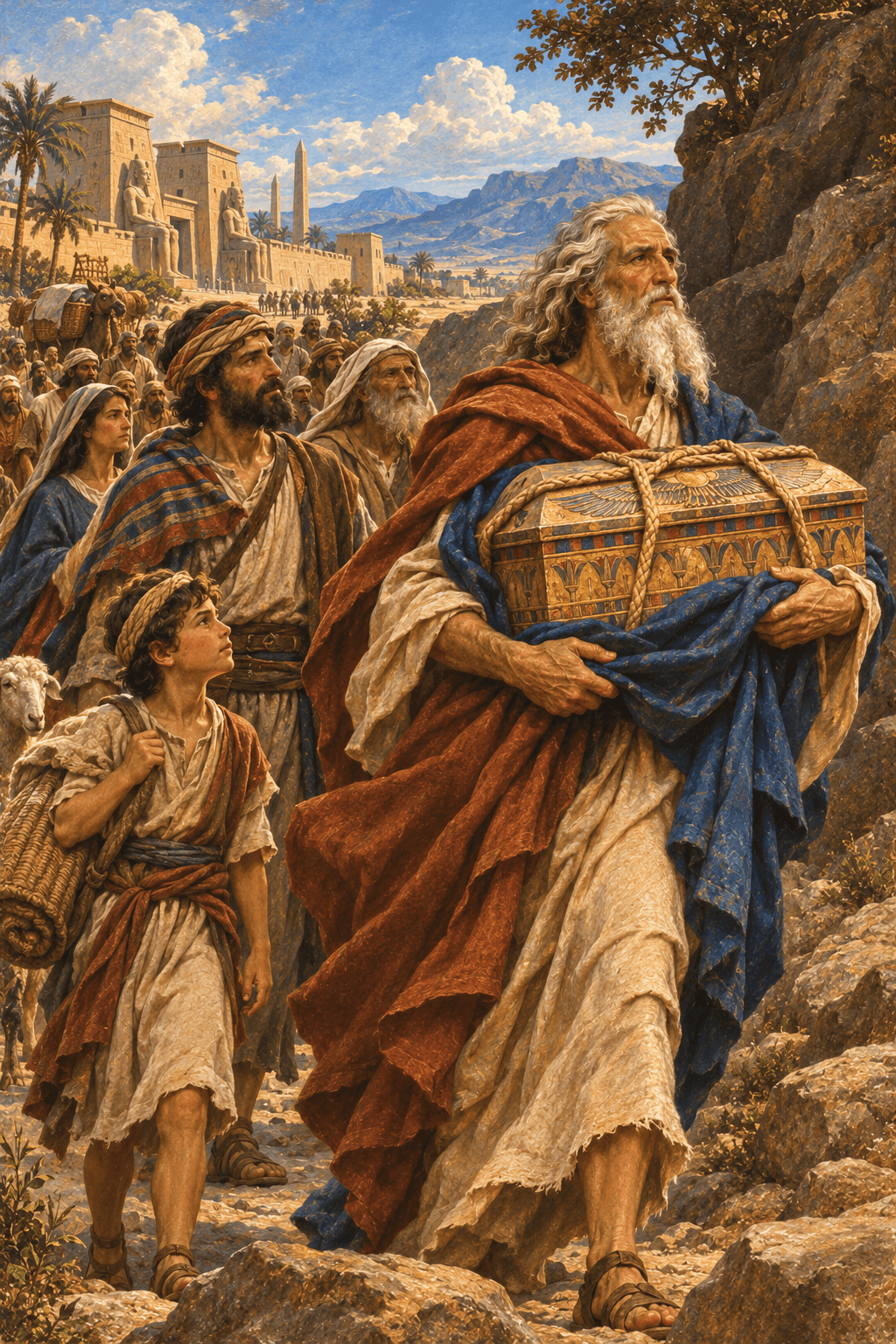
Scripture says: “And Moses took the bones of Joseph with him: for he had straitly sworn the children of Israel, saying, God will surely visit you; and ye shall carry up my bones away hence with you” (19).
It is as if Joseph perceived, through the darkness, that his people would go out of the land of Egypt and rest in the land of promise. His request carried a symbol of the longing for the resurrection within him: he wanted his body too to rest in the Jerusalem above, when it bears the new nature fit for heavenly things.
Saint Aphrahat comments on what Moses the prophet did, saying:
The bones of the righteous man were more precious and better in his eyes than the gold and silver which the children of Israel took with them from Egypt and corrupted. The bones of Joseph remained forty years in the wilderness, and when Moses fell asleep he handed them down to Joshua the son of Nun… who buried them in the land of promise as a treasure! [177]
4. The Encampment in Etham
KJV · Verses 20–22
20 And they took their journey from Succoth, and encamped in Etham, in the edge of the wilderness. 21 And the Lord went before them by day in a pillar of a cloud, to lead them the way; and by night in a pillar of fire, to give them light; to go by day and night: 22 He took not away the pillar of the cloud by day, nor the pillar of fire by night, from before the people.
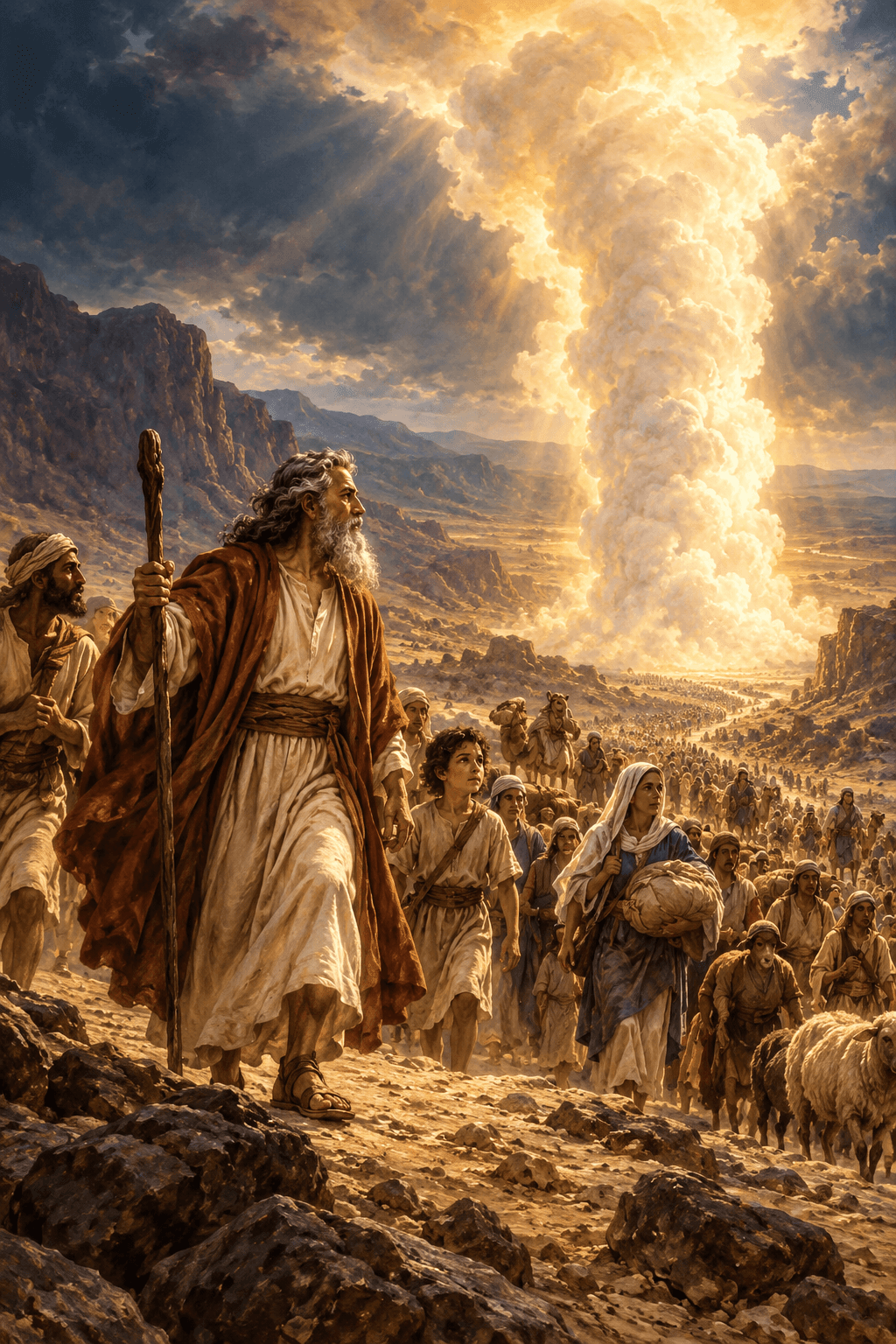
We spoke before of the journey from Rameses to Succoth, and said that it is a going out from the provocations of sin, with a sense of being a stranger. Now they reached Etham, which in the opinion of Origen means “a sign.” It is the third station, “in the edge of the wilderness” (20). The believer cannot enter the wilderness, with all its pains and trials, unless he reaches the third station, that is, experiences the resurrection with the Lord Christ; then the Lord reveals Himself to him, supports him by day, and gives him light by night.
Origen says:
We must not stop here (in Succoth) but continue on the way. We must strike the tent from Succoth and hasten to Etham. Etham can be translated “a sign,” and it is a well-chosen name, for you hear afterward that God went before them by day in a pillar of a cloud, to lead them the way, and by night in a pillar of fire, to give them light. This sign we do not find in Rameses or in Succoth, the first and second stages of the journey; it comes in the third stage, where God’s revelations begin. Remember what was written before, that Moses said to Pharaoh: “Let us go, we pray thee, three days’ journey into the desert, and sacrifice unto the LORD our God” (Exodus 5:3)… So Pharaoh did not want to let the children of Israel go to the places of God’s revelations, unless he allowed them to advance and enjoy the mysteries of the third day. Hear what the prophet says: “After two days will he revive us: in the third day he will raise us up, and we shall live in his sight” (Hosea 6:2).
The first day represents for us the passion of the Savior; the second day represents His descent into Hades; and the third day represents His resurrection.
The Lord went before them by day in the pillar of a cloud, to lead them the way, and by night in a pillar of fire, to give them light. If we follow the Apostle, who says that these words refer to baptism (1 Corinthians 10:2), then everyone who is baptized into Jesus Christ is baptized into His death, is buried with Him by baptism into death (Romans 6:3–4), and rises with Him on the third day. The Apostle speaks of such a person, saying that God “hath raised us up together, and made us sit together in heavenly places” (Ephesians 2:6). So when you acquire the mystery of the third day, the Lord leads you and shows you the beginning of the way of salvation. [178]
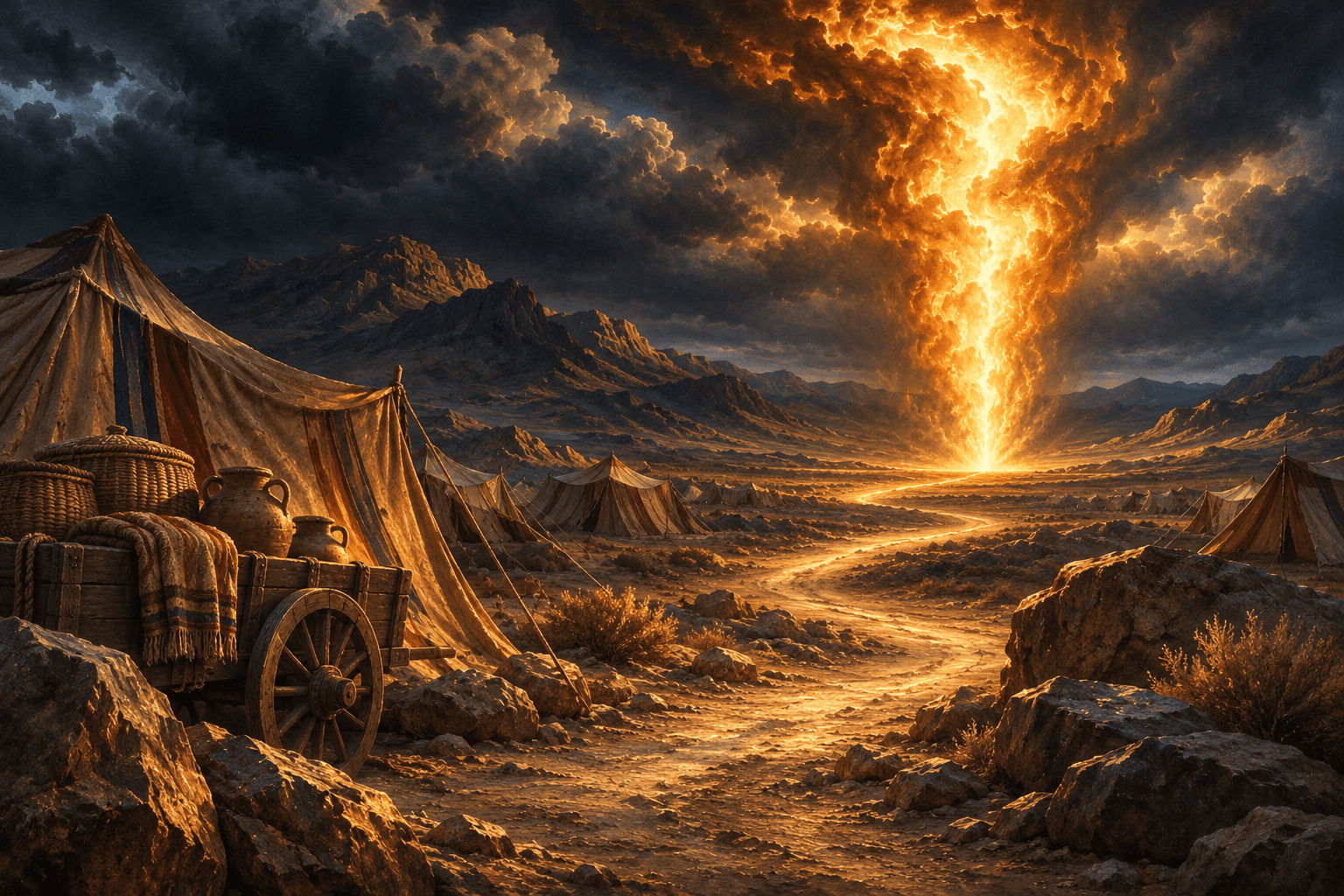
If the Apostle sees in the cloud that overshadowed the people baptism (1 Corinthians 10:2), through which we receive the Spirit of adoption by the Holy Spirit, Saint Basil the Great sees in it:
the shadow of the grace of the Holy Spirit, which cools the flame of our passions by the mortifying of our members (Colossians 3:5). [179]
So the pillar of fire is a shadow of the enlightenment we received in baptism, that we may walk in the way of the Lord the Savior through the darkness of this life.
Notes and References
[177] Aphrahat, Demonstration 8, On the Resurrection of the Dead.
[178] Origen, In Exod. hom. 5:2.
[179] St. Basil, On the Holy Spirit, ch. 14.