
When Abraham entered into a covenant with God, he entered into a deeper friendship, which God cherished, calling him His friend. Speaking with Israel He says: “But thou, Israel, art my servant, Jacob whom I have chosen, the seed of Abraham my friend” (Isaiah 41:8) — the title Jehoshaphat used in speaking with God when he asked His help for His people (2 Chronicles 20:7), and which James the Apostle declared when he said of Abraham: “he was called the Friend of God” (James 2:23).
This unique friendship appears in many situations that reveal God’s love and His dealings with His children. God appears with His angels to Abraham, who hosts them at noon at the oaks of Mamre; God promises him Isaac and enters into an open dialogue with him concerning Sodom and Gomorrah.
1. At the Oaks of Mamre
KJV · Verses 1–2
1 And the Lord appeared unto him in the plains of Mamre: and he sat in the tent door in the heat of the day; 2 And he lift up his eyes and looked, and, lo, three men stood by him: and when he saw them, he ran to meet them from the tent door, and bowed himself toward the ground,
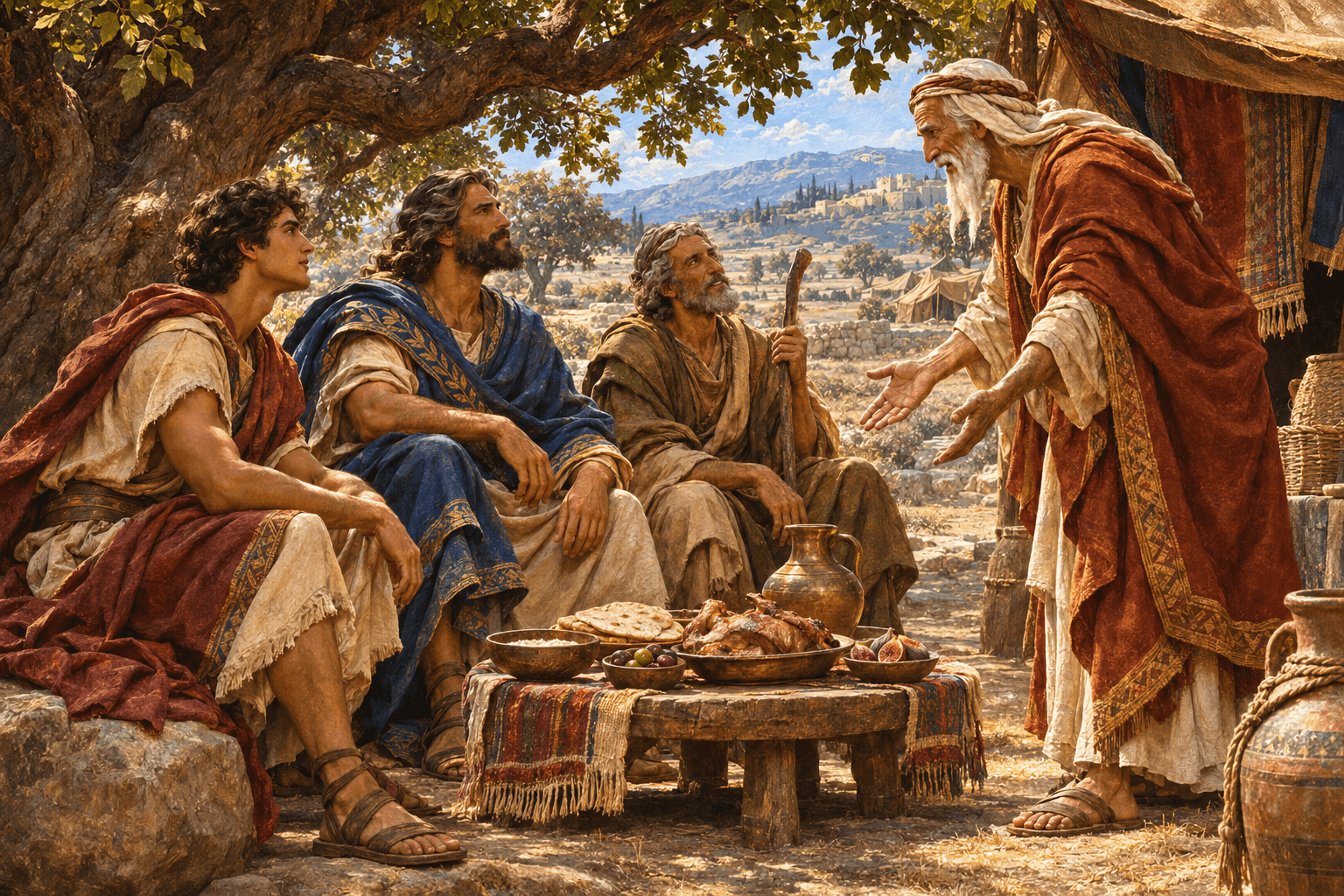
This historic meeting represents a true spiritual meeting enjoyed by every soul that imitates Abraham the patriarch: it enters into a sincere friendship of love with God and sits at the door of its tent by the oaks of Mamre, to receive within itself the Lord of heaven and His angels, and so becomes a temple of God, declaring the kingdom of heaven within it.
To receive the Lord within us, let us go out to the door of the tent and sit there by the oaks of Mamre at noon, shaded by the oak trees. What is going out of the tent but the soul’s setting out beyond the lusts of the body, so that evil lusts do not imprison the soul within, entangling it in pleasures and cares; rather it sets out as in freedom, so that man lives spiritually and not carnally, subjecting the tent to himself, and not subjecting himself to the weight of the tent.
It is not enough to go out to the door of the tent; we must sit by the oak tree, that is, by the cross, at noon, to contemplate the wounds of the Lord lifted up on the cross at the sixth hour, repeating what we say in the Divine Liturgy: “Draw His wounds before you, O my soul, and take refuge in them when the enemy rages against you.” As for “Mamre,” it means “vision” or “insight.” By our going out through the Holy Spirit from the weight of the lusts of our tent, and our sitting by the holy oak, saying: “I sat down under his shadow with great delight, and his fruit was sweet to my taste” (Song of Solomon 2:3), we enjoy Mamre, that is, the vision of God and the enlightenment of inner insight.
Father Caesarius of Arles comments on God’s meeting with Abraham at the oaks of Mamre, saying:
Do you see in what place a banquet can be prepared for the Lord? Abraham’s vision and insight were enlightened (Mamre = vision or insight), so his heart was pure, seeing God. It is in such a place and in such a heart that the Lord can find a banquet. [277]
Some Jewish interpreters hold that this meeting took place three days after the circumcision, and that the Lord came to heal Abraham of his wound. If this saying is true, then circumcision — a symbol of baptism, which we perform in the name of the Holy Trinity — is the way of our entry into divine friendship, through which God longs for us to receive Him in our tent, sanctified by His Holy Spirit, so that He finds in us His delightful banquet and hears our voice: “Let my beloved come into his garden, and eat his pleasant fruits” (Song of Solomon 4:16). With joy He enters our hearts to say: “I am come into my garden, my sister, my spouse: I have gathered my myrrh with my spice; I have eaten my honeycomb with my honey; I have drunk my wine with my milk: eat, O friends; drink, yea, drink abundantly, O beloved” (Song of Solomon 5:1). Thus our tent is changed into a place of rest for the Lord, who finds His delight in the sons of men. Saint Macarius the Great says:
The heart is the palace of Christ; into it the King enters to rest, and with Him the angels and the spirits of the saints. There He dwells and walks within it and establishes His kingdom. [278]
Our tent is changed into a garden in which the Lord, the Bridegroom, rejoices, as Saint Gregory of Nyssa says:
This is He for whom the bride has prepared her table. The table is a planted garden, living trees; the trees are we, and the fruit we offer is our souls… The food prepared is our salvation, and the fruit is our free will, which offers our souls to God as fruit gathered from the branch. [279]
May we stand with Abraham at the door of the tent to host the Lord in our tent as His palace and His garden, offering Him by our free will (our holy life in Him) food that gladdens His heart!
Abraham’s hosting of the Lord and His two angels drew the attention of the holy men of God, so that the Apostle Paul said: “for thereby some have entertained angels unawares” (Hebrews 13:2). The fathers spoke abundantly of the work of “hospitality to strangers” as a living way of hosting the Lord in His creation. Saint Ambrose says:
Perhaps Christ is coming in the person of the stranger, for He comes in the person of the poor, as He said: “I was in prison, and ye came unto me… Naked, and ye clothed me” (Matthew 25:36). [280]
Saint Jerome says:
The true temple of Christ is the soul of the believer; let us adorn it and offer it garments, let us offer it gifts, let us welcome Christ who is in it! What use are walls studded with jewels if Christ in the poor is in danger of perishing from hunger?! [281]
2. Generous Abraham
KJV · Verses 3–5
3 And said, My Lord, if now I have found favour in thy sight, pass not away, I pray thee, from thy servant: 4 Let a little water, I pray you, be fetched, and wash your feet, and rest yourselves under the tree: 5 And I will fetch a morsel of bread, and comfort ye your hearts; after that ye shall pass on: for therefore are ye come to your servant. And they said, So do, as thou hast said.
This meeting revealed Abraham’s generous nature in giving: he offered his heart before his food, and hosted others within himself before opening his tent to them. This appeared clearly when “he ran to meet them from the tent door, and bowed himself toward the ground” (2); that is, old as he was, he ran to them and bowed in greeting, for he was waiting for someone to host. With a large heart he said: “My Lord, if now I have found favour in thy sight, pass not away, I pray thee, from thy servant: let a little water, I pray you, be fetched, and wash your feet, and rest yourselves under the tree: and I will fetch a morsel of bread, and comfort ye your hearts; after that ye shall pass on: for therefore are ye come to your servant. And they said, So do, as thou hast said” (3–5).
Abraham thought they were travelers, so he asked them to accept the washing of their feet and to comfort their hearts with a morsel of bread after resting under the shade of the tree, and then go on their way… Thus he speaks in love and eagerness to give, in a spirit of humility: he asks to wash their feet, and counts what he offers them as a morsel of bread, a simple sign of love that is not refused.
Abraham began with the washing of feet, and as Origen the scholar says:
He knew that the mysteries of the Lord cannot find their fulfillment unless we at least wash the feet. [282]
Saint Ambrose says:
Good is the mystery of humility, for when I wash the defilements of others, I wash away my own. [283]
It is as though the beginning of hospitality is washing — not the feet, but the defilements — by forgiving the faults others have committed against us; thus, in washing their defilements, we wash our own.
3. Preparing the Banquet
KJV · Verses 6–8
6 And Abraham hastened into the tent unto Sarah, and said, Make ready quickly three measures of fine meal, knead it, and make cakes upon the hearth. 7 And Abraham ran unto the herd, and fetcht a calf tender and good, and gave it unto a young man; and he hasted to dress it. 8 And he took butter, and milk, and the calf which he had dressed, and set it before them; and he stood by them under the tree, and they did eat.
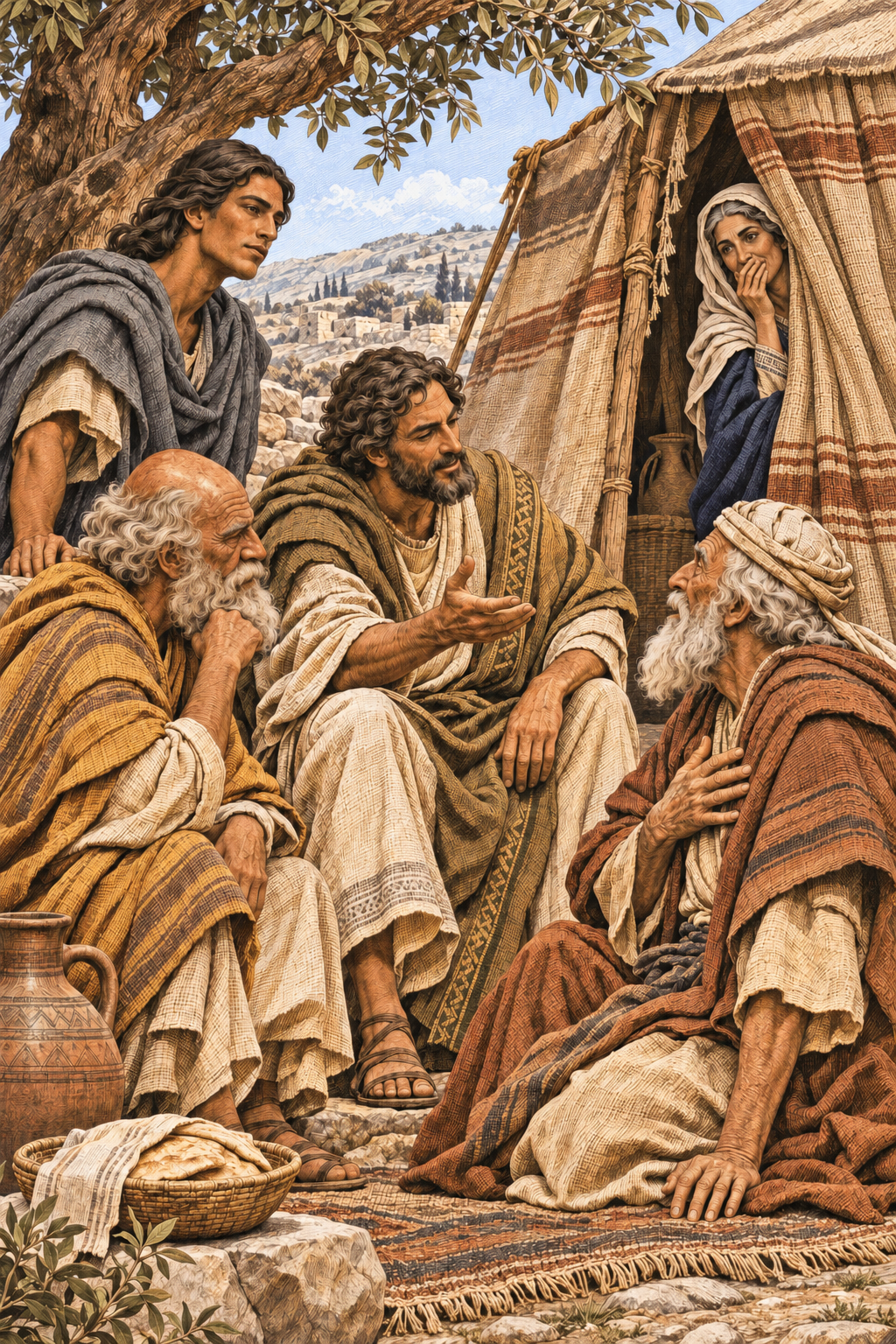
“And Abraham hastened into the tent unto Sarah, and said, Make ready quickly three measures of fine meal, knead it, and make cakes upon the hearth. And Abraham ran unto the herd, and fetcht a calf tender and good, and gave it unto a young man; and he hasted to dress it” (6–7).
In this banquet we observe the following:
First: When Abraham saw the men he “ran,” though he was old; in doing good he runs swiftly like a child who rejoices in the work. When the men accepted the invitation he hastened to Sarah and asked her to hasten in doing good, and when he gave the calf to his servant, the servant hastened to his work… So it was with Abraham, his wife, and his servants: all were marked not only by doing good but by speed in it, as though seizing the opportunity lest it slip from their hands. Origen the scholar says:
Abraham runs, his wife hurries, the servant hastens; for there is no sloth in the house of the wise. [284]
Saint John Chrysostom says:
Abraham trained his servants well too… Let us also think of their salvation, for it is our duty to care that those who serve us be good and practice divine works. [285]
Thus Abraham’s house was blessed: he, his wife, and his servants worked for the Lord with a vigilant spirit and a burning heart that knew no idleness.
If Abraham represents the human soul that goes out of the tent to sit by the cross, hosting all with love, Sarah represents the body sanctified in the Lord, which offers cakes upon the hearth that gladden the heart of God. Sarah shared with Abraham in the hospitality; so the body shares with the soul in the life of union with God and walking by His Holy Spirit. The servants point to man’s energies and gifts, which offer sacrifices of love to God, as Abraham’s servant did!
Second: Abraham asked his wife Sarah to knead three measures of fine meal, that is, the finest flour. Abraham does not offer his guests stale bread, but always wishes to give the finest he has, from the work of his aged wife, and in abundant quantity. The three measures perhaps point to “faith, hope, and love,” these three things which the Church kneads to offer to the Lord, in the life of her children, as fine bread in which God delights. This is the continual offering of the Church, especially since these things are kneaded with the waters of the Holy Spirit. For by the Holy Spirit, when the heart is filled with faith, the soul sets out toward her heavenly Bridegroom; by hope she overcomes every difficulty and is filled with joy; and by love she enters where the throne of God, “Love itself,” is. This is our spiritual dough, undivided, by which we are found in the bosom of God as an offering of love to Him.
“Cakes upon the hearth” are bread made on heated stones and counted as fine bread (1 Kings 19:6). If Sarah (the Church) offers our life as dough of three measures (faith, hope, and love), this dough is not fit to eat nor pleasing to the Lord except through the heated stones, that is, our fellowship with the Lord in His sufferings, so that we become in Him cakes upon the hearth. Sufferings are bitter and harsh, but with the Lord they are changed into glories, or into an offering of fine bread to God.
Third: When Abraham set the food before them, “he stood by them under the tree” (8). Abraham, his wife, and his servants not only hastened to work and offered the best they had in hosting strangers; but he too, old as he was… He had servants, slaves, and maids, yet he himself stood to serve the strangers. What love is like this?!
Let us stand with Abraham under the tree of the cross, serving others in humility and with joy, for we serve the Lord Himself in them!
4. Sarah Enjoys the Fruit
KJV · Verses 9–15
9 And they said unto him, Where is Sarah thy wife? And he said, Behold, in the tent. 10 And he said, I will certainly return unto thee according to the time of life; and, lo, Sarah thy wife shall have a son. And Sarah heard it in the tent door, which was behind him. 11 Now Abraham and Sarah were old and well stricken in age; and it ceased to be with Sarah after the manner of women. 12 Therefore Sarah laughed within herself, saying, After I am waxed old shall I have pleasure, my lord being old also? 13 And the Lord said unto Abraham, Wherefore did Sarah laugh, saying, Shall I of a surety bear a child, which am old? 14 Is any thing too hard for the Lord? At the time appointed I will return unto thee, according to the time of life, and Sarah shall have a son. 15 Then Sarah denied, saying, I laughed not; for she was afraid. And he said, Nay; but thou didst laugh.
In love Abraham and Sarah offered the Lord the best they had, and in love the Lord condescended to accept from man the gift that in truth is from Him — as Solomon the wise said, what he offers is of God’s own. Since the Lord does not accept to be a debtor, He returned love with love, asking about Sarah; and it was said to Him, “Behold, in the tent” (9). “And he said, I will certainly return unto thee according to the time of life; and, lo, Sarah thy wife shall have a son” (10).
They hosted the Lord, and behold, the Lord gives these two old people, well stricken in age (11), a son — as though raising life from death, and children to Abraham from stones… He gave them “Isaac,” which means “laughter.” Truly it is laughter, for it is said of Sarah, barren and aged, that she is a mother. What is greater still is that through Isaac comes the Messiah, the Savior, bearing flesh as his son while He is his Lord, so that all nations are blessed in Him! It is a surpassing divine work, a mystery beyond comprehension! This is the fruit that Abraham the patriarch and Sarah enjoyed through their faith working by love.
The men asked: “Where is Sarah thy wife? And he said, Behold, in the tent” (9). Abraham was at the tent door, while Sarah was in the tent behind him (10). Abraham represents the soul setting out in the freedom of the Holy Spirit outside the tent, that is, above all the pressures of the body; Sarah points to the body, which must be behind the soul and not before it, so that the body submits to the demands of the soul in the Lord, and the soul does not serve the demands of the body. When the body submits to the soul sanctified in the Lord, the two unite together to bring forth Isaac, which means “laughter” or “joy,” so that the whole person rejoices, bearing the fruit of the Spirit within.
The inspired text continues: “Now Abraham and Sarah were old and well stricken in age” (11)… Though Abraham and Sarah did not live as many years as their earlier forefathers, this is the first time a person is described as old and well stricken in age. Origen the scholar says that they were old, that is, full of wisdom, and advanced in days because they did not waste a single day of their life without spiritual fruit; their days were daylight without night, all light, recorded to their account without loss — therefore it was said, “well stricken in age.” Origen says:
The sinner is not advanced in days, for he does not do this: forget those things which are behind and reach forth unto those things which are before (Philippians 3:13); rather he always looks back (Luke 9:62), and therefore he is not fit for the kingdom of God. On the contrary, when we reach forward and strive toward perfection, we are advanced in days. [286]
Abraham and Sarah bore the old age of wisdom and advance in days in grace — not the old age of infirmity and the advance of days that drives toward death… They enjoyed this grace and obtained this title because they hosted the Word of God and the two angels; so their life became heaven, and they were made worthy of the promise of Isaac, a symbol of Christ, and were rightly counted two wise elders in the Lord.
Sarah heard the promise, “Therefore Sarah laughed within herself, saying, After I am waxed old shall I have pleasure, my lord being old also? And the LORD said unto Abraham, Wherefore did Sarah laugh, saying, Shall I of a surety bear a child, which am old? Is any thing too hard for the LORD? At the time appointed I will return unto thee, according to the time of life, and Sarah shall have a son. Then Sarah denied, saying, I laughed not; for she was afraid. And he said, Nay; but thou didst laugh” (12–15).
Saint Clement of Alexandria sees that Sarah laughed not because she did not believe the promise, but because she was embarrassed by the situation — how she could still become the mother of a son. [287] Saint Augustine [288] sees that she laughed from joy, but was not full of faith.
Abraham laughed when he heard the news and fell on his face before the Lord (Genesis 17:17), and Sarah laughed within herself (Genesis 18:13); and they bore Isaac, which means “laughter,” so that they would remember God’s work with them whenever they called him by his name, glorifying God who granted them a grace beyond the limits of nature.
5. A Dialogue with God
KJV · Verses 16–33
16 And the men rose up from thence, and looked toward Sodom: and Abraham went with them to bring them on the way. 17 And the Lord said, Shall I hide from Abraham that thing which I do; 18 Seeing that Abraham shall surely become a great and mighty nation, and all the nations of the earth shall be blessed in him? 19 For I know him, that he will command his children and his household after him, and they shall keep the way of the Lord, to do justice and judgment; that the Lord may bring upon Abraham that which he hath spoken of him. 20 And the Lord said, Because the cry of Sodom and Gomorrah is great, and because their sin is very grievous; 21 I will go down now, and see whether they have done altogether according to the cry of it, which is come unto me; and if not, I will know. 22 And the men turned their faces from thence, and went toward Sodom: but Abraham stood yet before the Lord. 23 And Abraham drew near, and said, Wilt thou also destroy the righteous with the wicked? 24 Peradventure there be fifty righteous within the city: wilt thou also destroy and not spare the place for the fifty righteous that are therein? 25 That be far from thee to do after this manner, to slay the righteous with the wicked: and that the righteous should be as the wicked, that be far from thee: Shall not the Judge of all the earth do right? 26 And the Lord said, If I find in Sodom fifty righteous within the city, then I will spare all the place for their sakes. 27 And Abraham answered and said, Behold now, I have taken upon me to speak unto the Lord, which am but dust and ashes: 28 Peradventure there shall lack five of the fifty righteous: wilt thou destroy all the city for lack of five? And he said, If I find there forty and five, I will not destroy it. 29 And he spake unto him yet again, and said, Peradventure there shall be forty found there. And he said, I will not do it for forty's sake. 30 And he said unto him, Oh let not the Lord be angry, and I will speak: Peradventure there shall thirty be found there. And he said, I will not do it, if I find thirty there. 31 And he said, Behold now, I have taken upon me to speak unto the Lord: Peradventure there shall be twenty found there. And he said, I will not destroy it for twenty's sake. 32 And he said, Oh let not the Lord be angry, and I will speak yet but this once: Peradventure ten shall be found there. And he said, I will not destroy it for ten's sake. 33 And the Lord went his way, as soon as he had left communing with Abraham: and Abraham returned unto his place.
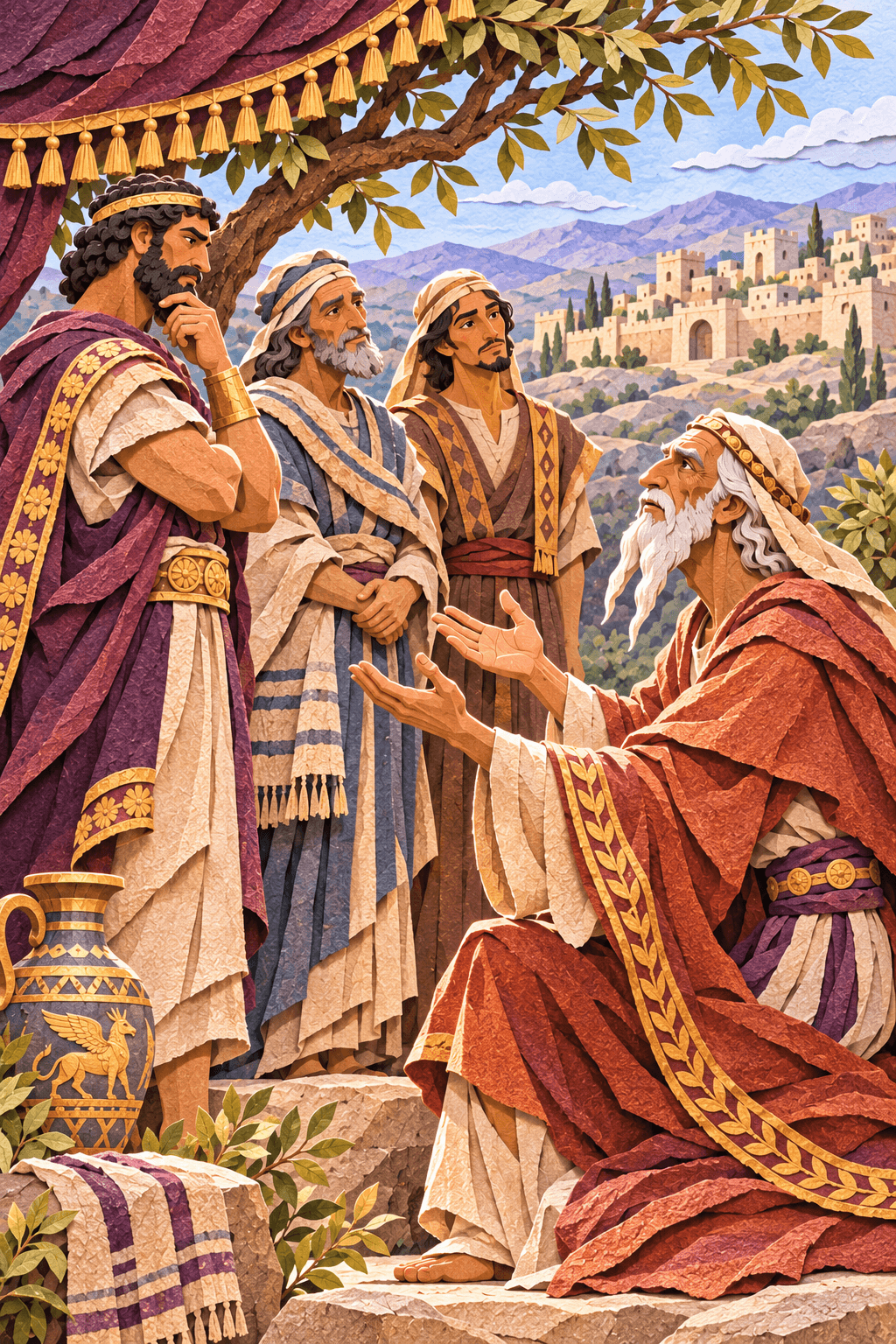
Since Abraham met God’s love with love, God spoke with him as a friend, saying: “Shall I hide from Abraham that thing which I do; seeing that Abraham shall surely become a great and mighty nation, and all the nations of the earth shall be blessed in him?” (17–18).
God, in His friendship with man, wishes not to hide His secrets from him… “The secret of the LORD is with them that fear him” (Psalm 25:14), and as it is said in Amos: “Surely the Lord GOD will do nothing, but he revealeth his secret unto his servants the prophets” (Amos 3:7). Since God would make Abraham a great nation and he would enjoy the coming of the Lord Christ from his seed, in whom all the nations of the earth are blessed, He speaks with him frankly and with an open heart, so that his children might learn the life of fellowship with God and the opening of their hearts to Him.
The Lord declared the iniquities of Sodom and Gomorrah to Abraham, saying: “Because the cry of Sodom and Gomorrah is great, and because their sin is very grievous; I will go down now, and see whether they have done altogether according to the cry of it, which is come unto me; and if not, I will know” (20–21).
This shows the hideousness of what man had reached in his wickedness: the sins themselves cried out, demanding punishment of those who committed them; or the earth — inanimate creation — could no longer bear this corruption and groaned to God to punish man. So did the blood of Abel cry out to God because of Cain’s cruelty (Genesis 4:10), and the hire of the laborers kept back by fraud cries out against the injustice of the owners of the fields (James 5:4).
Sodom and Gomorrah were two cities near the Dead Sea, in one of which Lot dwelt. The first means “burning,” and the second means “overflowing (flood).” [289] Thus Sodom and Gomorrah became a symbol of sin, which drives man as it were to burning by fire or drowning by flood.
The expression “I will go down now, and see” is not to be understood literally, for God is present everywhere; but it is an expression suited to our humanity, revealing God’s justice: He does not punish hastily, but is like one who waits until He comes down and sees for Himself what man is doing… He is concerned with all of human life.
God came down to us to see our sins… and as Origen the scholar says:
…in order to bear them, taking the form of a servant (Philippians 2:7). [290]
He comes down to us to bear our bitter burdens and pay our debt, and to lift us up with Him, as He did on the mount of Transfiguration (Mark 9:2).
After this conversation the two angels went away toward Sodom and Gomorrah, and Abraham remained before the Lord… With the boldness of love, “Abraham drew near, and said, Wilt thou also destroy the righteous with the wicked? Peradventure there be fifty righteous within the city…” (23–24). He did not speak with the Lord about what concerned himself or his wife in their bearing Isaac according to God’s promise; but all Abraham’s feelings were absorbed in those exposed to destruction, so he stood as an intercessor for them! It is a living picture of mature love, in which a person is occupied with the salvation of his brethren and asks for them more than for himself — even if the other is wicked and deserving of death. As Saint John Chrysostom says:
Abraham appeared indeed as one asking on behalf of the righteous, though he was asking for all. The souls of the saints are very tender and loving toward others, loving the salvation of strangers as of their own souls. [291]
If God opened the door of dialogue with His friend Abraham, Abraham in turn held to a spirit of humility in speaking with the Lord. As Saint Augustine says:
When Abraham spoke with his God, and the door of conversation was closed before him concerning the burning of Sodom, he said: “I… am but dust and ashes.” Great is this humility which marks the great saints! [292]
Saint John Chrysostom says:
Let us humble ourselves that we may be exalted, for vainglory brings a man down completely. So Pharaoh was abased when he said, “I know not the LORD” (Exodus 5:2), and became less than flies, frogs, and locusts, and after this he was drowned with his army and his horses in the sea. On the contrary, when Abraham said, “I am but dust and ashes,” he conquered barbarian nations; and when he fell into the hands of the Egyptians (Pharaoh and his court), he returned bearing a victory more glorious than the first. By cleaving to this virtue he grew, rising toward the heights. [293]
Saint Ambrose says:
Job sat in the dust and regained all that he had lost (Job 2:8; 42:10). [294]
Notes and References
[277] Caesarius of Arles, Serm. 83:5.
[278] Macarius, Hom. 15.
[279] Gregory of Nyssa, Comm. on the Song of Songs, Serm. 10.
[280] Ambrose, Duties of the Clergy 2:21 (107).
[281] Jerome, Ep. 58:7.
[282] Origen, In Gen. hom. 4:2.
[283] Ambrose, Duties of the Clergy 1:1 (14).
[284] Origen, In Gen. hom. 4:1.
[285] Chrysostom, In Acts hom. 45.
[286] Origen, In Jos. hom. 16:1.
[287] Clement of Alexandria, Strom. 6:7.
[288] Augustine, City of God 16:31.
[289] New Westminster Dictionary of the Bible, p. 339.
[290] Origen, In Gen. hom. 4:5.
[291] Chrysostom, In Rom. hom. 29.
[292] Augustine, On Ps. 147.
[293] Chrysostom, In Matt. hom. 65:6.
[294] Ambrose, Concerning Repentance 2:1 (4).