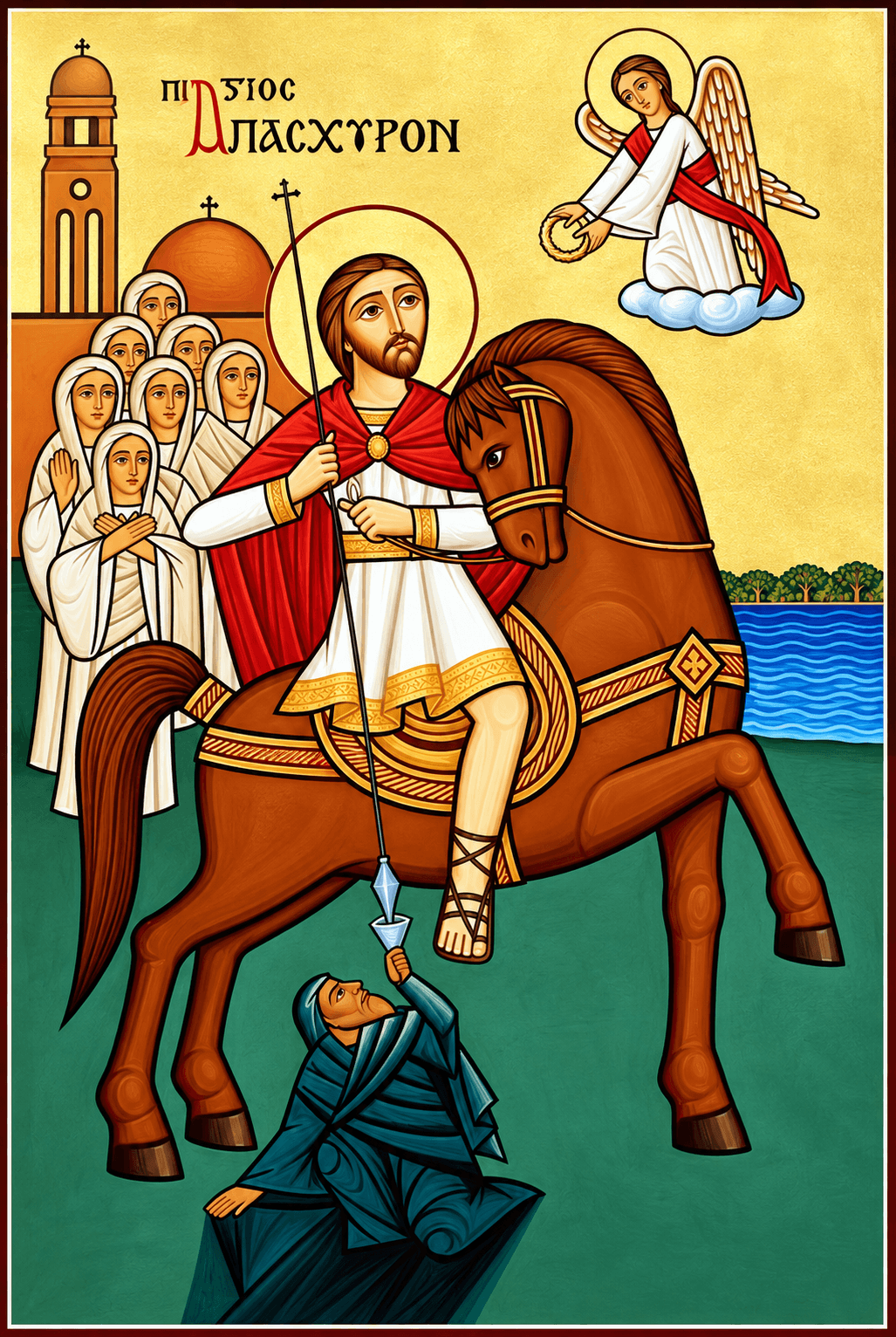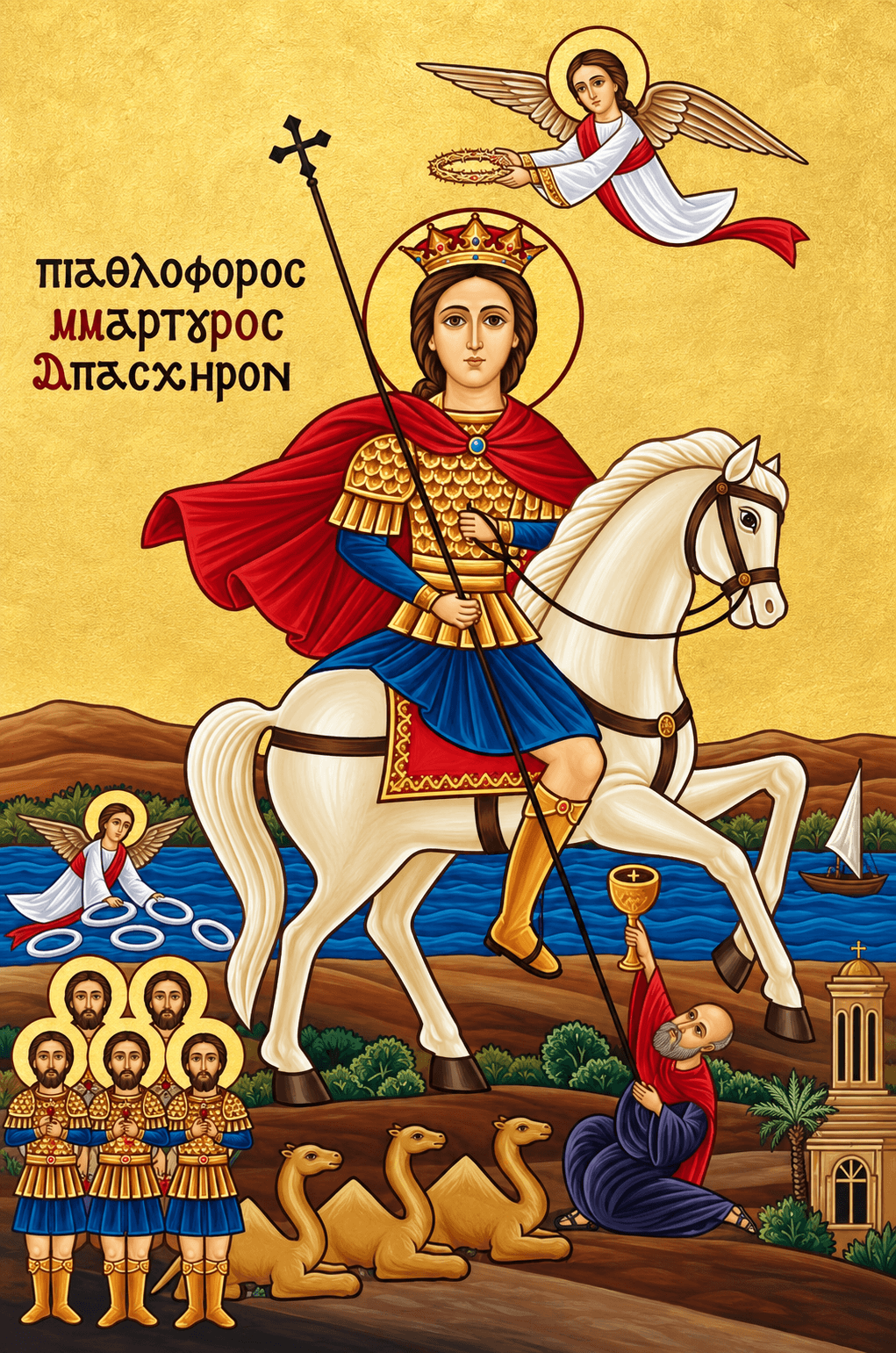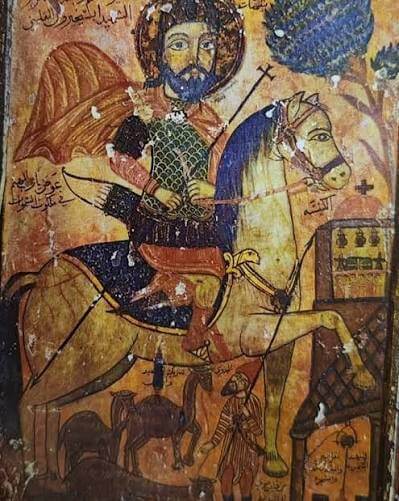
His Early Life:
The name “Abaskhiron” or “Abaskhiron” is derived from two words: “Abba,” meaning “Father,” and “Sakhiroun,” “Ashiros,” or “Iskaros,” meaning “strong.” He was born in Qulin (Qallin), in Kafr El-Sheikh Governorate. He was a brave and well-loved soldier, widely known and respected among his fellow soldiers and superiors. He belonged to the military unit stationed at Atrib (Banha).
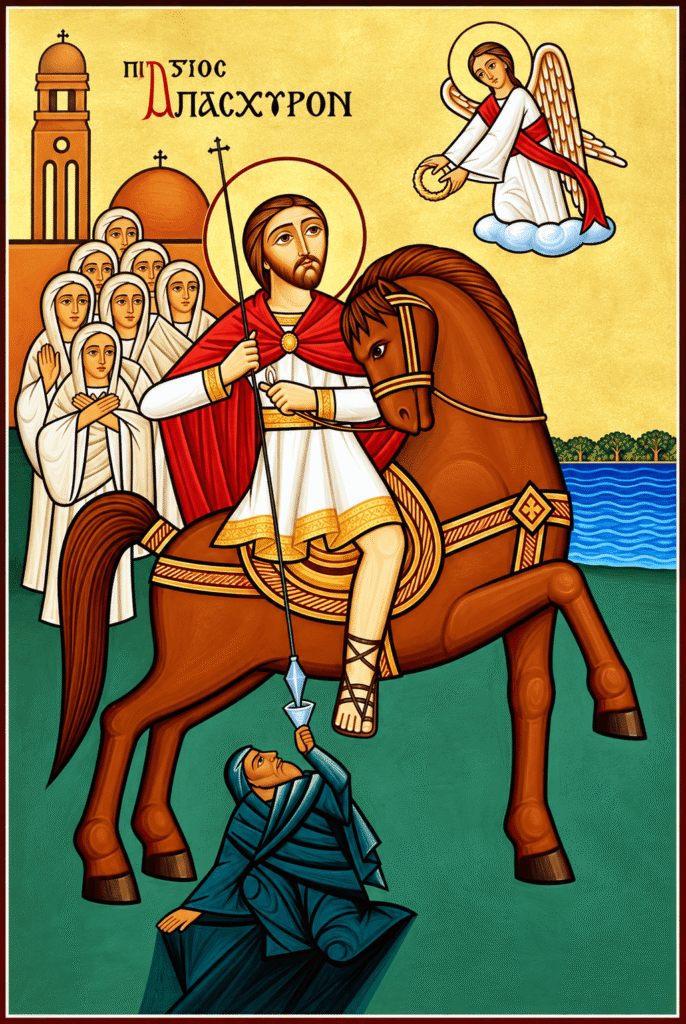 His Position Regarding Diocletian’s Edict:
When Diocletian issued an edict ordering sacrifices to idols throughout the Empire, and the edict was announced among the soldiers, Abaskhiron refused to worship the idols. The governor struck him and began rebuking him. Abaskhiron immediately threw down his soldier’s military insignia before him. The governor then ordered him to be imprisoned.
The Trial and His Journey to Upper Egypt:
Saint Abaskhiron had two brothers who came to him weeping and pleading with him to offer incense to the idols. When he did not respond to their tears, they disowned him. He, however, spoke to them about faith in the Lord Christ. He then began to pray, and an angel appeared to him, supporting and encouraging him. The following morning he was brought to trial. The governor alternately threatened him and treated him gently. When he found Abaskhiron steadfast in his faith, he decided to transfer him to Arianus, governor of Ansena (the village of Sheikh Abada, opposite Mallawi, east of the Nile). Abaskhiron was bound and sent with four soldiers on a boat heading toward Upper Egypt. While he was in chains, the Lord Christ appeared to him and released the chains from the ship. When the soldiers pleaded with him, He allowed them to bind him again so that they would not be exposed to death.
In Assiut:
They did not find the governor in Ansena, because they learned that he had gone to Assiut, so they traveled there. There Abaskhiron met a group of believers from Aswan and Esna who had been brought to Arianus to be tortured. They encouraged one another together. The saint cast out an evil spirit that was tormenting Maximas, an adviser to the governor (probably the governor of Assiut who was accompanying Arianus, the governor of Ansena). The governor became enraged and ordered the saint to be tied to horses and dragged around the city streets, while some people shouted before him: “This is the punishment of one who does not submit to the orders of kings and does not offer incense to the gods.”
Further Tortures and Martyrdom:
He endured many tortures, and the Lord supported and strengthened him. Arianus accused him of sorcery and summoned a magician named Alexander. The magician brought him a cup containing poison. The saint made the sign of the cross over it, and he was unharmed. The magician then believed in the Lord Christ, and Arianus had him beheaded. Arianus intensified his torture of the saint and finally had him beheaded on 7 Paoni, together with five soldiers: Alphius, Armanius, Archeas, Peter, and Qirayon.
The Church of Saint Abaskhiron in Al-Bayho: 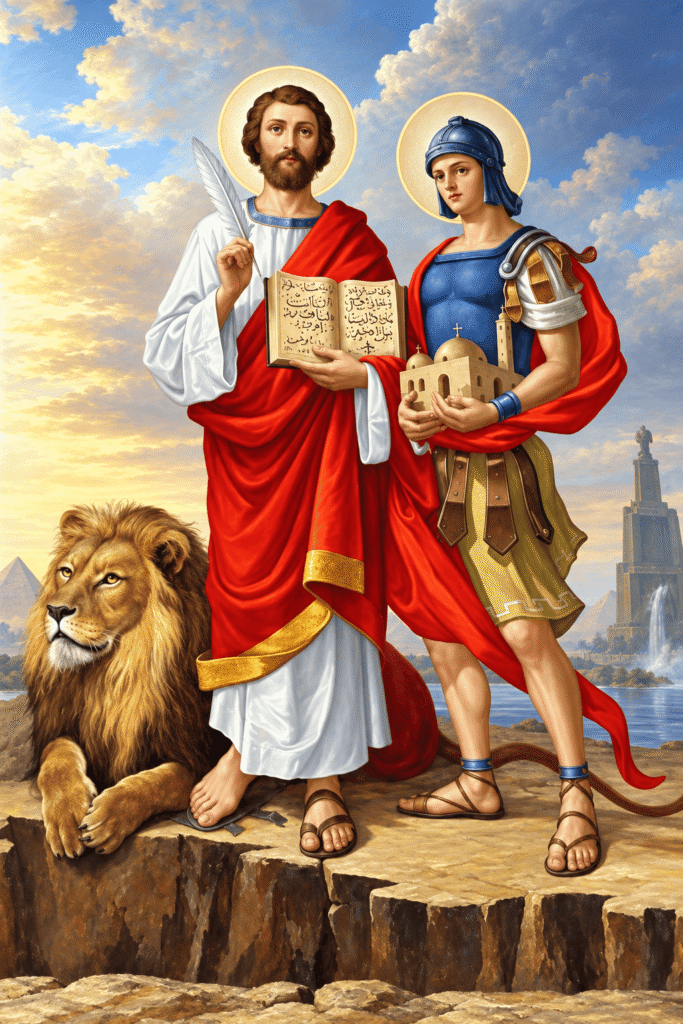
The Church of Saint Abaskhiron was originally in Qulin (in Kafr El-Sheikh Governorate). The saint moved it to Al-Bayho in Minya Governorate in Upper Egypt, and it is still standing today. It is said that the people of Qulin used to designate a particular night on which a number of weddings would be celebrated together, perhaps because transportation was difficult at that time and because the date coincided with the harvest season. During one of these celebrations, when about one hundred people were gathered in the church, the Evil One stirred up the persecutors against them. During the night, before the persecutors could carry out their intentions, the church, together with the people inside it, was transported to Al-Bayho in Upper Egypt. In the morning, the people came out of the church and found themselves in a land different from their own. The saint appeared to them without their recognizing him, and he walked with them to the bank of the Nile. When they boarded a boat, they reached Qulin in one day instead of three days. The boat owner was amazed and believed in Christianity. In Qulin, they did not find the church; its former location is still a body of water known as “Lake Al-Qalini.”